
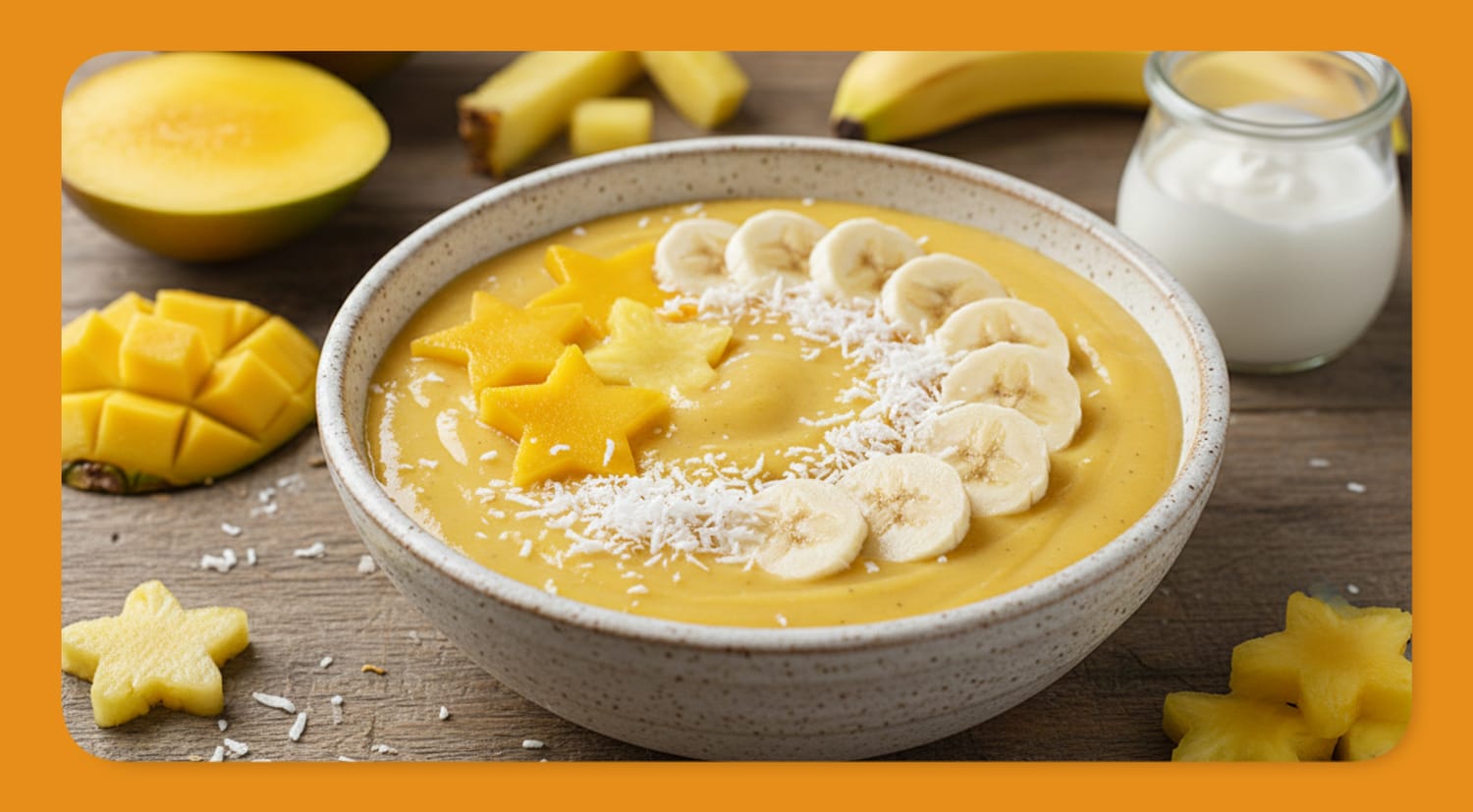
🥭 Creamy Dairy-Free Tropical Smoothie Bowl: Your Morning Escape to Paradise 🍍
The first spoonful hits differently. Thick, luscious coconut cream meets sweet, sun-ripened mango and tangy pineapple in a symphony of tropical flavors that makes you forget you're eating something incredibly good for you. This isn't your average watery smoothie that leaves you hungry an hour later. This is a spoon-standing-upright-in-the-bowl, Instagram-worthy breakfast that actually keeps you satisfied until lunch.
We've all been there. You're dairy-sensitive or vegan, and you watch everyone else enjoy those thick, creamy smoothie bowls while yours turn out thin and disappointing. Store-bought dairy-free options either taste like cardboard or cost eight dollars for a tiny serving. After countless kitchen experiments with every coconut product imaginable, I finally cracked the code to creating a dairy-free smoothie bowl so creamy and indulgent, even dairy-lovers ask for the recipe.
This Dairy-Free Tropical Smoothie Bowl delivers restaurant-quality thickness without a single drop of yogurt or milk. The secret? Full-fat coconut cream combined with perfectly frozen fruit creates that dreamy, soft-serve texture you've been missing. You'll get 12 grams of natural plant protein, healthy fats that keep you energized for hours, and enough vibrant tropical flavor to make every morning feel like vacation. Best of all, it comes together in just 5 minutes with ingredients you can keep stocked in your freezer year-round.
🌟 What Makes This Smoothie Bowl Special
Paradise in a Bowl Without the Dairy: Full-fat coconut cream creates an incredibly rich, thick base that rivals any dairy-based smoothie bowl, without the bloating, digestive issues, or animal products. You get all the creaminess with none of the compromise.
Naturally Sweet & Perfectly Balanced: No added sugars needed when you use ripe, frozen tropical fruits. The mango brings honeyed sweetness, pineapple adds bright tang, and banana provides natural creaminess, all working together so you'd never guess this is completely sugar-free beyond the fruit.
Genuinely Filling Breakfast: With 12g of plant-based protein, 8g of fiber, and healthy fats from coconut, this bowl actually sustains you through busy mornings. The combination of complex carbs and fats means steady energy without the crash you get from juice-based smoothies.
Freezer-to-Bowl in 5 Minutes: Everything can be kept frozen and ready to blend. No meal prep required beyond having frozen fruit on hand. It's the fastest nourishing breakfast you can make that doesn't come from a drive-through window.
Instagram-Worthy Every Time: That gorgeous golden-yellow color topped with vibrant fresh fruit, toasted coconut, and crunchy granola looks so stunning you'll want to photograph it before diving in. The thick consistency holds toppings perfectly for that picture-perfect presentation.
📝 Ingredients
Base Ingredients:
- 1 cup frozen mango chunks (150g), provides natural sweetness and vibrant color
- 3/4 cup frozen pineapple chunks (115g), adds tropical tang and vitamin C
- 1 medium banana, frozen (120g), creates thickness and adds potassium
- 1/2 cup full-fat coconut cream (120ml), the secret to dairy-free creaminess
- 1/4 cup coconut water or regular water (60ml), adjust for desired thickness
- 1/2 teaspoon vanilla extract (optional), enhances tropical flavors
Nutritional Boosters (Optional):
- 1 scoop vanilla plant-based protein powder (adds 15 to 20g protein)
- 1 tablespoon hemp hearts (adds 3g protein and omega-3s)
- 1 tablespoon ground flaxseed (adds fiber and healthy fats)
- 1/4 teaspoon turmeric powder (anti-inflammatory boost)
- Small handful of spinach (invisible in tropical flavors, adds nutrients)
Smoothie Bowl Toppings (Optional but Recommended):
- Fresh tropical fruit slices (mango, kiwi, pineapple, dragon fruit)
- Unsweetened coconut flakes, toasted
- Dairy-free granola
- Sliced banana
- Chia seeds
- Drizzle of almond or cashew butter
- Fresh passion fruit pulp
- Edible flowers for special occasions
🔄 Blending Instructions & Technique
A. Preparation:
If your frozen fruit is rock-solid straight from the freezer, let it sit at room temperature for 3 to 5 minutes. This helps your blender motor work more efficiently and prevents overheating. Make sure your coconut cream is well-stirred or shaken. Full-fat coconut cream often separates in the can, and you want that thick cream incorporated with any liquid.
B. Blend Order & Layering:
- Add liquid first: Pour the coconut cream and coconut water into your blender base. This prevents frozen fruit from jamming the blades and creates a liquid vortex that pulls ingredients down toward the blades for smoother blending.
- Add banana chunks: Break your frozen banana into 3 to 4 pieces and add to the liquid. Bananas blend more easily than other frozen fruits and help create the creamy base.
- Add remaining frozen fruit: Top with frozen mango and pineapple chunks. The weight of these fruits will push everything toward the blades as blending begins.
- Add boosters last: If using protein powder, hemp hearts, or other add-ins, sprinkle them on top so they don't stick to the bottom of the blender.
C. Blending Technique:
Start low, then increase: Begin blending on low speed for 10 to 15 seconds to break down the larger frozen chunks. You'll hear the motor working hard, and that's normal. Use your blender's tamper if you have one to push ingredients toward the blades without adding extra liquid.
Increase to high speed: Once ingredients start moving, increase to high speed and blend for 30 to 45 seconds. The mixture should transform from chunky to silky smooth. You'll hear the motor sound change from labored to smooth. That's your audio cue that it's ready.
Stop and scrape: Turn off the blender and scrape down the sides with a spatula. Any unmixed fruit stuck to the walls will create icy chunks in your final bowl.
Final blend: Give it one last 10 to 15 second pulse on high. The color should be a vibrant, sunny golden-yellow with no streaks of white banana or dark fruit chunks. The consistency should be thick like soft-serve ice cream. If you lift the tamper or spatula, the mixture should hold its shape rather than immediately flowing back.
Texture checkpoint: Dip a spoon into the mixture. It should coat the back of the spoon thickly and hold for a moment before slowly sliding off. If you can stand a spoon upright in the mixture without it falling over, you've achieved perfect smoothie bowl consistency.
Too thick to blend? Add coconut water 1 tablespoon at a time, pulsing between additions. Don't add too much at once or you'll end up with a drinkable smoothie instead of a bowl.
Too thin? Add 2 to 3 ice cubes or more frozen banana and blend again. You can also add a small handful of frozen cauliflower rice (trust me, you won't taste it).
D. For Layered Tropical Smoothie Bowls:
Want to create those gorgeous two-toned bowls you see on Pinterest?
- Divide and conquer: After step 2, remove half of the mixture into a separate bowl and set aside in the freezer for 2 minutes to keep it thick.
- Create second layer: To the remaining mixture in the blender, add 1/2 cup frozen dragon fruit or 1/4 cup frozen berries. Blend for 15 seconds until smooth and pink/magenta in color.
- Layer in serving bowl: Pour the pink layer into your serving bowl first, spreading it evenly. Gently spoon the yellow tropical layer on top, trying not to mix the layers.
- Create swirls: For an artistic touch, use the back of a spoon to create gentle swirl patterns between the layers.
E. Finishing & Serving:
Give your smoothie bowl a final visual check. The color should be vibrant and appealing, not dull or oxidized. Immediately transfer to a chilled bowl (pop your serving bowl in the freezer for 5 minutes beforehand if you have time). Working quickly before the mixture starts to melt, arrange your toppings in sections or rows for that Instagram-worthy presentation. Fresh fruit slices look beautiful arranged in a rainbow, granola adds crucial crunch, and a drizzle of nut butter provides visual contrast and healthy fats. Serve immediately with a spoon and enjoy the fruits of your 5-minute labor.
🥄 Texture & Consistency Guide
Getting the perfect texture makes all the difference between a disappointing smoothie and a crave-worthy breakfast bowl.
For Drinkable Smoothies:
If you prefer sipping through a straw rather than spooning from a bowl, here's how to adjust:
- Current recipe is too thick? Add an additional 1/4 to 1/2 cup coconut milk, coconut water, or regular water. Start with 2 tablespoons at a time and blend between additions until you reach your preferred consistency.
- Want it thinner? Replace the coconut cream with regular coconut milk from a carton (the refrigerated kind, not canned).
- Perfect drinkable consistency: Should flow smoothly through a wide straw or move easily when you tip the glass, but still have enough body that it doesn't feel watery.
For Smoothie Bowls:
- Perfect Bowl Consistency: Thick enough that toppings don't immediately sink to the bottom. When you drag a spoon across the surface, it should leave a trail that holds its shape for a few seconds. Think soft-serve ice cream texture.
- The Secret: Use minimal liquid (no more than 1/2 cup total) and maximize frozen ingredients. If you're between adding more liquid or accepting a slightly thicker blend, choose thicker. You can always thin it out, but you can't thicken it without adding more frozen ingredients.
- The Spoon Test: Your spoon should be able to stand upright in the center of the mixture without falling over. If it falls, add a few ice cubes or more frozen fruit and blend again.
Ideal Consistency Indicators:
| For Drinkable Smoothies | For Smoothie Bowls |
|---|---|
| Flows through a wide reusable straw without excessive sucking effort | Holds its shape when scooped with a spoon |
| Coats the inside of the glass when swirled | Toppings rest on the surface rather than sinking |
| Has body and substance, not watery or juice-like | Doesn't puddle at the edges of the bowl |
| Stays mixed rather than separating into layers | Feels dense and creamy on the tongue, not icy or watery |
| Melts slowly rather than immediately liquefying at room temperature |
🎨 Customization Matrix
Make this recipe work for your specific needs, preferences, and what you have in the pantry.
Liquid Base Options:
| Dairy | Non-Dairy (Best for This Recipe) | Light Options |
|---|---|---|
| Not applicable (dairy-free recipe) | Coconut cream (thickest), Full-fat coconut milk from can, Light coconut milk from carton, Almond milk, Oat milk, Cashew milk, Macadamia milk | Coconut water (adds electrolytes), Regular water (most neutral), Chilled green tea (antioxidant boost) |
Protein Boosters:
| Plant-Based (Recommended) | Additional Options |
|---|---|
| Vanilla or tropical plant protein powder (pea, hemp, or rice protein), Hemp hearts (3g protein per tbsp), Chia seeds (2g protein per tbsp), Almond butter (4g protein per 2 tbsp), Cashew butter (5g protein per 2 tbsp), Pumpkin seeds (7g protein per 1/4 cup) | Silken tofu (8g protein per 1/4 cup, makes it incredibly creamy), Collagen peptides (dairy-free) (10g protein per scoop) |
Natural Sweeteners:
Only add if your fruit isn't sweet enough:
- Medjool dates (2 to 3 pitted, blend with liquid first)
- Maple syrup (1 to 2 tablespoons)
- Agave nectar (1 to 2 tablespoons)
- Coconut sugar (1 tablespoon)
- Extra ripe banana
- More frozen mango (naturally very sweet)
Thickness Enhancers:
- Frozen banana (the best option for creaminess)
- Avocado (1/4, adds healthy fats and no flavor)
- Frozen cauliflower rice (1/4 cup, completely flavorless in tropical smoothies)
- Frozen zucchini chunks (1/4 cup, adds nutrients without affecting taste)
- Rolled oats (2 to 3 tablespoons, adds fiber and makes it more filling)
- Ice cubes (3 to 4 cubes, though this dilutes flavor slightly)
Tropical Fruit Variations:
- Swap mango for papaya (more subtle sweetness)
- Use frozen peaches instead of mango (less tropical but still delicious)
- Add passion fruit pulp on top for intense tropical flavor
- Include 1/4 cup frozen dragon fruit for stunning pink color
- Try frozen lychee if you can find it (exotic and sweet)
- Add fresh or frozen guava for unique flavor
Nutrient Boosters:
Greens (Won't Affect Tropical Taste):
- Handful of baby spinach (most mild)
- Small handful of kale (remove thick stems)
- Frozen zucchini chunks (completely undetectable)
Superfoods:
- Maca powder (1 teaspoon, energizing, subtle butterscotch flavor)
- Turmeric powder (1/4 teaspoon, anti-inflammatory)
- Spirulina (1/2 teaspoon, start small, it's potent)
- Acai powder (1 tablespoon, antioxidant boost)
- Baobab powder (1 teaspoon, vitamin C)
Healthy Fats:
- Avocado (1/4, creaminess without flavor)
- Almond butter (1 to 2 tablespoons)
- Coconut oil (1 teaspoon, melts into tropical flavors)
- Macadamia nuts (1/4 cup, very tropical)
👨🍳 Chef's Tips for Success
💚 Nutritional Benefits Section
Let's be honest: many smoothies are just fruit juice in disguise, giving you a sugar spike and a crash an hour later. This Dairy-Free Tropical Smoothie Bowl is genuinely different, and here's exactly why it actually fuels your body properly.
Specific Health Benefits:
High Natural Fiber Content for digestive health and lasting fullness. With 8g of fiber per serving (32% of your daily needs), this bowl keeps you satisfied for 3 to 4 hours. Compare that to a typical fruit-only smoothie with 2 to 3g of fiber that leaves you raiding the snack drawer by 10 AM. The combination of fruit fiber and optional add-ins like chia or flax means stable blood sugar without the crash.
Healthy Fats from Coconut for brain function and sustained energy. The medium-chain triglycerides (MCTs) in coconut cream are processed differently than other fats. Your body converts them quickly into ketones for immediate, clean-burning energy that lasts. You get 18g of these beneficial fats per serving, which also help you absorb the fat-soluble vitamins (A, D, E, K) from the tropical fruits.
Complete Vitamin C Powerhouse for immune support and skin health. One serving provides over 100% of your daily vitamin C needs from the pineapple and mango combination. Vitamin C isn't just for cold prevention. It's essential for collagen production (hello, skin elasticity), iron absorption, and fighting oxidative stress. Fresh tropical fruit has significantly higher vitamin C than store-bought juice that's been sitting on shelves.
Plant-Based Protein for muscle recovery and appetite control. Even without added protein powder, you get 5g of natural plant protein from the fruits and coconut. Add a scoop of plant protein powder and you're at 20 to 25g, equivalent to four eggs or a chicken breast. This makes it a legitimate meal replacement for busy mornings or post-workout recovery.
Natural Electrolytes for hydration (especially post-workout). Coconut water and banana provide potassium, sodium, and magnesium, the key electrolytes you lose through sweat. With 450mg of potassium per serving (more than a sports drink), this bowl rehydrates you naturally without artificial colors or added sugars. Perfect after yoga, a morning run, or just to start your day properly hydrated.
Manganese and Copper for metabolism and bone health. Pineapple is exceptionally rich in manganese (providing 76% of your daily needs per serving), which helps your body metabolize carbs and proteins efficiently. Coconut provides copper, essential for iron absorption and maintaining healthy bones and connective tissue.
Macro Breakdown:
Why This Nutritional Profile Matters:
This isn't a "diet" smoothie that leaves you unsatisfied and reaching for snacks an hour later. The combination of natural carbs, healthy fats, and fiber creates steady energy that lasts through your morning. The high fiber content slows sugar absorption, preventing the blood sugar roller coaster that happens with juice-based smoothies or sugary cereals.
For weight management goals, the 385 calories deliver significant volume and satiety. You're eating an entire large bowl of food that keeps you full for hours. Compare that to a 400-calorie muffin that's gone in four bites or a drive-through breakfast sandwich that's equally caloric but loaded with processed ingredients.
For parents, this bowl delivers the nutrition of several servings of fruit without any of the fuss. Kids who won't touch fresh pineapple or mango will happily devour this "ice cream breakfast" topped with granola. You're sneaking in vitamin C, fiber, and healthy fats in a form that actually excites them about breakfast.
🔌 Best Blender Types & Equipment
Let's talk honestly about what you actually need to make this smoothie bowl successfully, without the sales pitch.
High-Speed Blenders (Ideal):
Vitamix, Blendtec, Ninja Professional Series These powerhouse blenders (1000+ watts) pulverize frozen fruit effortlessly and create that silky-smooth, completely lump-free texture. The included tamper pushes ingredients toward the blades without needing extra liquid, which is crucial for thick smoothie bowls. If you make smoothies 3+ times per week or want to expand into nut butters, hot soups, and frozen desserts, this investment pays for itself.
Best for: Daily smoothie makers, large families, smoothie bowl enthusiasts, anyone who values time and texture perfection.
Budget range: $200 to $600 (refurbished models available for less)
Standard Blenders (Works Great with Patience):
Most kitchen blenders (Hamilton Beach, Oster, KitchenAid) Your everyday 500 to 700 watt blender can absolutely make this recipe. You'll need to be more patient and strategic. Cut frozen fruit into smaller chunks (about 1-inch pieces), let it sit at room temperature for 5 minutes to take the edge off, and add liquid first, always. Blend in intervals: 15 seconds on, shake the jar, 15 seconds on, scrape down sides, repeat.
Best for: Occasional smoothie makers, those testing if they like smoothie bowls before investing in equipment, smaller households.
Personal/Bullet Blenders (Convenient for Singles):
NutriBullet, Magic Bullet, Ninja Personal Blenders Perfect for single servings, and many newer models handle frozen fruit surprisingly well. The single-serve cup design means less cleanup, and you can blend directly in your to-go cup. These work best with slightly smaller portions and a bit more liquid than the recipe calls for.
Best for: Single servings, small kitchens, grab-and-go lifestyles, dorm rooms or first apartments.
Budget range: $50 to $150
No Blender? Alternative Tools:
Immersion/Stick Blender Can work for this recipe if you let the frozen fruit thaw for 10 minutes first and use a deep, narrow container (like a large mason jar). You won't get the same ultra-smooth texture, but it's functional. Not recommended for daily smoothie bowl making.
Food Processor Works in a pinch for non-frozen or partially thawed smoothies. The texture will be slightly more textured/chunky rather than smooth, and you may need to scrape down the sides multiple times. Better than nothing, but not ideal for the creamy, soft-serve consistency we're after.
Other Helpful Tools That Actually Matter:
- Reusable Stainless Steel Straws (Wide) If you thin this recipe into a drinkable smoothie, you'll want straws with at least 1/4-inch diameter. Regular straws get clogged with thicker smoothies. Silicone straws work too and are gentler on teeth.
- Mason Jars with Lids (16 oz or larger) Perfect for storage, meal prep smoothie packs, and even blending if you have a personal blender with jar adapters. Glass is better than plastic for smoothies. It doesn't absorb odors or stain.
- Flexible Spatulas Essential for scraping every last bit of smoothie goodness from your blender. A long, flexible spatula that can reach the bottom of the blender jar is worth its weight in gold for thick smoothie bowls.
- Ice Cube Trays (Large Cube Style) If you make smoothies regularly, freeze leftover coconut cream, coconut water, or even extra smoothie into large ice cubes. These become instant thickness boosters without diluting flavor.
- Shallow, Wide Bowls for Serving Smoothie bowls look and eat better in shallow bowls (think pasta bowls) rather than deep cereal bowls. The wider surface area lets you arrange toppings prettily and makes each spoonful have the perfect topping-to-smoothie ratio.
📦 Storage, Prep & Serving
Maximize convenience and minimize waste with these practical storage strategies.
Immediate Serving (Best Option):
Best consumed within 15 minutes of blending for peak texture, maximum nutrition, and that just-blended creaminess. The enzymes in fresh fruit are most active immediately after blending, and the texture hasn't started to separate or oxidize yet.
Serve in a chilled bowl for smoothie bowls. Pop your serving bowl in the freezer for 5 to 10 minutes while you prep ingredients. The cold bowl keeps your smoothie thick longer, giving you more time to arrange toppings and photograph before eating.
Use a chilled glass for drinkable smoothies if you thin the recipe. A warm glass will start melting your smoothie immediately.
Short-Term Storage:
Refrigerator storage: Up to 24 hours in an airtight container or mason jar filled to the top (minimizing air exposure prevents oxidation). The color will darken slightly. That's natural enzymatic browning, not spoilage. Separation is completely normal; all the heavy coconut fats will settle to the bottom while liquid rises to the top.
Before serving refrigerated smoothie: Shake vigorously for 30 seconds or stir aggressively with a spoon. The texture will be thinner than fresh-blended, so pour into a bowl and pop in the freezer for 5 to 10 minutes to firm it back up. Add a few ice cubes while stirring to restore thickness.
Note on texture changes: Refrigerated smoothie bowls lose that perfect soft-serve consistency. They're still delicious and nutritious, but they're better for drinking than spooning. If you know you'll eat it later, consider storing as a smoothie pack (below) rather than pre-blended.
Make-Ahead Smoothie Packs (Life-Changing):
Preparation: Get a dozen freezer-safe bags (quart-size zipper bags or reusable silicone bags). In each bag, combine:
- 1 cup frozen mango chunks
- 3/4 cup frozen pineapple chunks
- 1 frozen banana, broken into chunks
- Any optional add-ins (protein powder, hemp hearts, etc.)
Label clearly: Write on the bag with permanent marker: "Tropical Bowl, Add 1/2 cup coconut cream + 1/4 cup water"
Freeze flat: Lay bags flat in your freezer for efficient storage and faster thawing. They stack beautifully and take up minimal space.
Freeze for up to 3 months. The fruit won't lose significant nutritional value, and the convenience factor is incredible.
Morning routine: Dump the entire bag contents into your blender, add the liquid noted on the label, blend for 60 seconds, and you're done. Zero measuring, zero decision-making, zero excuses on busy mornings. This literally saves 10+ minutes compared to gathering ingredients from multiple places.
Freezing Finished Smoothies:
Ice cube method: Pour leftover or extra smoothie into ice cube trays and freeze completely (4 to 6 hours). Pop out the cubes and store in a freezer bag for up to 1 month. These become instant smoothie starters. Just add liquid and a few fresh ingredients and re-blend.
Freezer bag method: Pour smoothie into a freezer-safe bag, squeeze out excess air, seal, and freeze flat. Lasts up to 1 month. To thaw: Move to fridge overnight, or break into chunks and re-blend with a splash of coconut milk. It essentially becomes soft-serve "nice cream" straight from the freezer. Some people prefer this texture.
Popsicle bonus idea: Pour into popsicle molds for a healthy frozen treat. Kids love these, and you just turned a breakfast smoothie into a guilt-free dessert.
Meal Prep Benefits (Why This Matters):
- Save 10+ minutes on busy mornings: The difference between scrambling to make breakfast and having a nutritious meal ready in 2 minutes is significant when you're rushing to get to work or get kids out the door.
- Reduce food waste dramatically: We all buy tropical fruit with good intentions, then watch it rot in the fridge. Buying frozen fruit or immediately freezing fresh fruit for smoothie packs means zero waste and fruit that's actually riper and sweeter than most fresh options.
- Ensures you always have a healthy option: When the morning is chaotic and you're tempted by drive-through breakfast or skipping the meal entirely, having a pre-portioned smoothie pack eliminates the excuse. No thinking required. Just blend and go.
- Budget-friendly: Bulk frozen tropical fruit is significantly cheaper than buying fresh mango and pineapple year-round. A $10 bag of frozen mango makes 6 to 8 smoothie bowls vs. $3 to $4 per fresh mango that yields one bowl.
- Consistency: Every smoothie pack ensures you get the same delicious result. No more disappointing batches because you eyeballed the ingredients or forgot a key component.
🍽️ Serving Suggestions & Occasions
This tropical bowl is incredibly versatile and fits seamlessly into your daily routine.
Best Times to Enjoy:
- Breakfast on-the-go: Thick enough that you can eat while walking or commuting without spills. Transfer to a mason jar with a lid and wide spoon, and you have a portable breakfast that doesn't require sitting down.
- Post-workout recovery: The natural sugars from fruit help replenish glycogen stores after cardio or strength training, while the coconut cream provides quick-digesting fats for energy. Add plant protein powder for muscle recovery. The electrolytes from coconut water make this superior to many commercial sports drinks.
- Afternoon energy boost: That 2 to 3 PM slump when you're tempted by the vending machine or coffee shop? This bowl provides sustained energy without caffeine jitters or sugar crashes. The healthy fats and fiber prevent the blood sugar spike and subsequent energy dip.
- Healthy dessert alternative: Craving ice cream after dinner? This bowl satisfies sweet tooth cravings with the same creamy, indulgent texture but actual nutritional value. Top with dark chocolate chips and toasted coconut for a dessert-like experience.
- Kid-friendly after-school snack: Children devour smoothie bowls because they feel like a treat, not "health food." The thick texture makes it fun to eat, and letting them choose their own toppings gives them ownership. You're essentially serving fruit, but they think they're getting ice cream.
Perfect Pairings:
Pair with: Whole grain toast with almond butter, a protein muffin (banana or blueberry pairs perfectly), a small handful of raw almonds or cashews, or a hard-boiled egg if you need extra protein.
Serve as: A complete meal replacement if you add protein powder and top generously with granola, nuts, and nut butter. This brings the calorie count to 500 to 600, which is appropriate for a full breakfast or lunch.
For smoothie bowls: Top strategically for a complete meal. Start with a granola base for crunch (adds complex carbs), arrange fresh fruit in sections for visual appeal and vitamin variety, add a drizzle of almond or cashew butter for protein and healthy fats (this brings satisfying richness), sprinkle with hemp hearts or chia seeds for omega-3s, and finish with toasted coconut flakes for texture contrast.
Make It a Complete Meal:
Add plant protein powder or extra nut butter to reach 20g+ protein per serving. This transforms it from a snack into a legitimate meal that will sustain you for 4 to 5 hours. Without added protein, the base recipe provides about 5g, which isn't enough for most people's breakfast needs.
Include healthy fats through avocado (blended in), nut butter (drizzled on top), chia seeds, or coconut flakes. Fats slow digestion and help you absorb the fat-soluble vitamins in the tropical fruits. They also significantly boost satiety.
Use filling bases like banana (always), and consider adding 2 to 3 tablespoons of rolled oats blended in. The oats add fiber and create an even thicker consistency while making the bowl more substantial. Frozen cauliflower rice (1/4 cup) is another secret weapon. It adds creaminess and bulk without calories or flavor.
Layer in greens invisibly: A handful of baby spinach completely disappears in the tropical flavors but adds iron, vitamins, and fiber. The bright mango and pineapple flavors completely dominate, so even picky eaters won't detect the greens.
💭 Final Thoughts
This Dairy-Free Tropical Smoothie Bowl proves you don't have to sacrifice creaminess, satisfaction, or flavor when you eliminate dairy. In fact, many people prefer the lighter, more refreshing coconut base to heavy Greek yogurt. It lets the bright tropical flavors shine without weighing you down.
For busy parents juggling morning chaos, this bowl is your secret weapon. Five minutes of blending creates a breakfast that delivers more nutrition than most sit-down restaurant meals, keeps everyone full until lunch, and actually gets eaten without complaints. The freezer smoothie packs mean you can literally make this happen even on the most hectic mornings when you'd otherwise resort to drive-through breakfast or granola bars in the car.
If you're dairy-sensitive or vegan, you already know how disappointing most dairy-free smoothies can be. Thin, lacking substance, and definitely not Instagram-worthy. This recipe changes that completely. The full-fat coconut cream creates authentic richness and body that rivals any dairy-based bowl, while the tropical fruits provide natural sweetness that needs zero added sugars. Your mornings just got easier, healthier, and infinitely more delicious.
The beauty of this recipe lies in its flexibility. Make it exactly as written and you'll love it. Or use it as your canvas for customization. Swap fruits based on what's in season or on sale, adjust the thickness to your preference, add protein for post-workout recovery, or keep it simple for a quick breakfast. Every variation delivers that same creamy, satisfying tropical experience that makes you look forward to breakfast.
Whether you're here because you're dairy-intolerant, committed to plant-based eating, or simply want a healthier morning routine that doesn't taste like punishment, this smoothie bowl delivers. Save this recipe to your Pinterest board, prep those freezer packs this weekend, and experience how much easier healthy eating becomes when it's this delicious.
❓ FAQ Section
Can I use fresh fruit instead of frozen?
You can, but the texture won't be the same. Frozen fruit creates that thick, spoonable smoothie bowl consistency because it acts like natural ice cream. If you only have fresh fruit, add 1 cup of ice cubes and reduce the liquid slightly. Alternatively, cut fresh fruit into chunks and freeze on a tray for at least 2 hours before using. The smoothie will still be delicious but won't have that signature soft-serve thickness without frozen ingredients.
What's the best dairy-free milk alternative for this recipe?
Full-fat coconut cream from a can is hands-down the best option for thickness and tropical flavor. If you can't find or don't like coconut cream, canned full-fat coconut milk (the kind in the international aisle, not the refrigerated carton) is your second-best choice. For a lighter option, refrigerated coconut milk from a carton works but will create a thinner consistency. You'll need less of it. Avoid almond milk or oat milk as the primary liquid for bowls; they're too thin and won't create that creamy texture. However, they work fine if you're making a drinkable smoothie instead.
Can I make this without banana?
Banana is the secret to creaminess in most smoothie bowls, but yes, you can substitute it. Replace with 1/2 an avocado (won't taste it with the tropical flavors) for similar creaminess, add 1/4 cup frozen cauliflower rice (seriously, you won't detect it), use 1/4 cup raw cashews soaked for 2 hours (creates incredibly silky texture), or increase the frozen mango to 1.5 cups. Just know that banana provides both thickness and natural sweetness, so you might need to add a pitted Medjool date or touch of maple syrup if your replacement isn't naturally sweet.
Why is my smoothie too watery?
This is the number one smoothie bowl mistake. You likely added too much liquid at the start. The fix: blend in 2 to 3 tablespoons of frozen fruit (mango or banana work best), add 3 to 4 ice cubes and blend again, or add 1 tablespoon of chia seeds and let it sit for 5 minutes to thicken. Prevention: always start with minimal liquid (1/4 cup) and add more in tablespoon increments only if the blender truly can't process the ingredients. Remember, you can always thin a smoothie, but you can't thicken it without adding more frozen ingredients.
How do I make it thicker without adding calories?
Frozen cauliflower rice is your best friend here. It's virtually calorie-free, completely flavorless in tropical smoothies, and adds impressive thickness. Use 1/4 to 1/2 cup. Ice cubes also work but can dilute flavor and make the texture slightly icier rather than creamy. Another trick: use less liquid overall. The recipe calls for 1/2 cup total liquid, but if your blender can handle it, try 1/3 cup instead. Finally, make sure all your fruit is completely frozen solid. Room-temperature or partially thawed fruit creates thinner smoothies.
My smoothie separated in the fridge. Is it still good?
Absolutely! Separation is completely normal and doesn't indicate spoilage. The heavier coconut fats settle to the bottom while liquid rises to the top. Before consuming, shake the container vigorously for 30 seconds, or pour into a bowl and stir aggressively with a spoon. The texture will be different from fresh-blended (thinner and less fluffy), but the taste and nutrition remain intact. To improve texture, add to a bowl and freeze for 10 minutes before eating, or pour back into the blender with a few ice cubes for a quick re-blend.
How can I make this nut-free for allergies?
This recipe is naturally nut-free as written! Just avoid nut butter toppings and choose nut-free granola or skip granola entirely. For protein boosts, use seed butters (sunflower seed butter or tahini work beautifully) instead of almond or peanut butter. Hemp hearts, chia seeds, and pumpkin seeds are all nut-free protein sources. Most plant-based protein powders are nut-free, but always check labels if allergies are severe. Coconut is technically a fruit (not a nut), but check with your doctor if you have tree nut allergies and are unsure about coconut.
Do I need a high-speed blender?
No, but it helps significantly. High-speed blenders like Vitamix or Blendtec make the process effortless and create ultra-smooth texture in 30 seconds. However, regular blenders absolutely work. You just need to be more strategic. Let frozen fruit sit at room temperature for 5 minutes before blending, cut fruit into smaller chunks, always add liquid first, blend in 15-second intervals with shaking between, and scrape down sides frequently. You might need to add 2 to 3 extra tablespoons of liquid to help things move. The texture won't be quite as silky smooth, but it's still delicious and totally worth making.
Can I make this the night before?
Not recommended if you want the classic smoothie bowl texture. However, you can prep smoothie packs (all solid ingredients in a freezer bag) the night before or even weeks in advance, then blend fresh in the morning in just 2 minutes. If you absolutely must make it the night before, blend and pour into a freezer-safe container and freeze (not refrigerate). In the morning, let it sit at room temperature for 5 to 10 minutes. It becomes like soft-serve ice cream, which is actually delicious. Refrigerating overnight makes it watery and separated. For best results, prep the pack at night, blend in the morning.
How much protein does this have, and is it filling enough for breakfast?
The base recipe provides about 5g of protein from the fruits and coconut, which isn't substantial enough to sustain most people through the morning. To make this a filling, complete breakfast, add one scoop of plant-based protein powder (adds 15 to 20g protein) and top with 2 tablespoons of almond butter and 1/4 cup granola (adds another 8 to 10g protein). This brings you to 25 to 30g total protein, which keeps you satisfied for 4 to 5 hours. The healthy fats from coconut cream and the fiber from fruit also contribute significantly to satiety. With protein additions and generous toppings, this absolutely works as a complete meal replacement.
Is this suitable for kids?
Absolutely! Kids love smoothie bowls because they feel like eating ice cream for breakfast. The thick, creamy texture is fun to eat with a spoon, and the tropical flavors are naturally sweet without being overpowering. Let children choose their own toppings. This gives them control and makes them more excited to eat it. The recipe is naturally free from common allergens (no dairy, no nuts unless you add them as toppings) and provides real nutrition: vitamin C, fiber, potassium, and healthy fats. For picky eaters, the bright yellow color is appealing and the sweetness makes vegetables (if you sneak in spinach) completely undetectable. This is infinitely better than sugary cereals or toaster pastries nutritionally, while being just as quick to prepare.
📚 Glossary of Key Terms
Base Liquid: The liquid foundation of your smoothie that determines final consistency and affects flavor profile. For smoothie bowls, use minimal liquid (1/3 to 1/2 cup) for thick, spoonable texture. For drinkable smoothies, increase to 3/4 to 1 cup. Coconut cream creates the richest base, while coconut water creates the lightest. The liquid you choose also impacts nutrition. Coconut cream adds healthy fats and calories, while water adds neither.
Boost/Booster: Nutritional add-ins like protein powder, hemp hearts, chia seeds, or superfood powders that enhance the health benefits of your smoothie without significantly changing flavor or texture. Boosters transform a fruit smoothie into a complete meal by adding protein, omega-3 fatty acids, fiber, or specific vitamins and minerals. Always add boosters last in the blending order so they don't clump at the bottom.
Coconut Cream: The thick, rich layer that separates to the top of a can of full-fat coconut milk. This is the secret to creating dairy-free smoothie bowl thickness that rivals Greek yogurt-based recipes. Brands vary in cream content. Thai Kitchen and Aroy-D have the highest cream-to-liquid ratio. Don't shake the can before opening; scoop out the cream first and save the watery coconut liquid for other uses or to thin smoothies.
Frozen Cauliflower Rice: A secret smoothie ingredient that adds thickness, creaminess, and extra nutrition without affecting taste. When blended with tropical fruits, frozen cauliflower is completely undetectable but contributes fiber, vitamins, and impressive body to your smoothie. It's especially useful for adding volume and thickness without adding sugar or many calories. Keep a bag in your freezer as your emergency thickness enhancer.
High-Speed Blender: Professional-grade blenders rated at 1000+ watts (like Vitamix, Blendtec, or Ninja Professional series) that pulverize frozen ingredients effortlessly and create perfectly smooth, lump-free texture in 30 seconds. The powerful motors can process ice, frozen fruit, and fibrous ingredients without overheating. While not essential for making smoothies, high-speed blenders make the process significantly easier and create superior texture, especially for smoothie bowls.
Layered Smoothie Bowl: A visually stunning smoothie bowl with distinct colored layers created by blending different combinations of fruits separately and carefully pouring them into the bowl without mixing. For tropical layers, blend half the base recipe, then add dragon fruit or berries to the remaining half for a contrasting pink layer. The thick consistency of smoothie bowls allows layers to hold their shape rather than immediately blending together.
Nice Cream: Frozen bananas blended until they reach a soft-serve ice cream consistency. This technique creates the foundation for many dairy-free smoothie bowls and provides natural sweetness and creamy texture without any added dairy or sweeteners. Ripe, spotty bananas work best because they're sweeter. Nice cream can be used as a smoothie bowl base or eaten as a healthy frozen dessert alternative.
Plant-Based Protein Powder: Concentrated protein supplement made from peas, rice, hemp, or other plant sources rather than dairy (whey). These boost the protein content of smoothies from 5g to 20 to 25g per serving, making them substantial enough for meal replacement. Look for unsweetened or naturally sweetened varieties with minimal ingredients. Vanilla and unflavored work best in tropical smoothies.
Smoothie Bowl: A thick smoothie eaten with a spoon from a bowl rather than drunk through a straw. The key difference from regular smoothies is consistency. Smoothie bowls use minimal liquid and maximum frozen ingredients to create a soft-serve ice cream texture that holds toppings on the surface. They're more filling than drinkable smoothies because they slow down eating pace and allow for textural variety through toppings.
Smoothie Pack: Pre-portioned freezer bags containing all solid smoothie ingredients (frozen fruit, any powder or seed add-ins) minus the liquid. These eliminate morning decision-making and measuring. Label each pack with the liquid amount needed, then simply dump contents into the blender, add liquid, and blend. Smoothie packs last 3 months in the freezer and turn a 10-minute process into a 2-minute process on busy mornings.
Soft-Serve Consistency: The ideal texture for smoothie bowls. Thick enough that a spoon can stand upright in the mixture without falling over, but smooth and creamy like soft-serve ice cream rather than icy or crystallized. This consistency holds toppings on the surface and provides a satisfying, indulgent eating experience. Achieved through minimal liquid, frozen ingredients, and high-quality blending.
Superfood: Nutrient-dense ingredients that provide exceptional health benefits relative to their calorie content. Common smoothie superfoods include chia seeds (omega-3s and fiber), hemp hearts (complete protein), spirulina (iron and protein), maca powder (energy and hormone balance), and acai (antioxidants). Adding 1 to 2 tablespoons of superfoods significantly boosts nutritional value without changing flavor noticeably when combined with strong flavors like tropical fruit.
🎉 Share Your Success!
What's your go-to morning routine for quick, healthy breakfasts? Has this dairy-free bowl become part of your ritual, or are you making it for the first time? I'd genuinely love to hear how it turns out for you!
Did you try any creative topping combinations? Dragon fruit and passion fruit? Dark chocolate and toasted macadamia nuts? Granola with a drizzle of tahini? The possibilities are endless, and I'm always inspired by what readers create in their own kitchens.
If you're dairy-sensitive or vegan, has this bowl given you that creamy smoothie bowl experience you've been missing? Drop a comment below and let me know how it compares to dairy-based versions you've tried. I love hearing about those "aha" moments when people realize dairy-free can be just as indulgent.
Save this recipe to your Pinterest smoothie board so you can find it again when you're standing in front of your freezer at 7 AM wondering what to make for breakfast! Having it pinned means you'll always have the perfect tropical escape just a few taps away.
Follow my Pinterest for more healthy smoothie recipes, meal prep ideas, and dairy-free breakfast inspiration. I'm constantly testing new combinations and sharing what actually works in real kitchens with real time constraints.
Tag me in your smoothie bowl photos. I feature reader creations and love seeing how you make this recipe your own! Whether you're team extra-toppings or minimalist bowl, I want to see it. Your version might inspire someone else to finally try making smoothie bowls at home.
Here's to easier mornings, healthier choices, and proving that dairy-free doesn't mean flavor-free. Blend away! 🥭🍍🥥
More Delicious Smoothies to Try
Affiliate Disclosure
This page may contain affiliate links. This means that if you click on one of these links and make a purchase, I may receive a small commission at no additional cost to you. This helps support the blog and allows me to continue creating free content. I only recommend products or services that I use personally and believe will add value to my readers. Your support is appreciated!
Created with ©simplyhealthynews