
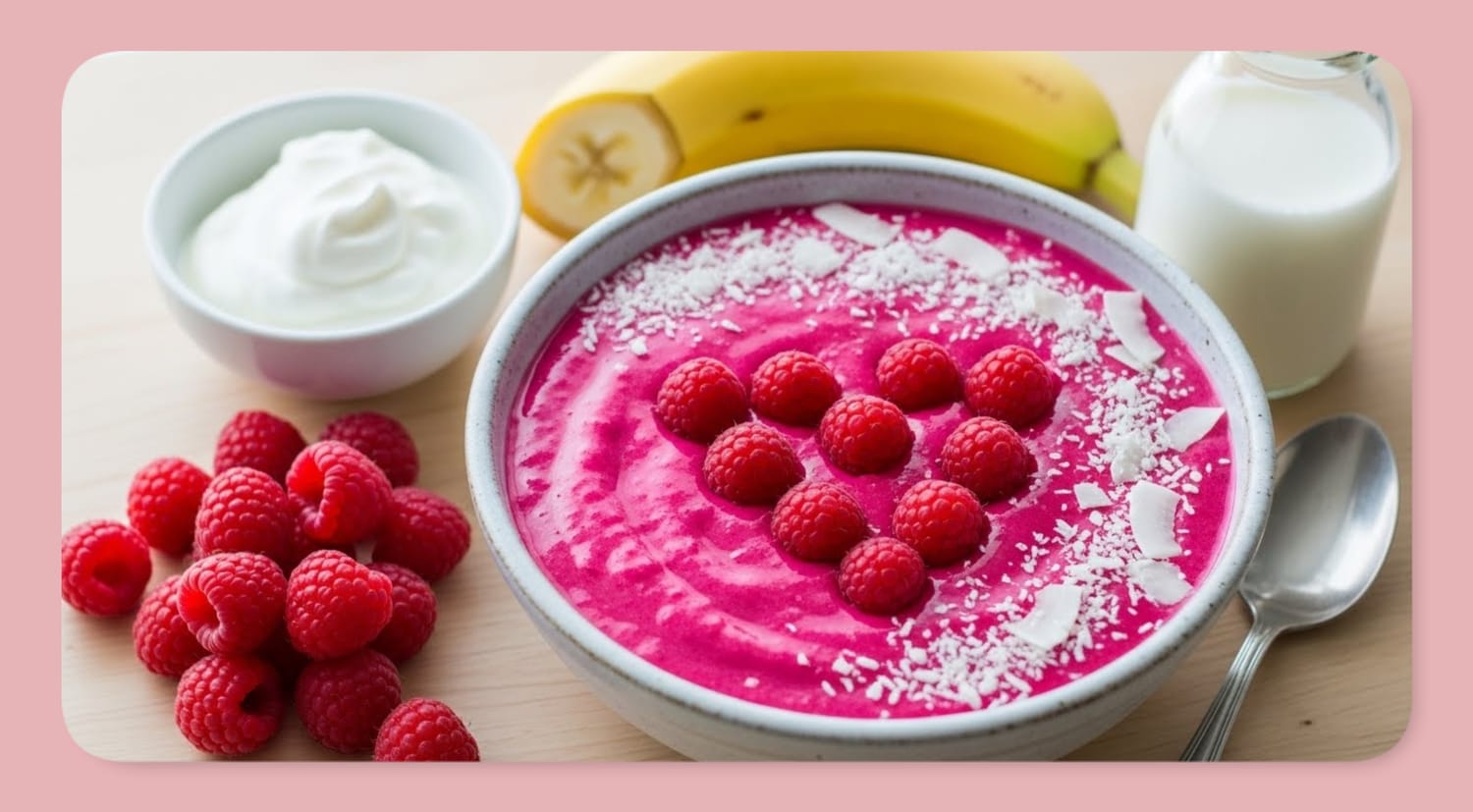
🍓 Gorgeous Fresh Raspberry Smoothie Bowl: Pink Perfection
The first spoonful hits your taste buds like a burst of summer sunshine, sweet, tart, and impossibly creamy all at once. This fresh raspberry smoothie bowl transforms your ordinary breakfast routine into something that looks like it came from a trendy café, but takes just five minutes in your own kitchen.
The vibrant fuchsia-pink color is almost too pretty to eat (almost), and unlike those disappointing store-bought smoothie bowls that cost $12 and leave you hungry an hour later, this one actually keeps you satisfied until lunch.
We've all been there: staring at a sad, watery smoothie that's more juice than substance, or choking down a chalky protein shake that tastes like cardboard. I spent months perfecting this recipe because I was tired of choosing between something that tasted good OR something that was actually nutritious. The breakthrough came when I discovered the perfect ratio of frozen raspberries to banana, enough sweetness to balance the tartness, but not so much that it masks that gorgeous berry flavor. The Greek yogurt adds a protein punch and silky texture that makes this feel indulgent rather than virtuous.
What makes this raspberry smoothie bowl different is how it delivers on every level. It's thick enough to hold your favorite toppings without turning into soup halfway through. It's naturally sweetened with just fruit, with no added sugars needed. It packs 18 grams of protein to keep you energized through your busiest mornings. And honestly? It's so photogenic that you'll want to snap a picture before diving in. This is the breakfast that makes you actually excited to get out of bed, whether you're meal-prepping for the week ahead or treating yourself to a slow weekend morning.
✨ What Makes This Smoothie Bowl Special
🥄 Restaurant-Quality Thickness: This isn't your average drinkable smoothie. It's specifically crafted to achieve that perfect soft-serve consistency that holds toppings beautifully and feels substantial enough to eat with a spoon. The secret is using frozen fruit and minimal liquid.
🍓 Balanced Sweet-Tart Flavor: Fresh raspberries can be mouth-puckeringly tart, but this recipe balances them perfectly with ripe banana and a touch of honey. You get that authentic berry flavor without the extreme tartness or artificial sweetness of most berry smoothies.
💪 Protein-Powered Satisfaction: With 18g of protein per serving from Greek yogurt, this bowl keeps you full for 3 to 4 hours, with no mid-morning snack emergency required. That's triple the protein of a typical fruit smoothie.
📸 Instagram-Worthy Pink Hue: That stunning natural pink color comes entirely from real raspberries. No food coloring, no beet juice, just gorgeous berry pigment. It photographs beautifully and looks as good as it tastes.
🎨 Customizable Canvas: Whether you're vegan, dairy-free, nut-free, or just picky about textures, this base recipe adapts easily to your needs without sacrificing taste or consistency.
📝 Fresh Raspberry Smoothie Bowl Recipe
🍓 Base Ingredients:
- 1½ cups frozen raspberries (200g) - provides that stunning pink color and bright flavor
- 1 medium banana, frozen (120g) - adds natural sweetness and creamy texture
- ½ cup plain Greek yogurt (120g) - for protein, thickness, and slight tang
- ¼ cup coconut milk (60ml) - just enough liquid for blending without making it runny
- 1 tablespoon honey (15ml) - optional, for extra sweetness if your berries are very tart
- 3 to 4 ice cubes - for extra thickness and frosty texture
💪 Nutritional Boosters (Optional):
- 1 scoop vanilla protein powder (adds 15 to 20g protein)
- 1 tablespoon chia seeds (omega-3s and fiber)
- 1 tablespoon ground flaxseed (additional fiber and healthy fats)
- Handful of spinach (won't affect the pink color or taste!)
🎨 Smoothie Bowl Toppings (Optional but Recommended):
- Fresh raspberries and blueberries
- Sliced strawberries
- Crunchy granola or grain-free granola
- Unsweetened coconut flakes
- Sliced banana
- Chia seeds
- Hemp hearts
- Drizzle of almond butter or cashew butter
- Fresh mint leaves for garnish
🔄 Blending Instructions & Technique
A. Preparation:
If you haven't pre-frozen your fruit, here's what you need to do ahead of time:
- Peel and slice your banana into 1-inch chunks, then freeze on a parchment-lined tray for at least 2 hours or overnight. Pre-frozen banana chunks blend more smoothly than whole frozen bananas.
- If using fresh raspberries, freeze them for at least 3 hours. Frozen fruit is essential for achieving that thick, spoonable consistency.
- Chill your serving bowl in the freezer for 10 minutes before serving. This keeps your smoothie bowl cold longer while you arrange toppings and take photos.
B. Blend Order & Layering:
1Add liquid first (¼ cup coconut milk) - This prevents your blender blades from jamming and ensures everything moves smoothly around the pitcher. Liquid on the bottom creates the vortex that pulls ingredients down toward the blades.
2Add Greek yogurt next - This acts as a bridge between liquid and frozen ingredients, helping everything blend without air pockets.
3Add frozen banana chunks - These go in before raspberries because they're denser and need more blending time.
4Top with frozen raspberries - Adding these last prevents them from getting crushed at the bottom before everything else blends.
5Add honey and ice cubes last - The ice cubes help push everything down into the blades as they blend.
C. Blending Technique:
- Start on low speed for 10 to 15 seconds to break up the frozen chunks. You'll hear a chunky, grinding sound. This is normal.
- Gradually increase to medium-high speed. Use your blender's tamper (that stick that comes with high-speed blenders) to push ingredients toward the blades. If you don't have a tamper, stop and scrape down the sides with a spatula every 15 seconds.
- Blend for 30 to 45 seconds total until completely smooth. You'll know it's ready when the motor sound becomes even and smooth rather than labored and chunky.
- Check consistency by stopping the blender: The mixture should be thick enough that it doesn't immediately settle back down. It should look like soft-serve ice cream or frozen yogurt, thick, glossy, and able to hold peaks.
🔧 Troubleshooting mid-blend:
- Too thick to blend? Add 1 to 2 tablespoons more coconut milk and blend again. Repeat if needed.
- Too thin? Add 2 to 3 more ice cubes or a small handful of frozen raspberries and blend briefly.
D. Finishing & Serving:
- Stop the blender and give it a final stir with a spatula to check consistency. Your spoon should stand upright when stuck into the mixture.
- Use a spatula to scoop the smoothie into your chilled bowl. Work quickly, as the mixture starts to soften at room temperature.
- Smooth the top with the back of your spoon to create a clean canvas for toppings.
- Arrange toppings immediately while the base is still thick and cold. Start with larger items like berries and granola, then sprinkle smaller items like seeds and coconut flakes.
- Drizzle nut butter in a zigzag pattern for that professional café look.
🥄 Texture & Consistency Guide
For Smoothie Bowls (What We're Making):
Perfect Bowl Consistency: Should be thick enough to eat with a spoon. Think soft-serve ice cream texture. Your toppings should sit on top rather than sinking in immediately.
The Secret: Use minimal liquid (only ¼ cup for this recipe). More frozen ingredients and less liquid is the key to bowl-worthy thickness.
The Spoon Test: Stick a spoon upright in the center of your mixture. If it stands up on its own, you've nailed it. If it falls over, it's too thin.
Adjusting Consistency:
Too Thin? Add:
- 3 to 4 more ice cubes (adds thickness without diluting flavor)
- ¼ cup more frozen raspberries (intensifies flavor and color)
- ¼ frozen banana (adds natural sweetness and creaminess)
- 2 tablespoons frozen cauliflower rice (won't affect taste, just adds thickness)
Too Thick? Add:
- 1 to 2 tablespoons coconut milk at a time
- 2 tablespoons coconut water (lighter option)
- 1 tablespoon regular water (if you don't want to change the flavor)
Ideal Consistency Indicator: When you scoop it with a spoon, it should hold its shape momentarily before very slowly settling. It shouldn't immediately puddle or flow like a liquid.
📊 Customization Matrix
Liquid Base Options:
| Type | Options | Best For |
|---|---|---|
| Dairy | Whole milk, 2% milk, Greek yogurt thinned with water | Creamiest texture, highest protein |
| Non-Dairy | Almond milk, coconut milk, oat milk, cashew milk | Dairy-free, vegan-friendly |
| Light | Coconut water, regular water, unsweetened almond milk | Lower calorie, lighter texture |
| Rich | Full-fat coconut milk, coconut cream | Extra creamy, tropical flavor |
Protein Boosters:
- Greek Yogurt: 120g = 17g protein (what this recipe uses)
- Vanilla Protein Powder: 1 scoop = 15 to 25g protein depending on brand
- Cottage Cheese: ½ cup = 14g protein (makes it extra thick and creamy)
- Silken Tofu: ½ cup = 10g protein (for vegan option)
- Hemp Hearts: 3 tablespoons = 10g protein
- Almond Butter: 2 tablespoons = 7g protein
Natural Sweeteners:
- Honey: 1 tablespoon (what this recipe uses) = liquid gold sweetness
- Medjool Dates: 2 to 3 pitted = caramel-like sweetness and extra fiber
- Maple Syrup: 1 tablespoon = subtle earthy sweetness
- Ripe Banana: adds sweetness naturally (already in this recipe)
- Vanilla Extract: ½ teaspoon = enhances perceived sweetness without adding sugar
Thickness Enhancers:
- Frozen Banana: ½ to 1 whole (already in this recipe)
- Avocado: ¼ medium = creamy, neutral flavor, healthy fats
- Frozen Cauliflower: ½ cup = invisible thickener with no flavor impact
- Raw Oats: ¼ cup = adds thickness and staying power
- Chia Seeds: 1 tablespoon soaked = gel-like thickness
Nutrient Boosters:
- Greens: 1 handful baby spinach, ½ cup frozen zucchini (won't affect pink color)
- Superfoods: 1 teaspoon acai powder (deeper purple color), 1 teaspoon maca powder (energy boost), ½ teaspoon spirulina
- Healthy Fats: ¼ avocado, 1 tablespoon almond butter, 1 teaspoon coconut oil
- Fiber: 1 tablespoon ground flaxseed, 1 tablespoon chia seeds, 2 tablespoons oat bran
👨🍳 Chef's Tips for Success
🍓 Invest in Frozen Fruit Quality: Not all frozen berries are created equal. Look for individually quick-frozen (IQF) raspberries without added sugar or syrup. Organic frozen berries often have better flavor and color. Avoid bags with visible ice crystals or freezer burn.
🍌 The Banana Ripeness Sweet Spot: Use bananas that have brown spots on the peel before freezing. They're at peak sweetness. Under-ripe bananas make your smoothie bowl taste starchy and require more added sweetener. Over-ripe bananas (completely brown) can overpower the raspberry flavor.
⏱️ Don't Over-Blend: Once your mixture is smooth, stop immediately. Over-blending incorporates too much air, making your bowl foamy rather than creamy, and the friction from the blades can warm it up, making it less thick.
🥄 The 2-Tablespoon Rule: When adjusting consistency, always add liquid in 2-tablespoon increments. It's much easier to thin a smoothie bowl than to thicken it back up. You can always add more. You can't take it back out.
📦 Make-Ahead Freezer Packs: Pre-portion your frozen raspberries, banana chunks, and any optional add-ins (chia seeds, protein powder) into individual freezer bags. Label each bag with "Add ¼ cup coconut milk + ½ cup Greek yogurt" so you don't have to think in the morning. These keep for up to 3 months.
🥛 Room Temperature Greek Yogurt Blends Better: If you have time, let your Greek yogurt sit out for 10 minutes before blending. Cold-from-the-fridge yogurt can make your blender work harder and creates a less smooth result, especially in standard blenders.
⚡ Best Consumed Immediately: Smoothie bowls don't store well once blended. The texture changes as it sits, becoming icy and separated. If you must prep ahead, assemble your freezer packs and blend fresh each morning. It only takes 5 minutes.
📈 Nutritional Benefits Section
This gorgeous pink bowl isn't just Instagram-worthy. It's genuinely one of the most nutritious breakfasts you can eat. Unlike store-bought smoothie bowls that can pack 50+ grams of sugar and cost $12 to $15, this homemade version gives you complete control over ingredients while delivering serious nutrition. Here's why this combination of raspberries, banana, and Greek yogurt is a health powerhouse.
Macro Breakdown (Per Serving):
Sugar: 28g (all natural from fruit, no added sugars)
For Comparison: A typical coffee shop smoothie bowl contains 450 to 600 calories with only 5 to 8g protein and often includes added sugars, honey, or fruit juice concentrates that spike blood sugar.
6 Key Health Benefits:
💪 High Protein Content for Sustained Energy: With 18g of protein per serving, this bowl keeps you satisfied for 3 to 4 hours, unlike typical fruit-only smoothies that leave you hungry within an hour. Greek yogurt provides complete protein with all essential amino acids, supporting muscle recovery, metabolism, and stable blood sugar levels throughout your morning.
🌾 Fiber-Rich Ingredients for Digestive Health: Raspberries are one of the highest-fiber fruits available, delivering 8g of fiber per cup. Combined with banana, you're getting 12g total fiber. That's 48% of your daily recommended intake. This fiber promotes healthy digestion, supports gut bacteria, and helps you feel full longer.
🛡️ Antioxidants from Raspberries for Immune Support: Raspberries are loaded with anthocyanins (the compounds that give them that gorgeous pink color), vitamin C, and ellagic acid. These antioxidants combat inflammation, support immune function, and protect your cells from oxidative stress. One cup of raspberries provides 54% of your daily vitamin C needs.
💧 Natural Electrolytes for Hydration: Coconut milk provides natural electrolytes including potassium, magnesium, and calcium. Bananas add even more potassium (422mg per banana). These electrolytes support proper hydration, nerve function, and muscle recovery, making this bowl perfect after morning workouts.
🦠 Probiotics from Greek Yogurt for Gut Health: Greek yogurt contains beneficial live cultures that support a healthy gut microbiome. These probiotics aid digestion, support immune function, and may improve mood and mental clarity. Choose yogurt labeled "contains live and active cultures" for maximum benefit.
🦴 Bone-Building Calcium and Vitamin K: Greek yogurt provides approximately 20% of your daily calcium needs, while raspberries offer vitamin K. Both are essential for bone health. This combination is particularly important for women concerned about bone density.
Why This Nutritional Profile Matters: This smoothie bowl hits the ideal breakfast macronutrient ratio for sustained energy: adequate protein to keep you full, complex carbohydrates from whole fruit (not juice) for steady energy release, and healthy fats for nutrient absorption. The high fiber content slows digestion, preventing blood sugar spikes and crashes that lead to mid-morning energy slumps and sugar cravings.
🔌 Best Blender Types & Equipment
You don't need professional kitchen equipment to make an amazing smoothie bowl, but understanding what works best can help you achieve perfect results every time.
High-Speed Blenders (Ideal):
Best Brands: Vitamix, Blendtec, Ninja Professional
Power: 1000+ watts
Price Range: $200 to $500
These powerhouses create the smoothest, creamiest texture and handle frozen ingredients effortlessly. The tamper tool included with most high-speed blenders is game-changing for smoothie bowls. It pushes ingredients down into the blades while the motor runs, eliminating air pockets. If you make smoothie bowls regularly (3+ times per week), a high-speed blender pays for itself in avoided café purchases within a few months.
Best For: Daily smoothie bowl makers, anyone who wants professional-quality texture, making nut butters and frozen desserts too.
Standard Blenders (Works Great):
Best Brands: KitchenAid, Hamilton Beach, Oster
Power: 500 to 900 watts
Price Range: $50 to $150
Most kitchen blenders handle this recipe beautifully with a few adjustments. Cut your frozen banana into smaller chunks (½-inch pieces instead of 1-inch), and let frozen fruit sit at room temperature for 3 to 5 minutes before blending. You'll need to stop and scrape down the sides more frequently (every 15 seconds), but the final result is still delicious and thick.
Pro Tip: If your blender is struggling, add liquid in very small amounts (1 tablespoon at a time) until the mixture starts moving, then stop adding liquid. Patience is key. It might take 60 to 90 seconds of blending versus 30 seconds in a high-speed machine.
Personal/Bullet Blenders (Can Work):
Best Brands: NutriBullet, Magic Bullet, Ninja Personal
Power: 600 to 900 watts
Price Range: $40 to $100
Personal blenders can make smoothie bowls, but require extra attention. The smaller container means you'll likely need to make a smaller portion (use ¾ of this recipe) or blend in two batches. The key is not overfilling. Never fill past the MAX line, as frozen ingredients need room to move.
Important Tips:
- Layer liquid and yogurt on bottom, frozen fruit on top
- Pulse 10 to 15 times before continuous blending to break up chunks
- If it's not moving, add 1 tablespoon liquid and try again
- Blend in 15-second intervals to prevent motor burnout
No Blender? Alternative Options:
Immersion/Stick Blender: Can work for non-frozen or partially-thawed smoothies in a deep container, but won't achieve thick bowl consistency with fully frozen ingredients.
Food Processor: Works in a pinch but won't give you the smooth, creamy texture. The result will be more granita-like (icy and grainy) rather than soft-serve smooth. Better than nothing for a quick breakfast, though!
Other Helpful Tools:
- Reusable Stainless Steel or Glass Straws: Perfect for sipping any leftovers or making this as a drinkable smoothie. Wide straws (10mm diameter) work best for thick smoothies.
- Shallow Bowls: A wide, shallow bowl (like a pasta bowl) is ideal for smoothie bowls. It provides more surface area for pretty topping arrangements.
- Offset Spatula: Makes it easy to scrape every last bit from your blender and smooth the top of your bowl for professional presentation.
- Ice Cube Trays: Freeze leftover smoothie mixture in cubes. Blend a few cubes with fresh yogurt and milk for a quick smoothie another day.
- Small Prep Bowls: Organize your toppings in small bowls before assembling. This makes the process faster and your final presentation prettier.
📦 Storage, Prep & Serving
Immediate Serving (Best Option):
Smoothie bowls are absolutely best enjoyed within 10 to 15 minutes of blending. This is when the texture is at its peak, thick, creamy, and cold, and the color is most vibrant. The antioxidants in raspberries start oxidizing immediately upon exposure to air, which can dull that gorgeous pink color slightly over time.
Serving Tips:
- Use a bowl that's been chilled in the freezer for 10 minutes
- Work quickly when adding toppings so the base stays cold and thick
- If taking photos, arrange toppings immediately and shoot within 5 minutes before everything starts softening
Short-Term Storage (Not Ideal But Workable):
Refrigerator: Store blended smoothie bowl in an airtight container for up to 24 hours maximum. Be aware that separation is completely normal. The liquid will settle to the bottom while solids rise to the top. The color will oxidize to a darker, more muted pink.
Before Serving: Stir vigorously with a spoon (don't shake in the container as this creates too much air). You may need to add 1 to 2 tablespoons of liquid and briefly re-blend to restore the creamy texture. The result won't be quite as thick as fresh, but it's still perfectly edible.
Reality Check: Honestly, pre-blended smoothie bowls stored in the fridge are a distant second to fresh. If meal prep is essential, use the freezer pack method below instead.
Make-Ahead Smoothie Freezer Packs (Game-Changer):
This is the secret weapon for busy mornings. All the convenience of meal prep with the quality of fresh-blended.
How to Make Freezer Packs:
- Label a quart-size freezer bag with: "Raspberry Smoothie Bowl - Add ¼ cup coconut milk + ½ cup Greek yogurt"
- Add to each bag:
- 1½ cups frozen raspberries (or measure fresh and freeze flat)
- 1 frozen banana, pre-chunked
- 1 tablespoon honey or 2 pitted dates
- 1 tablespoon chia seeds (optional)
- 1 scoop protein powder (optional)
- Squeeze out excess air, seal, and freeze flat for easy storage
- Stack multiple bags in freezer. They take up minimal space
Morning Routine (5 Minutes Total):
- Grab one freezer pack
- Dump contents into blender
- Add ¼ cup coconut milk and ½ cup Greek yogurt
- Blend and serve
Storage Time: These packs keep for up to 3 months in the freezer. The ingredients are already frozen, so there's no quality loss. This is infinitely better than storing pre-blended smoothies.
Freezing Finished Smoothies (Emergency Backup):
If you have leftover blended smoothie or accidentally made too much, you can freeze it:
Ice Cube Method:
- Pour into ice cube trays
- Freeze until solid (4 to 6 hours)
- Pop out cubes and store in freezer bag for up to 1 month
- Use 4 to 6 cubes blended with ½ cup liquid for a quick smoothie
Freezer Bag Method:
- Pour into freezer-safe bag, press flat
- Freeze for up to 1 month
- Thaw overnight in refrigerator
- Re-blend briefly with a splash of milk to restore texture
Honest Assessment: The texture will never be quite the same after freezing and thawing. It's better than food waste, but not ideal. Use this method only when necessary.
Meal Prep Benefits:
⏰ Time Savings: Making freezer packs once a week saves 10 to 15 minutes every morning. You're only portioning and bagging, not washing cutting boards, measuring, and cleaning up multiple ingredient containers each day.
🗑️ Reduced Food Waste: Pre-portioning ensures you use exactly what you need. No more forgotten bananas turning brown on the counter or bags of berries developing freezer burn in the back of your freezer.
🎯 Consistency: Each pack is pre-measured, so your smoothie bowl turns out perfect every time. No guessing on ratios or ending up with too-thin or too-thick results.
💵 Budget-Friendly: Buy berries in bulk when they're on sale, make multiple packs, and you've got healthy breakfasts for pennies compared to the $12 café version.
🍽️ Serving Suggestions & Occasions
Best Times to Enjoy:
☀️ Breakfast or Brunch (Most Popular): This smoothie bowl is filling enough to carry you through to lunch without any mid-morning crashes. The protein and fiber combo provides steady energy for your morning, whether you're heading to work, homeschooling kids, or tackling weekend errands.
🏋️ Post-Workout Recovery (Within 30 to 60 Minutes): The natural sugars from fruit replenish glycogen stores while Greek yogurt provides muscle-repairing protein. Add a scoop of protein powder for an extra 20g protein if you've done an intense workout.
⚡ Afternoon Energy Boost (2 to 4 PM): When that afternoon slump hits and you're tempted by the vending machine, this bowl offers sustained energy without the sugar crash. The protein prevents the 4 PM energy nosedive that comes from grabbing cookies or candy.
🍨 Healthy Dessert Alternative (Evening Treat): Craving something sweet after dinner? This feels indulgent enough to satisfy dessert cravings while actually being nutritious. The cold, creamy texture hits that ice cream craving without the guilt.
🥳 Weekend Brunch Centerpiece: Make this the star of your weekend brunch spread. Set up a topping bar with granola, berries, nuts, and nut butters so everyone can customize their own bowl. Kids especially love this.
Perfect Pairings:
For a Light Breakfast: Pair with a slice of whole grain toast with avocado or almond butter, or a handful of raw almonds for additional healthy fats and staying power.
For Post-Workout: Add a hard-boiled egg or a small protein muffin alongside to increase the protein content even further.
As a Complete Meal: Top generously with granola (½ cup), sliced banana, a tablespoon of almond butter, and hemp hearts. This combination adds healthy fats, complex carbs, and extra protein to create a 500-calorie balanced meal that keeps you full for 4 to 5 hours.
For Kids: Serve in a smaller bowl with fun toppings they can arrange themselves. Mini chocolate chips (just a sprinkle!), animal-shaped graham crackers, or alphabet cereal makes it feel special.
Make It a Complete Meal:
If you want this smoothie bowl to serve as your sole breakfast or lunch, make these additions:
Boost the Protein (aim for 25 to 30g total):
- Add 1 scoop protein powder to the base (adds 15 to 20g)
- OR use 2 tablespoons almond butter as a topping (adds 7g)
- OR add 2 tablespoons hemp hearts as topping (adds 6g)
Include Healthy Fats (for satiety):
- Drizzle 1 tablespoon nut butter on top
- Sprinkle 1 tablespoon chia seeds or hemp hearts
- Add ¼ sliced avocado to the blend (surprisingly delicious and completely undetectable!)
Add Complex Carbs (for lasting energy):
- Top with ⅓ to ½ cup granola
- Include ¼ cup raw oats in the blend
- Serve with a slice of whole grain toast on the side
The Complete Meal Formula: Base smoothie bowl + ½ cup granola + 2 tablespoons almond butter + fresh berries = approximately 550 calories, 30g protein, 15g healthy fats, and enough fiber to keep you full until your next meal.
💭 Final Thoughts
This gorgeous raspberry smoothie bowl proves that healthy eating doesn't have to be bland, boring, or time-consuming. In just five minutes (literally the time it takes to brew coffee), you've got a breakfast that looks like it came from a $15 brunch café, tastes like a dessert, and actually fuels your body with the nutrition it needs to thrive.
What I love most about this recipe is how it meets you where you are. Running out the door with kids? Make a freezer pack on Sunday and blend it in 3 minutes on Tuesday morning. Want to slow down and enjoy a mindful weekend breakfast? Take your time arranging those toppings in perfect Instagram-worthy rows. Need serious post-workout protein? Add a scoop of protein powder and you're at 35+ grams. Feeding a picky toddler who "doesn't like healthy food"? The natural sweetness and fun pink color make them forget they're eating something nutritious.
The customization options in this recipe mean you can make this bowl your own. Swap almond milk for the coconut milk. Use strawberries if raspberries aren't your thing. Top it with whatever makes you excited to eat it. The foundation is solid (the perfect ratio of fruit to yogurt to liquid that creates that thick, spoonable texture), but the details are yours to play with.
Your mornings just got easier AND healthier, without sacrificing an ounce of deliciousness. This is the kind of breakfast that makes you actually look forward to waking up, and there's no higher praise than that.
❓ Frequently Asked Questions
Can I use fresh raspberries instead of frozen?
You can, but you'll need to add ice cubes to achieve the thick, spoonable consistency. Use 1 cup fresh raspberries plus 1 cup ice cubes instead of 1½ cups frozen. Keep in mind that fresh berries won't create quite the same ultra-smooth texture. You may notice tiny seeds more prominently. For best results, buy fresh raspberries when they're in season and on sale, then freeze them yourself in a single layer before storing in bags.
Why is my smoothie bowl too watery and thin?
The most common culprit is too much liquid. Smoothie bowls need much less liquid than drinkable smoothies. This recipe uses only ¼ cup. If you've already blended it and it's too thin, add 3 to 4 ice cubes, ¼ cup more frozen raspberries, or ¼ frozen banana and blend again. For next time, start with even less liquid (3 tablespoons) and add more only if absolutely needed. Also ensure your fruit is completely frozen. Partially thawed fruit creates a thinner consistency.
How can I make this vegan and dairy-free?
Absolutely! Replace the Greek yogurt with a plant-based alternative. The best options are coconut yogurt (Cocojune or Culina brands are thick and creamy), cashew yogurt, or silken tofu. Silken tofu is surprisingly good here. It creates incredible thickness and has a neutral flavor. Use ½ cup silken tofu plus 1 scoop vanilla plant-based protein powder to match the protein content of Greek yogurt. Everything else in the recipe is already vegan-friendly.
My smoothie separated in the fridge. Is it still good to eat?
Yes, completely safe to eat! Separation is totally normal when smoothies sit. The heavier liquids sink to the bottom while the fruit solids float to the top. Just stir vigorously or briefly re-blend with a splash of milk to reincorporate everything. The color may have oxidized slightly (turning a deeper, duller pink), but the taste and nutrition remain intact. It just won't be as thick as when freshly blended.
Do I need a high-speed blender like a Vitamix?
No, you don't! While high-speed blenders make the process faster and easier, regular blenders work perfectly fine with a few adjustments. Let your frozen fruit sit at room temperature for 3 to 5 minutes to slightly soften, cut your banana into smaller chunks, and add liquid first. You'll need to stop and scrape down the sides more often (every 15 seconds), and blending will take 60 to 90 seconds instead of 30, but the final result is just as delicious. Be patient and don't rush the process.
How much protein does this smoothie bowl have?
This base recipe contains 18g of protein from the Greek yogurt alone. That's triple the protein of a typical fruit-only smoothie. For comparison, one egg has 6g of protein, so this bowl gives you the equivalent of three eggs. If you want even more protein (ideal for post-workout or meal replacement), add a scoop of protein powder (adds 15 to 20g) or top with 2 tablespoons of almond butter (adds 7g protein). You can easily get this bowl to 35 to 40g protein with simple additions.
Can I make this the night before for a grab-and-go breakfast?
Honestly, it's not ideal. The texture changes significantly overnight. It becomes icy, separates, and loses that creamy soft-serve consistency. Instead, I strongly recommend making freezer packs: portion all your ingredients (frozen fruit, banana chunks, protein powder, seeds) into labeled freezer bags. In the morning, dump the contents into your blender with yogurt and liquid, blend for 45 seconds, and you're done. It takes 5 minutes total and tastes fresh-made because it IS fresh-made.
Is this actually filling enough for breakfast, or will I be hungry in an hour?
This is genuinely filling for 3 to 4 hours, and here's why: the combination of 18g protein, 12g fiber, and healthy fats from coconut milk creates real satiety, not the blood sugar spike-and-crash you get from juice or sugary cereal. The frozen fruit takes longer to digest, and the protein slows everything down even more. If you want it to be even more substantial, add ½ cup granola on top (adds 5g protein and complex carbs) or blend in ¼ cup oats. Personally, I make this at 7 AM and don't think about food again until noon.
Can my kids eat this? Is it too tart for picky eaters?
Kids absolutely love this! The banana and honey balance the tartness perfectly, so it doesn't have that mouth-puckering sourness of plain raspberries. The bright pink color makes it fun and appealing. My testing showed that kids respond really well to the visual appeal. If you have an especially picky eater, start with half raspberries and half strawberries for a milder berry flavor, or add an extra half banana for more sweetness. Let them help arrange the toppings. Giving them ownership makes them much more likely to eat and enjoy it.
What toppings do you recommend for the best taste and texture?
My go-to combination is: ⅓ cup crunchy granola (for textural contrast), fresh raspberries and blueberries (for extra berry flavor), sliced banana (adds natural sweetness), a drizzle of almond butter (healthy fats and makes it more filling), and a sprinkle of unsweetened coconut flakes (adds tropical vibes). The key is combining different textures: creamy base, crunchy granola, juicy fresh fruit, and smooth nut butter. Don't skip the granola. The crunch is essential for making it feel like a complete meal rather than just a snack.
📖 Glossary of Key Terms
Base Liquid: The liquid foundation of your smoothie that determines final consistency. For smoothie bowls, use minimal liquid (¼ cup or less) to achieve thick, spoonable texture. Common options include dairy milk, non-dairy milk, coconut water, or regular water.
Boost/Booster: Nutritional add-ins like protein powder, chia seeds, hemp hearts, or superfoods that enhance the health benefits of your smoothie bowl without significantly changing the taste or texture. These are optional but recommended for maximizing nutrition.
Frozen vs. Fresh Fruit: Frozen fruit is essential for smoothie bowls because it creates that thick, ice-cream-like consistency without diluting flavor with ice cubes. Fresh fruit requires added ice, which waters down flavor and creates a less creamy texture.
Greek Yogurt: Thick, strained yogurt with approximately double the protein of regular yogurt (17 to 20g per cup vs. 8 to 9g). The straining process removes excess whey, creating a thicker consistency perfect for smoothie bowls. Provides creamy texture, protein, probiotics, and a subtle tang that balances fruit sweetness.
High-Speed Blender: Professional-grade blender with 1000+ watts of power that pulverizes frozen ingredients into ultra-smooth consistency. Brands include Vitamix, Blendtec, and Ninja Professional. Features a tamper tool for pushing ingredients toward blades without stopping the motor, which is essential for perfect smoothie bowls.
IQF (Individually Quick Frozen): Commercial freezing method where fruits are frozen separately before packaging, preventing them from clumping together in a solid block. IQF berries are easier to portion and blend more smoothly than home-frozen fruit.
Macro Breakdown: Nutritional information showing the three macronutrients: protein, carbohydrates, and fats. Understanding macros helps you balance meals for energy, satiety, and specific health goals like muscle building or weight management.
Oxidation: Natural process where antioxidants in fruit react with oxygen, causing color changes (pink raspberries turn duller) and slight nutrient loss. This is why smoothie bowls are best consumed immediately after blending. The vibrant color fades within hours.
Smoothie Bowl: Thick smoothie eaten with a spoon rather than drunk through a straw, typically topped with granola, fresh fruit, nuts, and seeds. Requires less liquid and more frozen ingredients than drinkable smoothies to achieve soft-serve ice cream consistency.
Smoothie Pack: Pre-portioned freezer bag containing all smoothie ingredients except liquid and yogurt. Enables meal prep convenience while maintaining fresh-blended quality. Simply dump frozen contents into blender, add fresh liquid ingredients, and blend.
Soft-Serve Consistency: The ideal texture for smoothie bowls. Thick enough to hold toppings without them sinking, smooth like ice cream, and spoonable rather than drinkable. Achieved through minimal liquid, maximum frozen fruit, and proper blending technique.
Tamper: Long stick tool included with high-speed blenders that pushes ingredients toward blades while the motor runs. Essential for smoothie bowls because frozen ingredients create air pockets. The tamper eliminates these without stopping to scrape sides.
🎉 Share Your Success!
I'd genuinely love to know: what's your go-to morning routine? Are you the type who hits snooze three times and needs breakfast in under 5 minutes, or do you savor slow weekend mornings with elaborate topping arrangements? Either way, this raspberry smoothie bowl fits into your life.
Have you experimented with any creative topping combinations? I'm always looking for new ideas. One reader told me she adds a sprinkle of crushed freeze-dried raspberries on top for extra intense berry flavor and gorgeous color. Another swears by adding a small handful of dark chocolate chips (mini ones work best!). I want to hear what works for you!
If you make this recipe, I'd be thrilled to see your creation! Drop a comment below and let me know how your smoothie bowl turned out. Did you customize it? What toppings did you choose? Any tips or tricks you discovered along the way?
Save this recipe to your Pinterest smoothie board so you can find it again on those busy mornings when you need breakfast inspiration fast! Follow me on Pinterest for more healthy breakfast recipes, meal prep ideas, and nutrition tips that actually fit into real life.
And if you loved this recipe, share it with a friend who's always rushing out the door without breakfast, or tag me in your smoothie bowl photos. I feature my favorites and love celebrating your healthy eating wins! Your pink perfection bowl deserves to be seen.
Here's to easier mornings, happier taste buds, and that gorgeous pop of pink that makes breakfast feel special. Now go blend something beautiful! 🍓💕
More Delicious Smoothies to Try
Affiliate Disclosure
This page may contain affiliate links. This means that if you click on one of these links and make a purchase, I may receive a small commission at no additional cost to you. This helps support the blog and allows me to continue creating free content. I only recommend products or services that I use personally and believe will add value to my readers. Your support is appreciated!
Created with ©simplyhealthynews