
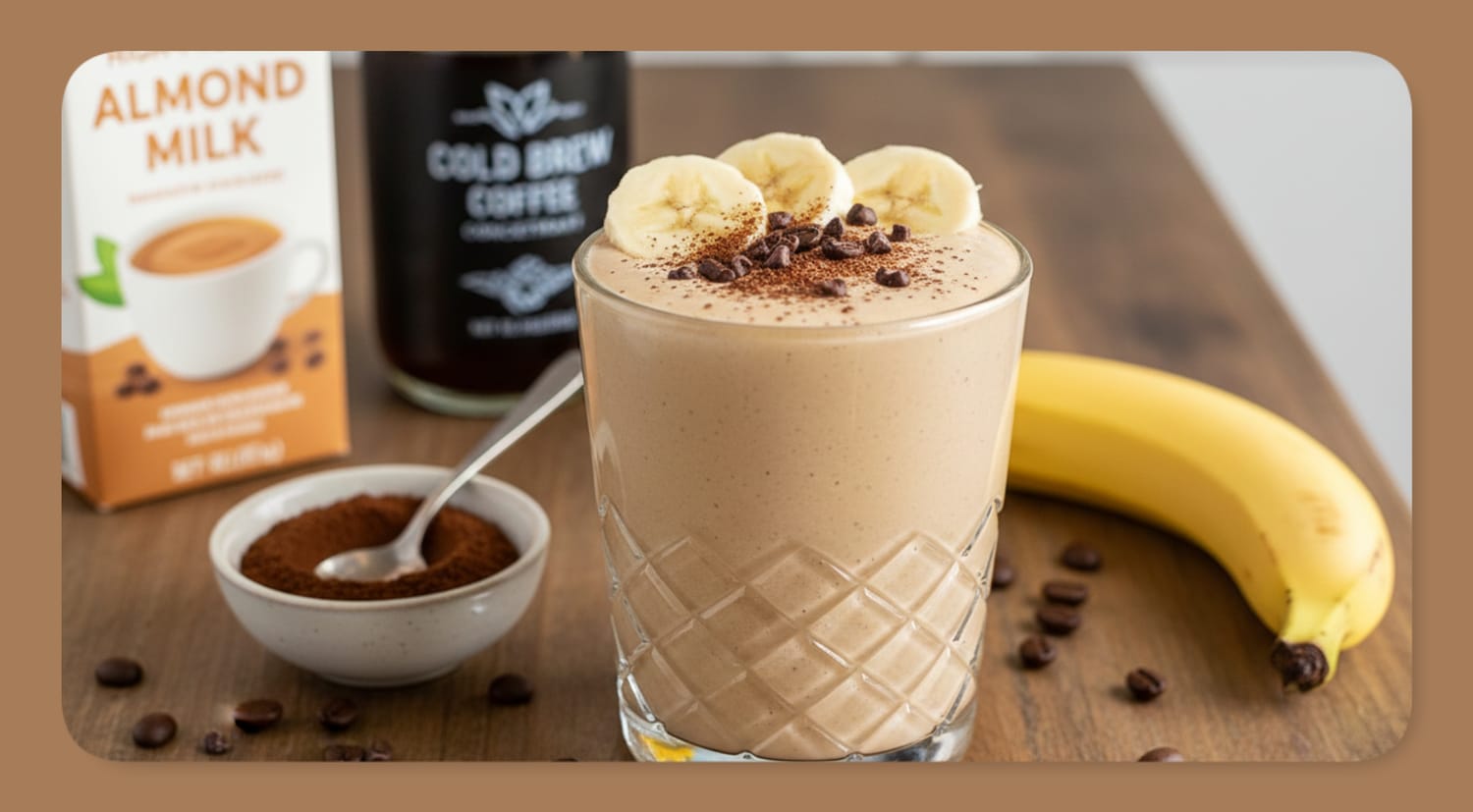
Energizing High-Protein Coffee Smoothie: Your Perfect Breakfast Fuel
That first sip of cold, creamy coffee blended with velvety banana and a protein punch, it's the morning miracle that replaces your usual caffeine-and-toast routine with something that actually fuels your entire morning. This high-protein coffee smoothie delivers the energy boost you crave with the sustained fullness you need, all in one gorgeous glass that tastes like your favorite café drink but powers you through until lunch.
We've all been there: grabbing a sugary coffee drink and a muffin on the way out the door, only to crash hard by 10 AM. I spent months perfecting this recipe after realizing my morning coffee ritual was leaving me hungry, jittery, and reaching for snacks before noon. The solution? Transforming that beloved coffee into a legitimate meal that combines caffeine's energizing effects with protein's staying power and natural ingredients that taste indulgent without the sugar crash.
This isn't just another protein shake with coffee thrown in. It's a carefully balanced blend that tastes like a frozen mocha from your favorite coffee shop, but with 25+ grams of protein, natural energy from real coffee, and none of the artificial sweeteners or mysterious powders. Whether you're rushing to the gym, heading to work, or just need to feed yourself and get out the door, this smoothie transforms your morning coffee from a beverage into a complete, energizing breakfast that keeps you satisfied and focused for hours.
What Makes This Coffee Smoothie Special
- Genuine Coffee Shop Taste: Rich, cold brew coffee flavor with natural sweetness from banana, no artificial coffee flavoring or overwhelming protein powder taste that makes you grimace with every sip
- Seriously Filling Protein: Packs 25-28g of protein per serving from quality protein powder and Greek yogurt, keeping you full for 4+ hours (unlike that 5g protein breakfast bar you usually grab)
- Perfectly Creamy Texture: Frozen banana creates a thick, milkshake-like consistency that's luxurious and satisfying, not thin and watery like most protein smoothies
- Smart Caffeine Boost: Contains the same caffeine as your morning coffee but releases more gradually thanks to the protein and healthy fats, so no mid-morning crash
- Ready in 3 Minutes: Faster than waiting in the drive-through line, and you control exactly what goes in your body
Ingredients
Base Ingredients
- 1 cup cold brew coffee (240ml) - stronger flavor than regular brewed coffee, less acidic
- 1 large banana, frozen (120g) - provides natural sweetness and creamy texture
- 1 scoop vanilla or chocolate protein powder (30g, ~20g protein) - I prefer vanilla for versatility
- 1/2 cup plain Greek yogurt (120g) - adds 12g protein plus tangy balance
- 1/2 cup unsweetened almond milk (120ml) - keeps it light and dairy-free friendly
- 1/2 cup ice cubes - for extra thickness and chill
- 1 to 2 teaspoons honey or maple syrup (optional) - only if you prefer sweeter coffee drinks
Flavor Boosters (Optional)
- 1 tablespoon almond butter or peanut butter - adds healthy fats and nutty richness
- 1 teaspoon vanilla extract - enhances the coffee shop mocha vibe
- 1 tablespoon cacao powder - for a deeper mocha flavor
- Pinch of cinnamon - warming spice that complements coffee beautifully
- 1/4 teaspoon instant espresso powder - for extra coffee intensity
Nutritional Boosters (Optional)
- 1 tablespoon chia seeds - adds 2g protein, omega-3s, and thickness
- 1 tablespoon ground flaxseed - fiber and healthy fats
- 1/4 avocado - makes it ultra-creamy without affecting coffee flavor
- Handful of spinach - I promise you won't taste it, adds vitamins and minerals
Topping Suggestions (Optional)
- Whipped cream or coconut whipped cream
- Cacao nibs
- Coffee beans (just for decoration and photo appeal)
- Drizzle of chocolate or caramel sauce
- Crushed ice on top
Blending Instructions & Technique
A. Preparation
Freeze Your Banana in Advance
The night before (or whenever you buy bananas), peel ripe bananas, break them into chunks, and freeze in a single layer on a parchment-lined tray. Once frozen solid (2 to 3 hours), transfer to a freezer bag. This prevents rock-hard banana chunks that strain your blender and ensures even blending.
Brew Coffee Ahead
Cold brew is ideal because it's naturally sweeter and less acidic than hot brewed coffee that's been chilled. Make a batch on Sunday and store it in the fridge for the week. If you only have hot coffee, brew it strong, let it cool completely, then refrigerate. Warm coffee will make your smoothie thin and frothy rather than thick and creamy.
Room Temperature Protein Powder
If your protein powder has been in the fridge, let it sit at room temperature for 10 minutes. Cold protein powder can clump when it hits cold liquid.
B. Blend Order & Layering
- Add cold brew coffee first (prevents the blades from running dry and helps everything blend smoothly from the start)
- Add Greek yogurt and almond milk (liquids create the vortex that pulls frozen ingredients down into the blades)
- Add protein powder and any powdered boosters (cacao, cinnamon, instant espresso). Adding these before frozen ingredients prevents them from sticking to the sides unblended
- Add frozen banana chunks (frozen ingredients go in last so they don't block the liquid from reaching the blades)
- Top with ice cubes (these help push everything down while blending)
Why This Order Matters
Starting with liquids prevents air pockets that cause uneven blending. Adding frozen ingredients last (rather than first) means they gradually get pulled into the vortex instead of sitting at the bottom in a frozen clump.
C. Blending Technique
- Start on low speed for 10 seconds to break down the frozen banana without overwhelming the motor
- Gradually increase to high speed over the next 10 seconds. You'll hear the motor sound change from struggling to smooth
- Blend on high for 30 to 45 seconds total until completely smooth with no banana chunks (you'll see the mixture become uniformly light brown rather than streaky)
- Stop and check consistency: Remove the lid and look at the texture. It should coat the back of a spoon and hold its shape briefly before slowly leveling out
Texture Checkpoints
- Perfect Consistency: Thick enough to need a spoon push through a straw, but not so thick it won't pour
- Color Check: Should be a rich, creamy tan or light mocha color (not pale beige)
- Sound Check: When the blender motor sounds smooth and consistent (not laboring or pulsing), it's ready
D. Troubleshooting During Blending
Too Thick? Stop the blender, add 2 to 3 tablespoons more cold brew or almond milk, blend for another 15 seconds. Repeat if needed.
Too Thin? Add 2 to 3 more ice cubes or a small handful of frozen cauliflower rice (this won't affect taste but adds thickness). Blend for another 20 seconds.
Protein Powder Clumps? This usually happens if you add protein powder directly to frozen ingredients. Stop, use a spoon to break up clumps, and blend on low for 10 seconds, then increase speed.
Won't Blend/Air Pocket? Turn off the blender, use a spoon or spatula to push ingredients down from the sides toward the blades, add a splash more liquid, and restart on low speed.
E. Finishing & Serving
- Do a final taste test: Not sweet enough? Add 1 teaspoon honey and pulse for 5 seconds. Want more coffee punch? Add 1/4 teaspoon instant espresso and blend briefly.
- Pour immediately into a chilled glass (or if topping, into a chilled bowl). The longer it sits, the more it separates
- Optional finishing touches: Drizzle with a tiny bit of chocolate sauce, sprinkle with cacao nibs, or add a few coffee beans on top for that café aesthetic
- Grab a thick straw or spoon and enjoy right away for best texture and temperature
Texture & Consistency Guide
For Drinkable Coffee Smoothies
Too Thin? Add one of these thickness boosters:
- 1/4 cup more frozen banana (best option) - adds creaminess and natural sweetness
- 3 to 4 more ice cubes - adds volume without changing flavor
- 2 tablespoons rolled oats - makes it heartier and adds fiber
- 1/4 avocado - ultra-creamy texture, no avocado taste
- 1/4 cup frozen cauliflower rice - secret weapon, zero taste, great thickness
Too Thick? Add liquid gradually:
- Start with 2 tablespoons more cold brew coffee (maintains flavor)
- Or add 2 tablespoons almond milk (keeps it lighter)
- Or add 2 tablespoons regular water (won't dilute coffee flavor as much as you'd think)
- Blend for 10 seconds after each addition. You can always add more
Ideal Consistency Indicators
Perfect Drinkable Texture:
- Flows through a thick reusable straw with gentle suction
- Leaves a coating on the glass when you swirl it
- Has body and substance (not watery like iced coffee)
- When poured, it ribbons from the blender rather than splashing
Testing Method: Dip a spoon in and lift it out. The smoothie should coat the back of the spoon and slowly drip off in a thick stream, not run off immediately like milk.
For Coffee Smoothie Bowls (Thicker Version)
Perfect Bowl Consistency:
- Thick enough that a spoon stands upright in the center without falling over
- Holds granola and toppings on the surface without them sinking
- Has a soft-serve ice cream texture, scoopable but not rock hard
Secret to Bowl Thickness:
- Use only 1/2 cup total liquid (coffee + almond milk combined)
- Add an extra 1/2 frozen banana
- Reduce or skip the ice cubes
- Use a tamper (if your blender has one) to push ingredients toward the blades without adding liquid
Test Before Serving: Scoop a spoonful and turn it upside down. It should stick to the spoon for 2 to 3 seconds before slowly dropping.
Customization Matrix
Liquid Base Options
- Whole milk - creamier, more calories
- 2% milk - balanced option
- Skim milk - lighter, fewer calories
- Half-and-half - ultra-indulgent, very rich
- Almond milk - light, slightly nutty, my go-to
- Oat milk - creamiest non-dairy option, naturally sweet
- Coconut milk beverage - tropical hint, very creamy
- Cashew milk - neutral flavor, creamy texture
- Soy milk - highest protein among plant milks, 9g per cup
- Cold brew coffee only - strongest coffee flavor, minimal calories
- Coconut water - hydrating, subtle sweetness
- Regular water - if you want pure coffee and banana flavor
- Chilled green tea - adds antioxidants, lighter caffeine
Protein Boosters
- Whey protein: Vanilla, chocolate, or unflavored (blends smoothest)
- Plant-based blend: Pea, rice, hemp combination (may be slightly grittier)
- Collagen peptides: Unflavored, dissolves completely (15 to 20g protein)
- Greek yogurt: 1/2 cup = 12g protein (tangy, thick)
- Cottage cheese: 1/2 cup = 14g protein (sounds weird, tastes amazing, trust me)
- Silken tofu: 1/2 cup = 10g protein (completely neutral flavor, adds creaminess)
- Nut butter: 2 tablespoons = 7 to 8g protein (adds healthy fats and richness)
- Hemp hearts: 3 tablespoons = 10g protein (nutty flavor)
- Chia seeds: 2 tablespoons = 4g protein (adds thickness, omega-3s)
Natural Sweeteners (if needed)
- Banana is your base sweetness - use very ripe spotted bananas for maximum natural sugar
- Honey: 1 tablespoon (adds floral sweetness, 60 calories)
- Maple syrup: 1 tablespoon (deeper sweetness, 52 calories)
- Dates: 2 to 3 pitted Medjool dates (caramel-like sweetness, adds fiber)
- Vanilla extract: 1 teaspoon (enhances sweetness perception without calories)
- Stevia or monk fruit: If you need zero-calorie sweetness (start with a tiny amount)
Coffee Customization
- Cold brew concentrate: Use 1/2 cup concentrate + 1/2 cup almond milk (very strong)
- Regular cold brew: 1 cup (medium strength, recommended)
- Chilled regular coffee: 1 cup strong brewed coffee (lighter flavor)
- Instant espresso: Add 1/2 teaspoon to any of the above (for extra kick)
- Decaf cold brew: For evening smoothies or caffeine-sensitive folks
- Add 1 tablespoon cacao powder = Mocha Coffee Smoothie
- Add 1/2 teaspoon cinnamon = Cinnamon Coffee Smoothie
- Add 1 tablespoon peanut butter = PB Coffee Smoothie
- Add 1/4 teaspoon peppermint extract = Peppermint Mocha Smoothie
- Add 1 tablespoon caramel sauce = Caramel Macchiato Smoothie
Thickness Enhancers
- Frozen banana - more = thicker, sweeter
- Avocado: 1/4 = creamy thickness, healthy fats (won't taste like avocado)
- Frozen cauliflower: 1/2 cup = thickness and nutrients (completely flavorless)
- Rolled oats: 1/4 cup = heartier texture, extra fiber (soak in coffee for 5 min first)
- Chia seeds: 1 tablespoon = thickens as it sits, adds omega-3s
- Ice cubes: More ice = thicker, more diluted flavor
Nutrient Boosters
- Spinach: 1 handful (completely disappears in taste)
- Kale: 1/2 handful (slightly more detectable, very nutritious)
- Frozen zucchini: 1/4 cup (great for kids, adds veggies invisibly)
- Maca powder: 1 teaspoon (energy boost, slightly malty)
- Cacao powder: 1 tablespoon (antioxidants, chocolate flavor)
- Ground flaxseed: 1 tablespoon (omega-3s, fiber)
- Collagen peptides: 1 scoop (skin/joint health, unflavored)
- Almond butter: 1 tablespoon (creamy, nutty)
- Cashew butter: 1 tablespoon (mild, sweet)
- Coconut oil: 1 teaspoon (MCT energy, tropical hint)
- Avocado: 1/4 whole (ultimate creaminess)
Chef's Tips for Success
Blender Power Matters: High-speed blenders (Vitamix, Blendtec, Ninja) create the smoothest texture and handle frozen bananas effortlessly. If you have a standard blender, let your frozen banana sit at room temperature for 5 minutes before blending, cut it into smaller chunks, and add an extra splash of liquid. The smoothie will still be delicious, just blend a bit longer.
Freeze Bananas Like a Pro: Peel ripe (spotted) bananas, break into 1-inch chunks, spread on a parchment-lined baking sheet, and freeze for 2 to 3 hours until solid. Then transfer to a freezer bag. This prevents one giant frozen banana clump and makes blending much easier. Pre-frozen chunks also mean you can grab exactly what you need each morning.
Make-Ahead Smoothie Packs: Every Sunday, I portion everything except liquids (frozen banana chunks, measured protein powder in a small container or baggie, Greek yogurt if you don't mind it being frozen) into individual freezer bags. Label each bag with "Add: 1 cup cold brew + 1/2 cup almond milk." On busy mornings, dump the contents into your blender, add liquids, blend, and you're out the door in 2 minutes flat.
Cold Brew is Worth It: Cold brew coffee has 67% less acid than regular hot-brewed coffee and tastes naturally sweeter and smoother, perfect for smoothies. Make a big batch once a week: combine 1 cup coarse ground coffee with 4 cups cold water, let it sit at room temperature or in the fridge for 12 to 24 hours, then strain through cheesecloth or a coffee filter. It keeps for up to 2 weeks refrigerated.
Don't Overdo the Liquid: The number one mistake people make is adding too much liquid right away, then ending up with a thin, watery smoothie. Start with less liquid than you think you need. You can always add more and blend again. You cannot remove liquid once it's in there. Aim for a thick milkshake consistency initially.
Ripe Bananas = Natural Sweetness: The more brown spots on your banana peel, the sweeter your smoothie will be naturally. Buy bananas, let them ripen on your counter until heavily speckled, then freeze. This eliminates the need for added sweeteners in most cases. Under-ripe bananas create a starchy, less sweet smoothie.
Protein Powder Quality Varies: Not all protein powders blend smoothly. Whey-based proteins typically dissolve better than plant-based (though good plant blends exist). If your protein powder makes grainy smoothies, try blending it with the liquid first for 10 seconds before adding frozen ingredients, or switch brands. I've found that vanilla protein powder is most versatile. You can make it more chocolatey with cacao but can't reverse chocolate powder.
Best Consumed Fresh: This smoothie is absolutely best within 15 minutes of blending when it's coldest, creamiest, and most uniform. That said, real life happens. If you need to store it, keep it in an airtight jar in the fridge for up to 24 hours. It will separate (liquid on bottom, thick part on top), which is totally normal. Just shake vigorously or stir well before drinking. The coffee flavor may strengthen as it sits, which some people love.
Nutritional Benefits
Let's be honest: your usual grande mocha Frappuccino has around 420 calories, 66g of sugar, and only 5g of protein. Meanwhile, this high-protein coffee smoothie delivers legitimate nutrition that fuels your morning without the crash. Here's what you're actually getting.
Specific Health Benefits
High Protein Content for Sustained Energy and Muscle Recovery: With 26 to 28g of protein per serving (compared to just 2 to 5g in typical fruit smoothies or coffee drinks), this smoothie provides the building blocks your muscles need post-workout and keeps you genuinely full until lunch. The combination of fast-absorbing whey and slower-digesting Greek yogurt creates sustained amino acid release for 3 to 4 hours.
Caffeine Plus Protein Prevents the Coffee Crash: The 80 to 100mg of caffeine from cold brew gives you that alert, focused feeling you crave, but the protein and healthy fats slow caffeine absorption into your bloodstream. This means steady energy for 3 to 4 hours instead of the spike-and-crash cycle you get from black coffee or sugary coffee drinks.
Potassium from Banana for Muscle Function and Hydration: One banana provides about 422mg of potassium (12% of your daily needs), which is crucial for proper muscle contraction, nerve signaling, and maintaining healthy blood pressure. This is especially important if you're exercising in the morning or tend to feel sluggish before noon.
Probiotics from Greek Yogurt for Digestive Health: Greek yogurt contains beneficial bacteria that support gut health and digestion. A healthy gut microbiome is linked to better immune function, improved mood, and more efficient nutrient absorption, meaning you actually get more benefit from the other nutritious ingredients.
Calcium and Vitamin D for Bone Health: Between the Greek yogurt and fortified almond milk, you're getting approximately 30% of your daily calcium needs. Many protein powders are also fortified with vitamin D, which helps your body absorb that calcium more effectively.
Natural Energy Without Added Sugars: The only sugar in this smoothie comes from the banana (about 14g of natural fruit sugar) paired with fiber and protein that slow digestion. Compare that to the 50 to 60g of added sugars in typical bottled coffee drinks. Your blood sugar stays stable, meaning no mid-morning irritability or desperate snack attacks.
Macro Breakdown (Base Recipe)
Why This Matters
This nutritional profile is specifically designed for people who want to feel energized and satisfied all morning without compromising health goals. The high protein-to-calorie ratio means you're getting maximum satiety and muscle support without excessive calories. The balance of protein, healthy carbs from banana, and minimal fat creates the ideal macro split for sustained energy, whether you're heading to a workout, tackling a busy workday, or managing a household.
For comparison: A typical fast-food breakfast sandwich has similar calories (300 to 400) but with half the protein, double the fat, and loads of sodium. A sugary bottled coffee drink delivers the caffeine but leaves you starving an hour later. This smoothie gives you the best of both worlds: the coffee you want and the nutrition your body actually needs.
If your goal is weight management, this smoothie keeps you full on reasonable calories. If you're building muscle, the high protein supports recovery and growth. If you're just trying to eat healthier while juggling a crazy schedule, this is the realistic solution that doesn't feel like a sacrifice.
Best Blender Types & Equipment
Let's talk real talk about blenders because the right equipment makes this recipe foolproof, but you don't necessarily need to drop $400.
High-Speed Blenders (Ideal for Perfect Results)
Vitamix, Blendtec, Ninja Professional (1000+ watts): These powerhouse blenders pulverize frozen bananas into silky-smooth perfection in under 30 seconds. They handle ice, frozen fruit, and thick mixtures without straining. The variable speed control means you can start slow and ramp up gradually for the best texture.
- Best for: Daily smoothie makers, anyone who makes 5+ smoothies per week, people who want café-quality texture, families making multiple servings at once.
- Investment Range: $200 to $500 (but they last 10+ years with proper care)
- Verdict: If smoothies are part of your regular routine, this is worth it. I use mine daily and it's been going strong for 6 years.
Standard Kitchen Blenders (Works Great with Simple Adjustments)
Most Regular Blenders (600 to 800 watts): Your average kitchen blender can absolutely make this smoothie delicious. You just need to work with it, not against it. Cut frozen banana into smaller pieces (1-inch chunks), let frozen fruit thaw for 3 to 5 minutes on the counter, and add liquid first to help create the blending vortex.
Tips for Success:
- Blend in 15-second intervals, stopping to scrape down sides
- Add a bit more liquid than the recipe calls for (start with 2 to 3 extra tablespoons)
- Start on lowest speed, gradually increase to high
- Be patient. It might take 60 to 90 seconds total instead of 30 seconds
Best for: Occasional smoothie makers, people testing out smoothie recipes before investing in better equipment, anyone on a budget.
Verdict: Your smoothie will still taste great, just with slightly less silky texture. Totally acceptable.
Personal/Bullet Blenders (Convenient for Single Servings)
NutriBullet, Magic Bullet, Nutri Ninja: These compact blenders are perfect for making exactly one serving and they come with to-go cups so you can blend and drink from the same container (fewer dishes!). The smaller blade container actually helps create better texture with less liquid.
- Don't fill past the MAX line. These need room for ingredients to move
- Use smaller pieces of frozen banana (dime-sized chunks)
- Pulse several times first, then blend continuously
- You might need to shake the cup or invert it once during blending to redistribute ingredients
Best for: Single people, dorm rooms, small kitchens, people who blend and immediately head out the door.
Verdict: Surprisingly effective for this recipe. The only limitation is batch size. You can't make multiple servings at once.
No Blender? Creative Alternatives
Immersion/Hand Blender: This can work if you use fresh (not frozen) banana and skip the ice. It won't be as thick and frosty, but you'll still get a drinkable protein coffee drink. Use a tall, narrow container and move the immersion blender up and down continuously.
Food Processor: In a pinch, this works, though the texture won't be as smooth. Let frozen banana thaw for 10 minutes, then pulse until chopped, add liquids, and process for 1 to 2 minutes. It'll be thicker and slightly grainy but still tasty.
Verdict: Not ideal, but proves you can make a version of this recipe with almost any equipment.
Other Helpful Tools
- Reusable Stainless Steel Straws: This smoothie is thick, so get straws with at least a 10mm diameter (bubble tea straws work perfectly). Regular thin straws will frustrate you.
- Mason Jars with Lids: Perfect for storing pre-measured dry ingredients (protein powder, chia seeds) or keeping your finished smoothie fresh in the fridge. The wide mouth makes them easy to blend directly in if you have a personal blender with the right attachment.
- Kitchen Scale: Not necessary, but helpful for precise protein powder measurements (scales are more accurate than scoops, which can vary by 5 to 10g).
- Tamper (if your blender has one): For high-speed blenders, a tamper helps push thick mixtures toward the blades without adding extra liquid, creating that ultra-thick, smoothie bowl consistency.
- Ice Cube Trays: For freezing leftover coffee smoothie into popsicles or coffee ice cubes you can blend into your next smoothie for extra coffee flavor without dilution.
Storage, Prep & Serving
Immediate Serving (Best Option)
This coffee smoothie is absolutely at its prime within the first 15 minutes after blending. The texture is creamiest, the temperature is perfectly frosty, and everything is uniformly mixed. The coffee flavor is bright and the banana sweetness is at its peak.
Serving Tips:
- Use a pre-chilled glass (keep glasses in the freezer for 10 minutes while you prep ingredients) or an insulated tumbler to keep your smoothie cold longer
- Pour immediately after blending. The longer it sits in the blender, the more it separates
- Grab a thick reusable straw or even a spoon if it's particularly thick
- If you're adding toppings like whipped cream or cacao nibs, add them right before drinking so they don't sink or get soggy
Short-Term Storage (Up to 24 Hours)
Life happens. Sometimes you blend your smoothie and then realize you forgot something upstairs, or you want to make it the night before for an extra-rushed morning.
Refrigerator Storage:
- Transfer to an airtight container or mason jar, filling it as full as possible to minimize air exposure (air causes oxidation and separation)
- Seal tightly and refrigerate immediately
- Shelf life: Up to 24 hours, though best within 12 hours
- What to expect: The smoothie will separate with liquid settling to the bottom and thicker mixture on top. This is completely normal and doesn't mean it's gone bad
- Before drinking: Shake vigorously for 15 to 20 seconds, or pour into blender and pulse for 5 seconds to recombine
- Flavor changes: The coffee flavor intensifies slightly, and the banana flavor mellows. Some people actually prefer this deeper coffee taste
Important Notes:
The color may darken slightly due to banana oxidation (still safe to drink). Texture won't be quite as fluffy and creamy as fresh. Give it a sniff and taste test. If it smells off or tastes sour beyond the normal yogurt tang, discard it.
Make-Ahead Smoothie Packs (Huge Time-Saver)
This is my favorite meal prep hack. Spending 20 minutes on Sunday means grab-and-blend breakfasts all week.
How to Prep Smoothie Packs:
- Gather freezer-safe bags or containers (quart-size freezer bags work perfectly)
- Portion ingredients per serving into each bag:
- 1 frozen banana, broken into chunks
- 1 scoop protein powder (measured into a small baggie or container inside the larger bag, or write the measurement on the bag so you can add it separately)
- Optional boosters: measured chia seeds, cacao powder, etc.
- Label each bag clearly: "Coffee Protein Smoothie - Add: 1 cup cold brew + 1/2 cup almond milk + 1/2 cup Greek yogurt + ice"
- Freeze flat (stack them like file folders in your freezer for easy access and space-saving)
- Freezer life: Up to 3 months
Morning Routine:
- Grab one smoothie pack from freezer
- Dump contents into blender
- Add your labeled liquids (cold brew, almond milk, Greek yogurt)
- Add ice if desired
- Blend and go
Total Morning Time: Under 2 minutes from freezer to door
Pro Tips:
- If including Greek yogurt in your packs (rather than adding fresh), it might be slightly icy when frozen but still blends fine
- You can also prep just the dry ingredients (protein powder, boosters) in small containers and keep frozen banana chunks in one large bag. Grab what you need each morning
- Write prep dates on bags so you use oldest first
Freezing Finished Smoothies (Less Ideal, But Possible)
If you accidentally made too much or want to preserve leftovers, you can freeze the finished smoothie.
Methods:
- Ice cube trays: Pour smoothie into trays, freeze until solid, then pop out cubes and store in a freezer bag. Use 4 to 6 cubes blended with a splash of liquid for a quick smoothie, or let cubes thaw in fridge overnight for a drinkable smoothie
- Freezer-safe containers: Pour smoothie into jars or containers, leaving 1 inch of space at the top for expansion, freeze up to 1 month
Thawing:
- Refrigerator method: Move to fridge night before and let thaw overnight (takes 6 to 8 hours)
- Quick method: Microwave on 30% power in 30-second bursts until slushy, then shake or blend
- Blender method: Blend frozen smoothie cubes with 1/4 cup fresh liquid until smooth
Note: Frozen and thawed smoothies lose some of that fluffy, fresh-blended texture and may separate more. They're totally safe and nutritious, just not quite as luxurious as fresh.
Meal Prep Benefits
Taking 20 to 30 minutes one day a week to prep smoothie packs delivers:
- Time Savings: 10 to 15 minutes saved every morning (no measuring, no decision-making, just blend)
- Reduced Food Waste: Bananas going brown? Freeze them immediately for smoothies instead of tossing them. Leftover cold brew? Freeze in ice cube trays for future smoothies.
- Consistent Nutrition: When you prep, you ensure you're getting proper portions and balanced nutrition every single morning, not guessing or skimping when you're rushed
- Money Savings: Pre-portioned packs mean you use exactly what you need with no waste, and you're far less likely to hit the drive-through when breakfast is this convenient
- Stress Reduction: No morning decision fatigue about what to eat or whether you have time for breakfast. It's already decided and ready
Serving Suggestions & Occasions
Best Times to Enjoy
- Breakfast On-the-Go: This is the ideal grab-and-run breakfast when you have zero time but need real fuel. The protein keeps you full through morning meetings, school drop-off chaos, or your commute. Unlike a breakfast bar that leaves you hungry by 9 AM, this actually sustains you until lunch.
- Post-Workout Recovery: The combination of fast-acting protein (whey) and slower-digesting protein (Greek yogurt) makes this perfect within 30 minutes of finishing your workout. The caffeine can also enhance post-exercise performance and reduce perceived fatigue. The banana provides quick carbs to replenish glycogen stores.
- Afternoon Energy Boost: Hitting the 2 PM slump? This smoothie is a much smarter alternative to a vending machine candy bar or another cup of coffee with no substance. The protein prevents the crash and keeps you focused for the rest of your workday.
- Pre-Workout Fuel: Drink this 30 to 45 minutes before exercise for sustained energy. The caffeine enhances performance and focus, while the carbs from banana provide readily available energy. Just note: some people prefer less dairy/yogurt pre-workout, so you might sub with more almond milk and extra protein powder.
- Meal Replacement When You're Crazy Busy: Some days you just don't have time for a sit-down meal. With 26g+ protein, healthy carbs, and essential nutrients, this smoothie can legitimately replace breakfast or lunch without leaving you depleted or cranky.
Perfect Pairings
- Whole grain toast with avocado or nut butter (adds healthy fats and extra fiber)
- Protein muffin or homemade oat muffin (for additional complex carbs)
- Hard-boiled eggs (if you need even more protein and staying power)
- Handful of almonds or walnuts (adds crunch and healthy fats)
- Greek yogurt parfait on the side (for extra protein and probiotics if you're extra hungry)
As a Meal Replacement
This smoothie can absolutely serve as a complete meal if you're in a rush, especially if you:
- Use full-fat Greek yogurt or add 1 tablespoon nut butter (increases healthy fats and satiety)
- Add a handful of spinach or 1/4 cup frozen cauliflower (boosts veggie intake)
- Include 1 tablespoon chia or flax seeds (adds fiber and omega-3s)
- Use a higher protein powder dose or add an extra 1/4 cup Greek yogurt (brings protein to 30g+)
For Maximum Staying Power
Create a complete, balanced meal by ensuring you have adequate protein (25g+), healthy fats (add nut butter or avocado), and fiber (chia seeds or oats). This combination keeps blood sugar stable and hunger at bay for 4 to 5 hours.
Make It a Complete Meal
If you want this smoothie to carry you through a longer stretch without snacking:
- Boost protein to 30g+: Add an extra scoop of protein powder or 1/4 cup Greek yogurt
- Include healthy fats: 1 tablespoon almond butter, 1/4 avocado, or 1 tablespoon chia seeds
- Add complex carbs: 1/4 cup rolled oats blended in (adds 4g fiber and makes it heartier)
- Increase volume: Double the recipe and split it between breakfast and mid-morning snack
Balanced Macro Split for Meal Replacement:
- Protein: 30 to 35g (supports fullness and muscle maintenance)
- Carbs: 40 to 50g (provides sustained energy)
- Fats: 10 to 15g (aids nutrient absorption and satiety)
- Fiber: 6 to 8g (supports digestion and fullness)
Final Thoughts
Here's the thing about this high-protein coffee smoothie: it solves the morning dilemma we all face. You want your coffee. You need actual nutrition. You don't have time to sit down for a proper breakfast. And you're tired of feeling starving and unfocused by mid-morning.
This recipe delivers on every single count: genuine coffee flavor that satisfies your caffeine craving, 26+ grams of protein that keeps you full and focused for hours, and a taste that makes you excited to have it again tomorrow. It's not another chalky protein shake you choke down out of obligation. It's genuinely delicious, genuinely nutritious, and genuinely realistic for busy mornings.
For busy parents rushing to get kids ready and out the door, this is your 3-minute breakfast solution that doesn't sacrifice health for convenience. For fitness enthusiasts, it's the perfect post-workout recovery with the protein and caffeine your body craves. For anyone trying to eat healthier without feeling deprived, it's the café-quality treat that happens to fuel your body properly.
The beauty of this smoothie is its versatility. Make it exactly as written, or customize it with the swaps in the matrix above to match your taste preferences, dietary needs, or what's in your fridge today. Turn it into a mocha by adding cacao. Make it nutty with peanut butter. Keep it simple with just the base ingredients. Every version works.
Your mornings just got easier, healthier, and way more delicious. The hardest part? Remembering to freeze your bananas ahead of time. Everything else is blend and go.
FAQ Section
Can I use fresh banana instead of frozen?
Yes, but your smoothie will be thinner and less cold, more like a protein shake than a thick smoothie. To compensate, add 1/2 to 1 cup of ice cubes to achieve that frosty, thick texture. Fresh banana works well if you're in a pinch, but frozen banana is what creates that creamy, milkshake-like consistency that makes this recipe special. If you only have fresh banana, peel it, break it into chunks, and freeze it for at least 2 hours before making your smoothie.
What's the best dairy-free milk alternative for this recipe?
Oat milk is my top choice for dairy-free because it's naturally creamy and slightly sweet, mimicking the body of regular milk without any weird aftertaste. Almond milk is the lightest option (30 to 40 calories per cup) and has a subtle nutty flavor that complements coffee beautifully. Coconut milk beverage (not canned coconut milk) adds tropical richness. Cashew milk is neutral and creamy. Soy milk has the highest protein among plant milks at 7 to 9g per cup. Avoid rice milk. It's too thin and sweet for this recipe.
Why is my smoothie too watery?
You've added too much liquid or not enough frozen ingredients. Next time, start with 3/4 cup total liquid instead of the full amount, blend, then add more if needed. Also make sure your banana is completely frozen solid. Partially thawed banana adds water content instead of thickness. Add ice cubes or more frozen banana to thicken it up, or add 2 tablespoons oats or 1/4 avocado for instant thickness without changing flavor.
How can I make this smoothie thicker without adding calories?
Add 1/2 cup frozen cauliflower rice. This is the secret weapon for ultra-thick smoothies. It's virtually flavorless and adds only about 15 calories while creating amazing body. You can also add more ice cubes (zero calories), reduce your liquid by 1/4 cup, or use frozen banana that's been in the freezer for at least 24 hours (super frozen = thicker smoothie). Another trick: blend for slightly less time to keep it thicker rather than over-blending which can make it thinner.
My smoothie separated in the fridge overnight. Is it still good to drink?
Yes, completely normal and safe! Separation happens because the heavier liquid sinks to the bottom while proteins and solids float up. This doesn't mean it's spoiled. It's just physics. Before drinking, shake it vigorously in a sealed container for 20 to 30 seconds, or pour it back into the blender and pulse for 5 seconds to re-emulsify. Smell and taste it: if it smells fresh (not sour beyond normal yogurt tang) and tastes fine, it's perfectly good to drink.
How can I make this vegan or dairy-free?
Easy modifications: Replace Greek yogurt with unsweetened coconut yogurt, cashew yogurt, or silken tofu (same amount). Use plant-based protein powder instead of whey protein. Swap almond milk for any non-dairy milk. The rest of the recipe is already plant-based. The texture will be slightly less tangy without Greek yogurt, so you might add a squeeze of lemon juice or use a tart non-dairy yogurt. Total protein might drop by 5 to 7g depending on your yogurt substitute, so consider adding an extra 1/2 scoop of plant protein powder.
Do I need a high-speed blender like a Vitamix?
No, but it helps for the smoothest texture. A regular blender (600 to 800 watts) works fine. Just cut your frozen banana into smaller pieces, let it sit at room temperature for 5 minutes before blending, and add a bit more liquid to help things move. Start on low speed and gradually increase. It might take 60 to 90 seconds instead of 30 seconds, and the texture might be slightly less silky, but it'll still taste great. Personal blenders like NutriBullet also work well for single servings.
What order should I add ingredients to the blender?
Always add liquids first (cold brew coffee, almond milk, Greek yogurt). This prevents the blades from running dry and creates a vortex that pulls everything down for smooth blending. Next add protein powder and any dry ingredients like cacao or cinnamon. Finally, add frozen banana and ice on top. This order ensures even blending without air pockets or chunks stuck at the bottom.
How much protein does this actually have, and will it keep me full?
The base recipe has 26 to 28g of protein (20g from protein powder + 12g from Greek yogurt, plus small amounts from almond milk). This is equivalent to about 4 eggs or 3.5 ounces of chicken breast. For most people, 25 to 30g of protein at breakfast creates genuine fullness for 3 to 5 hours. If you need more staying power, add 1 tablespoon nut butter (+7 to 8g protein) or an extra scoop of protein powder. The combination of protein, fiber from banana, and healthy fats is what creates real satiety, not just temporary fullness.
Is this suitable for kids?
Absolutely! Kids often love this because it tastes like a milkshake or dessert but it's actually nutritious. For younger kids (under 10), you might reduce the coffee to 1/2 cup cold brew and increase almond milk to 1 cup, or use decaf coffee if you're concerned about caffeine. You can also add a handful of spinach (they won't taste it) for extra veggie nutrition. The protein helps keep them satisfied during school mornings. Consider reducing protein powder to 1/2 scoop for very young children unless advised by a pediatrician.
Can I make this the night before for a faster morning?
Yes, with caveats. Blend it the night before, store in an airtight mason jar in the fridge, and shake well in the morning before drinking. It will separate (normal), and the texture won't be quite as fluffy, but it's still nutritious and tasty. For even faster mornings, use the smoothie pack method: prep bags with all dry ingredients and frozen banana, then just dump and blend in the morning. This takes under 2 minutes and gives you fresh texture.
How long does this smoothie last in the fridge?
Up to 24 hours in an airtight container, though it's best within 12 hours. After 24 hours, the banana may oxidize (darken), the texture may become grainy, and separation increases. It's still safe to drink if it smells normal and tastes fine, but the quality degrades. For best results, make fresh daily or use the smoothie pack method for quick fresh smoothies each morning.
Can I freeze finished smoothies or make smoothie packs?
Smoothie packs are excellent! Portion all ingredients except liquids into freezer bags, freeze up to 3 months, then dump contents into blender with fresh liquids each morning. You can also freeze finished smoothies in ice cube trays (use 5 to 6 cubes blended with a splash of liquid for a quick smoothie) or in jars (leave 1 inch space for expansion, thaw overnight in fridge). Frozen-and-thawed smoothies lose some fluffy texture but retain nutrition.
Glossary of Key Terms
Share Your Success!
Has this high-protein coffee smoothie become your new morning ritual? I'd genuinely love to hear how it's working for you! Did you discover a game-changing topping combination or flavor variation that I need to know about?
Whether you made it exactly as written or put your own spin on it with the customization options, your experience matters. Drop a comment below and tell me:
- What's your favorite way to customize this recipe?
- Did this solve your morning breakfast struggle?
- Are you team thick-straw or team spoon for drinking it?
Save this recipe to your Pinterest smoothie board so you can find it again when you're meal planning or need quick breakfast inspiration! Follow my Pinterest for more healthy, protein-packed smoothie recipes and realistic meal prep ideas that actually work for busy lifestyles.
If you make this smoothie, snap a photo and tag me. I feature my favorites and love seeing how you make this recipe your own. There's something so satisfying about seeing real people enjoying real food that fuels their day.
Your mornings are about to get a whole lot better. Now blend up that coffee smoothie and conquer your day! ☕💪
More Delicious Smoothies to Try
Affiliate Disclosure
This page may contain affiliate links. This means that if you click on one of these links and make a purchase, I may receive a small commission at no additional cost to you. This helps support the blog and allows me to continue creating free content. I only recommend products or services that I use personally and believe will add value to my readers. Your support is appreciated!
Created with ©simplyhealthynews