
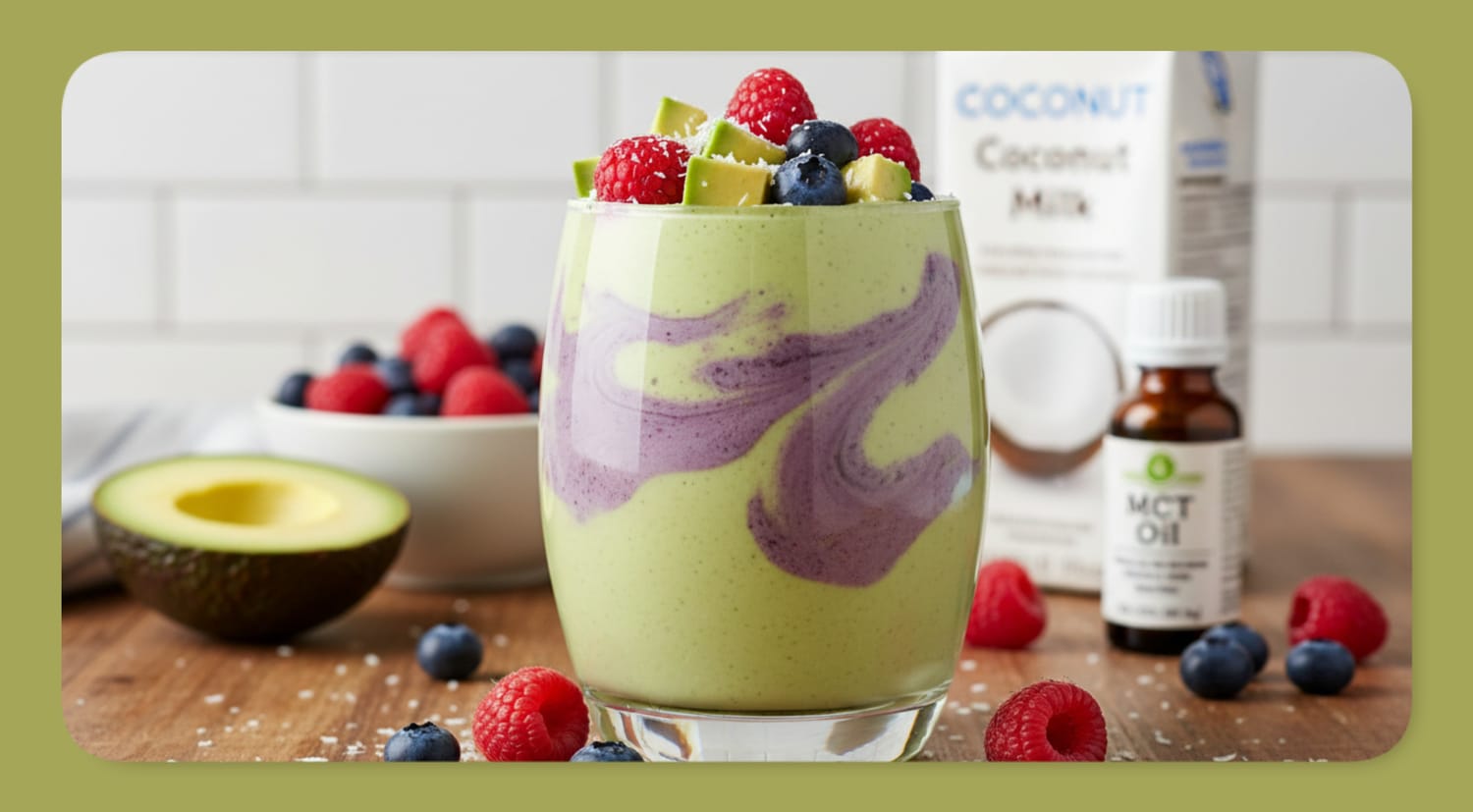
🥑 Creamy Keto Avocado Berry Smoothie: Low-Carb Breakfast That Keeps You Full
The blender whirs to life, and within seconds, a gorgeous purple-pink mixture swirls into existence, thick, velvety, and packed with healthy fats that'll power you through your morning. This isn't your typical fruit smoothie loaded with hidden sugars and empty carbs. This is a keto-friendly powerhouse that tastes like a berry milkshake but keeps your blood sugar stable and your energy sustained for hours.
I developed this recipe after months of disappointing keto breakfast attempts. Most low-carb smoothies tasted either chalky from too much protein powder or bland from lack of fruit. The real challenge? Creating something that satisfied my berry cravings without kicking me out of ketosis. After countless blender experiments, I discovered the magic combination: creamy avocado for texture and healthy fats, just enough mixed berries for flavor without the carb overload, full-fat coconut milk for richness, and MCT oil for that metabolic boost keto dieters crave. The result is a smoothie that actually keeps you full until lunch, with no mid-morning crashes or cravings.
Whether you're committed to keto, just trying to reduce carbs, or simply looking for a breakfast that won't leave you starving an hour later, this smoothie delivers. It's proof that low-carb eating doesn't mean sacrificing flavor or satisfaction. Best of all? It blends up in under five minutes and tastes indulgent enough to feel like a treat, not a diet drink.
🌟 What Makes This Smoothie Special
KETO Perfectly Keto-Friendly Macros: With only 8g net carbs and 22g of healthy fats per serving, this smoothie fits seamlessly into your keto lifestyle while keeping you in ketosis. Unlike typical fruit smoothies that can contain 40 to 60g of carbs, this recipe uses controlled portions of low-glycemic berries paired with high-fat ingredients to maintain that ideal keto ratio.
🥑 Seriously Satisfying Texture: The secret is avocado. It creates an incredibly creamy, thick consistency that rivals any ice cream smoothie, without any dairy or added sugars. You'll get that luscious mouthfeel that makes you feel like you're indulging, not restricting. No chalky protein powder texture here.
⚡ Blood Sugar Stable Energy: Thanks to the combination of healthy fats from avocado and MCT oil, plus fiber from berries, your blood sugar stays stable for hours. No energy crashes, no cravings at 10am, just sustained mental clarity and physical energy. This is the breakfast that gets you from morning to lunch without thinking about food.
🍓 Naturally Sweetened with Minimal Fruit: We use just enough frozen berries to deliver that sweet-tart berry flavor you crave, but not so much that it compromises your carb count. The result? A smoothie that tastes sweet and fruity without the sugar bomb.
🧠 MCT Oil Power Boost: Including MCT oil isn't just about fat content. It's about fast-acting energy that your body can use immediately, especially when you're fat-adapted. Many keto dieters report enhanced mental clarity and sustained energy when they include MCT oil in their morning routine.
📝 Recipe Information
🥑 Base Ingredients:
- 1/2 medium ripe avocado (75g) - provides creaminess and healthy monounsaturated fats
- 1/2 cup frozen mixed berries (75g) - strawberries, blueberries, raspberries for antioxidants and flavor
- 1 cup full-fat coconut milk (240ml) - dairy-free creaminess and medium-chain triglycerides
- 1 tablespoon MCT oil (15ml) - for ketone production and sustained energy
- 1/2 cup ice cubes - for thickness and refreshing chill
- 1/4 teaspoon vanilla extract - enhances berry flavor
- Optional: 5 to 10 drops liquid stevia or monk fruit sweetener - adjust to taste
⚡ Nutritional Boosters (Optional):
- 1 scoop unflavored or vanilla collagen peptides (adds 10g protein, still keto-friendly)
- 1 tablespoon chia seeds (3g net carbs, adds fiber and omega-3s)
- 1 handful baby spinach (won't affect berry taste, adds vitamins)
- 1 tablespoon unsweetened cocoa powder (for a chocolate-berry twist, only 1g net carb)
- Pinch of pink Himalayan salt (balances sweetness and supports electrolytes)
🎨 Smoothie Bowl Toppings (Optional, calculate carbs):
- 2 tablespoons unsweetened coconut flakes
- 5 to 6 fresh raspberries or blackberries
- 1 tablespoon sliced almonds
- 5 to 6 cacao nibs
- Drizzle of almond butter or macadamia nut butter
🔄 Blending Instructions & Technique
A. Preparation
If your avocado isn't soft enough to scoop easily, let it sit at room temperature for 10 to 15 minutes before blending. For the creamiest texture, make sure your berries are fully frozen. This creates that thick, frosty consistency. If you're adding spinach, you can use it straight from the bag; fresh or frozen both work beautifully and won't affect the berry flavor.
B. Blend Order & Layering
- Add liquid first (prevents blade jamming): Pour the full-fat coconut milk into your blender. This creates a vortex that pulls ingredients down toward the blades, ensuring everything blends smoothly without air pockets.
- Add MCT oil and vanilla extract: These liquids mix easily and help create a smooth base before the frozen ingredients go in.
- Add soft ingredients next: Scoop in your avocado. This will start blending immediately with the liquid base.
- Add frozen berries and ice on top: Place frozen ingredients last. They'll gradually work their way down into the vortex as the blender runs, creating the smoothest possible texture.
- Add optional boosters: If using spinach, collagen, or chia seeds, add them now on top.
C. Blending Technique
Start your blender on low speed for 10 to 15 seconds to break down the larger chunks and get everything moving. You'll hear the motor working hard initially. This is normal with frozen ingredients. Once you see the mixture starting to move and blend, gradually increase to high speed.
Blend on high for 30 to 45 seconds until the mixture is completely smooth and uniform in color. The color should be a vibrant purple-pink (depending on your berry blend), not dull or separated. You'll know it's ready when the blender motor sounds smooth and consistent, not straining or catching on chunks.
If your blender seems to struggle, stop and use a tamper to push ingredients down, or turn off the blender, stir manually with a spoon, and restart. For less powerful blenders, let frozen berries thaw for 3 to 5 minutes before blending, or cut your avocado into smaller pieces.
🎯 Texture checkpoint: The final smoothie should coat the back of a spoon and slowly drip off, not run off quickly. It should be thick enough to drink through a wide straw but pourable.
D. For Smoothie Bowls: Creating Thickness
If you want a smoothie bowl consistency, reduce the coconut milk to 3/4 cup and add an extra 1/4 cup of ice. Blend until thick enough that a spoon stands upright when stuck into the mixture. The consistency should resemble soft-serve ice cream or thick Greek yogurt. It should hold its shape when scooped but still be smooth and creamy.
E. Finishing & Serving
Check the final consistency by pouring a small amount into your glass. It should flow slowly and steadily, not watery or chunky. Taste and adjust sweetness if needed. Remember, keto taste preferences vary, so some people prefer a touch of stevia while others love the natural berry tartness.
Pour into a chilled glass for a drinkable smoothie, or into a chilled bowl if you're doing the bowl version. Serve immediately for the best texture and temperature. If making a bowl, arrange your low-carb toppings in sections or rows for that Instagram-worthy presentation: coconut flakes in one area, nuts in another, fresh berries scattered on top.
🥄 Texture & Consistency Guide
For Drinkable Smoothies:
Too Thin? Add: 1/4 more avocado (adds 2g net carbs), 5 to 6 more ice cubes, 2 tablespoons unsweetened coconut cream, or 1 tablespoon chia seeds (let sit 2 minutes to thicken). Avoid adding more berries as this increases carbs significantly.
Too Thick? Add: 2 to 4 tablespoons more coconut milk, unsweetened almond milk, or even cold water. Add liquid gradually. You can always add more but can't take it away. Start with 2 tablespoons, blend for 10 seconds, and assess.
For Smoothie Bowls:
Perfect Bowl Consistency: Should be thick enough to hold toppings without them sinking in immediately. When you drag a spoon through it, it should leave a defined trail that holds for a few seconds. Think soft-serve ice cream texture.
Secret: Use minimal liquid (3/4 cup maximum) and maximize frozen ingredients. The more frozen berries and ice you use relative to liquid, the thicker your bowl will be. If it's too thin, add more ice and blend again. Ice doesn't add carbs or calories.
Test: A spoon should stand upright in the mixture for at least 3 to 5 seconds before slowly tipping over.
Ideal Consistency Indicators:
- Drinkable: Flows through a wide reusable straw but has substantial body, not watery. Should feel thick and creamy on your tongue, coating your mouth pleasantly.
- Bowl: Holds its shape when scooped with a spoon, doesn't puddle or spread out across the bowl. Toppings should sit on top, not sink immediately.
📊 Customization Matrix
Liquid Base Options:
| Category | Options | Notes |
|---|---|---|
| High-Fat Dairy | Heavy cream (dilute with water), full-fat Greek yogurt thinned with water | Adds protein but contains lactose (counts toward carbs) |
| Non-Dairy Keto | Coconut milk (canned, full-fat), unsweetened almond milk, unsweetened cashew milk, macadamia milk | Choose unsweetened versions; almond milk is thinnest, coconut milk is richest |
| Light/Lower Calorie | Unsweetened almond milk, coconut water (moderate use, contains carbs), water with a splash of coconut cream | Reduces calories and fat but may need extra avocado for creaminess |
Protein Boosters (Keto-Friendly):
| Type | Amount | Protein | Net Carbs |
|---|---|---|---|
| Collagen peptides | 1 scoop | ~10g | 0g |
| Unflavored whey protein isolate | 1 scoop | ~20g | 1 to 2g |
| Plant-based protein (pea, hemp) | 1 scoop | ~15g | 2 to 3g |
| Hemp hearts | 3 tablespoons | ~10g | 1g |
| Almond butter | 2 tablespoons | ~7g | 3g net |
Natural Sweeteners (Use Sparingly):
- Liquid stevia: 5 to 10 drops (0g carbs). Start with less, can always add more
- Monk fruit sweetener: 1/4 teaspoon (0g carbs). Very sweet, use sparingly
- Erythritol: 1 to 2 teaspoons (0g net carbs). Granulated, blend well to avoid grittiness
- Avoid: Regular honey, maple syrup, agave, dates (all high-carb)
Thickness Enhancers (Keto-Approved):
- Extra avocado: +1/4 avocado (adds 2g net carbs but worth it for creaminess)
- Ice: Unlimited, adds no carbs or calories
- Coconut cream: 2 tablespoons (thick part from canned coconut milk)
- Chia seeds: 1 tablespoon (1g net carb, let sit to gel)
- Xanthan gum: 1/8 teaspoon (powerful thickener, 0g carbs)
- Avoid: Banana, oats, regular yogurt (too high in carbs)
Nutrient Boosters (Keto-Safe):
| Category | Options | Benefits |
|---|---|---|
| Greens | Baby spinach, kale, frozen zucchini, cucumber | Vitamins, minerals, fiber. Won't affect taste in small amounts |
| Healthy Fats | Coconut oil, extra MCT oil, macadamia nut butter | Increase satiety and fat ratio for keto macros |
| Superfoods | Maca powder (1 tsp), matcha powder (1 tsp), spirulina (1/2 tsp) | Nutrient-dense additions (check carb counts) |
| Electrolytes | Pink Himalayan salt (pinch), magnesium powder, potassium powder | Essential for keto diet to prevent "keto flu" |
👨🍳 Chef's Tips for Success
🔌 Blender power matters, but workarounds exist: High-speed blenders (Vitamix, Blendtec) create the silkiest texture with frozen ingredients, but any blender works if you let berries thaw for 3 to 5 minutes and cut your avocado into smaller chunks before blending. Personal blenders like NutriBullet work great for single servings. Just don't overfill past the max line.
🥑 Choose your avocado wisely: Use a ripe avocado that yields to gentle pressure but isn't overly soft or brown inside. Perfectly ripe avocados create creaminess; underripe ones taste bitter and won't blend smoothly. If you cut into an underripe avocado, save it for another use and try again tomorrow.
🥥 Coconut milk matters. Use the right kind: Always use full-fat canned coconut milk, not the carton kind labeled "coconut milk beverage." The canned version has the fat content you need for keto macros and creates that rich, creamy texture. Shake the can well before opening to mix the cream and liquid.
📦 Make-ahead smoothie packs save mornings: Pre-portion your berries, avocado chunks (yes, frozen avocado works!), and any dry boosters into freezer bags. Label with the recipe name and "add 1 cup coconut milk + 1 tbsp MCT oil." Freeze for up to 2 months. Morning routine becomes: dump, blend, drink.
🍓 Berry selection affects carb count: Raspberries and blackberries are lowest in net carbs (around 3 to 4g per 1/2 cup), followed by strawberries (around 4 to 5g), with blueberries highest (around 8 to 9g). Mix raspberries and strawberries for the best flavor-to-carb ratio. Measure your berries. Eyeballing can easily add hidden carbs.
⚠️ MCT oil dosage matters if you're new: If you're not used to MCT oil, start with 1 teaspoon instead of 1 tablespoon and work your way up over a week. Taking too much too fast can cause digestive upset. Once you're adapted, the full tablespoon provides maximum energy benefits.
🌡️ Temperature trick for immediate drinking: If you want to drink it immediately without brain freeze, use half ice and half very cold coconut milk from the fridge. This creates a perfectly chilled smoothie that's cold but not painfully frozen.
📦 Storage isn't ideal but works in a pinch: This smoothie is absolutely best consumed fresh, but it keeps in the fridge for up to 24 hours in an airtight container. The avocado may oxidize slightly (turning a bit brown on top), but just stir or shake vigorously before drinking. The texture will separate, and this is completely normal. Some people actually prefer letting it sit 10 minutes to let the chia seeds (if added) plump up and thicken the mixture further.
📈 Nutritional Benefits Section
Macro Breakdown (Per Serving):
Sugar: 6g (all natural from berries)
Compare to Alternatives:
A typical fruit smoothie from popular chains contains 50 to 70g of carbs and 35 to 45g of sugar, often with added sweeteners and minimal fat or protein. Even homemade "healthy" smoothies with banana, juice, and yogurt can contain 40 to 60g of carbs. This keto version delivers satisfying flavor and creaminess with only 8g net carbs, meaning you stay in ketosis while feeling like you're treating yourself.
Specific Health Benefits:
💪 High Healthy Fat Content for Sustained Ketosis: With 22g of fat (primarily from avocado, coconut milk, and MCT oil), this smoothie provides the macronutrient ratio keto dieters need, approximately 75% of calories from fat. These aren't just any fats; they're heart-healthy monounsaturated fats from avocado and medium-chain triglycerides that your body converts to ketones for immediate energy.
🧠 MCT Oil for Mental Clarity and Fat Burning: Medium-chain triglycerides bypass normal fat digestion and go straight to your liver, where they're converted into ketones, your brain's preferred fuel source when you're in ketosis. Many people report enhanced focus, mental clarity, and sustained energy within 30 minutes of consuming MCT oil. It may also boost your metabolic rate slightly, supporting fat loss goals.
🌿 Fiber-Rich for Digestive Health: Despite being low-carb, this smoothie provides 7g of dietary fiber from berries, avocado, and optional chia seeds. This supports healthy digestion, feeds beneficial gut bacteria, and helps you feel satisfied longer. Fiber is often neglected on keto diets, making this smoothie an excellent way to meet daily fiber needs.
🍓 Antioxidants from Mixed Berries: Berries are among the most antioxidant-rich foods on the planet, particularly anthocyanins that give them their vibrant color. These compounds fight oxidative stress, support immune function, and may protect against cognitive decline. You're getting these benefits without the sugar overload of tropical fruits.
⚡ Potassium and Electrolytes for Keto Balance: Avocado is incredibly rich in potassium (more than a banana but with a fraction of the carbs), which is crucial for anyone following a keto diet. When you reduce carbs, your body releases more water and electrolytes, making adequate potassium, magnesium, and sodium essential. This smoothie helps prevent the "keto flu" symptoms many experience.
📊 Blood Sugar Stability for Sustained Energy: The combination of healthy fats, moderate protein (especially if you add collagen), and low net carbs means your blood sugar stays remarkably stable after drinking this. No insulin spike, no crash two hours later, just steady, sustained energy that carries you through your morning without cravings or brain fog.
Why This Matters: This nutritional profile directly supports the most common keto goals: maintaining ketosis, building or preserving muscle, controlling hunger, sustaining energy, and supporting overall health without feeling restricted. At only 8g net carbs per serving, you can easily fit this into a 20 to 30g daily carb limit while still having room for low-carb vegetables and other foods throughout your day. The high fat content means you'll stay full for 4 to 5 hours, making this a true meal replacement rather than just a snack.
🔌 Best Blender Types & Equipment
High-Speed Blenders (Ideal):
Vitamix, Blendtec, Ninja Professional Series - These powerhouses (1000+ watts) pulverize frozen berries and ice effortlessly, creating the smoothest, creamiest texture possible. The avocado becomes impossibly silky, with no chunks or fibrous bits. If you make smoothies daily or want to experiment with smoothie bowls, frozen desserts, and nut butters, investing in a high-speed blender is worth it.
Best for: Daily smoothie makers, smoothie bowl enthusiasts, anyone wanting restaurant-quality texture at home
Price range: $200 to $500 (but often lasts 7 to 10 years with regular use)
Standard Blenders (Works Great):
Most kitchen blenders (600 to 800 watts) - Your typical countertop blender handles this recipe beautifully with minor adjustments. Cut your avocado into smaller chunks, let frozen berries sit at room temperature for 3 to 5 minutes to slightly soften, and always add liquid first. Blend a bit longer (60 to 90 seconds instead of 30 to 45) and use the pulse function to break up any stubborn chunks.
Tip: If your blender has multiple speeds, start low to break things up, then switch to high once everything is moving. Stop and scrape down the sides if needed.
Best for: Home cooks who make smoothies 2 to 3 times per week, anyone with limited counter space or budget
Personal/Bullet Blenders (Convenient):
NutriBullet, Magic Bullet, Ninja Personal Blenders - Perfect for this single-serving recipe. The extraction blade design works especially well with the soft texture of avocado. Just don't fill past the MAX line, as the ingredients expand during blending.
Tip: For these blenders, put ice and frozen berries in first, then liquids on top, then avocado. This reversed order works better for the upside-down blade design. Pulse a few times to break up frozen chunks before blending continuously.
Best for: Single-person households, office smoothie makers, anyone prioritizing convenience and minimal cleanup
Price range: $30 to $100
Immersion/Stick Blenders (Emergency Backup):
Hand-held immersion blenders - This can work if frozen berries are mostly thawed and you cut avocado very small, but the texture won't be as smooth. Best used in a tall, narrow container to create proper circulation. Expect to blend for 2 to 3 minutes and accept a slightly more rustic texture.
Best for: People with extremely limited kitchen storage or traveling in RVs/tiny homes
No Blender? Alternatives:
Food processor - Can work in a pinch for mostly-thawed ingredients, but the texture will be chunkier and less smooth. You may need to add slightly more liquid to get things moving. Pulse repeatedly rather than running continuously.
Other Helpful Tools:
- Reusable wide-bore straws: Essential for thick keto smoothies. Metal or silicone straws with 10mm+ diameter prevent frustration and make sipping enjoyable. Regular straws collapse from the suction needed for thick smoothies.
- Insulated tumbler or mason jar: Keeps your smoothie cold for hours if you're taking it to work or sipping slowly. The insulation prevents condensation rings on your desk.
- Small spatula: Gets every last bit of smoothie out of the blender. At 385 calories per serving, you don't want to waste any.
- Digital kitchen scale: Incredibly helpful for keto tracking. Weighing your berries and avocado ensures you're hitting your carb macros accurately, especially important when net carbs matter.
📦 Storage, Prep & Serving
Immediate Serving:
This smoothie is absolutely best consumed within 15 minutes of blending for optimal texture, temperature, and nutrition. The healthy fats in avocado are sensitive to oxidation, and the smoothie naturally separates as it sits. Serve immediately in a chilled glass for drinkable smoothies. Run your glass under cold water for 30 seconds, shake dry, and pour. For smoothie bowls, use a chilled bowl (pop it in the freezer for 10 minutes before blending) to keep the thick consistency longer while you arrange toppings.
Short-Term Storage:
Refrigerator: Keeps up to 24 hours in an airtight container (mason jar or shaker bottle works great). The color will oxidize slightly. The top may turn a bit brown, which is natural avocado oxidation and completely safe. Give it a vigorous shake or stir for 30 seconds before drinking, as the ingredients will separate. Some people add a squeeze of lemon juice before storing to slow oxidation and add brightness.
Note: The texture changes when refrigerated. It becomes slightly thicker and less "fluffy." If too thick after refrigeration, add 2 to 3 tablespoons of coconut milk or almond milk and shake well.
Make-Ahead Smoothie Packs:
This is a game-changer for busy keto mornings. Here's exactly how to do it:
What to pre-portion: Frozen mixed berries (1/2 cup), avocado chunks (1/2 avocado, peeled and cut), optional boosters like chia seeds or collagen powder.
What to keep separate: Liquids (coconut milk, MCT oil) and ice. These should only be added right before blending.
How to prep: Use quart-size freezer bags or reusable silicone bags. Add your pre-portioned berries and avocado chunks to each bag. Label with smoothie name, date, and "Add: 1 cup coconut milk + 1 tbsp MCT oil + ice."
Storage: Freeze flat for easy stacking, up to 2 months. Frozen avocado works surprisingly well in smoothies. The texture is perfect once blended.
Morning routine: Dump entire contents of frozen pack into blender, add your coconut milk, MCT oil, and ice. Blend and go. Total time: 2 minutes.
Pro tip: Prep 7 to 10 packs on Sunday for the entire week. Having grab-and-go options means you'll never skip breakfast or resort to high-carb convenience foods.
Freezing Finished Smoothies:
While not ideal for this particular recipe due to the avocado, you can freeze the finished smoothie if needed:
Ice cube tray method: Pour finished smoothie into ice cube trays, freeze until solid (4 to 6 hours), then pop out and store in freezer bags. Use 6 to 8 smoothie cubes blended with 1/2 cup coconut milk for a quick treat.
Freezer bag method: Pour into freezer-safe bags, remove air, lay flat, and freeze up to 1 month. Thaw in fridge overnight, shake vigorously before drinking. The texture won't be as creamy as fresh but works for meal prep purposes.
Popsicle option: Pour into popsicle molds for a keto-friendly frozen treat. These actually work better than storing as drinkable smoothie. The texture issue is eliminated, and you get a delicious low-carb dessert.
Meal Prep Benefits:
Prepping smoothie packs saves 10+ minutes on busy mornings, the difference between rushing out the door hungry and starting your day nourished. It reduces food waste since you're portioning exactly what you need and freezing it before it goes bad. Most importantly, it removes decision fatigue and ensures you always have a keto-compliant breakfast ready, which is crucial for staying on track with your dietary goals.
🍽️ Serving Suggestions & Occasions
Best Times to Enjoy:
☀️ Breakfast on-the-go: This smoothie is substantial enough to replace a full breakfast. The high fat content and moderate protein (especially with collagen added) keep you satisfied until lunch. Pour into an insulated tumbler and take it to work, drink during your commute, or sip at your desk while checking emails.
🏋️ Post-workout recovery: The combination of quick-absorbing MCT oil and protein (if you add collagen or protein powder) makes this ideal within 30 to 60 minutes after exercise. The electrolytes from avocado help with rehydration, especially important on keto.
⏰ Intermittent fasting break-fast: If you practice intermittent fasting (common with keto), this is an excellent first meal. The fats ease you out of fasting without spiking insulin, and the calories help you meet daily needs in a shorter eating window.
⚡ Afternoon energy boost: Skip the afternoon coffee and crash cycle. This smoothie provides sustained energy without caffeine jitters, perfect for the 2 to 3pm slump. The MCT oil gives you that mental clarity boost when focus starts to fade.
🍰 Dessert alternative: Craving something sweet after dinner? This tastes indulgent enough to satisfy dessert cravings without kicking you out of ketosis. The berry flavor feels like a treat, especially if you add a touch of cocoa powder for chocolate-berry bliss.
Perfect Pairings:
With: Two hard-boiled eggs (12g protein, 0g carbs), handful of macadamia nuts (2g net carbs), or a few slices of avocado with sea salt. These additions boost the meal's satiety factor without adding many carbs.
As: Complete meal replacement if you add protein powder or collagen (bringing total to 16 to 20g protein) and ensure you're getting adequate fat (the base recipe already provides this). This hits ideal keto macros in a single glass.
For smoothie bowls: Top with 2 tablespoons unsweetened coconut flakes (1g net carb), 5 to 6 fresh raspberries (1g net carb), 1 tablespoon sliced almonds (1g net carb), and a drizzle of almond butter (2g net carb). Total bowl: approximately 13g net carbs, still keto-friendly and feels like a complete, satisfying meal.
Make It a Complete Meal:
Add protein: Mix in 1 scoop unflavored collagen peptides (10g protein, 0g carbs) or vanilla whey protein isolate (20g protein, 1 to 2g carbs). This brings your total protein to 16 to 26g, ideal for meal replacement.
Include more healthy fats: Add 1 tablespoon almond butter or 2 tablespoons coconut cream for extra richness and satiety. This increases calories to 450 to 500 but keeps you full even longer.
Use filling boosters: Add 1 tablespoon chia seeds (let sit 5 minutes to gel) or 1 tablespoon hemp hearts for extra fiber, protein, and omega-3s. The gel texture makes the smoothie even more satisfying.
Balance electrolytes: Add a pinch of pink Himalayan salt and a squeeze of lemon. This seemingly small addition makes a huge difference in how you feel on keto. Proper electrolyte balance prevents fatigue and muscle cramps.
💭 Final Thoughts
This Keto Avocado Berry Smoothie proves that low-carb eating doesn't mean sacrificing the foods you love or settling for bland, boring breakfasts. You get the creamy, dreamy texture of a milkshake, the sweet-tart burst of fresh berries, and the satisfaction of knowing you're fueling your body with nutrient-dense ingredients that support your ketosis goals. At only 8g net carbs, this smoothie fits seamlessly into even the strictest keto meal plan while tasting indulgent enough to crave.
For busy keto dieters and parents trying to balance health goals with hectic schedules, this five-minute recipe is a lifesaver. Prep a week's worth of smoothie packs on Sunday, and you've eliminated the morning scramble for a compliant breakfast. No more grabbing high-carb convenience foods or skipping breakfast altogether because nothing appeals to you. The sustained energy from healthy fats and MCT oil means you'll power through your morning with mental clarity and zero cravings, no mid-morning snack attacks or energy crashes.
The beauty of this recipe is its versatility. Make it as written for a perfectly balanced keto breakfast, or customize it with the variations that match your specific goals. Need more protein? Add collagen. Want it thicker? Extra ice and less liquid. Prefer chocolate? Cocoa powder transforms it completely. The customization matrix gives you endless possibilities while keeping you firmly in ketosis.
Your mornings just got easier AND healthier. This isn't deprivation. It's delicious, nourishing food that happens to align perfectly with your low-carb lifestyle. The gorgeous purple-pink color makes it Pinterest-worthy, the creamy texture makes it crave-worthy, and the nutrition profile makes it goal-worthy. Whether you're three weeks or three years into keto, this smoothie deserves a permanent spot in your breakfast rotation.
Save this recipe, prep those smoothie packs, and experience what keto breakfasts should taste like: satisfying, energizing, and absolutely delicious.
❓ Frequently Asked Questions
Can I use fresh berries instead of frozen?
Yes, but you'll need to add more ice to achieve the thick, creamy texture. Aim for 1 full cup of ice. Fresh berries create a thinner consistency and won't give you that frosty, thick texture that makes this smoothie so satisfying. The advantage of frozen berries is they're picked at peak ripeness, often more affordable, and eliminate the need for excess ice. If using fresh, freeze them on a baking sheet for 2 to 3 hours before using for best results.
What's the best dairy-free milk alternative for lowest carbs?
Unsweetened almond milk is your lowest carb option at only 1 to 2g carbs per cup (compared to coconut milk's 6 to 7g). However, almond milk is much thinner and won't give you the same rich, creamy texture. For best results, use half unsweetened almond milk and half coconut cream, or stick with full-fat canned coconut milk for authentic creaminess. Macadamia milk is another excellent low-carb option (1g per cup) with a naturally creamy texture.
Can I make this without avocado?
Avocado is really the star ingredient for creaminess here, but if you can't have it, try 1/4 cup coconut cream plus 2 tablespoons macadamia nut butter instead. This maintains the healthy fat content and creates thickness, though the texture will be slightly different. Another option: use 1/3 cup full-fat Greek yogurt (if you tolerate dairy), which adds 3 to 4g net carbs but provides creaminess and protein.
Why is my smoothie too watery?
You likely added too much liquid or didn't use enough frozen ingredients. Next time, start with only 3/4 cup coconut milk and add more gradually if needed. Make sure your berries are fully frozen (not thawed) and use the full 1/2 cup of ice. If it's already too watery, fix it by adding: 1/4 more avocado, a handful more frozen berries (watch your carbs), or 5 to 6 more ice cubes. Blend until thick again.
How do I make it thicker without adding calories or carbs?
Ice is your best friend here. It adds thickness and chill with zero calories or carbs. You can also add 1/8 teaspoon xanthan gum (powerful thickener with no nutritional impact), a handful of frozen cauliflower rice (truly tasteless, adds 1g net carb per cup), or 1 tablespoon chia seeds and let the smoothie sit for 5 minutes to gel (adds 1g net carb but also adds fiber). For smoothie bowls, simply reduce liquid to 3/4 cup.
My smoothie separated in the fridge. Is it still good?
Completely safe to drink! Separation is natural with smoothies containing avocado and coconut milk. The fats and liquids naturally separate over time. Give it a vigorous shake for 20 to 30 seconds until recombined, or pour into a blender and pulse for 5 to 10 seconds. The color may have oxidized (turned slightly brown on top), which is just natural avocado oxidation. Stir or shake and it's perfectly fine.
Can I make this vegan/dairy-free?
This recipe is already naturally dairy-free and vegan as written! It uses coconut milk, avocado, and berries, all plant-based ingredients. If you add protein powder, just choose a plant-based option (pea protein, hemp protein, or brown rice protein) instead of whey. If you add collagen, that's not vegan, but you can substitute with 2 tablespoons hemp hearts for protein instead.
How can I reduce the calories while keeping it keto?
Use unsweetened almond milk instead of coconut milk (saves about 100 calories), reduce MCT oil to 1 teaspoon instead of 1 tablespoon (saves 90 calories), and use slightly less avocado, 1/3 instead of 1/2 (saves about 60 calories). This brings the total to approximately 235 calories while maintaining keto ratios. You'll lose some richness, but it's still satisfying and keeps you in ketosis. Add extra ice for thickness.
Do I need a high-speed blender?
No, but it makes things easier. Any blender works with these adjustments: let frozen berries thaw at room temperature for 5 minutes, cut avocado into smaller chunks, add liquid first, and blend longer (60 to 90 seconds instead of 30 to 45). Use the pulse function to break up stubborn chunks. Start on low speed and gradually increase. Most standard kitchen blenders handle this recipe well with a bit of extra patience.
Is this actually filling enough for breakfast?
Yes, for most people! The 22g of healthy fats and moderate protein (6g, or 12 to 16g with added collagen/protein powder) create lasting satiety. The fiber from berries and avocado also helps you feel full. Most people report staying satisfied for 4 to 5 hours. If you need more staying power, add 1 scoop protein powder and 1 tablespoon chia seeds. This boosts protein to 16 to 20g and adds extra fiber without significantly increasing carbs.
Can I make this the night before?
You can, but it's not ideal. The texture changes overnight. It thickens considerably and may separate. The avocado can oxidize slightly (turning light brown), though it's still safe to eat. If you need to make it ahead, prepare everything except blending: portion ingredients into your blender container, cover, and refrigerate overnight. Blend fresh in the morning for best results. Takes only 2 minutes. Or prep freezer packs as described in the storage section for even faster morning assembly.
How long does it last in the fridge?
Up to 24 hours in an airtight container, though best within 12 hours. The color will darken from avocado oxidation (this is cosmetic only), and ingredients will separate naturally. Shake vigorously for 20 to 30 seconds before drinking to recombine. After 24 hours, the texture degrades significantly and taste becomes less fresh. For best quality and nutrition, consume fresh or within the same day.
📖 Glossary of Key Terms
Collagen Peptides: Hydrolyzed protein powder derived from animal connective tissue that dissolves easily in liquids without affecting taste. Provides 10g protein per scoop, supports skin, joints, and gut health. Different from regular protein powder because it's virtually tasteless and mixes smoother. Choose unflavored for this recipe.
Full-Fat Coconut Milk (Canned): Rich, creamy liquid extracted from mature coconut meat, containing 13 to 17% fat. Found in cans in the international aisle, not to be confused with coconut milk beverage in cartons. The thick cream rises to the top. Shake well before using. Essential for keto recipes due to high fat content and creamy texture.
Keto Macros: The ideal ratio of macronutrients for ketogenic diet, approximately 70 to 75% calories from fat, 20 to 25% from protein, and 5 to 10% from carbohydrates. This smoothie naturally achieves these ratios, helping maintain ketosis.
Ketosis: Metabolic state where your body burns fat for fuel instead of carbohydrates, producing molecules called ketones. Achieved by restricting carbs to 20 to 50g daily (depending on individual). This smoothie supports ketosis with only 8g net carbs.
MCT Oil: Medium-Chain Triglyceride oil, typically derived from coconut or palm kernel oil. Unlike regular fats, MCTs are rapidly absorbed and converted to ketones by the liver, providing quick energy and supporting ketone production. Start with small amounts (1 tsp) if new to MCT oil to avoid digestive upset.
Net Carbs: Total carbohydrates minus fiber and sugar alcohols, the number that impacts blood sugar and ketosis. Formula: Total Carbs - Fiber = Net Carbs. This smoothie has 15g total carbs but 7g fiber, resulting in 8g net carbs that "count" toward your daily limit.
Oxidation: Natural browning process that occurs when avocado flesh is exposed to air, similar to how apples turn brown. While it affects appearance, oxidized avocado is safe to consume. Adding lemon juice or storing airtight slows oxidation.
Pink Himalayan Salt: Unrefined mineral salt containing trace minerals and electrolytes, including sodium, potassium, and magnesium. Especially important on keto diet as low-carb eating causes water and electrolyte loss. A pinch in smoothies enhances flavor and supports electrolyte balance without tasting salty.
Smoothie Bowl: Thick smoothie served in a bowl and eaten with a spoon, topped with complementary ingredients like nuts, seeds, fresh fruit, and coconut. Requires less liquid than drinkable smoothies for thick, spoonable consistency. Perfect for leisurely breakfasts when you have time to sit down.
Smoothie Pack: Pre-portioned freezer bag containing all smoothie ingredients except liquids, prepared in advance for quick assembly. Frozen packs eliminate morning decision-making and prep time. Just dump, add liquid, and blend. Can be stored 2 to 3 months in freezer.
Sugar Alcohols: Low-calorie sweeteners that minimally impact blood sugar, commonly used in keto recipes. Include erythritol, xylitol, and monk fruit. Generally subtracted from total carbs when calculating net carbs. Not all people tolerate sugar alcohols. Some experience digestive issues.
Xanthan Gum: Powerful natural thickening agent made from fermented plant sugars, used in tiny amounts (1/8 to 1/4 tsp) to thicken smoothies without adding calories or carbs. A little goes a long way. Using too much creates slimy texture. Mix with dry ingredients before adding to prevent clumping.
🎉 Share Your Success!
What's your go-to keto breakfast routine? Has this smoothie made your mornings easier since you started? I'd genuinely love to know if this recipe has become part of your daily ritual or if you've discovered your own perfect variation.
Did you experiment with any fun topping combinations for the bowl version? I'm always fascinated by how people personalize these recipes. Some add cacao nibs for crunch, others drizzle tahini for earthiness, and someone once told me they added a pinch of cayenne for a spicy kick. The possibilities within keto guidelines are endless!
Drop a comment below and let me know how it turned out for you! Did you nail the perfect thick consistency on your first try, or did it take some adjusting? Any tips or tricks you discovered that other readers might benefit from?
Pinterest lovers: Save this recipe to your keto smoothie board so you can find it again when you need breakfast inspiration! It's also perfect for sharing with friends who are curious about keto but think low-carb means giving up everything delicious.
Follow along on Pinterest for more keto-friendly smoothie recipes, low-carb meal prep ideas, and healthy breakfast solutions that actually fit into real life. I'm constantly developing new recipes that balance health goals with genuine flavor satisfaction.
Tag your smoothie bowl photos if you share them! I absolutely love seeing your creations and featuring reader favorites! Your variations often inspire my next recipe experiments. Let's build a community of people who believe healthy eating should be delicious, not deprivation. 🥑🍓
More Delicious Smoothies to Try
Affiliate Disclosure
This page may contain affiliate links. This means that if you click on one of these links and make a purchase, I may receive a small commission at no additional cost to you. This helps support the blog and allows me to continue creating free content. I only recommend products or services that I use personally and believe will add value to my readers. Your support is appreciated!
Created with ©simplyhealthynews