
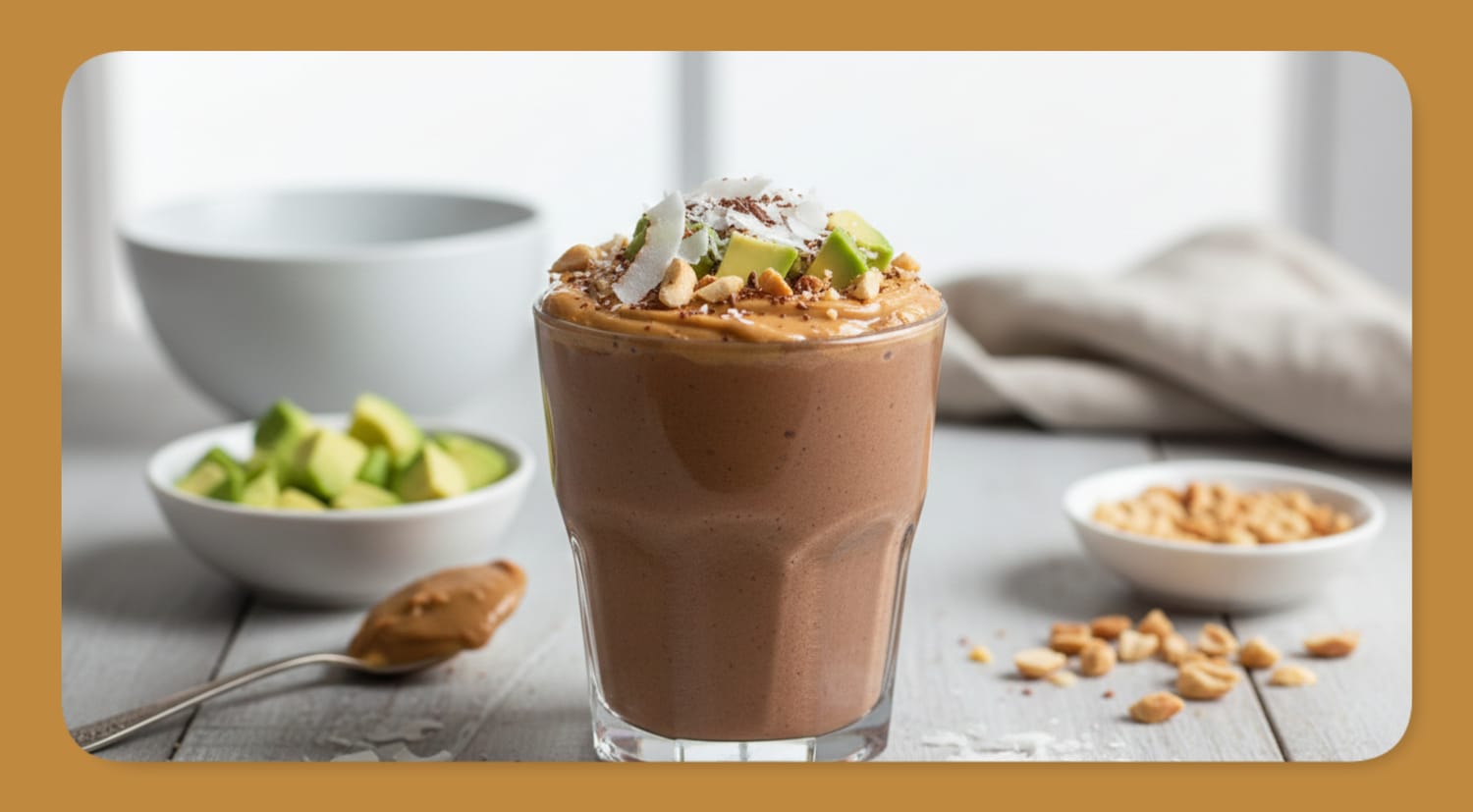
Creamy Keto Peanut Butter Smoothie: Low-Carb High-Fat Satisfaction
Thick, velvety peanut butter flavor coats your tongue with every sip, rich and satisfying in a way that feels almost too indulgent to be keto-friendly. The deep chocolatey undertones from cocoa powder blend seamlessly with the nutty richness, creating a smoothie that tastes like a peanut butter cup transformed into drinkable form. This is the kind of low-carb treat that makes sticking to keto feel effortless rather than restrictive.
Following a ketogenic diet often means watching other people enjoy smoothies while you calculate the carbs in a single banana and realize it would blow your entire daily allowance. Most smoothie recipes rely heavily on fruit for sweetness and flavor, making them completely off-limits for anyone trying to maintain ketosis. The frustration of wanting something cold, creamy, and satisfying while scrolling past recipe after recipe that doesn't fit your macros is real. Your keto lifestyle deserves better options.
This Peanut Butter Smoothie was specifically designed for the keto community, with every ingredient chosen to maximize satisfaction while minimizing carbs. Avocado provides silky creaminess without the sugar of banana. Full-fat coconut milk delivers the richness your body craves on a high-fat diet. Natural peanut butter offers that beloved nutty flavor alongside healthy fats and protein. And a touch of cocoa powder adds chocolate depth without adding carbs. At just 7 grams of net carbs, this smoothie fits perfectly into your daily macros while tasting like a genuine treat.
What Makes This Smoothie Special
- Keto Macro Perfection: 7g net carbs, 45g fat, and 15g protein per serving fits seamlessly into standard keto macros
- Genuinely Satisfying Flavor: Rich peanut butter and chocolate taste that rivals any high-carb smoothie shop creation
- Keeps You Full for Hours: The high fat and protein content provides lasting satiety, reducing cravings and snacking urges
- No Sugar Crash: Zero added sugars and minimal natural sugars mean stable energy and maintained ketosis
- Silky Smooth Texture: Avocado creates ice cream-like creaminess without the carbs of frozen banana
Ingredients
Base Ingredients
| Ingredient | Amount | Notes |
|---|---|---|
| Natural peanut butter | 2 tablespoons (32g) | No sugar added, just peanuts and salt |
| Avocado | 1/2 medium (75g) | Ripe but not overripe |
| Full-fat coconut milk | 1/2 cup (120ml) | Canned, well-shaken |
| Unsweetened almond milk | 1/2 cup (120ml) | Or any unsweetened nut milk |
| Unsweetened cocoa powder | 1 tablespoon (6g) | Dutch-process or raw cacao |
| Powdered erythritol | 1 to 2 tablespoons | Or monk fruit sweetener to taste |
| Vanilla extract | 1/2 teaspoon | Pure vanilla recommended |
| Ice cubes | 1 cup (about 8 cubes) | For thickness and chill |
| Pinch of sea salt | 1/16 teaspoon | Enhances peanut butter flavor |
Keto-Friendly Boosters (Optional)
- 1 tablespoon MCT oil for extra ketone-boosting fats (adds ~120 calories, 0g carbs)
- 1 tablespoon chia seeds for fiber and omega-3s (adds ~60 calories, 0g net carbs)
- 1 scoop collagen peptides for protein and gut health (adds ~35 calories, 0g carbs)
- 1/4 teaspoon cinnamon for blood sugar support (adds negligible carbs)
- 1 tablespoon hemp seeds for extra protein (adds ~55 calories, 0g net carbs)
Protein Boosters (Optional)
- 1 scoop chocolate keto protein powder adds ~100 calories and 20g protein
- 2 tablespoons additional peanut butter adds ~190 calories and 7g protein
- 1/4 cup full-fat Greek yogurt adds ~55 calories and 5g protein (check carbs on brand)
Smoothie Bowl Toppings (Keto-Friendly)
- Cacao nibs
- Unsweetened coconut flakes
- Chopped peanuts
- Hemp seeds
- Sugar-free chocolate chips
- Drizzle of peanut butter
- Sliced almonds
Blending Instructions and Technique
A. Preparation
Choose ripe avocado: The avocado should give slightly when pressed but not be mushy. Overripe avocado can add an off-flavor. Remove pit and scoop flesh directly into blender.
Shake coconut milk well: Canned coconut milk separates into cream and water. Shake the can vigorously before opening, or scoop both the cream and liquid in equal parts for proper fat content.
Use natural peanut butter: Check the ingredients. It should list only peanuts and possibly salt. Brands with added sugar or hydrogenated oils add unwanted carbs and unhealthy fats.
Measure sweetener carefully: Keto sweeteners vary in sweetness intensity. Start with 1 tablespoon and adjust after blending. You can always add more, but you cannot remove excess sweetness.
B. Blend Order and Layering
Proper layering ensures the avocado and peanut butter incorporate smoothly without sticking to blender walls.
- Add both milks first. Liquid at the bottom creates flow for smooth blending.
- Add peanut butter next. Submerge it in liquid for easier incorporation.
- Add avocado flesh. Scoop directly from skin into blender.
- Add cocoa powder, sweetener, vanilla, and salt. Sprinkle over the other ingredients.
- Blend briefly (15 seconds) to combine base ingredients.
- Add ice cubes last. Ice on top gets pulled down into the creamy base.
C. Blending Technique
Start on low speed for 5 to 10 seconds to break up ice and incorporate avocado. Increase to high speed and blend for 45 to 60 seconds until completely smooth and creamy.
Color Checkpoint: The finished smoothie should be a rich chocolate-brown color, uniform throughout with no green specks from avocado.
Texture Checkpoint: Aim for thick, creamy, milkshake-like consistency. The smoothie should pour slowly and coat a spoon thickly. This high-fat smoothie should feel luxuriously rich.
Taste Checkpoint: Peanut butter should be the dominant flavor with chocolate undertones. If peanut butter is too subtle, add 1 more tablespoon and blend. Adjust sweetener to your preference.
Troubleshooting During Blending:
- Avocado chunks remaining? Blend longer on high, or cut avocado into smaller pieces before adding.
- Too thick? Add unsweetened almond milk 1 tablespoon at a time.
- Too thin? Add more ice or 1/4 more avocado.
- Sweetener not dissolving? Use powdered rather than granulated erythritol.
D. Smoothie Bowl Variation
For a thick, spoonable keto bowl, omit the almond milk entirely and use only 1/4 cup coconut milk. Reduce ice to 1/2 cup. Blend until the mixture is thick like soft-serve ice cream.
Pour into a chilled bowl and arrange keto-friendly toppings. Cacao nibs, unsweetened coconut flakes, and a drizzle of peanut butter create beautiful contrast while keeping carbs minimal.
E. Finishing and Serving
Pour into a large glass or insulated tumbler. For extra indulgence, drizzle a thin line of melted peanut butter on top. Add a sprinkle of cacao nibs or a dusting of cocoa powder for visual appeal.
Pro Tip: This smoothie is very filling due to high fat content. Sip slowly and allow 15 to 20 minutes for satiety signals to register before deciding if you need additional food.
Texture and Consistency Guide
For Drinkable Smoothies
| Problem | Solution |
|---|---|
| Too thin | Add more avocado, ice cubes, or 1 tablespoon chia seeds |
| Too thick | Add almond milk 1 tablespoon at a time |
| Grainy sweetener texture | Use powdered erythritol, blend longer, or switch to liquid monk fruit |
| Chalky protein powder | Blend protein with liquid first before adding other ingredients |
Ideal Consistency Indicators
- Perfect Keto Texture: Rich and thick like a milkshake, coats the glass as you drink
- Color Check: Deep chocolate-brown, no green from avocado visible
- Mouthfeel: Creamy and substantial, should feel satisfying and rich
For Smoothie Bowls
- Perfect Bowl Consistency: Holds shape when scooped, thick enough for toppings
- The Spoon Test: Spoon stands upright without falling
- Temperature: Cold throughout, firms up slightly as fats chill
Customization Matrix
Fat Source Options
| Fat Source | Amount | Total Fat | Net Carbs |
|---|---|---|---|
| Avocado | 1/2 medium | 15g | 2g |
| Coconut cream | 1/4 cup | 18g | 2g |
| MCT oil | 1 tablespoon | 14g | 0g |
| Heavy cream | 1/4 cup | 22g | 1g |
| Coconut oil | 1 tablespoon | 14g | 0g |
Nut Butter Alternatives
| Instead of Peanut Butter | Use | Notes |
|---|---|---|
| Almond butter | 2 tablespoons | Slightly lower carbs, milder flavor |
| Sunflower seed butter | 2 tablespoons | Nut-free option |
| Tahini | 2 tablespoons | Savory undertone, pairs well with cocoa |
| Macadamia nut butter | 2 tablespoons | Highest fat, lowest carb |
| Pecan butter | 2 tablespoons | Rich, buttery flavor |
Keto Sweetener Options
| Sweetener | Amount | Notes |
|---|---|---|
| Powdered erythritol | 1 to 2 tablespoons | No aftertaste, dissolves well |
| Monk fruit sweetener | 1 to 2 teaspoons | Very concentrated, use less |
| Liquid stevia | 5 to 10 drops | Adjust to taste, can be bitter if overused |
| Allulose | 1 to 2 tablespoons | Tastes most like sugar, browns well |
| Erythritol/monk fruit blend | 1 tablespoon | Good balance of taste and texture |
Flavor Variations
| Variation | Modification |
|---|---|
| Chocolate peanut butter cup | Add 1 extra tablespoon cocoa powder |
| Peanut butter cookie | Add 1/4 teaspoon cinnamon and 1/4 teaspoon vanilla |
| Chocolate hazelnut | Swap peanut butter for hazelnut butter |
| Mocha peanut butter | Add 1/2 teaspoon instant espresso powder |
| Salted peanut butter | Increase salt to 1/8 teaspoon, top with flaky salt |
Protein Boost Options
| Protein Source | Calories | Protein | Net Carbs |
|---|---|---|---|
| Keto protein powder | 100 to 120 | 20 to 25g | 1 to 2g |
| Collagen peptides | 35 | 9g | 0g |
| Hemp seeds (2 tbsp) | 90 | 6g | 0g |
| Extra peanut butter | 190 | 7g | 3g |
Chef's Tips for Success
- Choose natural peanut butter only. Commercial peanut butters often contain added sugar and hydrogenated oils that increase carbs and add unhealthy fats. The ingredient list should say only "peanuts" and possibly "salt."
- Use powdered sweetener for smoothest texture. Granulated erythritol can leave a grainy mouthfeel. Powdered versions dissolve completely. You can powder granulated erythritol in a blender or coffee grinder.
- Freeze avocado for thicker smoothies. Cut ripe avocado into chunks, freeze on a parchment-lined tray, and store in freezer bags. Frozen avocado creates ice cream-like thickness without diluting flavor with ice.
- Shake canned coconut milk thoroughly. The fat separates when sitting. If you don't shake well, you might get inconsistent fat content. Alternatively, refrigerate the can and scoop only the thick cream from the top for maximum fat.
- Add MCT oil gradually if new to it. MCT oil can cause digestive upset if you're not accustomed to it. Start with 1/2 tablespoon and increase over time as your body adjusts.
- Test sweetener levels carefully. Keto sweeteners vary dramatically in intensity. Start with less than you think you need and adjust upward. Over-sweetened smoothies can taste artificial.
- Track your macros precisely. Weigh ingredients on a kitchen scale for accurate macro counting. Eyeballing peanut butter or avocado portions can significantly throw off your numbers.
Nutritional Benefits
This smoothie is designed specifically for ketogenic nutrition, providing the high-fat, moderate-protein, low-carb profile that supports ketosis while delivering genuine health benefits.
- Ketosis-Supporting Fat Profile (45g) from avocado, coconut milk, and peanut butter provides the fuel your body needs for fat-adapted energy production.
- MCT Fats from Coconut Milk that convert quickly to ketones, providing immediate energy for brain and body without glucose involvement.
- Monounsaturated Fats from Avocado that support heart health, reduce inflammation, and improve nutrient absorption.
- Quality Protein (15g) from peanut butter supports muscle maintenance without excessive protein that could interfere with ketosis.
- Fiber for Digestive Health (8g) from avocado, cocoa, and chia seeds (if added) supports gut health and regularity, which can be challenging on keto.
- Electrolytes from Avocado and Salt including potassium and sodium that are crucial for avoiding keto flu and maintaining proper hydration.
Macro Breakdown (Per Serving, Base Recipe)
| Nutrient | Amount |
|---|---|
| Calories | ~520 kcal |
| Total Fat | 45g |
| Protein | 15g |
| Total Carbohydrates | 15g |
| Fiber | 8g |
| Net Carbs | 7g |
| Sugar | 3g |
With MCT Oil Boost
| Nutrient | Amount |
|---|---|
| Calories | ~640 kcal |
| Total Fat | 59g |
| Protein | 15g |
| Total Carbohydrates | 15g |
| Fiber | 8g |
| Net Carbs | 7g |
Keto Macro Percentages (Base Recipe)
Fat: 78% | Protein: 12% | Net Carbs: 10%
This ratio falls within the standard ketogenic range of 70 to 80% fat, 15 to 20% protein, and 5 to 10% carbohydrates, making it an ideal keto meal or snack.
Best Blender Types and Equipment
High-Speed Blenders (Ideal)
Vitamix, Blendtec, and Ninja Professional models create the smoothest texture, fully incorporating avocado with no chunks and blending ice into creamy perfection.
Standard Blenders (Works Great)
Most kitchen blenders handle this recipe well. Cut avocado into smaller chunks before adding. Blend liquid and peanut butter first, then add avocado and remaining ingredients.
Personal Blenders (Convenient)
NutriBullet and similar single-serve blenders work for this recipe. The thick consistency may require stopping to shake or scrape sides halfway through. Don't overfill past the MAX line.
Essential Keto Kitchen Tools
- Kitchen scale for precise macro tracking (essential for keto)
- Measuring spoons for accurate peanut butter and oil portions
- Silicone spatula for scraping every bit of high-fat goodness
- Insulated tumbler keeps smoothie cold for slow sipping
- Ice cube trays for freezing coconut milk portions
Storage, Prep, and Serving
Immediate Serving (Best Option)
This smoothie tastes best immediately after blending when the texture is thickest and the flavors are most vibrant. The high fat content keeps it creamy, but ice begins melting immediately, so drink within 15 to 20 minutes.
Short-Term Storage
Refrigerate in an airtight container for up to 24 hours. The smoothie may thicken as fats solidify. Shake vigorously or re-blend with a splash of almond milk to restore creamy texture.
Note: Avocado can oxidize and develop slightly off flavors after 24 hours. Adding a squeeze of lemon juice before storing helps preserve freshness.
Make-Ahead Smoothie Packs
Prep a week of keto smoothies efficiently:
- Cut avocado into chunks and freeze in portions (1/2 avocado per bag)
- Measure coconut milk into ice cube trays and freeze (approximately 4 cubes equals 1/2 cup)
- Pre-measure peanut butter into small containers or silicone molds and refrigerate
- Label freezer bags: "Add: 1/2 cup almond milk, 1 tbsp cocoa, sweetener, vanilla, salt"
- Freeze fruit and fat portions for up to 1 month
Morning Routine: Add frozen avocado, frozen coconut milk cubes, peanut butter, and remaining ingredients to blender. Blend 60 seconds, enjoy.
Meal Prep Tips for Keto Success
- Weigh and portion ingredients in advance for foolproof macro tracking
- Prepare multiple smoothie packs on meal prep Sunday
- Keep ingredients stocked so you always have a keto-friendly option
- Label each pack with macro totals for easy tracking
Serving Suggestions and Occasions
Best Times to Enjoy
- Breakfast replacement when you need high-fat fuel to start your day
- Post-workout recovery for protein and healthy fats
- Afternoon snack when you need sustained energy without carbs
- Dessert replacement when sweet cravings hit
- Pre-fast meal as a filling option before intermittent fasting window
Perfect Pairings for Keto
- Breakfast: Enjoy alone as a complete high-fat meal
- Light lunch: Pair with a small salad with olive oil dressing
- Snack portion: Make a half-batch for approximately 260 calories and 3.5g net carbs
- Post-gym: Add protein powder for enhanced recovery
Intermittent Fasting Compatibility
| Fasting Protocol | Usage |
|---|---|
| 16:8 | Perfect first meal to break fast |
| OMAD | Part of single daily meal |
| 20:4 | Satisfying within eating window |
| 5:2 | Reserve for regular eating days |
Special Keto Occasions
| Occasion | Suggestion |
|---|---|
| Keto milestone celebration | Top with sugar-free whipped cream |
| Meal prep Sunday | Make double batch for quick weekday breakfasts |
| Keto potluck | Serve in small cups as dessert option |
| Fat bomb alternative | Freeze into popsicles for portable treat |
Final Thoughts
This Keto Peanut Butter Smoothie delivers everything you're missing on a low-carb diet: rich chocolate-peanut butter flavor, creamy milkshake texture, and genuine satisfaction that keeps cravings at bay for hours. At just 7 grams of net carbs with 45 grams of quality fats, it fits perfectly into your ketogenic macros while tasting like an indulgent treat.
Living keto shouldn't mean living without the foods you love. Peanut butter cravings, chocolate desires, creamy smoothie wishes. These are all achievable within your carb limits when recipes are designed with intention. Every ingredient in this smoothie serves a purpose: avocado for creaminess, coconut milk for MCTs, peanut butter for that beloved nutty richness, and cocoa for chocolate satisfaction without the sugar.
Whether you're new to keto and missing your old smoothie habits, or you're a seasoned low-carb veteran looking for new favorites, this recipe deserves a permanent spot in your rotation. Make it your go-to breakfast, your afternoon pick-me-up, or your guilt-free dessert. Your ketogenic lifestyle just got significantly more delicious.
Frequently Asked Questions
Will this smoothie kick me out of ketosis?
At 7 grams of net carbs, this smoothie fits within most standard keto macros (20 to 50g net carbs daily). Track it as part of your daily total. For very strict keto (under 20g), this could be a significant portion of your daily carbs, so plan accordingly.
Can I use regular peanut butter instead of natural?
Regular peanut butter often contains added sugar (2 to 3g per serving) and hydrogenated oils. This adds carbs and unhealthy fats. Always check labels. If you must use regular peanut butter, adjust your carb count accordingly.
The avocado taste is too strong. How do I fix it?
Increase peanut butter to 3 tablespoons and cocoa powder to 1.5 tablespoons. These stronger flavors will mask the avocado. Also ensure you're using a ripe but not overripe avocado, as overripe avocado has a stronger taste.
What if I don't have coconut milk?
Heavy cream is an excellent substitute with similar fat content. Use 1/4 cup heavy cream mixed with 1/4 cup almond milk. This maintains the high-fat profile while adjusting consistency.
Is this smoothie too high in calories?
At 520 calories, this is substantial. For keto, calories matter less than macros for many people, but if you're tracking calories, make a half-portion (260 calories, 3.5g net carbs) or use it as a meal replacement rather than a snack.
Can I make this dairy-free?
The base recipe is already dairy-free. If adding protein powder, choose a plant-based option. If adding heavy cream in the variation, substitute with additional coconut cream.
My sweetener tastes artificial. What should I try?
Different sweeteners work for different palates. Allulose tastes most like sugar. Monk fruit erythritol blends are popular. Reduce the amount and add a pinch more salt, which can reduce any artificial aftertaste.
How do I make this higher in protein without adding carbs?
Collagen peptides add 9 grams of protein with zero carbs. Keto protein powders typically have 1 to 2g net carbs per scoop. Hemp seeds add 6g protein with zero net carbs. Combine these for significant protein boost.
Glossary of Key Terms
Allulose: Rare sugar with minimal blood sugar impact. Tastes most like regular sugar among keto sweeteners. About 70% as sweet as sugar.
Erythritol: Sugar alcohol with zero calories and zero glycemic impact. Commonly used in keto baking and beverages. Powdered form dissolves best in smoothies.
Ketosis: Metabolic state where body burns fat for fuel instead of carbohydrates. Achieved by restricting carbs to typically under 20 to 50 grams daily.
MCT Oil: Medium-chain triglyceride oil extracted from coconut. Converts quickly to ketones for immediate energy. Can cause digestive issues if introduced too quickly.
Monk Fruit Sweetener: Zero-calorie sweetener derived from monk fruit. Much sweeter than sugar, so small amounts needed. Often combined with erythritol.
Natural Peanut Butter: Peanut butter made from only peanuts and possibly salt. No added sugars, oils, or stabilizers. Oil separation on top is normal.
Net Carbs: Total carbohydrates minus fiber and sugar alcohols. The number keto dieters track for staying in ketosis.
Standard Keto Macros: Typical ketogenic ratio of 70 to 80% calories from fat, 15 to 20% from protein, and 5 to 10% from carbohydrates.
Sugar Alcohols: Carbohydrates that are partially absorbed and have minimal blood sugar impact. Include erythritol, xylitol, and maltitol. Erythritol has the least digestive impact.
Share Your Success!
Has this peanut butter smoothie become your keto secret weapon? There's nothing quite like finding a recipe that satisfies cravings while keeping you firmly in ketosis. I'd love to hear how this smoothie is fitting into your low-carb lifestyle.
Did you discover any amazing keto-friendly additions? Find the perfect sweetener for your taste? Create a variation that's become your daily go-to? Drop a comment below and share your experience. Your keto hacks might help someone else stay on track.
Save this recipe to your Pinterest keto board so you always have a satisfying low-carb option ready when peanut butter cravings strike. And if you're building a collection of delicious keto recipes, follow along on Pinterest for more high-fat, low-carb smoothie ideas and meal inspiration.
Made this keto peanut butter smoothie? Tag me in your photos! I love seeing those rich, creamy creations and hearing about your keto wins. Here's to staying in ketosis without sacrificing flavor. You've got this!
More Delicious Smoothies to Try
Affiliate Disclosure
This page may contain affiliate links. This means that if you click on one of these links and make a purchase, I may receive a small commission at no additional cost to you. This helps support the blog and allows me to continue creating free content. I only recommend products or services that I use personally and believe will add value to my readers. Your support is appreciated!
Created with ©simplyhealthynews