
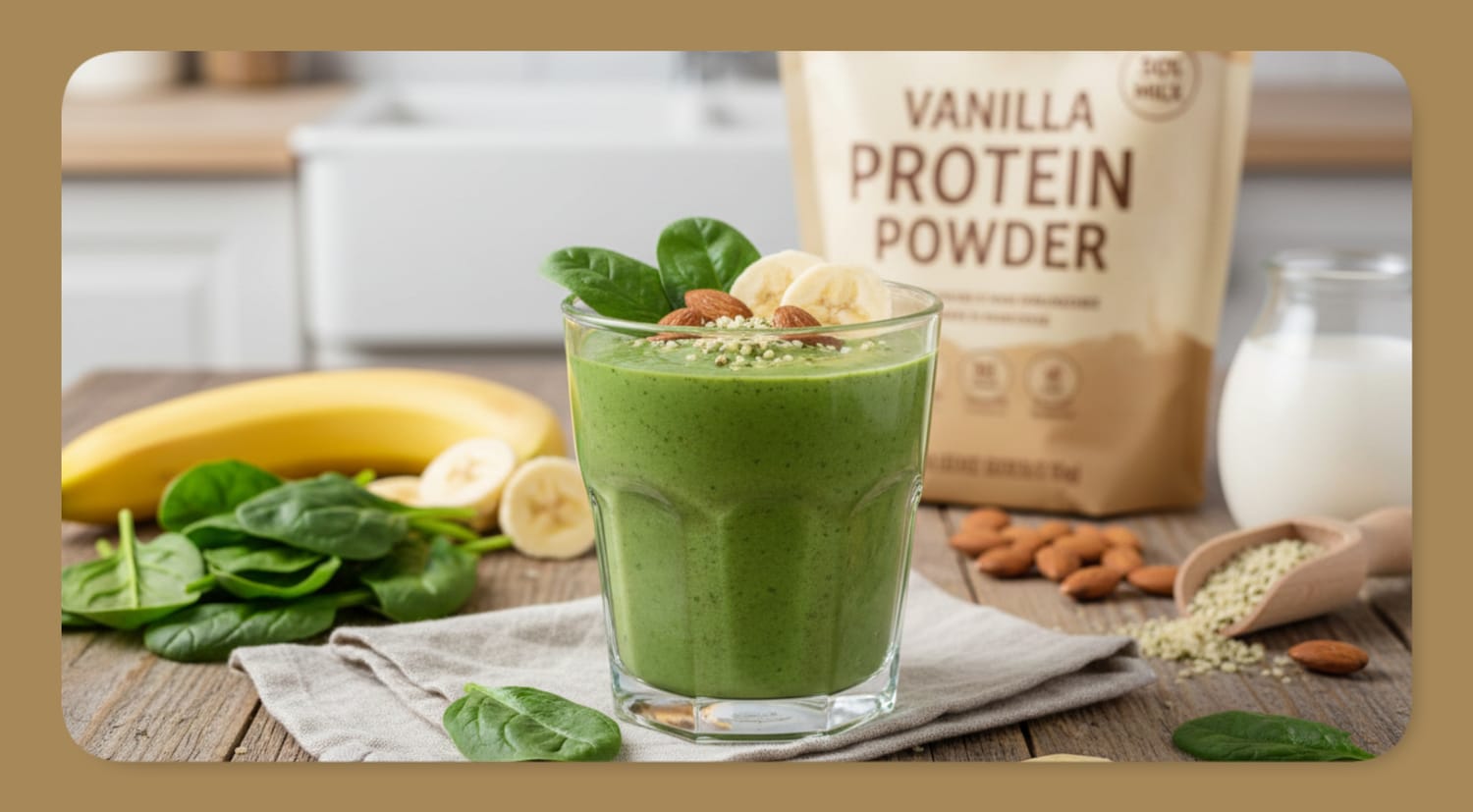
🥬 Energizing Protein-Packed Green Smoothie: Your 5-Minute Breakfast Power-Up
The alarm goes off, and you're already calculating how to fit breakfast into your packed morning. What if I told you that a vibrant, emerald-green smoothie could deliver 25 grams of protein, a full serving of greens, and taste like a vanilla milkshake, all in the time it takes to brew coffee?
This isn't your typical "healthy" smoothie that leaves you hungry an hour later or tastes like lawn clippings. After months of testing different ratios, I've cracked the code for a green smoothie that actually keeps you full until lunch while tasting so good you'll crave it. The secret? The perfect balance of creamy frozen banana, vanilla protein powder that masks any "green" flavor, and just enough almond milk to create that smooth, drinkable consistency without making it watery.
Whether you're rushing to the gym, powering through a busy workday, or just want to start your morning with serious nutrition, this smoothie delivers. It's the answer to that eternal question: "How do I eat healthy when I have zero time?" Best of all, it costs a fraction of those $8 smoothie shop drinks and takes literally 5 minutes from freezer to glass.
🌟 What Makes This Smoothie Special
💪 Serious Protein Power: With 25g of complete protein per serving, this smoothie rivals a chicken breast for protein content. Unlike typical fruit smoothies with only 3 to 5g of protein, this one actually keeps you satisfied for 3 to 4 hours. No mid-morning snack attacks.
🥬 Invisible Greens: Two full cups of fresh spinach disappear completely into the vanilla-banana flavor profile. You get all the iron, folate, and vitamins without any bitter or "grassy" taste. Picky eaters and kids have no idea they're drinking their vegetables.
🍌 Perfectly Balanced Texture: Not chalky like some protein smoothies, not thin like juice. This hits that sweet spot of creamy, velvety smoothness that flows through a straw but still has body. The frozen banana is the secret weapon here, creating that thick milkshake consistency naturally.
💰 Budget-Friendly Nutrition: At roughly $2.50 per serving, you're getting premium nutrition for less than a coffee shop latte. Compare that to $7 to $10 for a similar smoothie at juice bars, and you'll save hundreds per month.
⏱️ True 5-Minute Recipe: This isn't an exaggeration. From grabbing ingredients to finished smoothie, you're looking at 5 minutes max. It's actually faster than sitting in a drive-through and infinitely healthier.
📝 Ingredients
🥬 Base Ingredients:
- 2 cups fresh spinach, packed (60g) - provides iron and vitamins without affecting taste
- 1 medium banana, frozen (120g) - creates creamy texture and natural sweetness
- 1 scoop vanilla protein powder (30g) - delivers 20 to 25g protein and vanilla flavor
- 1 cup unsweetened almond milk (240ml) - light, nutty base that doesn't overpower
- 1/2 cup ice cubes (optional) - for extra thickness and chill
- 1 tablespoon almond butter (optional) - for healthy fats and richness
⚡ Nutritional Boosters (Optional):
- 1 tablespoon ground flaxseed - adds omega-3s and fiber
- 1 tablespoon chia seeds - boosts protein and creates thicker texture
- 1/2 teaspoon vanilla extract - amplifies vanilla flavor
- 1 teaspoon honey or maple syrup - for those who prefer sweeter smoothies
- 1/4 avocado (30g) - makes it ultra-creamy and adds healthy fats
🎨 Flavor Variations:
- 1/2 cup frozen mango - tropical twist
- 2 tablespoons cacao powder - chocolate-mint flavor
- 1/4 teaspoon cinnamon - warming spice note
🔄 Blending Instructions & Technique
A. Preparation:
Freeze Your Banana: For best results, peel and slice your banana before freezing. Cut it into 1-inch chunks and freeze in a single layer on a parchment-lined tray for 2 hours, then transfer to a freezer bag. This prevents one giant frozen banana chunk that's hard to blend.
Room Temperature Protein Powder: If your protein powder is refrigerated, let it sit out for 5 minutes. This helps it dissolve better and prevents clumping.
B. Blend Order & Layering:
- Add liquid first (almond milk): This is crucial. Liquid on the bottom prevents the blender blades from spinning uselessly above dry ingredients and ensures everything blends smoothly without air pockets.
- Add fresh spinach next: Greens blend best when they're closer to the liquid. This ensures they break down completely without leaving fibrous bits.
- Add protein powder: Adding it mid-way prevents it from sticking to the blender bottom or creating clumps on top.
- Add frozen banana chunks on top: Frozen ingredients go last because the blades will pull them down into the liquid as they blend.
- Add ice and optional boosters last: These help weigh down the frozen fruit and keep everything circulating properly.
C. Blending Technique:
Start on low speed for 10 seconds: This breaks up the larger frozen pieces without straining your blender motor. You'll hear the chunks hitting the blades.
Increase to medium speed for 20 seconds: The mixture will start to move more freely as ingredients break down. You'll notice the sound becoming smoother, less clunky.
Finish on high speed for 30 seconds: This is where the magic happens. The smoothie transforms into that silky, uniform texture. The color should brighten to a vibrant emerald green, and the sound will become a smooth, consistent hum.
Total blend time: 1 minute
🎯 Texture checkpoint: The smoothie should coat the back of a spoon and slowly drip off. Not run off immediately (too thin) or stick completely (too thick).
Troubleshooting during blend:
- Too thick? Add almond milk 2 tablespoons at a time while blending on low.
- Too thin? Add 3 to 4 ice cubes or another 1/4 frozen banana.
- Not blending smoothly? Stop the blender, use a spatula to redistribute ingredients, and try again. Some blenders need a little help.
D. Finishing & Serving:
Check final consistency: Pour a small amount into your glass. It should flow smoothly but have body. Think melted soft-serve ice cream, not juice.
Serve immediately: Green smoothies oxidize and separate quickly. The first 15 minutes are when texture and flavor are at their peak.
Pro serving tip: Use a chilled glass to keep your smoothie cold longer. I keep a mason jar in the freezer specifically for morning smoothies.
🥄 Texture & Consistency Guide
For Drinkable Smoothies:
Too Thin? Add:
- 1/4 frozen banana (adds 60 calories)
- 4 to 5 ice cubes (adds 0 calories)
- 1/4 avocado (adds 60 calories but makes it incredibly creamy)
- 2 tablespoons rolled oats (adds 70 calories and makes it more filling)
- 1 tablespoon chia seeds (adds 60 calories and thickens as it sits)
Too Thick? Add:
- Almond milk, 2 tablespoons at a time (adds 7 calories per 2 tbsp)
- Coconut water for natural sweetness (adds 10 calories per 2 tbsp)
- Regular water if you want to keep calories low (adds 0 calories)
Ideal Consistency Indicators:
Drinkable Smoothie: Should flow through a wide straw with gentle suction. When poured, it should ribbon slightly, not splash. Think: liquid enough to drink, thick enough to satisfy.
The Spoon Test: Dip a spoon in and turn it over. The smoothie should coat it and slowly drip off in 2 to 3 seconds. If it runs off immediately, it's too thin. If it clings completely, it's too thick.
Color Indicator: A properly blended green smoothie should be bright, vibrant emerald, not muddy or dull brown-green. If yours looks dull, you may have over-blended (oxidation) or your banana wasn't fully frozen.
📊 Customization Matrix
Liquid Base Options:
| Dairy Options | Non-Dairy Options | Light Options |
|---|---|---|
| Whole milk (adds richness, 150 cal/cup) | Almond milk (light, 30 to 60 cal/cup) | Coconut water (natural electrolytes, 45 cal/cup) |
| 2% milk (balanced, 120 cal/cup) | Oat milk (creamy, 120 cal/cup) | Green tea, cooled (metabolism boost, 0 cal) |
| Kefir (probiotic boost, 110 cal/cup) | Cashew milk (subtle flavor, 25 cal/cup) | Regular water (neutral, 0 cal) |
| Soy milk (protein boost, 80 cal/cup) |
Protein Powder Alternatives:
Plant-Based Proteins:
- Pea protein (similar texture to whey)
- Hemp protein (nutty flavor, adds 3g extra per scoop)
- Soy protein (smooth, mild flavor)
- Brown rice protein (budget-friendly)
Dairy Proteins:
- Whey protein isolate (smoothest texture)
- Whey concentrate (more affordable, slightly thicker)
- Casein protein (ultra-filling, very thick)
No Protein Powder?
- 3/4 cup Greek yogurt = 15 to 18g protein (makes smoothie thicker and tangy)
- 2 tablespoons peanut butter = 8g protein (adds 190 calories)
- 3 tablespoons hemp hearts = 10g protein (adds nutty flavor)
Natural Sweeteners:
| Sweetener | Amount | Calories | Notes |
|---|---|---|---|
| Medjool dates | 2 pitted | 130 | Caramel-like sweetness, adds fiber |
| Honey | 1 tablespoon | 60 | Floral notes, easy to blend |
| Maple syrup | 1 tablespoon | 52 | Subtle sweetness, doesn't overpower |
| Ripe banana | Use 1 whole instead of half | +60 | Most natural option |
| Stevia | 2 to 3 drops | 0 | No calories, very sweet |
Greens Alternatives:
Swap spinach for:
- Kale (more iron, earthier flavor. Use 1 cup instead of 2)
- Swiss chard (milder than kale, use 1.5 cups)
- Romaine lettuce (very mild, use 2 cups)
- Baby spinach (more tender, exact same amount)
- Frozen spinach (use 1/2 cup, more concentrated)
Pro tip: Frozen zucchini (1/2 cup) adds creaminess and nutrients with zero flavor impact.
👨🍳 Chef's Tips for Success
📦 Invest in Pre-Freezing: Every Sunday, I peel and slice 7 bananas, freeze them on a tray, then portion into individual bags. This single habit has made morning smoothies 100% consistent and effortless. No more struggling with rock-hard whole bananas or waiting for fresh ones to freeze.
💧 Liquid Ratio is Everything: Start with 3/4 cup almond milk, blend, then add more if needed. It's exponentially easier to thin a smoothie than to thicken one. I learned this the hard way after wasting several watery batches early on.
🥬 Blend Greens with Liquid First: Before adding anything else, blend your spinach with just the almond milk for 20 seconds. This creates a smooth green base without any leafy bits, especially helpful if you have a less powerful blender.
🌡️ Room Temperature Matters: If your protein powder clumps, it's often because everything is too cold. Let your protein powder sit at room temperature, and your smoothie will be silky every time.
🍌 The Banana Makes or Breaks It: Seriously. A frozen banana creates that thick, creamy, naturally sweet texture that makes this smoothie craveable. Fresh banana makes it thin and less satisfying. Always freeze your bananas for smoothies.
🧊 Storage Wisdom: This smoothie is absolutely best consumed within 15 minutes of blending. If you must store it, keep it in an airtight container in the fridge for up to 24 hours, but expect separation and color change. Shake vigorously before drinking. Personally, I never store them. I just make fresh each morning.
🔧 Equipment Hack for Standard Blenders: Don't have a Vitamix? No problem. Cut your frozen banana into smaller 1/2-inch pieces, let it sit for 2 minutes to slightly thaw, and add an extra 1/4 cup liquid. Your regular blender will handle it just fine, though you might need to blend 20 to 30 seconds longer.
📈 Nutritional Benefits Section
Let's talk real numbers. A typical coffee shop protein smoothie contains 350 to 450 calories, 35 to 50g sugar, and only 10 to 15g protein. This smoothie delivers 320 calories, 25g protein, and just 18g natural sugar from fruit. No added sweeteners needed.
6 Specific Health Benefits:
💪 High Protein Content for Sustained Energy and Muscle Recovery: With 25g of complete protein per serving, this smoothie provides essential amino acids needed for muscle repair and growth. Compare that to a typical fruit smoothie with only 3 to 5g protein, and you'll understand why this one actually keeps you full for 3 to 4 hours instead of leaving you starving by 10 AM.
🥬 Iron from Spinach for Energy and Focus: Two cups of spinach deliver 20% of your daily iron needs, crucial for oxygen transport and preventing that mid-afternoon fatigue. Paired with vitamin C from banana, the iron absorption is enhanced by up to 300%.
🌾 Fiber-Rich Ingredients for Digestive Health and Lasting Fullness: This smoothie packs 7g of fiber from spinach, banana, and optional chia seeds. That's 25% of your daily needs. Fiber slows digestion, stabilizes blood sugar, and keeps you genuinely satisfied rather than reaching for snacks an hour later.
⚡ Potassium for Muscle Function and Recovery: With 450mg of potassium from banana and spinach, this smoothie provides natural electrolyte replenishment, perfect post-workout or for active mornings. That's more potassium than a sports drink without the artificial sweeteners.
🧠 B-Vitamins from Greens for Metabolism and Mood: Spinach delivers folate (B9), riboflavin (B2), and other B-vitamins essential for converting food into energy. These vitamins also support neurotransmitter production, helping maintain steady mood and focus throughout your morning.
🥑 Healthy Fats for Brain Function and Nutrient Absorption: Adding almond butter or avocado provides monounsaturated fats that help absorb fat-soluble vitamins (A, D, E, K) from the greens. These healthy fats also support brain health and keep you satisfied longer by slowing carbohydrate absorption.
Macro Breakdown:
Protein: 25g (50% of daily needs for a 130lb person)
Fats: 6g (9g with optional almond butter)
Sugar: 18g (all natural from fruit, no added sugars)
Why This Matters: This macro profile creates the trifecta of sustainable energy: adequate protein for satiety and muscle maintenance, complex carbs for immediate fuel, and enough healthy fats to prevent blood sugar crashes. Unlike sugary breakfast options or carb-heavy meals that spike and crash your energy, this smoothie provides steady fuel for 3 to 4 hours. For anyone trying to build muscle, lose weight, or simply maintain energy through busy mornings, this nutritional balance is exactly what your body needs. And it tastes like a vanilla milkshake.
🔌 Best Blender Types & Equipment
High-Speed Blenders (Ideal):
Vitamix, Blendtec, Ninja Professional Series - These powerhouses make the absolute smoothest texture with zero chunks or fibrous bits. The high-powered motors (1000 to 1500 watts) pulverize frozen bananas in seconds and ensure spinach disappears completely.
Best for: Daily smoothie makers, anyone making 5+ smoothies per week, smoothie bowls, nut butters
Investment: $200 to $500, but they last 7 to 10 years
Why it matters: Cuts blend time in half and creates restaurant-quality texture
Standard Blenders (Works Great):
KitchenAid, Hamilton Beach, Oster, Most Kitchen Blenders - These work perfectly fine for this recipe. You'll just need to blend 20 to 30 seconds longer and cut ingredients slightly smaller.
Tip: Cut frozen banana into 1/2-inch pieces rather than 1-inch chunks. Add liquid first and blend greens separately for 15 seconds before adding other ingredients.
Best for: Occasional smoothie makers, budget-conscious buyers
Reality check: You might get a few tiny spinach flecks, but the taste and nutrition are identical
Personal/Bullet Blenders (Convenient):
NutriBullet, Magic Bullet, Nutri Ninja - Perfect for single servings and incredibly convenient for on-the-go lifestyles. This recipe fits perfectly in a standard NutriBullet cup.
Critical tips:
- Don't fill past the MAX line (leave 2 inches at top)
- Blend in 30-second intervals to prevent motor overheating
- Shake the cup between intervals to redistribute ingredients
Best for: Singles, dorm rooms, small kitchens, grab-and-go mornings
Immersion Blenders (Not Recommended):
While an immersion blender can technically work for non-frozen smoothies, it really struggles with frozen bananas and doesn't fully break down spinach. If this is your only option, let the banana thaw for 10 minutes and blend in a deep, narrow container.
Other Helpful Tools:
- Wide-Mouth Mason Jars (16 to 24oz): Perfect for serving and storage. I keep two in the freezer for instantly chilled smoothies.
- Reusable Silicone Straws: Essential for thick smoothies. Metal straws get too cold, plastic is wasteful. Silicone is the sweet spot.
- Ice Cube Trays: Freeze leftover smoothie into cubes, then blend with fresh almond milk for a quick "smoothie 2.0" the next day.
- Portion Scale: If you're tracking macros, a $10 kitchen scale helps you nail consistent protein powder measurements (1 scoop isn't always 30g).
📦 Storage, Prep & Serving
Immediate Serving:
The 15-Minute Window: This smoothie is at peak perfection within 15 minutes of blending. The texture is creamiest, the color is brightest, and the flavors are most vibrant. After that, oxidation begins, color dulls slightly, and separation starts.
Serve in a chilled glass: I keep mason jars in the freezer specifically for morning smoothies. That first sip hitting a frozen glass keeps everything cold for 20+ minutes.
Use a wide straw: Standard coffee straws are too narrow for this thick smoothie. Go for bubble tea straws or smoothie straws (12mm diameter).
Short-Term Storage:
Refrigerator: Up to 24 hours - Store in an airtight container (mason jar with lid is ideal). The smoothie will separate into layers. This is completely normal. The protein and fiber settle to the bottom while liquid rises to the top.
Before drinking: Shake vigorously for 15 to 20 seconds. The color will be slightly duller (oxidation), and the texture may be thinner, but it's still nutritious and drinkable.
Honest assessment: I never recommend making this the night before if you can avoid it. The texture and flavor really are noticeably better fresh.
Make-Ahead Smoothie Packs:
This is where meal prep magic happens. Every Sunday, I portion out 5 to 7 freezer bags with all ingredients except liquid:
Per bag include:
- 2 cups spinach
- 1 frozen banana (pre-sliced)
- 1 scoop protein powder (in a small separate bag or container inside)
- Any optional boosters (chia seeds, flax)
Label each bag: "Green Protein Smoothie - Add 1 cup almond milk"
Freeze for up to 3 months
Morning routine: Dump contents into blender, add 1 cup almond milk, blend for 1 minute. Seriously, that's it. From freezer to finished smoothie in 90 seconds.
Cost savings: Buying spinach in bulk and freezing prevents waste. I save roughly $30/month doing this versus buying fresh spinach that wilts in my fridge.
Freezing Finished Smoothies:
Ice cube tray method: Pour smoothie into ice cube trays, freeze completely (4 hours), then transfer cubes to freezer bag.
To use: Blend 6 to 8 smoothie cubes with 1/2 cup almond milk for a quick "smoothie slush." This is amazing for post-workout refreshment.
Freezer bag method: Pour smoothie into freezer-safe bags, flatten, and freeze for up to 1 month. Thaw overnight in fridge or break into chunks and re-blend with a splash of liquid.
Meal Prep Benefits:
⏰ Save 10 to 15 minutes on busy mornings - That's an extra 10 minutes of sleep or a more relaxed start to your day.
🗑️ Reduce food waste - Use spinach before it wilts, bananas before they brown, and ensure nothing gets forgotten in the back of your produce drawer.
💰 Financial savings - Pre-portioning prevents over-buying fresh ingredients that spoil. You'll save $20 to $40 monthly on wasted produce.
✅ Consistency - When ingredients are pre-measured, your smoothie tastes perfect every time. No more "oops, too much protein powder" or "why is this so watery?"
🍽️ Serving Suggestions & Occasions
Best Times to Enjoy:
☀️ Breakfast on-the-go: This is where this smoothie truly shines. Make it while your coffee brews, drink it during your commute, and arrive at work or the gym properly fueled. The 25g protein keeps you satisfied until lunch. No mid-morning vending machine temptation.
🏋️ Pre-Workout Fuel (30 to 60 minutes before): The natural carbs from banana provide quick energy, while protein supports your workout. It's light enough not to slosh in your stomach but substantial enough to power through a tough session.
💪 Post-Workout Recovery (within 30 minutes): The 3:1 carb-to-protein ratio is ideal for muscle recovery. Add an extra 1/2 scoop of protein powder if you've done heavy strength training.
⚡ Afternoon Energy Boost: When that 3 PM slump hits, this beats coffee hands down. You get sustained energy without the caffeine jitters or 5 PM crash.
🍽️ Meal Replacement (with modifications): Add 2 tablespoons almond butter and 1/4 avocado to bring calories to 450 to 500 and make it a complete meal with healthy fats.
Perfect Pairings:
With whole grain toast and avocado: The smoothie provides protein and nutrients, the toast adds complex carbs and healthy fats. You've got a complete, balanced meal.
Alongside a protein muffin or hard-boiled eggs: For particularly active mornings or if you prefer to "eat" some of your breakfast, pair the smoothie with solid protein.
For a lighter breakfast: The smoothie standalone is perfect. At 320 calories with 25g protein, it's legitimately filling for 3 to 4 hours.
Make It a Complete Meal:
If you need this to carry you through a longer morning (5+ hours until lunch):
Boost protein to 30 to 35g: Add 1/2 scoop extra protein powder or 1/2 cup Greek yogurt
Include healthy fats: Add 2 tablespoons almond butter or 1/4 avocado (adds 170 to 90 calories)
Increase volume with fiber: Add 1/4 cup rolled oats to the blend (adds 75 calories and makes it incredibly filling)
Final nutrition: ~500 to 550 calories, 30 to 35g protein, 10 to 12g healthy fats, 9 to 10g fiber. This will genuinely sustain you for 5 to 6 hours.
💭 Final Thoughts
Here's what I love most about this smoothie: it erases the false choice between "healthy" and "delicious." For years, I thought green smoothies had to taste like punishment. That earthy, grass-clipping flavor that made me grimace with every sip. This recipe proves that wrong. The vanilla protein and frozen banana create such a naturally sweet, creamy base that the spinach becomes completely invisible. My most skeptical friend (who swore she'd "never drink anything green") now makes this four times per week.
The real game-changer is how genuinely filling this is. We've all made the mistake of grabbing a sugary coffee drink or skipping breakfast entirely, only to feel ravenous and unfocused by 10 AM. With 25g of protein and 7g of fiber, this smoothie keeps you satisfied and mentally sharp for 3 to 4 hours, comparable to a full meal but ready in 5 minutes. Whether you're rushing kids out the door, heading to the gym, or starting a packed workday, you're not compromising nutrition for convenience.
And the customization options mean this recipe grows with you. Prefer it sweeter? Add a date. Need more calories post-workout? Toss in almond butter. Want to meal prep for the entire week? Batch your freezer packs on Sunday. This recipe adapts to your life rather than demanding you adapt to it.
Your mornings just got easier, healthier, and more delicious. No more choosing between nutrition and time, between taste and wellness. This smoothie delivers on every front, and costs a fraction of what you'd pay at a juice bar. Make your first batch tomorrow morning and see what I mean. I guarantee you'll save this recipe and come back to it again and again.
❓ FAQ Section
Can I use fresh spinach instead of frozen, or frozen instead of fresh?
Absolutely! Fresh spinach is actually what I recommend in this recipe because it blends more easily and has a milder flavor. If you want to use frozen spinach, use 1/2 cup (about 50g) since frozen is more concentrated, and let it thaw for 2 to 3 minutes before blending so it doesn't create ice chunks. Frozen spinach will make your smoothie slightly colder and thicker, which some people love.
What's the best dairy-free milk alternative for this smoothie?
Unsweetened almond milk is my go-to because it's light, mildly nutty, and doesn't overpower the vanilla flavor. However, oat milk creates an incredibly creamy texture if you prefer richness, and cashew milk is neutral and smooth. Avoid coconut milk from a can (too thick) and go for coconut milk beverage if you want that tropical hint. For the highest protein, choose soy milk which adds an extra 7g protein per cup.
Can I make this without protein powder?
Yes! Replace the protein powder with 3/4 cup plain Greek yogurt (adds 15 to 18g protein) or 2 heaping tablespoons peanut/almond butter (adds 8g protein). Keep in mind the texture will be thicker with yogurt and the flavor will be nuttier with nut butter. You can also use 3 tablespoons hemp hearts for 10g plant-based protein, though the texture will be slightly grainier.
Why is my smoothie too watery?
The most common culprit is using fresh banana instead of frozen. A frozen banana creates that thick, creamy base. Fresh banana makes everything thin. Other causes: too much liquid (start with 3/4 cup, not 1 full cup), ice that melted while blending, or not enough frozen ingredients. Quick fix: add 1/4 frozen banana, 4 to 5 ice cubes, or 2 tablespoons rolled oats and blend again.
How can I make this thicker without adding calories?
Frozen cauliflower rice is your secret weapon. Add 1/2 cup and it thickens beautifully with zero flavor impact and only 15 calories. Ice cubes work too (0 calories). Frozen zucchini (1/2 cup) adds creaminess for just 10 calories. Or reduce your liquid to 3/4 cup almond milk instead of 1 cup. All of these maintain the consistency without affecting your macro goals.
My smoothie separated in the fridge. Is it still good?
Yes, completely normal and totally safe! Separation happens because protein and fiber settle while liquid rises. This doesn't mean it's spoiled. Just shake the container vigorously for 15 to 20 seconds before drinking, and it'll recombine. The color may be slightly duller due to oxidation, but the nutrition and safety are unchanged. Consume within 24 hours for best quality.
Can I make this the night before?
You technically can, but I don't recommend it if you have the option to blend fresh. The texture becomes thinner, the color oxidizes to a duller green, and it needs vigorous shaking before drinking. If morning time is truly impossible, make it the night before. But try the "smoothie pack" method instead: prep all ingredients in a freezer bag, then just blend with liquid in the morning (takes 90 seconds total). You'll get that fresh texture with minimal effort.
Do I need a high-speed blender like a Vitamix?
Nope! While high-speed blenders create the smoothest texture, a standard kitchen blender works great for this recipe. The trick is cutting your frozen banana into smaller pieces (1/2-inch chunks instead of 1-inch), adding liquid first, and blending for an extra 20 to 30 seconds. You might get a few tiny spinach flecks, but the taste is identical. I made this in a $40 Hamilton Beach blender for two years before upgrading. It was delicious every time.
📖 Glossary of Key Terms
Almond Butter: Ground almonds blended into a creamy, spreadable paste. Richer and less sweet than peanut butter. Contains healthy monounsaturated fats and adds 8g protein per 2 tablespoons. Makes smoothies incredibly creamy and helps you stay full longer by slowing carbohydrate digestion.
Base Liquid: The liquid foundation that determines your smoothie's final consistency. Almond milk creates a light, drinkable texture; oat milk makes it creamier; water keeps it lean; coconut water adds natural sweetness. Always start with less liquid than you think you need. You can always thin it, but thickening requires more frozen ingredients.
Chia Seeds: Tiny black or white seeds from the Salvia hispanica plant, packed with omega-3 fatty acids and fiber. When added to smoothies, they absorb liquid and create a thicker, pudding-like consistency over time. They add 60 calories, 5g fiber, and 3g protein per tablespoon without affecting flavor.
Complete Protein: A protein source containing all nine essential amino acids your body cannot produce on its own. Whey, soy, and pea protein powders are complete proteins, making them ideal for muscle recovery and satiety. This matters because incomplete proteins (like rice protein alone) don't provide full amino acid profiles.
Frozen Banana: The secret weapon for creamy, thick smoothies without dairy or ice cream. Freezing banana concentrates its sweetness and transforms the texture. When blended, frozen banana creates a soft-serve consistency. Always freeze bananas peeled and pre-sliced for easiest blending.
Greek Yogurt: Strained yogurt with whey removed, resulting in double the protein of regular yogurt (15 to 20g per cup versus 8 to 10g). Adds tanginess and creamy body to smoothies. Full-fat versions create richer texture; non-fat keeps calories lower while maintaining protein content.
High-Speed Blender: Professional-grade blenders with motors rated 1000+ watts (Vitamix, Blendtec, Ninja Pro) that pulverize frozen ingredients and greens into perfectly smooth texture in 30 to 60 seconds. Worth the investment if you make smoothies daily, but standard blenders work fine with a few adjustments.
Macro Breakdown: The distribution of macronutrients (protein, carbohydrates, fats) in a recipe, usually measured in grams. Understanding macros helps you align meals with fitness goals: high protein for muscle building, balanced macros for sustained energy, or adjusted ratios for specific diets like keto or high-carb.
Oxidation: Chemical reaction when smoothie ingredients are exposed to air, causing color to dull and nutrients (particularly vitamin C) to degrade slightly. This is why green smoothies turn brownish-green after sitting. Doesn't affect safety or taste significantly, but fresh is always best for maximum nutrition and visual appeal.
Protein Powder: Concentrated protein supplement available in whey (dairy-based), plant-based (pea, hemp, rice, soy), or collagen forms. One scoop typically provides 20 to 25g protein. Vanilla or unflavored varieties work best for green smoothies as they don't compete with the natural fruit flavors. Quality matters. Cheap protein powders can taste chalky or artificial.
Smoothie Pack: Pre-portioned freezer bags containing all smoothie ingredients except liquid, ready to dump and blend. Game-changer for busy mornings. Prep 5 to 7 packs on Sunday, and you have instant healthy breakfasts all week. Eliminates decision fatigue and ensures consistent nutrition when you're rushed.
Spinach (Fresh vs. Frozen): Leafy green vegetable incredibly high in iron, folate, and vitamins A and K. Fresh spinach has milder flavor and blends more easily; frozen spinach is more concentrated (use half the amount) and more affordable. Baby spinach is most tender and has the mildest taste, perfect for smoothie beginners or picky eaters.
🎉 Share Your Success!
What's your biggest morning challenge that keeps you from eating a healthy breakfast? Is it time, taste preferences, or figuring out what actually keeps you full? This smoothie was designed to solve all three, and I'm genuinely curious whether it works for your routine.
If you've already tried it, did you stick with the classic recipe or customize it? I'd love to hear if you discovered any genius variations. Some readers have added frozen mango for a tropical twist or cacao powder for a chocolate-mint vibe, and those tweaks have made it into my regular rotation.
Pin this recipe to your Pinterest smoothie board so you can find it again on those chaotic mornings when you need it most. Trust me, future-you will thank present-you for bookmarking this one.
Drop a comment below and let me know how it turned out! Did it actually keep you full until lunch? Did your kids (or skeptical partner) realize they were drinking spinach? I read every comment and often feature reader variations in my weekly roundups.
Follow me on Pinterest for more high-protein breakfast recipes, meal prep hacks, and smoothie combinations that actually taste like treats. I post new recipes every week specifically designed for busy, health-conscious lifestyles. No fluff, just recipes that work.
Tag your smoothie photos with your favorite morning routine tips. I love seeing how this recipe fits into real life, whether that's a gym bag selfie, a desk breakfast, or a proud moment getting kids to drink their greens. Your success stories genuinely make my day! 🥬💪🌟
More Delicious Smoothies to Try
Affiliate Disclosure
This page may contain affiliate links. This means that if you click on one of these links and make a purchase, I may receive a small commission at no additional cost to you. This helps support the blog and allows me to continue creating free content. I only recommend products or services that I use personally and believe will add value to my readers. Your support is appreciated!
Created with ©simplyhealthynews