
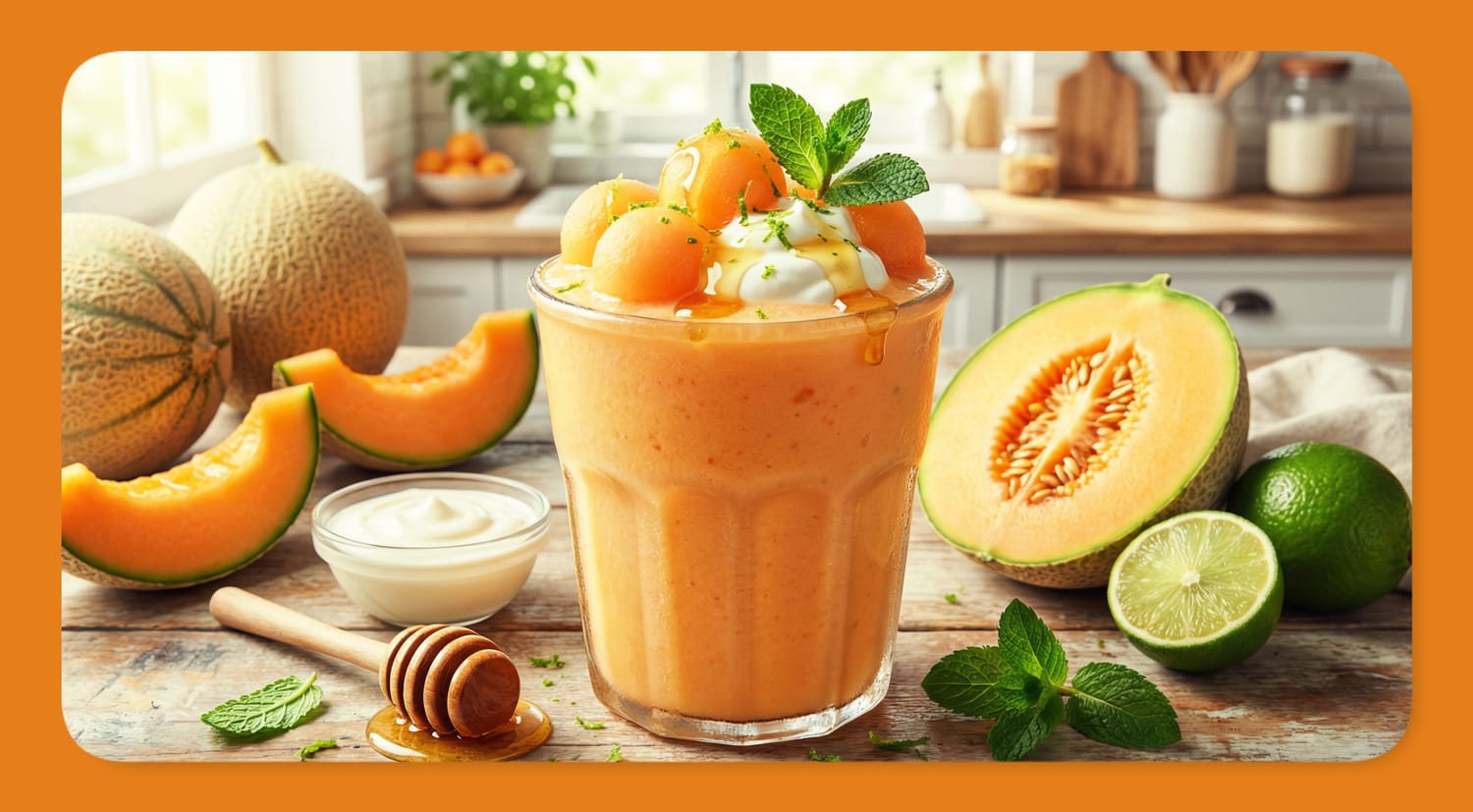
Refreshing Cantaloupe Smoothie: Unexpected Melon Magic You'll Crave All Summer
Cool, creamy, and bursting with sweet melon flavor, this is the summer drink you didn't know you needed.
Juicy, ripe cantaloupe blended with tangy Greek yogurt, a squeeze of fresh lime, and a drizzle of honey transforms into a frosty glass of pure refreshment. It's hydrating, it's satisfying, and it tastes like sunshine in a cup.
Most smoothie recipes stick to the usual berry and banana combinations, and there's nothing wrong with that. But if you've ever bitten into a perfectly ripe cantaloupe on a hot day and thought, "Why don't I blend this?" then you're about to have your moment. I developed this recipe after one too many watery, flavorless melon attempts. The secret? Freezing the cantaloupe first and pairing it with Greek yogurt for body and lime for brightness. The result is a melon smoothie that's creamy, naturally sweet, and packed with hydrating nutrients that store-bought juice blends simply can't match.
Whether you're looking for a quick afternoon pick-me-up, a light breakfast on a warm morning, or a healthy snack that actually tastes indulgent, this cantaloupe smoothie recipe delivers. It takes just 5 minutes, uses simple grocery store ingredients, and offers a flavor profile that will make you rethink everything you thought you knew about melon smoothies.
What Makes This Cantaloupe Smoothie Special
- Seriously Hydrating: Cantaloupe is over 90% water, and paired with coconut water, this smoothie is a natural hydration powerhouse. Perfect for hot days and post-workout recovery.
- Unexpectedly Creamy: Frozen cantaloupe plus Greek yogurt creates a luscious, velvety texture you wouldn't expect from a melon smoothie. No chalky protein powders or gummy thickeners needed.
- Perfectly Balanced Flavor: The combination of sweet melon, tangy yogurt, bright lime, and a touch of honey hits every note without being cloyingly sweet.
- Protein-Packed for a Fruit Smoothie: With 13g of protein per serving, this smoothie keeps you fuller far longer than typical fruit blends that average just 2 to 3g.
- Gorgeous Sunset Color: A vibrant, warm orange hue that's naturally Pinterest-worthy. No food coloring, no filters, just real cantaloupe doing its thing.
Ingredients
Base Ingredients:
- 2 cups frozen cantaloupe chunks (300g), provides creaminess and natural sweetness
- 1/2 medium banana, frozen (60g), adds thickness and potassium
- 1/2 cup plain Greek yogurt (120g), for protein, probiotics, and creamy tang
- 1/2 cup coconut water (120ml), enhances hydration and adds subtle sweetness
- Juice of 1/2 lime (about 1 tablespoon), brightens all the flavors
- 1 tablespoon honey (optional, for extra sweetness)
Nutritional Boosters (Optional):
- 1 scoop vanilla protein powder (for extra protein)
- 1 tablespoon chia seeds (for fiber and omega-3s)
- 1/4 teaspoon fresh ginger, grated (for a zingy kick and digestion support)
- 1 tablespoon collagen powder (for skin and joint support)
Smoothie Bowl Toppings (Optional):
- Fresh cantaloupe cubes
- Granola
- Toasted coconut flakes
- Fresh mint leaves
- Drizzle of honey
- Sliced kiwi or fresh berries
Blending Instructions & Technique
A. Preparation
For the best results, freeze your cantaloupe ahead of time. Cut ripe cantaloupe into 1-inch chunks, spread them on a parchment-lined baking sheet, and freeze for at least 2 hours or overnight. Once frozen solid, transfer to a freezer bag. This step is what transforms your smoothie from watery and thin to thick, creamy, and frosty.
If your banana isn't frozen yet, peel it, break it into chunks, and freeze it alongside the cantaloupe.
B. Blend Order & Layering
- Pour the coconut water into the blender first. Liquid on the bottom prevents the blades from jamming and creates a vortex that pulls frozen ingredients down.
- Add the Greek yogurt and lime juice. This lets the wet ingredients combine with the liquid before the frozen fruit goes in.
- Add the frozen cantaloupe and banana last. Placing frozen ingredients on top allows gravity to push them toward the blades as the liquid base circulates.
- Add honey or any optional boosters on top so they blend evenly throughout.
C. Blending Technique
- Start on low speed for 10 to 15 seconds to break up the frozen chunks.
- Increase to high speed and blend for 30 to 45 seconds, or until completely smooth.
- Use your tamper or pause and stir if needed. Thick, frozen cantaloupe can create air pockets, so don't hesitate to stop and push ingredients toward the blades.
- Listen for the motor. You'll hear the blender motor smooth out when everything is fully incorporated. That change in sound means your smoothie is ready.
D. For Smoothie Bowls
To make this a smoothie bowl, reduce the coconut water to just 2 to 3 tablespoons and add an extra 1/2 cup of frozen cantaloupe. The mixture should be thick enough that a spoon stands upright in it, like soft-serve ice cream. Scoop into a chilled bowl and add your toppings right away, before it begins to melt.
E. Finishing & Serving
- The finished smoothie should be a vibrant, warm orange color, like a summer sunset.
- For drinkable smoothies, pour into a chilled glass and serve immediately.
- For bowls, scoop gently and arrange toppings in rows or clusters for that Pinterest-perfect presentation.
- A fresh mint sprig or lime wedge on the rim adds a beautiful finishing touch.
Texture & Consistency Guide
For Drinkable Smoothies:
- Too Thin? Add more frozen cantaloupe (1/4 cup at a time), a few ice cubes, or half a frozen banana.
- Too Thick? Add coconut water or regular water, 2 tablespoons at a time, until it flows smoothly through a straw.
For Smoothie Bowls:
- Perfect Bowl Consistency: Should hold toppings on the surface without sinking, like soft-serve ice cream.
- The Secret: Use minimal liquid and keep everything frozen solid until the moment you blend.
- The Test: Your spoon should stand straight up in the center without falling over.
Ideal Consistency Indicators:
- Drinkable: Flows through a wide straw but has noticeable body. Coats the back of a spoon lightly.
- Bowl: Thick, scoopable, and holds its shape when transferred to a bowl. Toppings stay on top, not sinking in.
Customization Matrix
| Category | Options |
|---|---|
| Liquid Base | Coconut water (most hydrating), almond milk, oat milk, regular water, orange juice (sweeter) |
| Protein Boosters | Greek yogurt, vanilla protein powder, hemp seeds, cottage cheese, collagen powder |
| Natural Sweeteners | Honey (1 tbsp), maple syrup (1 tbsp), 2 to 3 pitted dates, extra ripe banana, frozen mango |
| Thickness Enhancers | Extra frozen cantaloupe, frozen banana, frozen cauliflower rice, 1/4 avocado, 1/4 cup oats |
| Flavor Enhancers | Fresh mint, fresh ginger, vanilla extract, cinnamon, orange zest |
| Nutrient Boosters | Chia seeds, flax seeds, turmeric, spinach (mild flavor), collagen powder |
Dairy-Free Swap: Replace Greek yogurt with coconut yogurt or silken tofu for the same creamy texture without dairy.
Tropical Twist: Add 1/2 cup frozen mango or pineapple to push the flavor in an island-inspired direction.
Chef's Tips for Success
- Choose ripe cantaloupe. The best cantaloupe smoothies start with perfectly ripe fruit. Look for melons that feel heavy for their size, have a sweet aroma at the stem end, and give slightly when pressed. Under-ripe cantaloupe will taste bland and watery no matter what you add.
- Always freeze your cantaloupe first. This is the single most important step. Fresh cantaloupe blends into a thin, watery drink. Frozen cantaloupe creates that thick, frosty, creamy texture that makes this recipe special.
- Freeze in a single layer before bagging. Spread cantaloupe chunks on a parchment-lined baking sheet and freeze until solid, then transfer to freezer bags. This prevents one giant frozen clump that's impossible to blend.
- Don't skip the lime. It might seem like a small addition, but lime juice is the secret weapon. It brightens the melon flavor, balances the sweetness, and helps keep the color vibrant rather than dull.
- Add liquid slowly. Start with less liquid than you think you need. You can always pour in another splash, but you can't take it out. This matters especially for smoothie bowl consistency.
- Blend greens first if adding them. If you want to sneak in spinach or other greens, blend them with the liquid base first until smooth, then add the frozen fruit. This prevents green flecks in your beautiful orange smoothie.
- Taste and adjust before pouring. Give it a quick taste. Need more sweetness? Add a small drizzle of honey. Want more tang? Squeeze in extra lime. This 10-second step makes a big difference in your final result.
Nutritional Benefits
This cantaloupe smoothie is more than just a pretty, refreshing drink. Every sip delivers real nutritional value that supports your health goals.
- Vitamin A (Beta-Carotene) for Skin and Eye Health: Cantaloupe is one of the richest fruit sources of beta-carotene. One serving of this smoothie provides over 100% of your daily Vitamin A needs, supporting healthy skin, strong vision, and immune function.
- High Water Content for Superior Hydration: With cantaloupe being over 90% water and coconut water adding natural electrolytes, this smoothie hydrates more effectively than many sports drinks, without the artificial colors, flavors, or added sugars.
- Protein from Greek Yogurt for Sustained Fullness: At 13g of protein per serving, this smoothie keeps you satisfied far longer than a typical fruit smoothie, which averages just 2 to 3g of protein per glass.
- Vitamin C for Immune Support: Between the cantaloupe and fresh lime juice, you get a powerful dose of Vitamin C, an antioxidant that supports immune health, collagen production, and iron absorption.
- Potassium for Heart Health and Muscle Function: Cantaloupe and banana together deliver a strong potassium punch, supporting healthy blood pressure and proper muscle recovery after exercise.
- Probiotics from Greek Yogurt for Gut Health: Live cultures in Greek yogurt support a healthy gut microbiome, improving digestion and nutrient absorption over time.
Macro Breakdown (Per Serving, Without Honey):
| Nutrient | Amount |
|---|---|
| Calories | ~220 kcal |
| Protein | 13g |
| Carbohydrates | 45g (4g fiber) |
| Fat | 1g |
| Sugar | 35g (all natural from fruit and dairy) |
*Adding 1 tablespoon of honey adds approximately 64 calories and 17g of sugar.*
Why This Matters: This nutritional profile makes the cantaloupe smoothie an ideal hydrating snack or light breakfast, especially during warmer months. The combination of protein and natural carbohydrates provides quick energy without a sugar crash, while the high water content supports hydration that plain water alone often can't match.
Best Blender Types & Equipment
High-Speed Blenders (Ideal):
Vitamix, Blendtec, and Ninja models handle frozen cantaloupe effortlessly, creating the smoothest, silkiest texture in under 60 seconds. Best for daily smoothie makers and anyone who wants perfect smoothie bowl consistency.
Standard Blenders (Works Great):
Most kitchen blenders can handle this recipe well. Just let your frozen cantaloupe sit on the counter for 3 to 5 minutes before blending, and cut chunks to about 1/2 inch. Add liquid first and be patient with the blending process.
Personal/Bullet Blenders (Convenient):
NutriBullet and Magic Bullet blenders work nicely for single servings. Don't overfill past the MAX line, and you may need to shake or tap the cup a few times during blending to redistribute ingredients.
No Blender? No Problem:
An immersion blender works if your cantaloupe is thawed or fresh, though the texture won't be as thick. A food processor can work in a pinch, but it won't achieve the same silky smoothness.
Other Helpful Tools:
- Wide reusable straws (cantaloupe smoothies can be thick)
- Mason jars for on-the-go serving and storage
- Ice cube trays for freezing leftover smoothie into cubes
- Parchment-lined baking sheet for freezing cantaloupe chunks in a single layer
Storage, Prep & Serving
Immediate Serving
This smoothie is best enjoyed within 15 minutes of blending, while it's cold, thick, and vibrant. Serve in a chilled glass for drinkable smoothies or a chilled bowl for smoothie bowls.
Short-Term Storage
Refrigerator: Store in an airtight container (mason jars work great) for up to 24 hours. The smoothie will separate and may lose some of its bright orange color. This is completely normal. Just shake or stir well before drinking.
Make-Ahead Smoothie Packs
This recipe is perfect for meal prep:
- Portion frozen cantaloupe chunks and frozen banana into individual freezer bags.
- Label each bag with the smoothie name and a reminder: "Add 1/2 cup coconut water + 1/2 cup Greek yogurt + 1 tbsp lime juice."
- Freeze for up to 3 months.
- On busy mornings, dump the bag into your blender, add the fresh ingredients, and blend. Done in under 3 minutes.
Freezing Finished Smoothies
- Pour leftover smoothie into ice cube trays and freeze.
- Use frozen smoothie cubes as a base for future smoothies (just blend with a splash of liquid).
- Frozen cubes keep for up to 1 month.
Meal Prep Benefits
- Save 10+ minutes on busy mornings
- Use up ripe cantaloupe before it goes bad (less food waste!)
- Ensure you always have a healthy, hydrating option ready in your freezer
Serving Suggestions & Occasions
Best Times to Enjoy:
- Hot summer mornings when you want something cool and light
- Afternoon pick-me-up on warm days
- Post-workout recovery (natural electrolytes and protein)
- Healthy dessert alternative after dinner
- Poolside or patio sipping
Perfect Pairings:
- With: A handful of almonds or walnuts for added healthy fats
- With: Whole grain toast with almond butter for a complete breakfast
- As: A light, hydrating snack between meals
- For smoothie bowls: Top with granola, fresh fruit, coconut flakes, and a drizzle of honey for a complete meal
Make It a Complete Meal:
- Add a scoop of protein powder for 25g+ total protein
- Include a tablespoon of nut butter for healthy fats and extra calories
- Stir in 1/4 cup oats for more fiber and sustained energy
- Top your bowl with granola and seeds for crunch and balanced nutrition
Final Thoughts
This cantaloupe smoothie might just become the most unexpected favorite in your smoothie rotation. It's light, naturally sweet, incredibly hydrating, and comes together in just 5 minutes with ingredients you can find at any grocery store. The combination of juicy cantaloupe, tangy Greek yogurt, and bright lime creates a flavor that's refreshing without being boring and satisfying without being heavy.
Whether you blend it up as a quick morning drink, an afternoon refresher, or a gorgeous smoothie bowl for a lazy weekend brunch, this recipe adapts to your life. Use the customization matrix to make it your own. Try different toppings, swap the liquid base, or add your favorite protein booster. There's no wrong way to enjoy it.
Your summer sipping just got a serious upgrade. Give this cantaloupe smoothie a try, and don't forget to come back and let me know what you think. I have a feeling this one is going to surprise you.
Frequently Asked Questions
Glossary of Key Terms
Share Your Success!
Have you tried using cantaloupe in your smoothies before, or is this your first time experimenting with melon? I'd love to hear how it turned out for you. Did the lime make a difference? Did you discover any fun topping combinations or flavor add-ins?
Drop a comment below and let me know your thoughts. I'm always looking for new ways to customize this recipe, and your ideas might inspire the next variation!
Save this recipe to your Pinterest smoothie board so you can find it whenever cantaloupe season hits or you spot a gorgeous melon at the store.
Follow my Pinterest for more healthy smoothie recipes, meal prep ideas, and easy snack inspiration! And if you make this cantaloupe smoothie, tag me in your photos. I feature my favorites and would love to see your creations!
More Delicious Smoothies to Try
Affiliate Disclosure
This page may contain affiliate links. This means that if you click on one of these links and make a purchase, I may receive a small commission at no additional cost to you. This helps support the blog and allows me to continue creating free content. I only recommend products or services that I use personally and believe will add value to my readers. Your support is appreciated!
Created with ©simplyhealthynews