
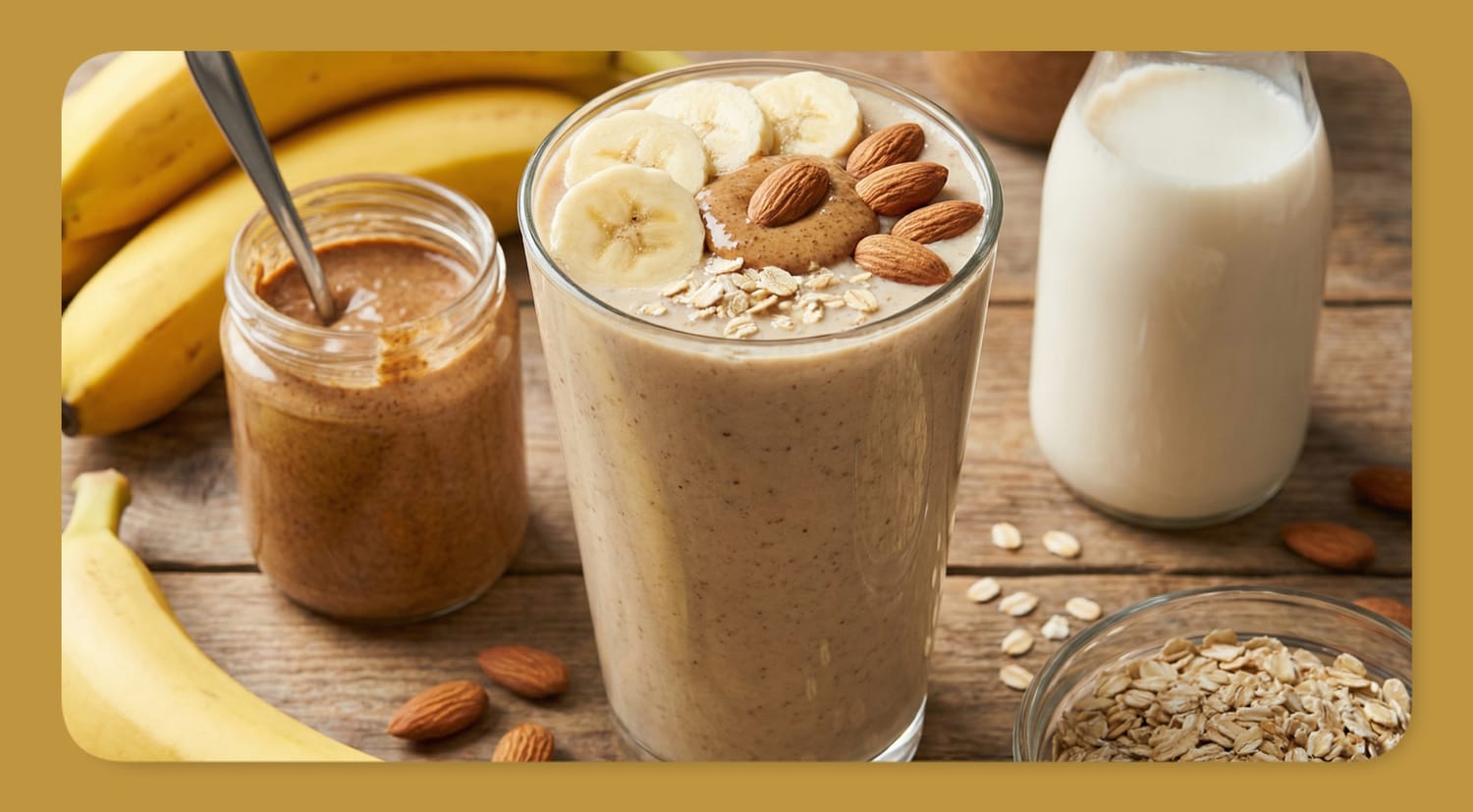
Protein-Packed Almond Butter Banana Smoothie: Morning Fuel That Actually Keeps You Full
The first sip hits your taste buds with a wave of creamy, nutty richness, like the world's healthiest peanut butter cup decided to become your breakfast. This isn't your average watery fruit smoothie that leaves you hungry an hour later. This is the kind of smoothie that makes you cancel your breakfast sandwich order because you've finally found something that tastes indulgent while actually fueling your body properly.
I developed this recipe after years of struggling with the classic smoothie dilemma: they either taste amazing but offer zero nutrition, or they're packed with superfoods but taste like grass clippings. The breakthrough came when I realized that almond butter wasn't just a protein booster, it was the secret to creating that thick, milkshake-like texture that makes you feel satisfied. Combined with the natural sweetness of banana and the staying power of oats, this smoothie delivers everything your morning needs: energy that lasts, nutrition that counts, and a taste that makes you actually look forward to breakfast.
What makes this smoothie different from the rest? It's built on the principle that breakfast should fuel you for hours, not just taste good for minutes. With over 15 grams of protein, 8 grams of fiber, and healthy fats that slow down digestion, this smoothie keeps you energized through your morning workout, your commute, and right up until lunch. No mid-morning crashes, no desperate snack attacks, no regrets.
What Makes This Smoothie Special
🎯 Unbeatable Satiety Factor
The combination of almond butter, oats, and banana creates a triple-threat of staying power. Healthy fats slow digestion, fiber keeps you full, and protein stabilizes blood sugar, meaning you'll actually make it to lunch without raiding the snack drawer.
🥛 Creamy Without Dairy
No Greek yogurt needed here. The almond butter and frozen banana create an incredibly thick, velvety texture that's naturally dairy-free. It's rich enough to eat with a spoon but smooth enough to drink through a straw.
🍯 Naturally Sweetened Perfection
Zero added sugars, yet it tastes like a treat. The ripe banana provides all the sweetness you need, while the almond butter adds a subtle caramel-like depth that makes this feel indulgent rather than "healthy."
💪 Perfect Protein Balance
With 15 to 20g of protein per serving (depending on your additions), this smoothie rivals a protein bar but tastes infinitely better. It's ideal for post-workout recovery or as a genuine meal replacement that won't leave you hungry.
📅 Make-Ahead Friendly
Prep five smoothie packs on Sunday, and you've got instant breakfast for the week. Just blend and go, no morning chaos required.
Ingredients
Base Ingredients
- 2 tablespoons almond butter (32g) - provides protein, healthy fats, and incredible creaminess
- 1 large banana, frozen (120g) - adds natural sweetness, potassium, and thick texture
- 1/4 cup rolled oats (20g) - for fiber, staying power, and subtle nutty flavor
- 1 cup unsweetened almond milk (240ml) - creamy base without added calories
- 1/2 teaspoon vanilla extract - enhances the nutty flavor profile
- 1/4 teaspoon cinnamon - warming spice that complements banana and almond beautifully
- Pinch of sea salt - amplifies sweetness and balances flavors
- 3 to 4 ice cubes (optional) - for extra thickness if using fresh banana
Nutritional Boosters (Optional)
- 1 scoop vanilla protein powder - adds 15 to 20g protein
- 1 tablespoon chia seeds - adds omega-3s and extra fiber
- 1 tablespoon flax seeds - ground, for additional healthy fats
- 1 teaspoon honey or maple syrup - if you prefer extra sweetness
- 1 handful spinach - seriously won't affect the taste, promise!
Smoothie Bowl Toppings (Optional)
- Sliced fresh banana
- Granola or toasted oats
- Extra drizzle of almond butter
- Sliced almonds or crushed walnuts
- Hemp seeds
- Dark chocolate chips
- Fresh berries
Blending Instructions & Technique
A. Preparation
Freezing Your Banana: For best results, peel and slice your banana into chunks before freezing. Freeze on a tray for 2 hours, then transfer to a freezer bag. This prevents your blender from working overtime and ensures ultra-smooth texture.
Room Temperature Almond Butter: If your almond butter is refrigerated and very firm, let it sit at room temperature for 5 to 10 minutes. This helps it blend more smoothly and distribute evenly throughout the smoothie.
B. Blend Order & Layering
- Add liquid first (almond milk) - This prevents the blade from jamming and creates a vortex that pulls ingredients down for smoother blending.
- Add oats second - Letting oats blend with the liquid first breaks them down completely, preventing any grainy texture in your final smoothie.
- Add almond butter, vanilla, cinnamon, and salt - Distribute the almond butter by dropping spoonfuls around the container rather than one big glob in the center.
- Add frozen banana chunks last - Frozen ingredients on top get pulled down into the blending vortex more effectively.
C. Blending Technique
For Standard Blenders: Start on low speed for 15 seconds to break down the frozen banana, then gradually increase to high speed. Blend for 45 to 60 seconds total, until you hear the motor sound smooth out rather than struggling. You'll know it's ready when the color is uniform and there are no visible banana chunks.
For High-Speed Blenders: Start on low, quickly ramp to high, and blend for 30 to 45 seconds. The color should be a gorgeous creamy tan, like café au lait. If you see any oat flecks or almond butter streaks, blend for another 10 seconds.
Texture Checkpoint: The mixture should coat the back of a spoon and slowly drip off, think milkshake consistency. When you pour it, it should ribbon into your glass rather than splash.
• Too thick? Add almond milk 2 tablespoons at a time and pulse to incorporate.
• Too thin? Add more frozen banana chunks or 2 to 3 ice cubes.
• Almond butter not incorporating? Stop the blender, scrape down the sides with a spatula, and blend again for 15 seconds.
D. For Smoothie Bowls: Creating Perfect Thickness
Use only 1/2 cup almond milk instead of 1 cup. Add 1/2 of an extra frozen banana for ultra-thick consistency. Blend until the mixture pulls away from the sides of the blender and moves as one mass. The final consistency should be thick enough that a spoon stands upright without falling over, like soft-serve ice cream.
Assembly Technique: Pour into a chilled bowl, smooth the top with the back of a spoon, and arrange toppings in sections (berries in one quarter, granola in another, nuts in the third, and a drizzle of almond butter across the top).
E. Finishing & Serving
Give the smoothie a final 5-second pulse to eliminate any air bubbles. Pour slowly into a chilled glass, as the thickness creates a satisfying ribbon effect. For smoothie bowls, use a chilled bowl and arrange toppings immediately before serving to prevent them from sinking.
Texture & Consistency Guide
For Drinkable Smoothies
Too Thin? Add: 1/2 frozen banana, 2 tablespoons more oats, 1 tablespoon extra almond butter, handful of ice cubes, or 1/4 cup frozen cauliflower (won't affect taste!)
Too Thick? Add: almond milk 2 tablespoons at a time, coconut water for subtle sweetness, regular water for zero calories, or a splash of coconut milk for extra richness
For Smoothie Bowls
Perfect Bowl Consistency: Should be thick enough to support toppings without them sinking. Think soft-serve ice cream that's just starting to melt. The mixture should hold its shape when scooped but still be creamy enough to eat easily.
Secret: Use minimal liquid (1/2 cup max) and maximize frozen ingredients. The frozen banana is key, don't use fresh banana for bowls.
Test: Insert a spoon vertically into the center. It should stand upright for at least 5 seconds without toppling over.
Ideal Consistency Indicators
Drinkable: Flows through a wide straw with gentle suction but has body. Should take 3 to 4 seconds to completely pour from the blender. Leaves a thin coating on the inside of your glass.
Bowl: Holds its shape when scooped, doesn't puddle around toppings. When you drag a spoon through it, the trail stays visible rather than filling back in immediately.
Customization Matrix
🥛 Liquid Base Options
Dairy: Whole milk (creamier, more calories), 2% milk (balanced), skim milk (lighter), cow's milk adds extra protein
Non-Dairy: Almond milk (light, nutty), oat milk (creamiest alternative), coconut milk (tropical richness), cashew milk (ultra-smooth), soy milk (highest protein alternative)
Light: Coconut water (natural sweetness + electrolytes), water (zero calories), cold brew coffee (for a morning boost!)
💪 Protein Boosters
Plant-Based: Vanilla protein powder (15 to 20g), chocolate protein powder (for extra indulgence), hemp seeds (complete protein + texture), chia seeds (3g protein + omega-3s), peanut butter instead of almond butter (slightly more protein)
Dairy: Greek yogurt (1/2 cup = 12g protein, makes it tangier), cottage cheese (mild flavor, very high protein), regular milk instead of almond milk (adds 8g protein)
🍯 Natural Sweeteners
If banana isn't sweet enough: 2 to 3 pitted Medjool dates (caramel-like sweetness), 1 tablespoon honey (floral notes), 1 tablespoon maple syrup (deeper, richer sweetness), 1/2 cup frozen mango chunks (tropical twist)
🧊 Thickness Enhancers
More body: Extra 1/2 frozen banana, 1/4 avocado (adds creaminess without banana flavor), 1/4 cup frozen cauliflower (invisible but effective), 2 tablespoons extra oats, 1 tablespoon chia seeds (let sit 2 minutes after blending for maximum thickness)
🌿 Nutrient Boosters
Greens: 1 cup spinach (completely undetectable), 1 cup kale (slightly earthier), 1/2 cup frozen zucchini (adds creaminess)
Superfoods: 1 teaspoon maca powder (energy boost), 1 tablespoon cacao powder (chocolate version!), 1 teaspoon spirulina (nutritional powerhouse), 2 tablespoons ground flax seeds (omega-3s)
Healthy Fats: 1/4 avocado (ultra-creamy), 1 tablespoon coconut oil (sustained energy), 1 tablespoon tahini (sesame twist)
🍫 Flavor Variations
Chocolate Almond: Add 1 tablespoon cacao powder + 1 teaspoon honey
Coffee Almond: Replace 1/2 cup almond milk with 1/2 cup cold brew coffee
Berry Almond: Add 1/2 cup frozen mixed berries (reduce banana to 3/4)
Tropical Almond: Replace banana with frozen mango, add 1/4 cup coconut milk
Chef's Tips for Success
Blender Power Matters (But Don't Stress): High-speed blenders (Vitamix, Blendtec) create the silkiest texture, but any blender works perfectly if you follow these tricks: cut frozen banana into smaller chunks, let it thaw for 3 to 4 minutes, and add an extra splash of liquid. Blend longer on high speed, your blender can handle it.
Banana Freezing is Everything: Freeze bananas when they're ripe with brown spots, this is when they're sweetest. Peel first (trust me, you don't want to wrestle frozen banana peels at 6am), slice into chunks, freeze on a parchment-lined tray for 2 hours, then transfer to freezer bags. Pre-frozen banana chunks blend smoother and create better texture than freezing whole bananas.
The Almond Butter Secret: Natural almond butter (ingredients: almonds, salt) works better than processed versions with added oils and sugars. It should be stirred until smooth before measuring, those separated oils on top actually help with blending. If your almond butter is super thick, microwave for 10 seconds to loosen it slightly.
Oat Game-Changer: Blend your almond milk and oats first for 20 seconds before adding other ingredients. This completely breaks down the oats, preventing any grainy texture. Quick oats work even better than rolled oats if you're using a standard blender.
Make-Ahead Mastery: Prep smoothie packs by portioning everything except liquid into freezer bags. Write the required liquid amount on the bag with permanent marker. Freeze flat for easy storage. Morning routine becomes: dump frozen pack in blender, add liquid, blend for 60 seconds, done. Saves 10+ minutes on busy mornings and ensures you actually eat breakfast.
Best Consumed Immediately: Smoothies oxidize and separate over time. The almond butter tends to settle, and the oats absorb liquid, making it thicker and grainier. If you must store it, keep in an airtight container in the fridge for up to 24 hours, but shake vigorously before drinking. The flavor and texture will never be quite as good as fresh.
Nutritional Benefits Section
This isn't just another fruit smoothie masquerading as a healthy breakfast. The Almond Butter Banana Smoothie delivers genuinely balanced nutrition that rivals a sit-down breakfast, without the prep time or dishes. Here's why it actually works as morning fuel.
Macro Breakdown (Per Serving)
| Nutrient | Amount | Notes |
|---|---|---|
| Calories | ~380 kcal | With protein powder: ~450 kcal |
| Protein | 15g | With protein powder: 30 to 35g |
| Carbs | 48g | With 8g fiber |
| Fats | 14g | Mostly heart-healthy monounsaturated fats |
| Sugar | 20g | All naturally occurring from banana, no added sugars |
Specific Health Benefits
⚡ High-Quality Protein for Sustained Energy
With 15g of plant-based protein from almond butter and oats (30g+ if you add protein powder), this smoothie provides the amino acids your muscles need for recovery and your body needs to stay energized. Unlike sugary breakfast options that spike and crash your blood sugar, protein stabilizes energy levels for 3 to 4 hours.
🌾 Fiber-Rich for Lasting Fullness
The 8g of fiber from oats and banana slows digestion, keeping you satisfied until lunch. This is more fiber than two slices of whole wheat bread. Fiber also supports digestive health, helps manage cholesterol levels, and feeds beneficial gut bacteria.
❤️ Heart-Healthy Fats from Almond Butter
Monounsaturated fats from almonds support cardiovascular health, help absorb fat-soluble vitamins (A, D, E, K), and keep your brain functioning optimally. These healthy fats also slow down sugar absorption, preventing the blood sugar rollercoaster that comes with high-carb-only breakfasts.
🏃 Potassium for Exercise Recovery
One banana provides about 422mg of potassium, an essential electrolyte that supports muscle function, prevents cramping, and helps regulate blood pressure. This makes the smoothie particularly valuable post-workout when your body needs to replenish electrolytes.
🌅 Slow-Releasing Carbohydrates from Oats
Unlike simple carbs that spike blood sugar, oats provide steady energy release over several hours. The beta-glucan fiber in oats has been shown to improve insulin sensitivity and support healthy cholesterol levels. This is the kind of carb that actually serves your body rather than just providing empty calories.
✨ Magnesium and Vitamin E from Almonds
Almond butter delivers magnesium (essential for 300+ bodily processes including energy production and muscle function) and vitamin E (a powerful antioxidant that supports immune health and skin vitality). Just 2 tablespoons provides about 25% of your daily vitamin E needs.
Why This Nutritional Profile Matters
If you're trying to manage weight while building or maintaining muscle, this smoothie's protein-to-carb ratio is nearly ideal. The combination of protein, healthy fats, and fiber means you'll actually feel satisfied, which prevents mid-morning snacking that can derail your nutrition goals. For busy parents, this delivers more nutrition than most sit-down breakfasts in a fraction of the time. For fitness enthusiasts, it provides the perfect post-workout recovery combo of protein and carbs without artificial ingredients or excessive sugar. And for anyone just trying to eat healthier, it proves that nutritious food can taste indulgent and be incredibly convenient.
Best Blender Types & Equipment
High-Speed Blenders (Ideal)
Vitamix, Blendtec, Ninja Professional Series - These powerhouses (1200 to 1500 watts) pulverize frozen bananas into silk within 30 seconds. They're worth the investment if you make smoothies daily. The extra power means you can add ice, frozen ingredients, even tougher greens like kale without any graininess.
Best For: Daily smoothie makers, anyone making smoothie bowls regularly, people who want the absolute smoothest texture, those who want to make nut butters or process tough ingredients
Investment: $200 to $600, but they last 7 to 10 years with regular use
Standard Blenders (Works Great)
Most 600 to 900 Watt Kitchen Blenders - Your basic Hamilton Beach, Oster, or KitchenAid blender handles this smoothie beautifully with a few adjustments. Cut frozen banana into smaller chunks (1-inch pieces), add liquid first to prevent jamming, and blend for an extra 15 to 20 seconds.
Best For: Occasional smoothie makers, those on a budget, people with limited counter space
Personal/Bullet Blenders (Convenient)
NutriBullet, Magic Bullet, Ninja Personal Blenders - Perfect for single servings! These compact blenders actually excel with this recipe because the tall, narrow container creates an excellent blending vortex. Don't overfill past the MAX line, leave at least 1 inch of space for ingredients to move.
Best For: Single servings, small kitchens, grab-and-go lifestyle, college students, dorm rooms
Limitation: Can't make smoothie bowls (not enough volume), struggles with double batches
No Blender? Alternatives
Immersion Blender: Works for unfrozen or slightly thawed ingredients. Blend in a deep, narrow container (like a quart mason jar) to prevent splashing. Texture won't be as smooth, and you'll need to blend longer (2 to 3 minutes).
Food Processor: Can work in a pinch but won't create the same smooth, pourable consistency. Best for smoothie bowls rather than drinkable smoothies. Expect a thicker, slightly grainier texture.
Other Helpful Tools
- Reusable Stainless Steel Straws: Wide smoothie straws (8 to 10mm diameter) make drinking thick smoothies effortless. Silicone straws also work great and won't hurt your teeth if you're sensitive to cold.
- Wide-Mouth Mason Jars (16 to 24 oz): Perfect for storing smoothie packs, serving smoothies, and bringing them on the go. The wide mouth makes them easy to drink from without a lid.
- Flexible Silicone Spatula: Essential for scraping down blender sides and getting every last bit of smoothie out. Those stuck-on bits represent valuable nutrition (and money)!
- Ice Cube Trays or Freezer Bags: Freeze leftover smoothie in ice cube trays, then blend these cubes with a splash of liquid for instant smoothie remix. Or freeze in portion-sized bags for future quick breakfasts.
- Smoothie Prep Containers: Reusable silicone freezer bags or portion containers make meal prep easier and more eco-friendly than disposable plastic bags.
Storage, Prep & Serving
Immediate Serving
Best Experience: This smoothie is absolutely best consumed within 15 minutes of blending. The texture is at peak creaminess, the temperature is perfectly cold, and all ingredients are evenly distributed. The longer it sits, the more the oats absorb liquid and the almond butter begins to separate.
Serving Style: For drinkable smoothies, pour into a chilled glass (pop your glass in the freezer for 10 minutes beforehand). For smoothie bowls, use a chilled bowl and arrange toppings immediately, as the cold bowl keeps the smoothie thick longer.
Short-Term Storage
Refrigerator: Store in an airtight container (mason jar with tight lid works perfectly) for up to 24 hours. The smoothie will separate, this is completely normal. The oats absorb some liquid and the almond butter rises to the top. Before drinking, shake vigorously for 30 seconds or stir thoroughly. The color may oxidize slightly (banana tends to brown), but it's still perfectly safe and nutritious.
Texture Changes: Expect the smoothie to thicken considerably in the fridge as oats continue absorbing liquid. Add 2 to 4 tablespoons of almond milk when reheating and shake or blend briefly to restore creamy consistency.
Flavor Note: The banana flavor intensifies slightly after sitting, and the cinnamon becomes more pronounced. Some people actually prefer the next-day flavor as all ingredients have fully melded together.
Make-Ahead Smoothie Packs
Game-Changing Meal Prep: This is the secret to actually making smoothies happen on busy mornings. Portion all dry and frozen ingredients into quart-sized freezer bags or reusable silicone bags: banana chunks, oats, protein powder (if using), chia seeds, cinnamon, and a pinch of salt. Keep almond butter at room temperature to add fresh.
Labeling System: Write on each bag with permanent marker: "Rich Almond Butter Banana - Add: 1 cup almond milk + 2 tbsp almond butter." Include the date you prepped it.
Storage: Freeze flat for easy stacking. These packs last up to 3 months in the freezer without any quality loss.
Morning Routine:
- Dump frozen pack contents into blender (still frozen, no thawing needed)
- Add almond milk and almond butter
- Blend for 60 seconds
- Grab and go
Time Saved: This method reduces morning smoothie-making from 5 to 7 minutes to literally 60 seconds of active time. You'll actually eat breakfast instead of skipping it.
Freezing Finished Smoothies
Ice Cube Method: Pour leftover smoothie into ice cube trays and freeze. Pop out cubes and store in freezer bags. To use: blend 6 to 8 smoothie cubes with 1/2 cup fresh almond milk for instant smoothie. This method also works great for toddlers, as smoothie cubes are like healthy popsicles.
Bag Method: Pour smoothie into quart freezer bags, press out air, seal, and freeze flat. Thaw overnight in the refrigerator, then shake or blend briefly. The texture won't be quite as creamy as fresh, but it's still delicious and far better than skipping breakfast.
Shelf Life: Frozen smoothies maintain quality for up to 1 month. After that, they're still safe but may develop freezer burn or ice crystals that affect texture.
Meal Prep Benefits
Time Efficiency: Spend 20 minutes on Sunday prepping 5 to 7 smoothie packs, save 30 to 40 minutes throughout the week. That's an extra 10+ minutes every morning to actually enjoy your breakfast, check emails, or (let's be honest) sleep a little longer.
Food Waste Reduction: Buy bananas in bulk when they're on sale, peel and freeze before they go bad. Use up that half-empty bag of oats. Suddenly, nothing goes to waste.
Consistency: You ensure you always have a healthy, protein-rich breakfast option ready. No more grabbing expensive coffee shop pastries or skipping breakfast entirely because "there's no time."
Budget-Friendly: Prepping at home costs about $2 per smoothie versus $8 to $12 for a comparable smoothie from a juice bar or café. That's $30 to $50 saved per week if you're a daily smoothie drinker.
Serving Suggestions & Occasions
Best Times to Enjoy
Breakfast On-the-Go (Prime Time): This is where this smoothie truly shines. Make it in 5 minutes, pour into a travel cup, and you've got a complete breakfast that rivals any sit-down meal. The protein and healthy fats keep you satisfied through morning meetings, commutes, or errands without the post-cereal crash.
Post-Workout Recovery (30 to 60 Minutes After Exercise): The 2:1 carb-to-protein ratio is nearly ideal for muscle recovery. The banana replenishes glycogen stores and provides quick-absorbing carbs, while almond butter delivers protein for muscle repair. Add a scoop of protein powder to boost recovery even further.
Afternoon Energy Boost (2 to 4pm Slump): Skip the 3pm coffee-and-cookie habit. This smoothie provides sustained energy without the caffeine jitters or sugar crash. The healthy fats and protein stabilize blood sugar during that notorious afternoon energy dip.
Healthy Dessert Alternative (Evening Treat): Craving something sweet after dinner? This smoothie satisfies dessert cravings with natural sweetness and actually contributes to your nutrition goals. It's indulgent enough to feel like a treat but won't derail your day.
Pre-Workout Fuel (60 to 90 Minutes Before Exercise): The easily digestible carbs from banana provide readily available energy, while the almond butter offers sustained fuel. Just reduce the portion size to 12 oz to avoid feeling too full during your workout.
Perfect Pairings
With: Whole grain toast with avocado (adds more healthy fats and makes it an even more complete meal), protein muffin or energy bites (for extra calories if you need them), small handful of raw almonds (for additional crunch and protein)
As: Complete meal replacement when made with protein powder (30g+ protein makes this genuinely filling for 4 to 5 hours), post-long-run recovery (the potassium and carbs are perfect for replenishing depleted muscles)
For Smoothie Bowls: Top with granola or toasted oats for crunch, fresh banana slices and berries for visual appeal and extra nutrients, generous drizzle of almond butter for extra richness, hemp seeds or chia seeds for omega-3s and texture, dark chocolate chips for an indulgent touch that's still relatively healthy
Make It a Complete Meal
Add Protein Powder: Boost to 30 to 35g protein total, making this substantial enough to sustain you through a physically demanding morning or replace a post-workout meal entirely.
Include Extra Healthy Fats: Add 1/4 avocado or extra tablespoon of almond butter. These fats slow digestion even more, extending satiety and providing the building blocks for hormone production and cellular health.
Use a Filling Base: Increase oats to 1/3 cup for more fiber and substance. Or add 1/4 cup frozen cauliflower rice (invisible in taste, adds volume and nutrients without many calories).
Pair Strategically: Combine with whole grain toast, a hard-boiled egg, or Greek yogurt on the side if you're particularly hungry or have an intense workout planned. The smoothie becomes the star, and the side acts as supporting nutrition.
Occasion-Specific Tips
Busy School Mornings: Make smoothie packs on Sunday, blend in 60 seconds on weekday mornings. Pour into insulated bottles for kids to drink on the bus or in the car. It's far more nutritious than drive-thru breakfast.
Meal Prep Sundays: Batch prep 5 to 7 smoothie packs while doing other meal prep. Having grab-and-go breakfast ensures you won't skip the most important meal all week.
Weekend Brunch Upgrade: Make smoothie bowls, arrange toppings beautifully, and serve alongside other brunch items. It's Instagram-worthy and far healthier than traditional brunch fare.
Travel and Vacation: Pack pre-portioned dry ingredients in bags. Buy fresh banana and almond milk at your destination. Hotel breakfast instantly gets healthier, and you save money on expensive resort smoothies.
Final Thoughts
If you've ever felt like healthy eating means sacrificing flavor, convenience, or satisfaction, this Almond Butter Banana Smoothie is here to prove otherwise. This isn't a compromise. It's a breakfast that genuinely delivers on every front. Rich, creamy, naturally sweet, and packed with 15+ grams of protein and 8 grams of fiber, it keeps you full and energized for hours without any of the additives, preservatives, or excessive sugar you'd find in store-bought alternatives.
What makes this recipe truly special is how adaptable it is to your life. Rushing out the door? Blend and go in 5 minutes. Want to meal prep for the week? Make smoothie packs on Sunday and have instant breakfast ready every morning. Trying to increase protein intake? Add a scoop of powder and you're hitting 30+ grams. Need a post-workout recovery drink? The carb-to-protein ratio is nearly perfect. Want something that feels indulgent while keeping your nutrition goals on track? The almond butter creates that milkshake-like richness that makes this feel like a treat, not a chore.
Your mornings just got easier AND healthier, and that's not an exaggeration. When breakfast takes 5 minutes, costs about $2, tastes amazing, and actually fuels your body properly, you'll find yourself looking forward to it rather than skipping it. Make it your own with the customization options throughout this guide. Swap the milk, add different protein powder, throw in some spinach, experiment with toppings. The base recipe is foolproof, and the variations are endless.
Ready to transform your breakfast routine? Grab your blender, some ripe bananas, and that jar of almond butter, and let's make mornings something to look forward to rather than rush through.
Frequently Asked Questions
Glossary of Key Terms
Share Your Success!
I'd genuinely love to hear how this Rich Almond Butter Banana Smoothie works for you! Has it become part of your morning routine? There's something incredibly satisfying about finding that one breakfast recipe that actually delivers on the promises. Tastes amazing, keeps you full, and fits into real life.
Did you experiment with any of the customization options? I'm always curious which variations people gravitate toward. Some prefer the chocolate version with cacao powder, while others swear by adding coffee for that extra morning boost. And if you made it into a smoothie bowl, I'd love to know what toppings became your go-to combination.
Save this recipe to your Pinterest smoothie board so you can find it again when you need breakfast inspiration! There's nothing worse than discovering the perfect recipe and then losing track of it.
Drop a comment below and let me know: What's your biggest smoothie struggle? Is it texture, flavor, or just remembering to actually make them on busy mornings? I read every comment and often use your feedback to create new recipes that solve real problems.
Follow for more healthy smoothie recipes and meal prep ideas that actually work for busy lifestyles. I share practical nutrition tips without the overwhelming wellness culture pressure. Just real food that tastes good and makes you feel great.
If you snap a photo of your creation (especially those gorgeous smoothie bowls!), tag me on social media. I feature reader smoothies every week because honestly, seeing how people make these recipes their own is the best part of recipe development.
Here's to mornings that are easier, healthier, and genuinely delicious. Now grab that blender and let's make breakfast something to look forward to!
More Delicious Smoothies to Try
Affiliate Disclosure
This page may contain affiliate links. This means that if you click on one of these links and make a purchase, I may receive a small commission at no additional cost to you. This helps support the blog and allows me to continue creating free content. I only recommend products or services that I use personally and believe will add value to my readers. Your support is appreciated!
Created with ©simplyhealthynews