
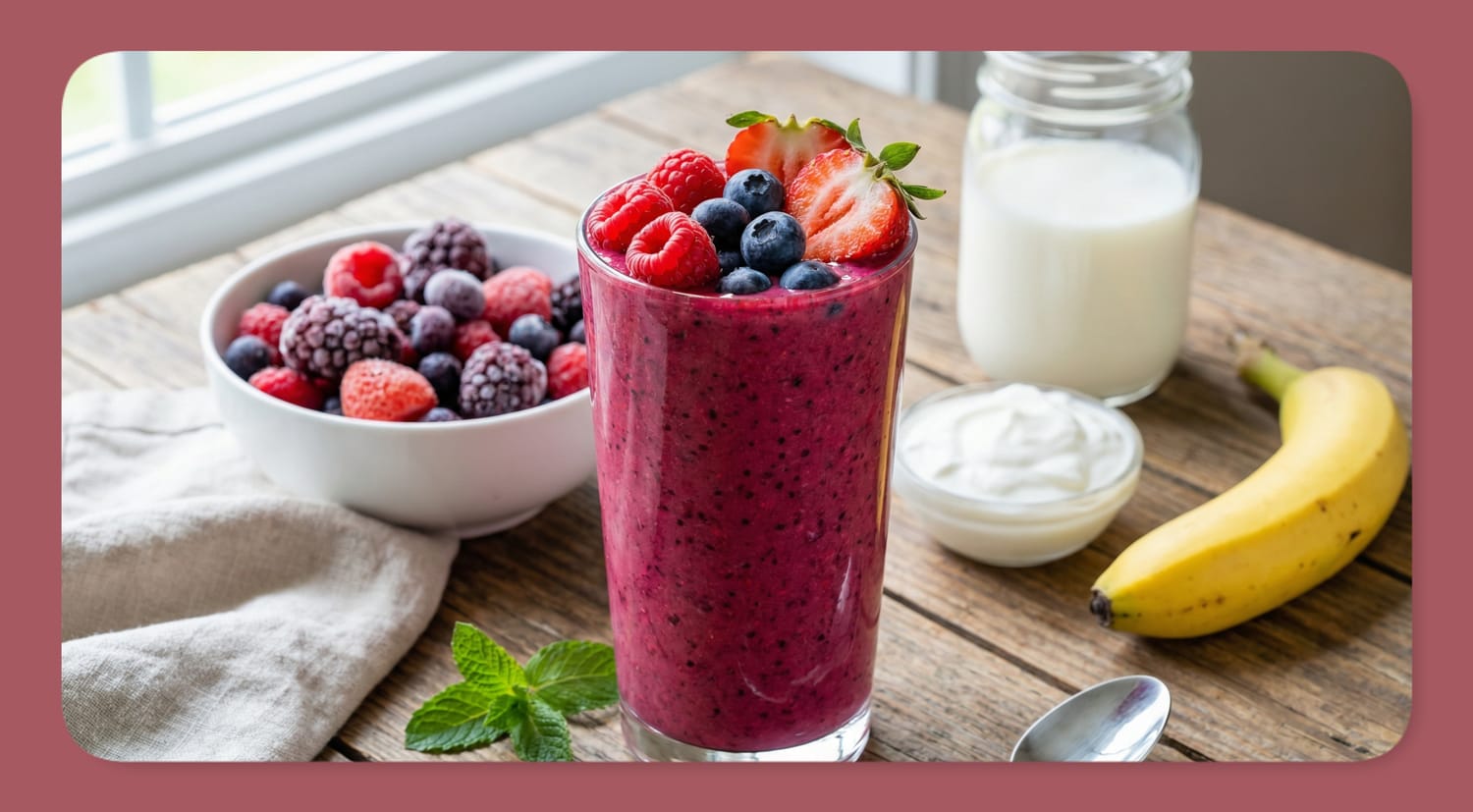
Naturally-Sweet Mixed Berry Smoothie: Budget-Friendly Breakfast in 5 Minutes
The blender whirls to life, transforming frozen berries into a vibrant magenta swirl that promises both indulgence and nutrition. Within minutes, you're sipping on a thick, creamy smoothie that tastes like a berry milkshake but delivers the fuel your body actually needs to power through the morning.
We've all been there, grabbing a store-bought smoothie that's either watery and flavorless or packed with hidden sugars and a hefty price tag. Or maybe you've tried making smoothies at home only to end up with something that tastes like disappointment and looks nothing like those gorgeous Pinterest photos. The struggle is real, especially when you're racing against the clock on a busy morning.
This mixed berry smoothie solves all those problems. After testing countless berry combinations and ratios, I've landed on a formula that delivers café-quality results with ingredients you probably already have in your freezer. No fancy superfoods required, no complicated techniques, and definitely no compromise on taste. Just pure berry goodness that keeps you satisfied for hours, costs a fraction of store-bought versions, and takes less time than waiting in a drive-through line. Whether you're fueling up before work, recovering after a workout, or sneaking nutrition into picky eaters, this smoothie delivers on every front.
What Makes This Smoothie Special
- Naturally Balanced Sweetness: The combination of mixed berries and banana creates perfect sweetness without any added sugars, honey, or artificial sweeteners. The banana mellows the berry tartness while the berries prevent that one-note banana flavor.
- Creamy Without Being Heavy: Greek yogurt adds luxurious thickness and a subtle tang that balances the fruit sweetness, creating a satisfying texture that's neither too thin to drink nor too thick to enjoy. It coats your tongue like a milkshake without the guilt.
- Budget-Friendly Nutrition: Unlike trendy smoothies that require expensive superfood powders, this recipe uses affordable frozen berries and pantry staples. You're getting antioxidants, protein, and vitamins for less than $2 per serving, compared to $8 to $12 at a smoothie shop.
- Foolproof Every Time: This recipe is remarkably forgiving. Whether your banana is extra ripe or your berries are slightly freezer-burned, you'll still get delicious results. The ingredient ratios are designed to work with standard kitchen blenders, no fancy equipment needed.
- Meal Prep Champion: Frozen berries mean this smoothie is ready whenever you are, with no washing, chopping, or worrying about produce going bad. Pre-portion your ingredients on Sunday and you've got five mornings of healthy breakfasts waiting in your freezer.
Ingredients
Base Ingredients
- 1½ cups frozen mixed berries (225g) - strawberries, blueberries, raspberries, and blackberries provide antioxidants and natural sweetness
- 1 large banana, frozen (140g) - creates creamy thickness and adds natural sweetness plus potassium
- ¾ cup plain Greek yogurt (180g) - delivers protein and tangy creaminess without added sugars
- ¾ cup milk of choice (180ml) - cow's milk, almond, or oat milk all work beautifully
- 3-4 ice cubes (optional) - for extra thickness and a frosty finish
Nutritional Boosters (Optional)
- 1 scoop vanilla protein powder (adds 15-20g protein)
- 1 tablespoon chia seeds (omega-3s and fiber)
- 1 tablespoon ground flaxseed (healthy fats and nutty flavor)
- 1 handful spinach (sneaks in greens without affecting berry taste)
- ½ teaspoon vanilla extract (enhances berry flavor)
Smoothie Bowl Toppings (Optional)
- Fresh berries (strawberries, blueberries, raspberries)
- Granola or muesli (adds satisfying crunch)
- Sliced banana
- Coconut flakes (toasted for extra flavor)
- Chia seeds or hemp hearts
- Drizzle of almond butter or peanut butter
- Dark chocolate chips (because life is short)
Blending Instructions & Technique
APreparation
If you're using fresh bananas instead of frozen, slice them and freeze for at least 2 hours beforehand. Frozen banana is the secret to that thick, creamy texture without having to add ice cream or excessive liquid. If you forget to freeze your banana, add 4-5 extra ice cubes to compensate.
For the creamiest results, let your Greek yogurt sit at room temperature for 5 minutes while you gather other ingredients. This prevents your blender from working overtime on cold, thick yogurt.
BBlend Order & Layering
- Add liquid first (¾ cup milk) - This prevents your blender blades from spinning uselessly above frozen ingredients and ensures everything pulls down properly. Starting with liquid creates a vortex that helps everything blend smoothly.
- Add Greek yogurt next - It will combine with the liquid to create your base, making it easier for the blades to grab the frozen ingredients.
- Add frozen banana chunks - Break your frozen banana into 3-4 pieces if it's whole. Smaller pieces mean less strain on your blender motor.
- Top with frozen berries - Save these for last as they're usually the easiest for blenders to handle.
- Add any optional boosters (spinach, protein powder, seeds) on top.
CBlending Technique
Start your blender on the lowest speed for 10-15 seconds. You'll hear it laboring a bit as it breaks down the frozen fruit, and this is normal. If your blender has a tamper, use it to push ingredients toward the blades without stopping the motor.
Gradually increase to medium-high speed and blend for 30-45 seconds. You're looking for a completely smooth consistency with no frozen chunks. The mixture should transform from chunky and separated to unified and velvety.
Too thick? Add 2 tablespoons of milk at a time and pulse to incorporate. Remember, it's much easier to thin a smoothie than to thicken it, so start thick.
Too thin? Add 2-3 ice cubes or a small handful of frozen berries and blend again for 15 seconds.
DFor Smoothie Bowls: Creating the Perfect Base
For bowl consistency, reduce the milk to ½ cup instead of ¾ cup. You want a texture so thick that toppings sit on top rather than sinking in.
Blend using the same technique but stop as soon as everything is combined, around 30 seconds. The mixture should be thick enough that you need to scrape it out with a spatula rather than pouring it.
For layered smoothie bowls, blend half your berries with all other ingredients for a lighter pink layer, then blend the remaining berries separately with a splash of milk for a deeper purple layer. Pour the lighter layer first, then carefully spoon the darker layer on top.
EFinishing & Serving
Give the smoothie one final 5-second pulse to incorporate any ingredients that settled. Pour immediately into chilled glasses or bowls. The cold container keeps your smoothie thick longer.
For drinkable smoothies, a wide reusable straw works best with this thickness. For bowls, arrange toppings in sections or rows for that Instagram-worthy look. Start with crunchier toppings like granola around the edges, then add fresh fruit, and finish with drizzles and smaller toppings in the center.
Texture & Consistency Guide
Too Thin? Add:
- ¼ frozen banana (instant thickness)
- 3 to 4 ice cubes (makes it frosty)
- 2 tablespoons Greek yogurt (adds creaminess and protein)
- 2 tablespoons oats (blends in and adds body)
- Handful of frozen cauliflower rice (secret ingredient, no flavor but great thickness)
Too Thick? Add:
- 2 tablespoons milk at a time (always start small)
- ¼ cup coconut water (adds hydration and subtle sweetness)
- 2 tablespoons orange juice (complements berry flavor)
- Splash of regular water (if you don't want to change the flavor)
For Smoothie Bowls:
Perfect Bowl Consistency: The mixture should be thick enough that when you drag a spoon through it, the path stays visible for a few seconds before slowly filling back in. Think soft-serve ice cream texture.
Secret: Use only ½ cup liquid maximum and make sure every piece of fruit is completely frozen. Room-temperature or partially thawed fruit will make your bowl soupy.
Test: Spoon should stand upright in the mixture without support. When you scoop it onto a spoon, it should hold its shape rather than dripping off.
Ideal Consistency Indicators
Drinkable: Should flow through a wide straw but require a bit of suction. It coats your mouth pleasantly without feeling heavy. You can see movement when you swirl the glass, but it's not watery.
Bowl: Holds its shape when scooped, doesn't puddle at the edges. Toppings sit on top without sinking. Has a scoopable, spoonable texture like frozen yogurt.
Customization Matrix
Liquid Base Options
Dairy
- Whole milk (creamiest, 150 cal/cup)
- 2% milk (balanced, 120 cal/cup)
- Skim milk (lightest, 80 cal/cup)
- Kefir (tangy, probiotic-rich)
Non-Dairy
- Almond milk (light, nutty, 30 to 60 cal/cup)
- Oat milk (creamy, naturally sweet, 120 cal/cup)
- Coconut milk (rich, tropical, 45 to 80 cal/cup depending on type)
- Cashew milk (smooth, neutral, 25 to 50 cal/cup)
- Soy milk (high protein, 80 to 100 cal/cup)
Light Options
- Coconut water (hydrating, subtle sweetness)
- Green tea (brewed and chilled, adds antioxidants)
- Regular water (zero calories, lets berry flavor shine)
Protein Boosters
Plant-Based
- Vanilla protein powder (15 to 20g protein per scoop)
- Chocolate protein powder (pairs beautifully with berries)
- Hemp seeds (3g protein per tablespoon, nutty flavor)
- Chia seeds (2g protein per tablespoon, thickening)
- Almond butter (3.5g protein per tablespoon, creamy richness)
- Peanut butter (4g protein per tablespoon, classic pairing)
Dairy
- Greek yogurt (already in recipe, 10g protein per ½ cup)
- Cottage cheese (14g protein per ½ cup, surprisingly smooth when blended)
- Milk (8g protein per cup)
- Protein powder (whey or casein)
Natural Sweeteners
- 2 to 3 pitted Medjool dates (fiber-rich, caramel notes)
- 1 tablespoon honey (floral sweetness)
- 1 tablespoon maple syrup (earthy depth)
- Extra ripe banana (already included, increase if needed)
- 1 tablespoon agave nectar (neutral sweetness)
- Splash of vanilla extract (enhances perceived sweetness)
Thickness Enhancers
- Frozen banana (already included, the MVP of smoothie thickness)
- ¼ ripe avocado (creamy, no flavor change, healthy fats)
- ½ cup frozen cauliflower rice (invisible nutrition boost)
- ¼ cup rolled oats (fiber and staying power)
- 2 tablespoons chia seeds (let sit 5 minutes to thicken)
- Extra ice cubes (dilutes flavor slightly but adds frostiness)
Nutrient Boosters
Greens
- 1 cup spinach (completely tasteless in berry smoothies)
- ½ cup kale (blend with liquid first for smoothest texture)
- ½ cup frozen zucchini (seriously undetectable)
Superfoods
- 1 teaspoon acai powder (more berry flavor, deep color)
- 1 teaspoon maca powder (energizing, malt-like flavor)
- ½ teaspoon spirulina (start small, strong flavor)
- 1 tablespoon cacao nibs (chocolate crunch)
Healthy Fats
- ¼ avocado (creaminess and satiety)
- 1 tablespoon nut butter (flavor and staying power)
- 1 teaspoon coconut oil (quick energy)
- 1 tablespoon ground flaxseed (omega-3s)
Chef's Tips for Success
- Freeze bananas like a pro: Peel ripe bananas, slice into 1-inch chunks, and spread on a parchment-lined baking sheet. Freeze for 2 hours until solid, then transfer to freezer bags. This prevents them from freezing into one solid block and makes blending infinitely easier.
- Berry selection matters: Mixed berry bags from the freezer section are often more affordable than buying individual berries, plus they're frozen at peak ripeness. Look for brands with no added sugars or syrups, just fruit. If berries look frosty white, they're freezer-burned but still safe to use; they'll just be slightly less flavorful.
- Liquid is your control lever: Always start with less liquid than you think you need. You can blend, check consistency, and add 2 tablespoons more if needed. Once a smoothie is too thin, your only option is adding more frozen fruit or ice, which dilutes flavor and changes your ratios.
- Greek yogurt makes all the difference: Regular yogurt is thinner and won't give you that luxurious, thick texture. Greek yogurt has been strained to remove liquid whey, concentrating both protein and creaminess. Plain, unsweetened varieties let the fruit shine without adding unnecessary sugar.
- Blend greens first for stealth nutrition: If you're adding spinach or kale, blend it with just the liquid for 20 seconds before adding other ingredients. This pulverizes the greens completely so even the pickiest eaters won't detect them in the final smoothie.
- Make-ahead freezer packs save mornings: Every Sunday, portion berries, banana chunks, and any dry boosters (chia, protein powder) into freezer bags. Label with the liquid amount needed and freeze flat for space-efficient storage. In the morning, dump the contents into your blender, add liquid and yogurt, and blend. Breakfast in under 2 minutes.
- The ripeness factor: Overripe bananas are actually perfect for smoothies. Their higher sugar content means more natural sweetness without added sweeteners. Those brown-spotted bananas everyone avoids? They're smoothie gold. Peel and freeze them before they're completely mushy.
Nutritional Benefits
While a store-bought smoothie from popular chains can contain 50-80g of added sugar and cost upwards of $10, this homemade mixed berry smoothie delivers superior nutrition for under $2 per serving with zero added sugars. Even compared to bottled smoothies from the grocery store, which often have 35-45g of sugar and minimal protein, this recipe provides balanced nutrition that actually keeps you satisfied.
Specific Health Benefits
High Protein Content for sustained energy and muscle recovery. At 12g of protein per serving (or 27-32g with added protein powder), this smoothie contains nearly 4 times the protein of a typical fruit-only smoothie. This protein helps stabilize blood sugar, preventing the mid-morning crash that comes from carb-heavy breakfasts.
Antioxidant-Rich Berries for immune support and cellular health. Mixed berries contain anthocyanins, the compounds responsible for their vibrant colors, which have been studied for their anti-inflammatory properties and potential cognitive benefits. Blueberries alone contain more antioxidants per serving than most other common fruits.
Probiotics from Greek Yogurt for digestive health and gut microbiome support. The live active cultures in Greek yogurt contribute to a healthy gut, which influences everything from immunity to mood. Plus, the protein and fat slow digestion, making this smoothie genuinely filling.
Fiber for Lasting Fullness and digestive regularity. With 6-8g of fiber per serving from berries and banana, this smoothie provides about 25% of your daily fiber needs. Fiber slows sugar absorption, keeps you feeling full longer, and supports healthy digestion.
Potassium for Hydration and muscle function, especially beneficial post-workout. Bananas are famous for their potassium content, providing about 400mg per serving, more than most sports drinks without the artificial colors and added sugars.
Vitamin C for Immune Function and skin health. One serving delivers over 50% of your daily vitamin C needs from the mixed berries, supporting collagen production, iron absorption, and immune system function.
Macro Breakdown
Why This Matters
This macro profile creates the ideal breakfast or snack for sustained energy. The protein and fat slow the digestion of natural fruit sugars, preventing blood sugar spikes and crashes. With 245 calories, it's substantial enough to replace a light breakfast when paired with a handful of nuts or whole grain toast, yet light enough to serve as a satisfying snack. For weight management, this smoothie provides volume and satiety without empty calories, helping you feel genuinely full for 3-4 hours. For active individuals, it offers the carbohydrates needed for energy plus protein for recovery. For families, it's an accessible way to meet fruit and dairy recommendations without negotiation or battles over "one more bite."
Best Blender Types & Equipment
High-Speed Blenders (Ideal)
Vitamix, Blendtec, Ninja Professional Series - These powerhouse blenders (1000+ watts) create the smoothest, creamiest texture possible. Frozen fruit doesn't stand a chance against their blade speed and motor power. They'll pulverize berry seeds almost completely and incorporate greens invisibly.
Best for: Daily smoothie makers, large families, smoothie bowls, and anyone who wants to expand into nut butters, hot soups, or frozen desserts.
Price range: $250 to $600, but they typically last 7-10 years with heavy use.
Standard Blenders (Works Great)
Most kitchen blenders from KitchenAid, Hamilton Beach, Oster - Your regular countertop blender absolutely works for this recipe. The key is cutting frozen fruit into smaller pieces and always adding liquid first. Let frozen bananas thaw for 5 minutes on the counter if your blender struggles.
Best for: Occasional smoothie makers, those on a budget, standard kitchens.
Tip: Pulse several times to break up frozen chunks before blending continuously. Stop and scrape down the sides once or twice. Be patient. It might take 60-90 seconds instead of 30 seconds, but you'll get there.
Personal/Bullet Blenders (Convenient)
NutriBullet, Magic Bullet, Ninja Personal Blenders - Perfect for single-serving smoothies and minimal cleanup. The key limitation is capacity. You'll need to make one serving at a time rather than two.
Best for: Singles, dorm rooms, small kitchens, grab-and-go lifestyles.
Tip: Don't fill past the MAX line, and use the recipe amounts for one serving only (half the recipe). Frozen ingredients should be cut smaller for these lower-powered models.
No Blender? Alternatives
Immersion (stick) blender - Works surprisingly well for non-frozen smoothies. Let frozen fruit thaw for 10-15 minutes first. Blend in a tall, narrow container to create a vortex. Texture won't be quite as smooth, but it's absolutely drinkable.
Food processor - Can work in a pinch but won't create the same smooth, drinkable texture. Best for smoothie bowls where slightly thicker, less uniform texture is acceptable. Add less liquid than the recipe calls for and expect a more scoopable consistency.
Other Helpful Tools
- Wide reusable straws: Essential for thick smoothies. Metal, silicone, or glass straws with 10-12mm diameter make sipping much easier.
- Mason jars with lids: Perfect for storage, transport, and serving. The 16-oz size is ideal for one smoothie serving.
- Measuring cups with spouts: Makes adding liquids precise and prevents spills when your hands are covered in berry juice.
- Rubber spatula: Crucial for scraping every last bit of smoothie from the blender container. Those thick, delicious smoothies don't want to leave the blender.
- Ice cube trays: For freezing leftover smoothie or creating smoothie cubes to add to future blends for extra berry flavor.
Storage, Prep & Serving
Immediate Serving
This smoothie tastes best within 15 minutes of blending when the texture is at its peak creaminess and the temperature is perfectly frosty. The longer it sits, the more it will separate naturally, with fruit solids sinking and liquid rising.
Serve drinkable smoothies in chilled glasses straight from the freezer. The cold container keeps your smoothie thick and frosty for longer. For smoothie bowls, use a chilled ceramic or glass bowl. Metal bowls can sometimes impart a slight metallic taste.
Short-Term Storage
Refrigerator: Pour smoothie into an airtight container or mason jar, filling it to the top to minimize air exposure. Store for up to 24 hours. Natural separation is completely normal. The berries and banana will settle to the bottom while liquid rises to the top. Before drinking, shake vigorously for 15-20 seconds or give it a quick 5-second re-blend.
Color changes: Your vibrant purple-pink smoothie may oxidize slightly and turn a more brownish-purple after several hours. This is natural oxidation from the fruit and doesn't affect taste or nutrition. If appearance matters (hello, Instagram), add a squeeze of lemon juice before storing. The vitamin C slows oxidation.
Texture changes: Stored smoothies will thicken as the chia seeds (if used) continue absorbing liquid and the fruit fibers settle. Add 2-3 tablespoons of liquid when you're ready to drink and shake or stir well.
Make-Ahead Smoothie Packs
The ultimate time-saver: Portion all ingredients except liquid and Greek yogurt into gallon-size freezer bags. Each bag should contain: 1½ cups frozen berries, 1 sliced frozen banana, and any dry boosters (protein powder, chia seeds, oats).
Label each bag with the smoothie name, date prepared, and liquid needed: "Mixed Berry Smoothie - 12/8/25 - Add ¾ cup milk + ¾ cup Greek yogurt."
Freeze flat on a baking sheet until solid, then stack vertically in your freezer like file folders. This saves massive space compared to storing bags bulky and loose.
Storage time: Smoothie packs keep for 3 months in the freezer without significant quality loss. After 3 months, you might notice slight freezer burn on the fruit, which affects texture slightly but not safety.
Morning routine: Grab a smoothie pack, dump contents into your blender, add fresh Greek yogurt and milk, blend for 45 seconds. Breakfast is ready in under 2 minutes, and you've used exactly zero brainpower on a bleary-eyed morning.
Freezing Finished Smoothies
Ice cube method: Pour leftover smoothie into ice cube trays and freeze until solid. Pop out the cubes and store in a freezer bag. In the morning, blend 8-10 smoothie cubes with a splash of milk for an instant smoothie. This method is brilliant for using up smoothie that's too much for one serving but not enough for two.
Bag method: Pour smoothie into a freezer-safe bag, remove as much air as possible, seal, and freeze flat. Thaw in the refrigerator overnight, shake well, and drink the next morning. Texture will be slightly less creamy but still delicious.
Storage time: Frozen smoothies keep for 1 month. Beyond that, they're safe but may develop ice crystals and lose some of that fresh-blended smoothness.
Meal Prep Benefits
- Time savings: Pre-portioning ingredients saves 10-15 minutes on busy mornings. Multiply that by 5 workdays and you've saved over an hour per week, time better spent sleeping, exercising, or actually sitting down for breakfast.
- Reduced food waste: Frozen fruit never goes bad in the back of your crisper drawer. Bananas that are getting overripe? Peel, slice, freeze. Berries on sale? Buy extra and freeze. You'll always have smoothie-ready ingredients.
- Budget control: Buying ingredients in bulk and freezing them yourself is dramatically cheaper than daily smoothie shop visits. A month of homemade smoothies costs less than 4 store-bought versions.
- Consistency and health: When healthy breakfast is pre-prepped and effortless, you actually eat it. No more skipping breakfast or grabbing fast food because you "don't have time." The healthiest breakfast is the one you actually make and eat.
Serving Suggestions & Occasions
Best Times to Enjoy
Breakfast on-the-go - Blend, pour into a travel cup, and head out the door. The protein and fiber keep you satisfied until lunch, unlike sugary cereals or pastries that leave you hungry by 10am.
Post-workout recovery - The natural sugars replenish glycogen stores while the protein supports muscle recovery. Add a scoop of protein powder for optimal post-exercise nutrition within that crucial 30-minute window.
Afternoon energy boost - Skip the 3pm coffee shop run and blend this instead. The natural sugars provide quick energy while the protein prevents a crash, and you'll save $5 in the process.
Healthy dessert alternative - Craving something sweet after dinner? This smoothie satisfies dessert cravings with a fraction of the sugar and calories of ice cream or baked goods, plus it won't leave you feeling heavy before bed.
Kid-friendly after-school snack - Picky eaters approve of the naturally sweet berry flavor, and parents love sneaking in nutrition. Pour into popsicle molds for a fun twist that kids can grab from the freezer themselves.
Perfect Pairings
Pair With:
- Whole grain toast with almond butter (adds healthy fats and makes it a complete meal)
- Protein muffin or homemade oat muffin (complementary textures and extra staying power)
- Handful of raw almonds or walnuts (crunch factor and additional protein)
- Hard-boiled eggs (if you need serious protein and aren't afraid of unusual combinations)
Enjoy As:
- Light meal replacement when made with protein powder and nut butter (20g+ protein makes it legitimately filling)
- Pre-workout fuel 30 to 45 minutes before exercise (quick-digesting carbs for energy)
- Between-meal snack that won't spoil your appetite for the next meal
For smoothie bowls: Top with granola for crunch, fresh berries for brightness, sliced banana for natural sweetness, and a drizzle of almond butter for healthy fats. This combination creates a complete, balanced meal with varied textures that's satisfying in a way a drinkable smoothie can't quite match. Add a sprinkle of coconut flakes, hemp hearts, or dark chocolate chips for extra nutrients and visual appeal.
Make It a Complete Meal
Add 20g+ protein: Use Greek yogurt (already in the recipe at 10g), plus add a scoop of protein powder (15-20g), or substitute part of the milk with a high-protein alternative like Fairlife milk or soy milk.
Include healthy fats: Add 2 tablespoons almond butter, peanut butter, or cashew butter (adds 8-10g healthy fats plus extra protein). Or blend in ¼ avocado for creamy, neutral-flavored fats that increase satiety significantly.
Boost with complex carbs: Add ¼ cup rolled oats before blending (they'll blend completely smooth and add fiber plus slow-releasing energy). Or serve alongside whole grain toast for dipping. Yes, dipping toast in smoothies is delicious, and adding carbs makes this genuinely meal-sized.
Fiber boost: Top smoothie bowls with chia seeds, ground flaxseed, or sliced pear. The additional fiber slows digestion and keeps you full for 4-5 hours easily.
Final Thoughts
This naturally-sweet mixed berry smoothie proves that healthy eating doesn't require sacrifice or a trust fund. You're getting antioxidant-rich berries, satisfying protein, and genuine nutrition, all in a gorgeous, Instagram-worthy glass that tastes like a milkshake and costs less than $2 to make. No weird ingredients, no complicated techniques, no judgment if you drink it straight from the blender container because who wants to wash extra dishes?
For busy parents racing through morning chaos, this is your secret weapon. Five minutes from freezer to table, zero negotiation required because kids actually ask for seconds. For health-conscious individuals trying to fuel your body well without spending your entire morning in the kitchen, this delivers café-quality results with ingredients you can pronounce. For anyone tired of disappointing smoothies that separate into weird layers or taste like liquid grass, this is your redemption smoothie.
The beauty of this recipe lies in its flexibility. Love chocolate? Add cacao powder. Need more protein? Scoop in your favorite powder. Want it greener? Toss in spinach that mysteriously disappears into the berry color. This smoothie adapts to your needs, your dietary preferences, and your ingredient availability without losing that essential deliciousness that makes you actually want to drink it.
Your mornings just got simpler, healthier, and more delicious. Make a batch of freezer packs this weekend and watch your weekday breakfast routine transform from stressful to effortless. You'll wonder why you ever waited in line at expensive smoothie shops when this kind of nutrition and flavor was always just 5 minutes and a blender away.
Now let's address some questions you might be wondering about.
FAQ Section
Glossary of Key Terms
Share Your Success!
What's your go-to smoothie routine? Do you blend first thing in the morning, or are you a make-ahead smoothie pack champion? I love hearing how this recipe fits into real, busy lives.
Did you customize this berry smoothie with your own twist? Maybe you added chocolate protein powder, topped your bowl with creative combinations, or discovered that your kids actually request the "purple smoothie" by name? Those are the wins worth celebrating!
I'd genuinely love to see your smoothie creations and hear what worked (or didn't work) for you. Drop a comment below and let me know how it turned out. Did it become thick enough for a bowl? Was it sweet enough without added honey? Did your picky eater actually drink something healthy?
Save this recipe to your Pinterest smoothie board so you can find it again on those chaotic mornings when you need it most. Because we both know you'll want to make this again, and probably share it with friends who are always asking how you manage healthy breakfasts when life gets busy.
Follow along for more realistic, tested smoothie recipes that balance nutrition with actual delicious taste. No weird ingredients, no unattainable perfection, just genuinely good food that works for real life. Your morning routine is about to get so much better.
More Delicious Smoothies to Try
Affiliate Disclosure
This page may contain affiliate links. This means that if you click on one of these links and make a purchase, I may receive a small commission at no additional cost to you. This helps support the blog and allows me to continue creating free content. I only recommend products or services that I use personally and believe will add value to my readers. Your support is appreciated!
Created with ©simplyhealthynews