
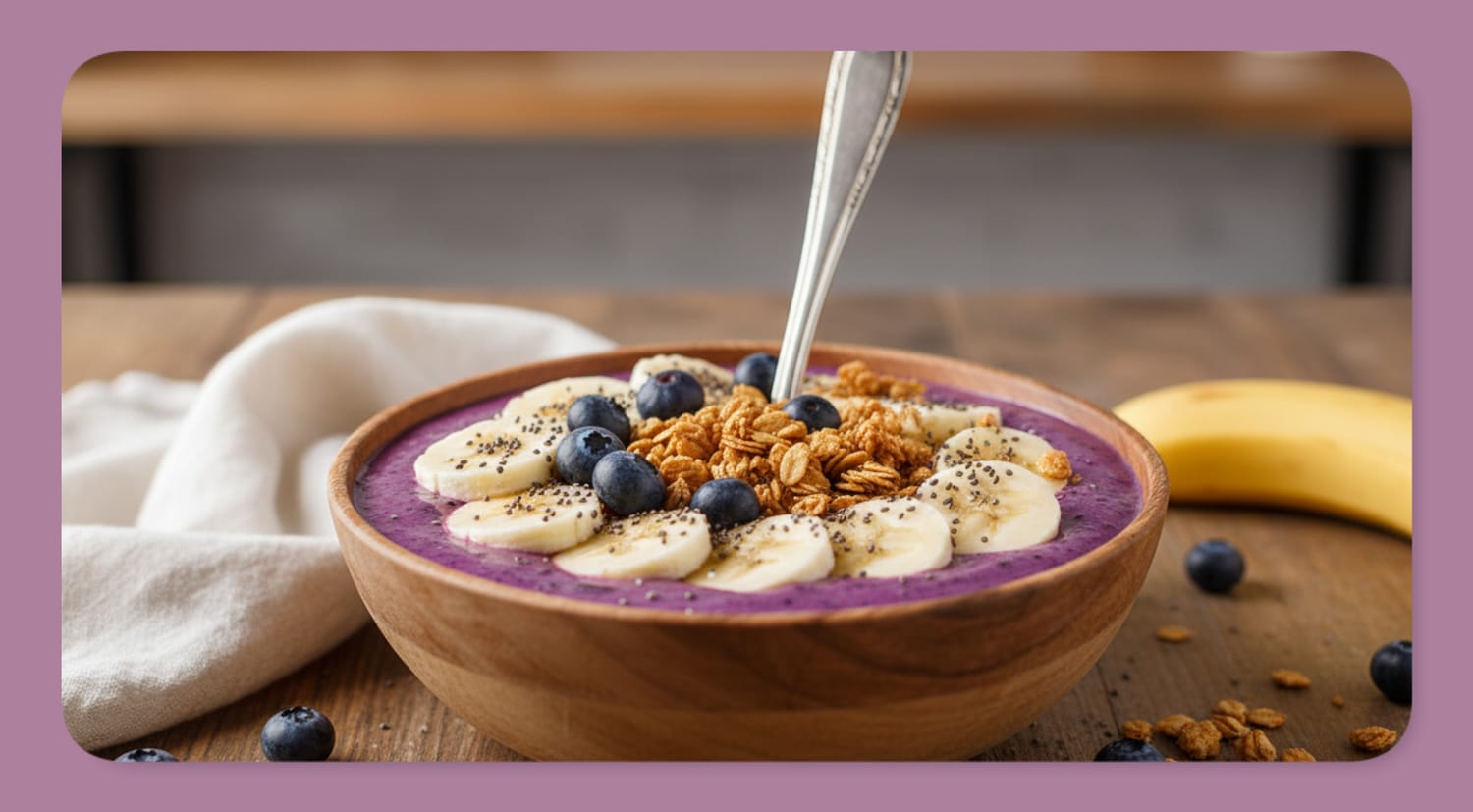
Vibrant Blueberry Smoothie Bowl: Antioxidant Breakfast Power
That first spoonful of deep purple blueberry smoothie bowl hits differently on a rushed morning. It's thick, creamy, and almost dessert-like, yet you're starting your day with a powerhouse of antioxidants and protein. No watery disappointment here, just a velvety, spoonable breakfast that actually keeps you satisfied until lunch.
We've all experienced the smoothie letdown: too thin to be filling, too bland to be exciting, or so loaded with sugar that the energy crash hits before your second cup of coffee. This blueberry smoothie bowl solves all three problems. The secret? Frozen fruit for natural sweetness and thickness, Greek yogurt for staying power, and just enough liquid to blend, not drown, your ingredients. After testing dozens of ratios, this is the one that makes you want to wake up early.
What makes this bowl special is how it balances indulgence with nutrition. The gorgeous deep blue-purple color looks like something from a trendy café, but you're making it in your own kitchen in under 5 minutes. No added sugars, no mysterious powders, just whole ingredients that work together to create something genuinely crave-worthy. Whether you're meal-prepping for the week or need a quick post-workout recovery, this bowl adapts to your morning without compromising on taste or nutrition.
What Makes This Smoothie Bowl Special
Perfectly Thick Texture
This isn't a drinkable smoothie accidentally served in a bowl. With minimal liquid and maximum frozen fruit, you get that ideal soft-serve consistency that holds toppings and gives you a real breakfast experience, not just flavored milk.
Antioxidant Powerhouse
Each serving delivers over 4,000mg of antioxidants from blueberries alone, that's more than most people get in an entire day. These compounds fight inflammation, support brain health, and give your immune system serious backup.
Protein-Packed Satisfaction
With 18g of protein per bowl from Greek yogurt, this isn't one of those fruit-only smoothies that leaves you hungry an hour later. You're getting real staying power that carries you through busy mornings without the mid-morning snack attack.
Naturally Sweet Without Sugar Bombs
The frozen banana and blueberries provide all the sweetness you need, no honey, no agave, no added sugars. Just fruit doing what fruit does best, giving you sustained energy instead of a spike-and-crash situation.
Five-Minute Breakfast Win
From freezer to bowl to table in 5 minutes flat. No complicated prep, no special ingredients you need to hunt down at specialty stores. Just real food that comes together faster than waiting in a drive-through line.
Ingredients
Base Ingredients
- 1 1/2 cups frozen blueberries (225g) - provides thick texture and intense antioxidants
- 1 medium frozen banana, cut into chunks (120g) - adds natural sweetness and creaminess
- 1/2 cup plain Greek yogurt (120g) - delivers protein and tangy balance
- 1/4 cup unsweetened almond milk (60ml) - just enough to get blending started
- 1/2 teaspoon vanilla extract (optional) - enhances natural berry flavors
Nutritional Boosters (Optional)
- 1 scoop vanilla protein powder (adds 15 to 20g protein)
- 1 tablespoon chia seeds (omega-3s and fiber)
- 1 tablespoon almond butter (healthy fats and richness)
- 1 handful spinach (nutrients without altering berry flavor)
Smoothie Bowl Toppings (Optional)
- Fresh blueberries
- Granola or grain-free granola
- Sliced banana
- Unsweetened coconut flakes
- Sliced almonds
- Hemp hearts
- Drizzle of almond butter or cashew butter
- Cacao nibs for crunch
Blending Instructions & Technique
A. Preparation
Make sure your blueberries and banana are completely frozen. This is non-negotiable for achieving that thick, spoonable consistency. If you're using fresh fruit, freeze it for at least 4 hours or overnight before blending. Fresh fruit will give you a drinkable smoothie, not a bowl.
Let your frozen fruit sit at room temperature for 2 to 3 minutes before blending. This slight thaw makes your blender's job easier without sacrificing thickness.
B. Blend Order & Layering
1Add liquid first (almond milk) - This prevents your blender blades from spinning uselessly and helps create a vortex that pulls ingredients down. If you add frozen fruit first, you'll just hear grinding sounds and frustration.
2Add Greek yogurt - The creamy texture helps bridge the gap between liquid and frozen ingredients, making the blend smoother.
3Add frozen banana chunks - These blend more easily than blueberries and create the base creaminess.
4Top with frozen blueberries - Adding them last means they blend most recently, preserving that vibrant purple color.
5Add vanilla extract - Last in means most potent flavor throughout the bowl.
C. Blending Technique
Start your blender on the lowest speed setting. You'll hear a lot of chunking and grinding at first. This is normal. Run it for 10 to 15 seconds on low.
Gradually increase to medium speed. Use your blender's tamper if you have one, pushing ingredients toward the blades. If you don't have a tamper, stop the blender and use a spatula to scrape down the sides and redistribute ingredients.
The color should be a rich, vibrant blue-purple, not pale or grayish. If it looks dull, you've over-blended or added too much liquid. The consistency should be thick enough that the blender struggles slightly. That's how you know you've got it right.
D. Finishing & Serving
Do the spoon test: Insert a spoon into the center of the mixture. It should stand upright without falling over. If it falls, blend in 2 to 3 more ice cubes to thicken.
Pour (or rather, spoon) the mixture into a chilled bowl. Working quickly prevents melting. You want to add toppings while the base is still frozen-thick.
Arrange toppings in sections or rows rather than sprinkling randomly. This creates that Instagram-worthy look and also ensures you get a perfect bite ratio of base to toppings.
Texture & Consistency Guide
For This Smoothie Bowl
Perfect Bowl Consistency: You're aiming for thick soft-serve ice cream texture. The mixture should be difficult to pour. If it flows easily, you've added too much liquid. A proper smoothie bowl requires scooping with a spatula, not pouring.
Secret Weapon: Use only 1/4 cup liquid to start. This seems impossibly small, but it's enough. Your blender will protest, you'll need to stop and scrape multiple times, but the result is worth every pause.
The Spoon Test: Your spoon should stand upright in the finished mixture without support. If it slowly tips over, you're close but need another 30 seconds of blending or a few ice cubes.
Troubleshooting
Too Thin? Add more frozen blueberries (1/4 cup at a time), another 1/4 frozen banana, or 3 to 4 ice cubes. Blend briefly after each addition until you reach the right consistency.
Too Thick? Add almond milk 1 tablespoon at a time. Seriously, just 1 tablespoon. It's shocking how much difference a small amount of liquid makes. Better to add multiple times than to overshoot.
Grainy Texture? This usually means you didn't blend long enough or your blueberries had ice crystals. Blend for another 20 seconds on medium-high speed, making sure to scrape down sides frequently.
Color Looks Dull? You either over-blended or your blueberries weren't fully frozen. Next time, ensure fruit is rock-solid frozen and blend in shorter bursts.
Ideal Consistency Indicators
Customization Matrix
Liquid Base Options
| Type | Options | Notes |
|---|---|---|
| Dairy | Whole milk, 2% milk, kefir | Adds creaminess and extra protein |
| Non-Dairy | Almond milk, coconut milk, oat milk, cashew milk | Keep it unsweetened to control sugar |
| Light | Coconut water, regular water | Use sparingly, very easy to over-thin |
| Thick | Coconut cream (2 tbsp), full-fat coconut milk | Creates ultra-rich, dessert-like texture |
Protein Boosters
| Type | Amount | Protein Content |
|---|---|---|
| Protein Powder | 1 scoop | 15 to 25g depending on brand |
| Greek Yogurt | Already included | 9g per ½ cup |
| Cottage Cheese | 1/4 cup (replaces yogurt) | 7g |
| Nut Butter | 2 tablespoons | 7 to 8g |
| Hemp Hearts | 3 tablespoons | 10g |
| Chia Seeds | 2 tablespoons | 4g |
Natural Sweeteners
- Medjool dates (1 to 2 pitted) - adds caramel-like sweetness and thickness
- Honey (1 tablespoon) - floral sweetness, best drizzled on top rather than blended in
- Maple syrup (1 tablespoon) - rich flavor but can thin the mixture
- Extra ripe banana (1/4 more) - increases natural sugar and creaminess
- Vanilla extract (1/2 tsp) - enhances perceived sweetness without adding sugar
Thickness Enhancers
- Frozen banana - the classic for good reason, adds creaminess and body
- Avocado (1/4 medium) - creates silky texture without affecting berry flavor
- Frozen cauliflower (1/4 cup) - sneaky veggie that adds thickness, zero taste impact
- Rolled oats (1/4 cup) - adds fiber and substance, blend with liquid first
- Frozen zucchini (1/4 cup) - another hidden veggie that thickens beautifully
Nutrient Boosters
| Category | Options | Benefits |
|---|---|---|
| Greens | Spinach (1 cup), kale (1/2 cup), frozen zucchini (1/4 cup) | Vitamins, minerals, fiber without berry flavor interference |
| Superfoods | Acai powder (1 tbsp), maca powder (1 tsp), spirulina (1/2 tsp) | Antioxidants, energy, nutrient density |
| Healthy Fats | Avocado, almond butter, ground flaxseed (1 tbsp), coconut oil (1 tsp) | Satiety, brain health, nutrient absorption |
| Omega-3s | Chia seeds, hemp hearts, ground flaxseed | Heart health, inflammation reduction |
Chef's Tips for Success
Blender Power Reality Check: High-speed blenders like Vitamix or Blendtec make this effortless, but any blender works if you're patient. Cut your banana into smaller chunks, let frozen fruit thaw for 3 to 4 minutes instead of 2, and expect to stop and scrape more frequently. The result is identical, it just takes an extra minute.
Freezing Technique That Matters: Peel and slice bananas before freezing them in a single layer on a parchment-lined tray for 2 hours, then transfer to freezer bags. This prevents them from freezing into one giant clump you can't break apart without a hammer. Same goes for fresh blueberries if you're freezing your own. Spread them out first.
Make-Ahead Smoothie Bowl Packs: Portion 1 1/2 cups blueberries and 1 banana into each freezer bag, label it "Blueberry Bowl + 1/4 cup almond milk + 1/2 cup yogurt," and stack them flat in your freezer. Morning routine becomes: dump frozen ingredients in blender, add yogurt and milk, blend. Five minutes including topping time.
Buy Frozen Blueberries: Fresh blueberries are expensive and you have to freeze them anyway for the right texture. Frozen wild blueberries are often smaller, more flavorful, and way more affordable. They also tend to have higher antioxidant content than cultivated berries.
The Liquid Trap: This is the number one mistake: adding too much liquid because the blender is struggling. Resist. Stop, scrape, and blend again rather than pouring in more almond milk. You can always thin it out, but you can't un-thin a smoothie without adding more frozen fruit.
Yogurt Temperature: Use cold yogurt straight from the fridge, not room temperature. Cold ingredients help maintain that thick, frozen texture. Room temperature yogurt will start melting your frozen fruit on contact.
Best Consumed Immediately: Smoothie bowls are at their peak texture for about 10 minutes after blending. After that, they start to melt and lose that perfect soft-serve consistency. If you must prep ahead, make the smoothie pack and blend right before eating.
Nutritional Benefits Section
This blueberry smoothie bowl isn't just pretty. It's working hard to support your health goals while tasting like a treat you'd order at a café.
High Antioxidant Content for Cellular Protection
Blueberries contain anthocyanins, powerful antioxidants that give them their deep purple color and fight oxidative stress in your body. One serving provides over 4,000mg of antioxidants compared to a typical fruit smoothie with 1,500 to 2,000mg. These compounds support brain health, reduce inflammation, and may improve memory and cognitive function.
Protein-Rich for Sustained Energy
With 18g of protein from Greek yogurt, this bowl keeps you genuinely full for 3 to 4 hours versus the 1-hour satisfaction window of fruit-only smoothies. Compare this to a typical acai bowl from a smoothie shop (8 to 10g protein) or a sugary breakfast pastry (3 to 5g protein), and you understand why this actually works as a meal replacement.
Fiber for Digestive Health and Satiety
Between the blueberries, banana, and optional chia seeds, you're getting 8 to 10g of dietary fiber, about one-third of your daily needs. This fiber slows sugar absorption, keeping your blood sugar stable instead of spiking and crashing. It also feeds beneficial gut bacteria and keeps your digestive system running smoothly.
Probiotics from Greek Yogurt
Live active cultures in Greek yogurt support gut health and immune function. A healthy gut microbiome affects everything from digestion to mood to skin clarity, making this bowl a genuinely functional breakfast.
Natural Electrolytes for Hydration
Bananas provide potassium (422mg per medium banana), which supports proper muscle function and helps prevent post-workout cramping. Paired with the natural sodium in yogurt, you're getting electrolyte replenishment without artificial sports drinks.
Brain-Boosting Nutrients
Studies show that regular blueberry consumption may slow cognitive decline and improve memory. The combination of antioxidants, healthy fats (if you add nut butter), and protein creates an ideal breakfast for focus and mental clarity.
Macro Breakdown
Why This Matters
This nutritional profile supports multiple health goals simultaneously. If you're managing weight, the protein and fiber combination keeps you satisfied on reasonable calories, no mid-morning snack needed. For active individuals, the carbs provide energy while protein supports muscle recovery. Parents can feel confident serving this to kids, knowing they're getting real nutrition, not sugar disguised as breakfast. The antioxidant content supports long-term health in ways that conventional breakfast options simply can't match.
Best Blender Types & Equipment
High-Speed Blenders (Ideal)
Vitamix, Blendtec, Ninja Professional - These powerhouses crush frozen ingredients without hesitation, creating the smoothest possible texture. The tamper tool that comes with Vitamix is genuinely useful for thick smoothie bowls. It lets you push ingredients toward the blades without stopping the motor.
Best for: Daily smoothie bowl makers, anyone who values time efficiency, people who want zero chunks or ice crystals in the final product.
Investment reality: Yes, they're expensive ($200 to $500), but they last 7 to 10 years with regular use. If you're making smoothies 4+ times per week, the per-use cost becomes reasonable.
Standard Blenders (Works Great)
Most kitchen blenders from KitchenAid, Oster, Hamilton Beach - These absolutely work for smoothie bowls. You just need to be more patient and strategic. Cut frozen fruit into smaller pieces, let it thaw 3 to 4 minutes, add liquid first, and expect to stop and scrape sides 3 to 4 times during blending.
Tip: Pulse 10 times first to break up large chunks, then switch to continuous blending. This prevents the motor from overheating and gives you more control.
Best for: Occasional smoothie bowl makers, budget-conscious buyers, people with limited counter space.
Personal/Bullet Blenders (Convenient)
NutriBullet, Magic Bullet, Ninja Personal - Perfect for single servings, but you need to adjust the recipe. Use the smaller cup size as your guide. Don't overfill past the MAX line or you'll have leakage issues.
Tip: For smoothie bowls in these smaller blenders, cut the recipe in half. Make one bowl at a time rather than trying to cram a double batch into the small container.
Best for: Solo smoothie drinkers, small kitchens, people who want minimal cleanup.
No Blender? Alternatives
Immersion blender - Can work for non-frozen or partially thawed smoothies, but struggles with the frozen ingredients needed for bowl consistency. Not recommended for this specific recipe.
Food processor - Works in a pinch if you let frozen fruit thaw for 5 to 6 minutes and blend in 30-second pulses. The texture won't be as creamy-smooth, more like a granita, but it's acceptable if a blender isn't available.
Other Helpful Tools
- Reusable stainless steel or silicone straws - Essential if you prefer drinking your smoothie bowl slightly melted. Regular plastic straws often crack when trying to sip thick smoothies.
- Wide-mouth mason jars - Perfect for storing smoothie packs, serving the finished bowl, or refrigerating leftovers. The 16oz size is ideal for one serving.
- Shallow bowls - Smoothie bowls are meant to be eaten with a spoon and admired before devouring. A wide, shallow bowl (like a pasta bowl) gives you more surface area for pretty topping arrangements.
- Small offset spatula - Makes scraping down blender sides and smoothing your bowl surface easier, especially if you're going for that café-perfect presentation.
Storage, Prep & Serving
Immediate Serving
Smoothie bowls are absolutely best enjoyed within 10 to 15 minutes of blending. The texture is at peak thickness, the temperature is perfectly frozen, and toppings haven't started sinking into a melting base. Serve in a chilled bowl (stick it in the freezer for 10 minutes while you gather ingredients) to extend the perfect texture window.
Pre-chill your serving spoon too if you want maximum Instagram time before eating. Warm utensils accelerate melting.
Short-Term Storage
Refrigerator: If you must store the finished smoothie bowl, transfer it to an airtight container and refrigerate for up to 24 hours. The texture will change significantly. It becomes more like regular yogurt consistency than thick soft-serve. Separation and color oxidation are normal. Stir well before serving and expect a less vibrant purple.
Reality check: Refrigerated smoothie bowls aren't nearly as good as fresh. If you know you can't eat it immediately, make a smoothie pack instead and blend fresh when ready.
Make-Ahead Smoothie Packs (The Smart Method)
This is the real meal prep game-changer for smoothie bowls:
- Portion ingredients into freezer-safe bags or containers:
- 1 1/2 cups frozen blueberries
- 1 banana, peeled and chunked
- Label: "Blueberry Bowl: Add 1/2 cup Greek yogurt + 1/4 cup almond milk"
- Freeze flat in a single layer so bags stack efficiently and thaw faster when needed.
- Storage time: Up to 3 months in the freezer without quality loss.
- Morning routine: Grab one pack, dump contents into blender, add fresh Greek yogurt and almond milk, blend for 60 seconds, top, eat. Total time: 5 minutes from freezer to breakfast.
- Pro tip: Make 5 to 7 packs on Sunday for the entire week. Your future self will thank you on those chaotic Tuesday mornings.
Freezing Finished Smoothies
Ice cube tray method: Pour leftover smoothie into ice cube trays, freeze, then transfer cubes to freezer bags. Use 4 to 6 cubes blended with a splash of almond milk for a quick single serving.
Freezer bag method: Pour finished smoothie into freezer bags, squeeze out air, lay flat to freeze. Break off chunks and re-blend with minimal liquid.
Storage time: Up to 1 month for best quality, though they're safe indefinitely.
Thawing: Refrigerator overnight for drinkable consistency, or blend frozen chunks with 2 to 3 tablespoons liquid for bowl consistency.
Meal Prep Benefits
Making smoothie packs transforms your morning routine. You're saving 10 minutes every single day. Over a week, that's more than an hour of your life back. You're also reducing food waste since bananas and berries get used before they go bad. And perhaps most importantly, you eliminate decision fatigue. When you're barely awake, having a pre-portioned healthy option ready means you actually eat the healthy thing instead of grabbing whatever's easiest.
Serving Suggestions & Occasions
Best Times to Enjoy
- Breakfast on-the-go: The thick consistency means this travels better than drinkable smoothies. Pour into a jar with toppings in a separate container, assemble when you arrive at your desk.
- Post-workout recovery: The protein from Greek yogurt supports muscle recovery, while natural sugars from fruit replenish glycogen stores. Consume within 30 to 45 minutes after exercise for optimal benefits.
- Afternoon energy boost: That 3pm slump when you're craving something sweet? This satisfies the craving while delivering sustained energy instead of a sugar crash.
- Healthy dessert alternative: Frozen, thick, and sweet. It genuinely feels like eating purple frozen yogurt. Kids don't realize they're eating breakfast food when you serve this after dinner.
- Pre-workout fuel: Eat 45 to 60 minutes before exercise for easily digestible energy that won't weigh you down.
Perfect Pairings
To complete the meal: Pair with a slice of whole grain toast with almond butter, a protein muffin, or a handful of raw almonds if you need more staying power.
As a meal replacement: This bowl works as a complete breakfast if you add protein powder (bringing total protein to 30 to 35g) and top generously with granola, nut butter, and hemp hearts for healthy fats and additional calories.
For smoothie bowls: This is already a complete meal as written. The combination of protein, carbs, healthy fats (especially with nut butter topping), and fiber checks all the boxes for balanced nutrition.
Make It a Complete Meal
- Boost protein to 25 to 30g: Add 1 scoop protein powder to the base or top with 2 tablespoons almond butter.
- Add healthy fats: Sprinkle hemp hearts, sliced almonds, or drizzle nut butter for satiety and nutrient absorption (many vitamins are fat-soluble).
- Increase volume without excess calories: Top with sliced strawberries, additional blueberries, or raspberries for more food volume and fiber.
- Morning meal prep: Make two bowls. Eat one fresh, refrigerate the second in an airtight container for an afternoon snack. The second bowl won't have perfect texture but still tastes good stirred up.
Final Thoughts
This vibrant blueberry smoothie bowl proves that healthy breakfast doesn't mean sacrificing flavor, convenience, or that Instagram-worthy presentation. You're getting genuine nutrition, 18g of protein, over 4,000mg of antioxidants, substantial fiber, in a format that tastes like dessert and takes 5 minutes to make.
For busy mornings, this is the breakfast that actually happens instead of just being good intentions. Make those smoothie packs on Sunday, and you've got grab-and-go nutrition all week. For health-conscious eaters tired of bland "healthy" food, this delivers real berry flavor and satisfaction without added sugars or weird ingredients. And for anyone who's tried smoothie bowls from cafés and wondered if they could recreate that thick, creamy texture at home, yes, you absolutely can, and you just learned exactly how.
The customization options mean this bowl grows with you. Start simple with just the base recipe. As you get comfortable, experiment with protein powders, different milks, hidden veggies, superfood add-ins. Make it yours while keeping the formula that works: minimal liquid, maximum frozen fruit, Greek yogurt for protein, and patience during blending.
Your mornings just got easier and healthier without tasting like a compromise. Save this recipe to your Pinterest board because you'll want to make it on repeat, and probably share it with friends who are still suffering through sad, watery smoothies.
Now let's address those questions you're probably already thinking about.
FAQ Section
Can I use fresh blueberries instead of frozen?
Fresh blueberries won't give you the thick smoothie bowl consistency you need. They'll create a drinkable smoothie instead. If you only have fresh berries, freeze them for at least 4 hours (overnight is better) before making the bowl. Spread them on a parchment-lined tray in a single layer, freeze until solid, then transfer to a freezer bag for storage.
What's the best dairy-free milk alternative for this recipe?
Unsweetened almond milk is the standard choice, offering neutral flavor, low calories, and easy availability. But oat milk creates an incredibly creamy texture if you don't mind a few extra calories. Coconut milk (from a carton, not a can) adds subtle tropical notes that pair beautifully with blueberries. Avoid anything with added sugars or flavors unless you specifically want sweeter results.
Can I make this without banana?
Yes, but you lose significant creaminess and natural sweetness. Replace it with ½ avocado for thickness without affecting the berry flavor, or use ½ cup frozen cauliflower as a neutral-tasting thickener. You might need to add a date or ½ tablespoon honey to compensate for lost sweetness. Another option: use frozen mango chunks, though this changes the flavor profile to berry-mango rather than pure berry.
Why is my smoothie bowl too watery?
You added too much liquid. This is the most common mistake. Start with only ¼ cup almond milk, even if it seems impossibly small. Stop and scrape down the sides multiple times rather than adding more liquid. If it's already too thin, rescue it by blending in ¼ cup more frozen blueberries, half a frozen banana, or 4 to 5 ice cubes. Blend briefly after each addition until you reach the right consistency.
How do I make this thicker without adding calories?
Frozen cauliflower is your secret weapon. It adds zero flavor but creates thickness and creaminess. Use ¼ to ½ cup frozen cauliflower rice or florets. Ice cubes also work for thickening without calories, though they slightly dilute flavor. Another trick: use less liquid (reduce to 3 tablespoons almond milk) and be patient with the blending process, scraping sides frequently.
My smoothie separated in the fridge. Is it still good?
Yes, it's completely safe to eat. Separation is normal when smoothies sit because different ingredients have different densities. Simply stir or shake vigorously before consuming. The texture won't be as thick as when freshly blended, think yogurt consistency rather than soft-serve, but the nutrition and taste remain intact. Consume within 24 hours for best quality.
How can I make this vegan or dairy-free?
Replace Greek yogurt with coconut yogurt, cashew yogurt, or almond yogurt. Choose one with at least 5 to 6g of protein per serving for better satiety. Alternatively, use silken tofu (½ cup) for a protein-rich, neutral-tasting swap. Just blend it thoroughly. Some people use additional frozen banana instead of yogurt, but you'll lose the protein content and tangy flavor balance.
Do I need a high-speed blender like a Vitamix?
No, though it makes the process faster and easier. Any blender works if you're patient and strategic. Let frozen fruit thaw 3 to 4 minutes before blending, cut banana into smaller chunks, add liquid first, and stop to scrape sides every 15 to 20 seconds. Budget blenders take about 90 seconds total blending time compared to 45 seconds in high-speed blenders, but the final result is nearly identical.
Glossary of Key Terms
Share Your Success!
What's your biggest morning breakfast challenge: lack of time, picky eaters, or just wanting something that actually tastes good while being healthy? I'd love to hear if this blueberry bowl solves that problem for you.
More Delicious Smoothies to Try
Affiliate Disclosure
This page may contain affiliate links. This means that if you click on one of these links and make a purchase, I may receive a small commission at no additional cost to you. This helps support the blog and allows me to continue creating free content. I only recommend products or services that I use personally and believe will add value to my readers. Your support is appreciated!
Created with ©simplyhealthynews