
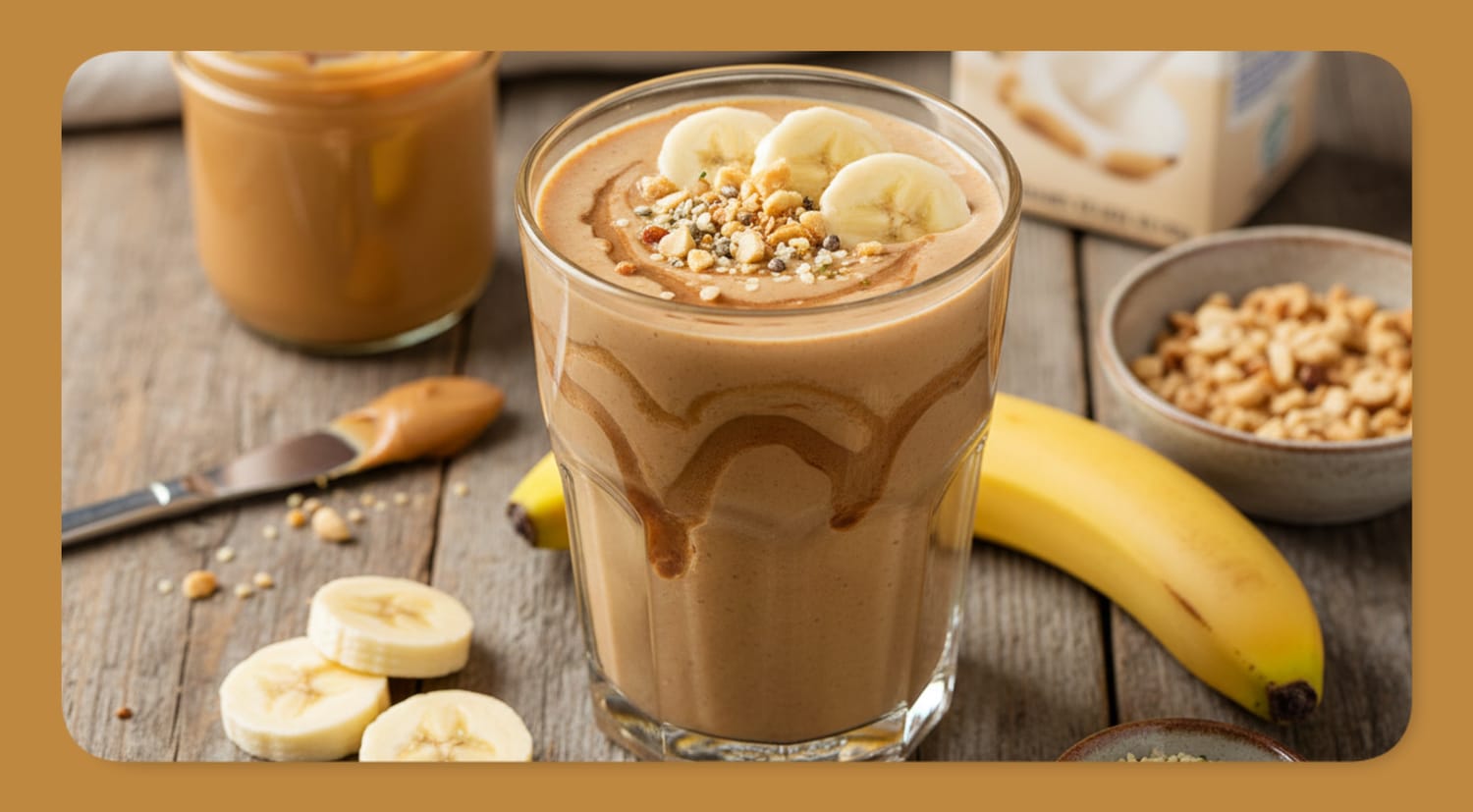
Protein-Packed Vegan Peanut Butter Smoothie: Plant-Powered Post-Workout Fuel
The blender whirs to life, and within seconds, creamy peanut butter swirls into frozen banana chunks, transforming into a thick, shake-like consistency that rivals any post-gym protein drink you'd pay $8 for at a juice bar. This isn't your average fruit smoothie that leaves you hungry an hour later. This is a legitimate meal replacement that delivers 25+ grams of plant-based protein, satisfies peanut butter cravings, and actually tastes like a milkshake instead of chalky protein powder.
Most vegan protein smoothies fall into two camps: they're either thin and watery, leaving you unsatisfied and reaching for snacks within the hour, or they're so packed with protein powder that they taste like you're drinking cardboard mixed with artificial sweetener. I spent months testing ratios to crack the code on a smoothie that's legitimately thick and creamy, naturally sweet from whole ingredients, and delivers serious protein without that dreaded chalky aftertaste. The secret? Using frozen banana as the base for creaminess, just the right amount of peanut butter for richness and flavor, and a high-quality vegan protein powder that actually tastes good.
This smoothie solves the biggest challenge plant-based athletes face: getting enough protein in a convenient, delicious format that doesn't require cooking or meal prep. Whether you're rushing out the door to work, recovering from an intense training session, or just need a satisfying breakfast that keeps you full until lunch, this smoothie delivers complete nutrition in under 5 minutes. No weird ingredients, no expensive superfoods you can't pronounce, just straightforward whole foods that work.
What Makes This Smoothie Special
Serious Protein Content: Delivers 25 to 28g of complete plant-based protein per serving, comparable to a chicken breast, from a combination of vegan protein powder, peanut butter, and oat milk. Unlike many vegan smoothies that max out at 10 to 12g, this one actually fuels muscle recovery and keeps you satisfied for 4+ hours.
Milkshake-Thick Texture: The frozen banana base creates that coveted soft-serve consistency that makes you feel like you're indulging in dessert, not choking down a health drink. It's thick enough to eat with a spoon but smooth enough to drink through a straw, the perfect middle ground.
No Chalky Aftertaste: The natural creaminess from peanut butter and oat milk completely masks any protein powder flavor, while the banana adds sweetness without needing added sugars or dates. Even people who hate protein shakes love this smoothie.
Budget-Friendly Plant Power: Uses affordable, accessible ingredients you can find at any grocery store. No expensive nut butters, no hard-to-find superfoods, no specialty vegan products, just peanut butter, bananas, and basic pantry staples that cost under $2 per serving.
Genuinely Filling: The combination of protein, healthy fats, and fiber creates lasting satiety that makes this work as a true meal replacement, not just a snack. You won't be raiding the pantry an hour later.
Ingredients
Base Ingredients:
- 1 large banana, frozen in chunks (140g), provides creamy base and natural sweetness
- 2 tablespoons natural peanut butter (32g), adds richness, healthy fats, and classic flavor
- 1 scoop vanilla vegan protein powder (30g), boosts protein content without chalky taste
- 1 cup unsweetened oat milk (240ml), creates creamy, neutral base that complements peanut butter
- 3 to 4 ice cubes (optional, for extra thickness)
- 1/4 teaspoon vanilla extract (optional), enhances overall flavor depth
Nutritional Boosters (Optional):
- 1 tablespoon ground flaxseed (adds 2g protein, omega-3s)
- 1 tablespoon hemp hearts (adds 3g protein, creamy texture)
- 1 handful spinach (won't affect taste, adds iron and vitamins)
- 1/2 tablespoon cacao nibs (for chocolate-peanut butter variation)
- Pinch of cinnamon (enhances sweetness perception)
Smoothie Bowl Toppings (Optional):
- Sliced banana
- Cacao nibs or dark chocolate chips
- Granola
- Extra drizzle of peanut butter
- Crushed peanuts
- Chia seeds
- Fresh berries
Blending Instructions & Technique
A. Preparation:
Slice your banana and freeze in chunks on a parchment-lined tray for at least 2 hours or overnight. Pre-frozen banana is the key to achieving that thick, ice cream-like consistency without watering down your smoothie with too much ice. If you forgot to freeze your banana ahead of time, you can use a fresh banana plus 5 to 6 ice cubes, though the texture won't be quite as creamy.
B. Blend Order & Layering:
- Add liquid first (pour oat milk into blender). This prevents the blender blade from jamming and ensures everything blends smoothly from the start rather than creating air pockets.
- Add protein powder. This allows it to incorporate into the liquid before frozen ingredients trap it in clumps.
- Add peanut butter. Dropping it in now helps it distribute evenly rather than sticking to frozen banana chunks.
- Top with frozen banana chunks last. Placing heavy frozen ingredients on top pushes everything down toward the blade for more efficient blending.
- Add optional boosters (spinach, flax, hemp) between the liquid and frozen fruit layers.
C. Blending Technique:
Start on low speed for 10 to 15 seconds to break down the frozen banana chunks without straining your blender motor. You'll hear the blender struggling initially, and this is normal. Use the tamper (if your blender has one) to push ingredients toward the blade, or stop and scrape down the sides with a spatula.
Gradually increase to medium-high speed and blend for 30 to 45 seconds until completely smooth. The mixture should transform from chunky to silky, and you'll notice the sound of the blender motor smooth out when everything is fully incorporated. The color should be a light tan or beige, not streaky.
If the smoothie is too thick and the blender is struggling (you'll hear the motor strain or see ingredients spinning above the blade without blending), stop and add 2 tablespoons of oat milk at a time until it starts moving smoothly. If it's too thin and pourable rather than spoonable, add another handful of ice cubes or 1/4 of a frozen banana.
For a smoothie bowl consistency, use minimal liquid (start with 3/4 cup oat milk) and add more frozen banana. The mixture should be thick like soft-serve ice cream, and a spoon should stand upright in it.
D. Finishing & Serving:
Pour into a chilled glass for drinking, or scoop into a bowl if making it as a smoothie bowl. The consistency should be thick enough to coat the back of a spoon but pourable enough to drink through a wide straw. If making a bowl, smooth the top with the back of a spoon and arrange toppings immediately before it warms up.
Texture & Consistency Guide
For Drinkable Smoothies:
Too Thin? Add: half a frozen banana, 2 tablespoons of oats (blends in seamlessly), another tablespoon of peanut butter, or 3 to 4 ice cubes. Blend again for 15 seconds.
Too Thick? Add: oat milk 2 tablespoons at a time (start conservatively, you can always add more), coconut water for lighter sweetness, or plain water if you want to avoid extra calories.
For Smoothie Bowls:
Perfect Bowl Consistency: Should be thick enough that toppings sit on top rather than sinking in, similar to soft-serve ice cream or frozen yogurt. When you drag a spoon through it, the path should hold its shape for a few seconds.
Secret: Use only 1/2 to 3/4 cup liquid maximum and pack in frozen ingredients. The less liquid you use, the thicker your bowl will be.
Test: Insert a spoon vertically into the center. It should stand upright without falling over. If it topples, blend in another frozen banana chunk.
Ideal Consistency Indicators:
Drinkable: Flows steadily through a wide straw (regular straws might be too narrow), has substantial body, and leaves a coating on the inside of your glass. Not watery or thin like juice.
Bowl: Holds its shape when scooped, mounds slightly when you scoop it into a bowl, doesn't puddle or flatten out immediately. Toppings should rest on the surface, not sink.
Customization Matrix
Liquid Base Options:
| Type | Options | Notes |
|---|---|---|
| Oat Milk | Unsweetened, vanilla, barista blend | Best overall for creaminess, neutral flavor |
| Almond Milk | Unsweetened, vanilla | Lighter, slightly nutty, lower calorie |
| Soy Milk | Unsweetened | Adds 7g extra protein, creamier than almond |
| Coconut Milk | Full-fat canned, coconut beverage | Ultra creamy, tropical undertones |
| Water/Coconut Water | Plain, unflavored | Lightest option, lets peanut butter flavor shine |
Protein Boosters:
- Vegan Protein Powder: Vanilla, chocolate, or unflavored pea protein, brown rice protein, or blends (30g scoop = 20 to 25g protein)
- Peanut Butter: Natural, powdered PB2 for lower fat (2 tbsp = 8g protein)
- Hemp Hearts: Nutty, creamy (3 tbsp = 10g protein)
- Silken Tofu: Neutral flavor, ultra creamy (1/4 block = 5g protein)
- Oats: Adds thickness and 5g protein per 1/4 cup
Natural Sweeteners:
- Banana: Best option, already in recipe (riper = sweeter)
- Dates: 2 to 3 pitted Medjool dates for caramel-like sweetness
- Maple Syrup: 1 tablespoon for classic sweet flavor
- Coconut Sugar: 1 tablespoon for lower glycemic option
- Vanilla Extract: Enhances sweetness perception without adding sugar
Thickness Enhancers:
- Frozen Banana: Primary thickener, adds creaminess
- Avocado: 1/4 avocado makes it ultra creamy without banana flavor
- Frozen Cauliflower: 1/4 cup adds thickness with zero flavor impact
- Oats: 2 to 3 tablespoons for extra body and staying power
- Chia Seeds: 1 tablespoon (let sit 5 minutes before blending to gel)
Nut Butter Alternatives:
- Almond Butter: Milder, slightly sweet
- Cashew Butter: Ultra creamy, neutral flavor
- Sunflower Seed Butter: Nut-free option, slightly earthy
- Tahini: Savory, unique flavor (use less, it's strong)
- Mixed Nut Butter: Complex flavor, typically more expensive
Flavor Variations:
Chef's Tips for Success
Freeze Bananas Properly: Peel bananas first, slice into 1-inch chunks, and freeze on a parchment-lined tray for 2 hours before transferring to freezer bags. Pre-sliced frozen banana chunks blend 10x easier than trying to break apart a whole frozen banana. Pro tip: buy overripe bananas on sale, freeze immediately, and you'll always have smoothie-ready fruit.
Choose the Right Peanut Butter: Natural peanut butter (just peanuts and salt) works best because it's less sweet and doesn't contain added oils that can make your smoothie greasy. Stir it well before measuring. Avoid reduced-fat versions, as they often add sugar to compensate for flavor, and you need those healthy fats for satiety.
Don't Overdo the Liquid: Start with less liquid than you think you need (3/4 cup instead of a full cup). You can always add more to thin it out, but you can't take liquid back out once it's in. This is the #1 mistake people make that results in thin, disappointing smoothies.
Blend in Stages for Lower-Powered Blenders: If you have a basic blender (not a Vitamix or Blendtec), let frozen bananas thaw for 5 minutes on the counter before blending, cut them into smaller chunks, and blend on low speed first. Add a bit more liquid if needed. It might take an extra 30 seconds, but you'll get smooth results without burning out your motor.
Make Freezer Smoothie Packs: Every Sunday, portion out frozen banana chunks, measured protein powder in small containers, and flaxseed into individual freezer bags labeled "Vegan PB Protein, add 1 cup oat milk + 2 tbsp PB." On busy mornings, dump the contents into your blender, add the wet ingredients, and blend. Saves 5 minutes when you're rushing.
Taste Your Protein Powder First: Not all vegan protein powders are created equal. Some are chalky, some are gritty, some taste like dirt. Buy small sample sizes first to test flavors. Vanilla blends best with peanut butter, but chocolate works great too for a Reese's cup vibe. Unflavored powder works if you add extra vanilla extract and a date for sweetness.
Best Consumed Immediately: This smoothie is at peak texture and flavor within the first 15 minutes after blending. After that, it starts to separate, the banana oxidizes (turns slightly brown), and the texture becomes less appealing. If you must store it, keep it in an airtight container in the fridge for up to 24 hours and shake vigorously before drinking. It won't be quite as good, but it's still nutritious.
Nutritional Benefits Section
This isn't just another sweet breakfast treat masquerading as health food. This smoothie delivers legitimate nutrition that rivals a full meal, with a macro balance specifically designed to support muscle recovery, sustained energy, and lasting fullness. Compare this to a typical store-bought fruit smoothie (maybe 5g protein, 60g sugar, no healthy fats) or a sugary coffee shop frappuccino (400+ calories, minimal nutrition), and you'll see why this homemade version is in a completely different category.
Specific Health Benefits:
High Protein Content for Muscle Recovery and Satiety: Contains 25 to 28g of complete plant-based protein per serving (when using a quality vegan protein blend), compared to just 5 to 8g in typical fruit smoothies. This amount is optimal for post-workout muscle protein synthesis and keeps you genuinely full for 4+ hours, preventing mid-morning snack attacks and stabilizing energy levels throughout your day.
Healthy Fats from Peanut Butter for Brain Function: The 16g of predominantly monounsaturated fats from peanut butter support cognitive function, hormone production, and help your body absorb fat-soluble vitamins. These fats also slow digestion, creating steady energy release rather than the blood sugar spike-and-crash you'd get from a carb-only smoothie.
Complex Carbohydrates for Sustained Energy: The 45g of carbohydrates come primarily from whole food sources (banana, oats if added) with 6g of fiber that moderates sugar absorption. Unlike refined sugar drinks, this provides steady fuel for your muscles and brain without the energy crash an hour later.
Potassium for Muscle Function and Recovery: Bananas provide 400mg+ of potassium, which is crucial for proper muscle contraction, nerve signaling, and preventing post-workout cramps. This is especially important after sweaty workouts when you've depleted electrolytes.
Omega-3 Fatty Acids from Optional Flaxseed: Adding ground flaxseed boosts anti-inflammatory omega-3s (ALA), which support heart health, reduce exercise-induced inflammation, and promote faster recovery. Two tablespoons provide about 3g of these essential fats that many plant-based diets lack.
Fiber for Digestive Health and Blood Sugar Control: With 6 to 8g of fiber per serving (depending on add-ins), this smoothie supports healthy digestion, feeds beneficial gut bacteria, and prevents the blood sugar rollercoaster that leaves you hungry and irritable. Most Americans get less than half the recommended daily fiber. This smoothie makes a serious dent in that gap.
Complete Macro Breakdown:
Why This Matters:
This nutritional profile represents the ideal macro balance for active individuals following a plant-based diet. The 40-30-30 style ratio (moderate carb, high protein, moderate healthy fat) supports muscle maintenance while providing enough carbohydrates for energy and enough fat for satiety and nutrient absorption. Whether you're trying to build muscle, lose fat while preserving lean mass, or simply maintain steady energy levels throughout demanding days, this combination of whole food ingredients and strategic supplementation (protein powder) delivers results. Unlike typical smoothies that are essentially fruit juice with ice, this functions as a complete meal that genuinely satisfies hunger and fuels your body for hours.
Best Blender Types & Equipment
High-Speed Blenders (Ideal):
Vitamix, Blendtec, Ninja Professional Series These powerhouse blenders (1000+ watts) make smoothie preparation absolutely effortless. They pulverize frozen bananas in seconds, create the silkiest texture, and never struggle regardless of how thick you make your smoothie. The investment (typically $200 to $400) pays off if you make smoothies 3+ times per week. Best for daily smoothie makers, anyone making smoothie bowls regularly, and those who want to blend nut butters or hummus in the same machine.
Standard Blenders (Works Great):
Most kitchen blenders (Oster, Hamilton Beach, KitchenAid) Absolutely capable of making excellent smoothies with a few minor adjustments. Cut frozen banana into smaller chunks (1/2-inch instead of 1-inch), let frozen fruit sit out for 5 minutes to slightly soften, and add an extra 2 to 3 tablespoons of liquid. Start on low speed and be patient. It might take 60 to 90 seconds instead of 30 seconds, but you'll get there. The texture might be slightly less silky-smooth, but it's 90% as good.
Blender Power Tip: If your standard blender struggles with frozen ingredients, blend the liquid, peanut butter, and protein powder first until completely smooth, then add frozen banana chunks gradually with the blender running on low. This prevents jamming.
Personal/Bullet Blenders (Convenient):
NutriBullet, Magic Bullet, Ninja Personal Blender Perfect for single-serving smoothies if you're making this just for yourself. These compact blenders handle frozen fruit surprisingly well, and you can drink directly from the blending cup (one less dish to wash). Key tip: Don't fill past the MAX line, and add liquid first. Let frozen banana soften for 5 minutes for best results. These smaller motors can overheat if you run them too long, so blend in 30-second intervals if needed.
No Blender? Alternative Options:
Immersion/Stick Blender Can work for this smoothie if you use a fresh banana instead of frozen and add 5 to 6 ice cubes for coldness. You'll need a tall, narrow container to blend in, and the texture won't be as uniformly smooth. Better than nothing, but not ideal for regular smoothie making.
Food Processor Works in a pinch, though the texture will be more icy and less creamy. Use minimal liquid and scrape down the sides frequently. Best for smoothie bowls where ultra-smooth texture is less critical.
Other Helpful Tools:
- Reusable Silicone Straws: Wide-bore straws (at least 10mm diameter) are essential for thick smoothies. Regular narrow straws make drinking a workout, and you'll miss out on the satisfying thick-shake experience.
- Mason Jars with Lids: Perfect for storing pre-made smoothies in the fridge (up to 24 hours) or taking your smoothie on the go. Wide-mouth 16oz or 24oz jars work best.
- Tamper Tool: If your blender came with a tamper (Vitamix always includes one), use it to push ingredients down toward the blade while blending. This is the secret to achieving thick smoothie bowl consistency without adding excess liquid.
- Small Containers for Smoothie Packs: Portion protein powder into small reusable containers or snack bags for freezer packs. Protein powder shouldn't be frozen in the bag with fruit (it can clump), so keep it separate.
Storage, Prep & Serving
Immediate Serving:
This smoothie is absolutely at its best within 15 minutes of blending. The texture is perfectly creamy, the temperature is ideal, and the flavors are brightest. Pour into a chilled glass (pop it in the freezer for 5 minutes beforehand) if drinking, or scoop into a chilled bowl if eating with a spoon. The cold vessel keeps your smoothie from warming up too quickly.
Short-Term Storage:
Refrigerator: Store in an airtight container (mason jar or bottle with tight-fitting lid) for up to 24 hours. The smoothie will separate, with liquid settling to the bottom and thicker mixture rising to the top. This is completely normal and doesn't affect safety or nutrition. Shake or stir vigorously for 30 seconds before drinking to recombine. The banana may oxidize slightly (turn a bit darker brown), which affects appearance but not taste. Texture will be slightly less thick, and you might want to add ice cubes when you drink it for coldness.
Important Note: The color and texture will never be quite as good as fresh, and protein powder can develop a slightly grainy texture when stored. If you know you'll be storing it, blend it slightly thicker than usual to compensate for separation.
Make-Ahead Smoothie Packs (Game-Changer):
Portion all dry and frozen ingredients into individual freezer bags or containers for instant smoothies all week:
- In each freezer bag, add: Frozen banana chunks (140g), measured protein powder in a small separate container or bag (don't mix directly with wet ingredients as it clumps)
- Label clearly: "Vegan PB Protein Smoothie, Add 1 cup oat milk + 2 tbsp peanut butter"
- Freeze flat for easy storage, stack multiple bags
- Shelf life: Up to 3 months frozen
Morning Routine: Dump contents of bag into blender, add liquid and peanut butter, blend 45 seconds. Total time from freezer to glass: 2 minutes.
Freezing Finished Smoothies:
You can freeze leftover smoothie, though texture changes significantly:
- Ice cube trays: Pour smoothie into trays, freeze, then pop cubes into freezer bags. Re-blend frozen cubes with 1/4 cup oat milk for a quick smoothie bowl, or add to your next smoothie for extra protein and thickness.
- Freezer bags: Pour into bags, squeeze out air, freeze flat. Takes up minimal freezer space.
- Storage time: Up to 1 month frozen
- How to use: Thaw overnight in refrigerator and shake well, or blend frozen smoothie cubes with a splash of liquid in your blender
Texture Note: Previously frozen smoothies lose that creamy, freshly-blended texture and become slightly icier. They're still nutritious and convenient, just not quite as luxurious.
Meal Prep Benefits:
Creating freezer smoothie packs saves 10 to 15 minutes on hectic mornings when every minute counts. It eliminates decision fatigue (no standing in front of the open fridge wondering what to make), reduces food waste dramatically (you're using up bananas before they go bad), ensures you have a healthy breakfast option even when you're exhausted or unmotivated, and costs about 60% less than buying pre-made smoothies or protein shakes. If you make smoothies 3+ times per week, dedicating 20 minutes on meal prep Sunday to create 7 smoothie packs is absolutely worth it.
Serving Suggestions & Occasions
Best Times to Enjoy:
Post-Workout Recovery (Ideal): The 30-minute window after training is when your muscles are primed to absorb protein and carbohydrates for recovery. This smoothie delivers both in optimal ratios. Fast-digesting carbs from banana replenish glycogen stores, while 27g of protein kickstarts muscle repair. The potassium replaces electrolytes lost through sweat. Perfect timing for this smoothie: within 30 to 60 minutes after strength training, CrossFit, running, cycling, or any intense workout.
Quick Breakfast On-the-Go: When you have 5 minutes to get out the door but need substantial nutrition that won't leave you starving by 10am. The protein and healthy fats provide steady energy for 4+ hours without the crash you'd get from toast or cereal. Drink it on your commute or sip at your desk during your first meeting.
Meal Replacement Lunch: Totally satisfying as a midday meal when paired with a small side of whole grain crackers or veggies. The 380 calories and high protein content make it a legitimate lunch, not just a snack. Works especially well for busy parents who need to eat fast while supervising kids' lunch.
Afternoon Energy Boost: That 3pm energy slump when you're tempted by vending machine candy or a third coffee? This smoothie provides sustained energy from balanced macros rather than a caffeine or sugar spike followed by an inevitable crash.
Healthy Dessert Alternative: Craving ice cream or something sweet after dinner? This smoothie satisfies sweet tooth cravings with the thick, creamy texture of a milkshake but delivers nutrition instead of empty calories. Add cacao powder for a chocolate-peanut butter version that tastes legitimately indulgent.
Perfect Pairings:
With: Whole grain toast with avocado (adds complex carbs and more healthy fats), a small protein muffin (boosts total calories for bigger appetites), a handful of raw almonds (adds crunch and extra protein), or apple slices with almond butter (for kid-friendly complete breakfast).
As a Meal Replacement: This smoothie works as a standalone meal replacement when it contains 25g+ protein, healthy fats from peanut butter, and you're not extremely hungry. For very active individuals or those with higher calorie needs, pair it with a side of whole grains or nuts to boost calories to 500 to 600.
For Smoothie Bowls, Complete Meal Approach: Make it extra thick (use only 1/2 cup oat milk), pour into a bowl, and top with crunchy granola (adds 100 calories and satisfying texture contrast), sliced banana (more potassium and sweetness), chia seeds (extra fiber and omega-3s), cacao nibs (antioxidants and chocolatey crunch), and a drizzle of extra peanut butter (because more peanut butter is always good). This transforms it into a 500 to 600 calorie complete breakfast that feels like you're eating dessert for breakfast.
Make It a Complete Meal:
If this smoothie is your only breakfast and you have a very active day ahead, consider these additions to boost nutrition and calories:
- Add 1/4 cup oats before blending (adds 75 calories, extra fiber, and makes it even more filling)
- Use 3 tablespoons peanut butter instead of 2 (adds 90 calories and 4g protein)
- Add 1/4 avocado (adds 60 calories and makes it ultra creamy)
- Include hemp hearts (3 tablespoons adds 10g protein and 100 calories)
- Blend in 1 tablespoon ground flaxseed (adds omega-3s, fiber, and 37 calories)
With these additions, you're looking at 550 to 650 calories with 30 to 35g protein. Truly a complete, satisfying meal that powers you through intense mornings.
Final Thoughts
This Vegan Peanut Butter Protein Smoothie proves that plant-based eating doesn't mean sacrificing taste, convenience, or muscle-building nutrition. You don't need expensive specialty ingredients, complicated techniques, or an hour of meal prep to fuel your body properly. Just five minutes, a handful of whole food ingredients, and a blender stand between you and a genuinely delicious, seriously nutritious breakfast or post-workout recovery meal.
What makes this smoothie special isn't just the impressive 27g of plant-based protein or the fact that it tastes like a peanut butter milkshake. It's that this recipe solves real problems: the morning chaos of busy families trying to eat something healthy before rushing out the door, the frustration of vegan athletes struggling to hit protein goals without eating tofu at every meal, the disappointment of spending $8 on a juice bar smoothie that leaves you hungry an hour later. This smoothie is thick enough to satisfy, protein-rich enough to fuel real workouts, budget-friendly enough to make daily, and simple enough that even non-cooks can nail it on the first try.
Your mornings just got easier, your post-workout nutrition just got more delicious, and your plant-based protein goals just became totally achievable. Make this recipe your own by trying the variations in the customization section (chocolate peanut butter, PB&J, cookie dough style) and discover which version becomes your signature smoothie. Whether you're a dedicated vegan athlete, a busy parent trying to feed nutritious breakfasts to picky kids, or simply someone who wants to start the day with real energy instead of caffeine and sugar crashes, this smoothie delivers.
Ready to discover just how good vegan protein smoothies can taste? Let's blend.
FAQ Section
Can I use fresh banana instead of frozen?
Yes, but your texture will suffer significantly. Fresh banana creates a thin, watery smoothie rather than that thick, creamy, milkshake-like consistency we're going for. If you absolutely must use fresh banana, compensate by adding 5 to 6 ice cubes and reducing your liquid to 3/4 cup. The texture still won't be quite as luxurious, but it'll be drinkable. Better solution: always keep pre-sliced bananas in your freezer specifically for smoothies.
What's the best vegan protein powder to use?
Look for a blend rather than single-source protein (pea protein alone can be gritty). Orgain Organic Protein, Vega Sport, Garden of Life Sport, and Naked Pea & Rice blend all work beautifully in this recipe. Vanilla flavor complements peanut butter best, but chocolate works great for a Reese's cup vibe. Avoid heavily stevia-sweetened powders if you're sensitive to stevia's aftertaste. Buy sample sizes first to test flavor and texture before committing to a large container.
How can I make this nut-free for allergies?
Replace peanut butter with sunflower seed butter or tahini (use only 1.5 tablespoons as tahini is strong). Use oat milk, coconut milk, or soy milk instead of almond milk. Add 1/4 avocado for creaminess and healthy fats to compensate for missing nut butter richness. The flavor profile changes significantly (more neutral and less distinctly "peanut butter smoothie"), but it's still delicious and delivers equivalent protein and nutrition.
Why is my smoothie too watery?
You added too much liquid. This is the #1 mistake. Next time, start with only 3/4 cup oat milk and add more only if needed. Quick fix for an already-watery smoothie: add another frozen banana half, 2 tablespoons of oats, or 3 to 4 ice cubes, then blend again for 15 seconds. For future smoothies, remember: you can always add more liquid, but you can't take it back out.
Can I make this the night before?
You can, but it won't be as good. Store in an airtight mason jar in the fridge for up to 24 hours. It will separate (shake vigorously before drinking), the banana will oxidize slightly (turning a bit darker), and the texture won't be as creamy. Better solution: make freezer smoothie packs with all ingredients except liquid and peanut butter. In the morning, dump the frozen pack into your blender, add wet ingredients, and blend fresh in 2 minutes.
Is this actually filling enough for breakfast?
Absolutely, if you're using a full scoop of protein powder and 2 tablespoons of peanut butter as written. The combination of 27g protein, 16g healthy fats, and 6g fiber keeps most people satisfied for 4 to 5 hours. If you're extremely active, training heavily, or have a very fast metabolism, add 1/4 cup oats or an extra tablespoon of peanut butter to boost calories to 450 to 500. For lighter appetites or as a snack, this recipe makes 2 smaller servings.
Do I need a high-speed blender like a Vitamix?
No, but it makes things easier. Any blender can make this smoothie. You just need to adjust your technique. With standard blenders: let frozen banana soften 5 minutes, cut into smaller chunks, add extra 2 to 3 tablespoons liquid, and be patient (blend for 60 to 90 seconds instead of 30). Start on low speed to break down frozen chunks before increasing to high. The texture might be 10% less silky-smooth, but it's still delicious.
How can I reduce the calories without losing protein?
Use PB2 powdered peanut butter instead of regular (saves 100 calories), use unsweetened almond milk instead of oat milk (saves 30 calories), skip optional add-ins like hemp hearts or extra toppings, or split the recipe into two smaller servings. You'll still get the full protein content but drop total calories to around 280 to 300 per serving. The texture will be slightly less rich and creamy without full-fat peanut butter, but still satisfying.
My smoothie separated in the fridge. Is it still good?
Yes, completely safe and still nutritious. Separation is natural. The liquid settles to the bottom while thicker components rise to the top. Shake vigorously for 30 seconds to recombine before drinking, or pour it back into your blender and pulse for 10 seconds. The texture won't be quite as smooth as fresh, and you might want to add a few ice cubes for coldness since it's been refrigerated.
Can kids drink this smoothie?
Absolutely. The nutrition profile is excellent for growing kids. High protein supports development, healthy fats support brain function, and the sweet peanut butter banana flavor appeals to most children. For younger kids (under 5), you might reduce the serving size to half since it's quite filling. Always check for peanut allergies first, and consider using sunflower seed butter instead for nut-free households or schools.
What order should I add ingredients to my blender?
Liquid first (prevents jamming), then protein powder, then peanut butter, then any add-ins like spinach or seeds, and frozen banana chunks last on top. This order ensures everything blends smoothly without creating air pockets or leaving chunks of protein powder stuck to the side. If your blender has a tamper, use it to push ingredients down toward the blade while blending.
Can I make this keto-friendly or lower carb?
Yes, with modifications. Replace banana with 1/2 cup frozen cauliflower plus 1/4 avocado for creaminess without carbs, use unsweetened almond milk (lowest carb milk option), add MCT oil or coconut oil for healthy fats, and use a keto-friendly protein powder. This drops carbs from 45g to about 10 to 12g net carbs while maintaining the creamy texture and protein content. The flavor will be less sweet naturally, so you might add a few drops of stevia or monk fruit sweetener.
Glossary of Key Terms
The liquid foundation of your smoothie that determines final consistency and contributes to overall flavor profile. For this recipe, oat milk provides creamy body, but almond milk, soy milk, or coconut milk work equally well. The amount of base liquid is the primary factor controlling whether you get a drinkable smoothie or thick smoothie bowl.
A meal-prep strategy where you pre-portion all dry and frozen smoothie ingredients into individual freezer bags, labeled with what liquid to add. Saves 10+ minutes on busy mornings and eliminates decision fatigue. Store protein powder separately in a small container since it can clump when frozen with wet fruit.
Professional-grade blenders with 1000+ watt motors (Vitamix, Blendtec, Ninja) that pulverize frozen ingredients effortlessly and create the smoothest possible texture. They're ideal but not required. Standard blenders work fine with minor technique adjustments.
The ratio of macronutrients (protein, carbohydrates, fats) in a meal or recipe. This smoothie's approximately 30% protein, 45% carbs, 25% fat balance is ideal for post-workout recovery and sustained energy, making it function as a true meal replacement rather than just a snack.
Peanut butter made from just peanuts and salt, without added oils, sugars, or hydrogenated fats. The oil separates naturally (stir before using), but it blends into smoothies more cleanly than conventional peanut butter and has a more authentic peanut flavor. Found in the organic section of most grocery stores.
Concentrated protein supplement derived from plant sources like peas, rice, hemp, or blends of multiple plants. Quality matters significantly. Look for products with 20+ grams protein per scoop and minimal ingredients. Avoid products with excessive sweeteners or long lists of additives.
A thick smoothie eaten with a spoon and topped with crunchy toppings like granola, fruit, and seeds. Requires minimal liquid (about half what you'd use for a drinkable smoothie) and maximum frozen ingredients to achieve soft-serve ice cream consistency that holds toppings without them sinking.
The ideal texture for smoothie bowls. Thick enough to eat with a spoon and hold toppings on the surface, similar to soft-serve ice cream or frozen yogurt. Achieved by using minimal liquid and maximum frozen ingredients, then blending until just smooth.
Nutrient-dense ingredients added to smoothies to enhance health benefits beyond basic nutrition. Examples include chia seeds (omega-3s and fiber), hemp hearts (protein and minerals), flaxseed (lignans and omega-3s), or spirulina (iron and protein). Usually added in small quantities (1 to 2 tablespoons).
A long plastic tool included with high-speed blenders (especially Vitamix) that allows you to push ingredients down toward the blade while the blender is running. Essential for achieving thick smoothie bowl consistency without adding excess liquid. The tamper is designed to never reach the blades, making it safe to use while blending.
Plant-based protein supplement that excludes all animal products (no whey, casein, egg, or collagen). Common sources include pea, rice, hemp, pumpkin seed, and combinations. Blends typically have better texture and more complete amino acid profiles than single-source powders.
Minimally processed ingredients in their natural state. Whole fruits, nuts, seeds, and vegetables rather than juices, extracts, or refined products. This smoothie emphasizes whole food ingredients (banana, peanut butter, oats) with protein powder as the only processed supplement, creating more stable blood sugar and lasting fullness compared to refined ingredient smoothies.
Share Your Success!
What's your go-to morning routine for fitting in a healthy breakfast? Has this smoothie become your new post-workout ritual, or are you using it to fuel busy mornings before work? I'm genuinely curious about how this recipe fits into your lifestyle and what variations you're experimenting with.
Did you try adding spinach without anyone noticing? Transform it into a chocolate peanut butter version with cacao powder? Create stunning smoothie bowls topped with your favorite granola? Drop a comment below and let me know how it turned out. I read every single one and love hearing about your smoothie adventures!
Save this recipe to your Pinterest smoothie board so you can find it again when you need quick breakfast inspiration or post-workout fuel. Trust me, you'll want this one bookmarked for those mornings when you need something fast, filling, and actually delicious.
Follow my Pinterest for more plant-based protein recipes, meal prep hacks for busy weeks, and smoothie bowl creations that are almost too pretty to eat. I'm constantly testing new flavor combinations and sharing what actually works in real kitchens with real blenders.
Tag me in your smoothie photos on social media, whether it's a perfectly styled smoothie bowl or a slightly messy but delicious morning creation in your favorite travel mug. I feature my favorites and love celebrating your healthy eating wins! Let's make plant-based protein delicious together.
More Delicious Smoothies to Try
Affiliate Disclosure
This page may contain affiliate links. This means that if you click on one of these links and make a purchase, I may receive a small commission at no additional cost to you. This helps support the blog and allows me to continue creating free content. I only recommend products or services that I use personally and believe will add value to my readers. Your support is appreciated!
Created with ©simplyhealthynews