
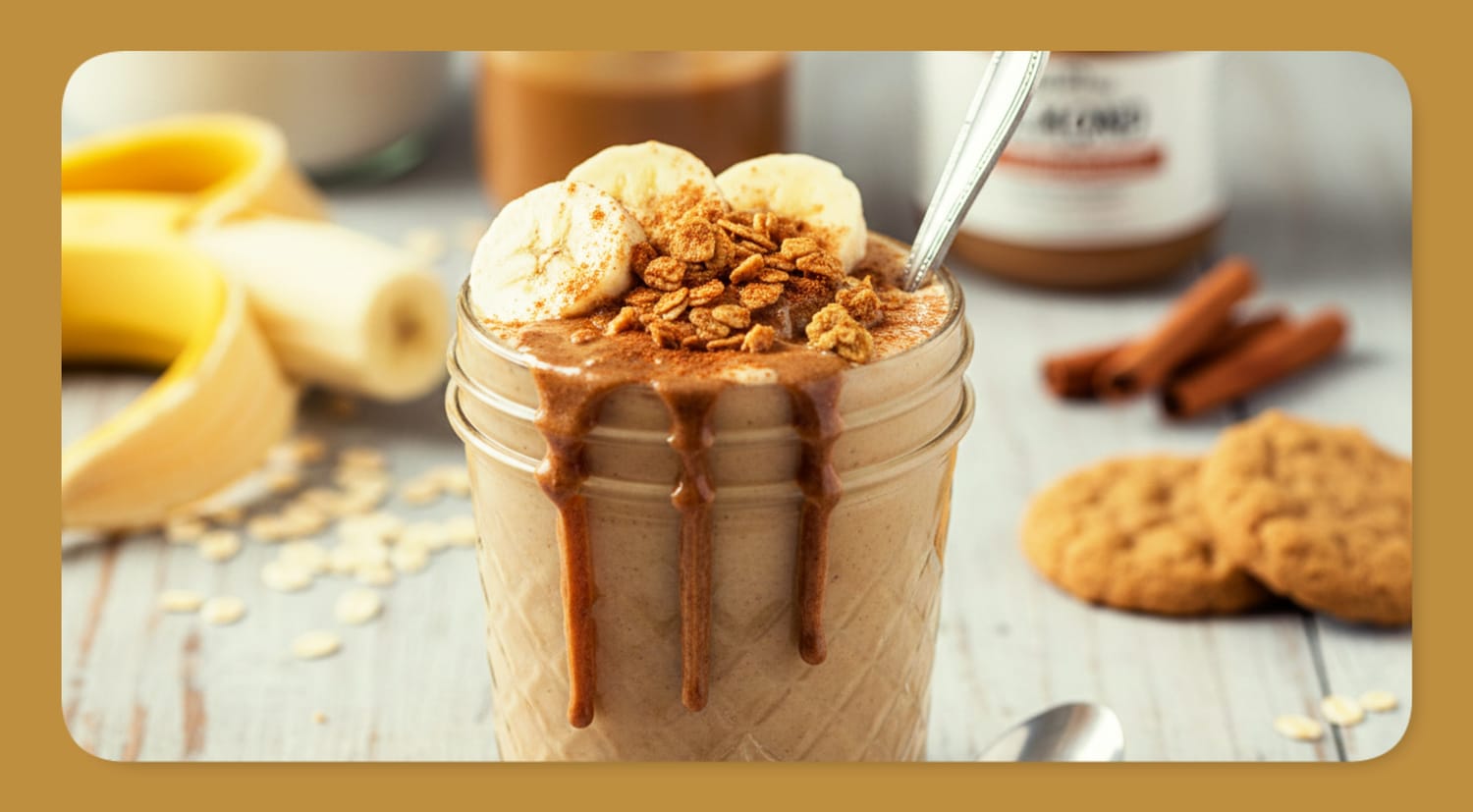
🍪 Cozy Gluten-Free Oatmeal Cookie Smoothie
Warm Cookie Comfort You Can Trust
Buttery almond, sweet cinnamon, and the soft warmth of oats swirl together in a smoothie so convincingly cookie-flavored that your brain genuinely struggles to believe it's not dessert. That unmistakable oatmeal cookie aroma drifts up from the blender the moment you hit the button, filling the kitchen with a smell that takes you straight back to a warm kitchen with a cookie sheet cooling on the counter. Every thick, creamy sip delivers toasty oat flavor, rich almond butter, warm cinnamon spice, and the natural sweetness of ripe banana, all blended into a smoothie that's completely, certifiably gluten-free.
For anyone living with celiac disease or gluten sensitivity, "safe comfort food" isn't just a nice idea. It's a real need. So many comfort-food-inspired recipes are either made with regular oats (which are frequently cross-contaminated with wheat) or carry an asterisk that reads "may contain traces of gluten." This recipe was developed with that reality front and center. Every ingredient is naturally gluten-free, and the oats are specifically certified gluten-free, meaning they've been grown, harvested, and processed in dedicated facilities free from wheat, barley, and rye contamination. After testing multiple brands of gluten-free oats, adjusting the oat-to-liquid ratio so they blend silky smooth rather than leaving a gritty paste, and finding the exact cinnamon and almond butter balance that creates authentic oatmeal cookie flavor, this version finally nailed it. It's safe, it's delicious, and it's genuinely comforting.
Whether you're celiac and craving a cookie-flavored treat you can trust, gluten-sensitive and tired of wondering if your smoothie ingredients are truly safe, a parent looking for a gluten-free breakfast that kids will actually get excited about, or simply a cookie lover who wants a healthier way to enjoy that warm, spiced oat flavor, this smoothie is here for you. Five minutes, one blender, zero gluten, all comfort.
🌟 What Makes This Smoothie Special
Every ingredient is naturally gluten-free, with certified gluten-free oats as the foundation. No cross-contamination risks, no "may contain" warnings, no guessing.
The combination of toasted oats, almond butter, cinnamon, and banana creates a flavor profile that genuinely tastes like a soft, chewy oatmeal cookie. Not "kind of like a cookie." Actually like a cookie.
With 8g of fiber per serving from oats, banana, and almond butter, this smoothie keeps you full for 3 to 4 hours, making it a real breakfast or a substantial snack, not just a sip of flavored milk.
Ripe frozen banana and a small drizzle of maple syrup provide all the sweetness. No refined sugar, no artificial sweeteners, and no sugar crash afterward.
The blend of oats, cinnamon, banana, and almond butter creates a warm, inviting golden-tan color that looks like a liquid cookie. Topped with a cinnamon dusting and a drizzle of almond butter, it's Pinterest-ready without any effort.
📋 Gluten-Free Oatmeal Cookie Smoothie Recipe
*With optional protein powder
🥣 Base Ingredients
- 1/3 cup certified gluten-free rolled oats (30g), provides the essential oat flavor, fiber, and that soft, baked-goods body (see important note about certification below)
- 1 medium banana, frozen (120g), adds natural sweetness, creamy thickness, and smooth body
- 2 tablespoons almond butter (32g), delivers buttery richness, healthy fats, and the warm nutty flavor essential to oatmeal cookies
- 1 cup milk of choice (240ml), dairy milk, oat milk, or almond milk all work beautifully (see customization matrix for options)
- 1 teaspoon ground cinnamon, the signature spice that makes everything taste like cookies
- 1/2 teaspoon pure vanilla extract, rounds out the cookie flavor and adds bakery-like warmth
- 1 tablespoon pure maple syrup (15ml), optional, adds a touch of caramel-like sweetness
- Pinch of sea salt, amplifies the cookie flavor and balances the sweetness, just like salt does in real cookie dough
- 4 to 5 ice cubes, for a thick, frosty texture
✨ Nutritional Boosters (Optional)
- 1 scoop vanilla protein powder, gluten-free certified (adds 20g protein)
- 1 tablespoon ground flax seeds (for omega-3s and extra fiber)
- 1 tablespoon hemp hearts (adds 5g protein and subtle nutty depth)
- 1 tablespoon chia seeds (stir in after blending for a thicker, pudding-like texture)
- 1/4 teaspoon maca powder (adds a malty, butterscotch-like depth that enhances the cookie flavor)
- 2 tablespoons raisins (adds classic oatmeal raisin cookie authenticity, blend them right in)
🎨 Topping Ideas (For a Smoothie Bowl Version)
- A generous cinnamon dusting
- A drizzle of almond butter
- Sliced banana coins
- Gluten-free granola clusters
- A sprinkle of certified gluten-free rolled oats (raw or lightly toasted)
- Raisins or dried cranberries
- Cacao nibs or dairy-free chocolate chips
- Chopped walnuts or pecans
- Unsweetened coconut flakes
- A tiny drizzle of maple syrup
⚠️ A Note About Gluten-Free Oats
This is important. Regular oats are naturally gluten-free, but they are almost always grown in fields rotated with wheat, harvested with shared equipment, and processed in facilities that also handle wheat, barley, and rye. This means conventional oats frequently contain gluten cross-contamination that can trigger reactions in people with celiac disease or gluten sensitivity.
Always use oats labeled "Certified Gluten-Free." These oats are grown in dedicated fields, harvested with dedicated equipment, processed in dedicated facilities, and tested to confirm gluten levels below 20 parts per million (the threshold established for gluten-free labeling). Trusted brands include Bob's Red Mill Gluten Free, GF Harvest, Bakery on Main, and Only Oats. Check for the certified gluten-free symbol on the packaging, not just the words "gluten-free," as some brands use the term loosely without third-party certification.
If you have celiac disease, the certification matters. If you're avoiding gluten by preference rather than medical necessity, standard oats are likely fine for you.
🧑🍳 Blending Instructions and Technique
Toasting the oats is optional but transformative. For the most authentic oatmeal cookie flavor, spread the certified gluten-free oats in a single layer on a small baking sheet and toast at 350°F (175°C) for 5 to 7 minutes until lightly golden and fragrant. Toasting deepens their flavor from bland and raw to nutty and baked, which is exactly what makes the smoothie taste like a cookie instead of a glass of oatmeal. This step can be done in advance, as cooled toasted oats can be stored in an airtight container for up to 2 weeks.
If you don't have time to toast, the smoothie still tastes great with raw oats. The cinnamon and almond butter carry enough cookie flavor on their own. But if you try it with toasted oats even once, you'll taste the difference immediately.
Freeze your banana at least 2 hours ahead of time. Peel, break into 1-inch pieces, spread on a parchment-lined tray, freeze solid, then transfer to a freezer bag. The riper the banana (look for brown spots on the peel), the sweeter the smoothie will be, which means less or no maple syrup needed.
If your almond butter has separated, stir it thoroughly before measuring. You want a smooth, consistent scoop.
This specific sequence ensures the oats break down completely and the flavors distribute evenly:
- Pour the milk into the blender first. Liquid at the bottom is essential for creating the vortex that pulls the oats and frozen ingredients toward the blades.
- Add the oats, almond butter, cinnamon, vanilla extract, maple syrup (if using), and sea salt. Adding the oats directly into the liquid allows them to begin softening immediately.
- Blend on medium-high for 15 to 20 seconds. This critical pre-blend step breaks the oats down into the milk, creating a smooth, creamy oat-milk base before any frozen ingredients are added. This is the single most important technique in the entire recipe. Skip it, and you risk gritty oat bits in your smoothie. Do it, and the oats dissolve into silky smoothness.
- Add the vanilla protein powder (if using). It dissolves best into the already-moving liquid base.
- Drop in the frozen banana chunks and ice cubes on top. Frozen ingredients go last so gravity pulls them into the smooth oat base.
- Start on low speed for 10 seconds to break up the frozen banana and begin incorporating it into the oat-milk base.
- Increase to high speed and blend for 30 to 45 seconds until completely smooth and creamy.
- Watch for the color. The smoothie should become a warm, inviting golden-tan, like the color of baked oatmeal cookie dough. If you see white milk streaks or dark cinnamon clumps, blend for another 10 seconds.
- Listen for the motor shift. It changes from a rough, chunky rumble to a smooth, even hum when the frozen banana is fully incorporated. Since the oats were already pre-blended into the liquid, the motor should smooth out quickly once the banana breaks down.
- Stop and taste. The flavor should present as warm, toasty oat first, followed by buttery almond richness, sweet cinnamon spice, and a clean vanilla finish. If the cinnamon isn't strong enough, add another 1/4 teaspoon and pulse. If it needs more sweetness, a small drizzle of maple syrup fixes it instantly. If the cookie flavor feels flat or "healthy," the salt is probably missing. Add a tiny pinch and blend briefly. Salt is what shifts the flavor from "oat smoothie" to "oatmeal cookie."
- Check the texture. It should be thick and creamy with a slightly more substantial body than a typical fruit smoothie. The oats contribute a gentle, almost imperceptible thickness that makes every sip feel more filling and more cookie-like.
- Reduce the milk to 1/2 cup (120ml) for a much thicker base.
- Use 1.5 frozen bananas instead of 1 for extra body and scoopability.
- Add 6 to 8 ice cubes for a frostier, more solid consistency.
- Increase the oats to 1/2 cup (40g) for extra thickness and deeper cookie flavor.
- Blend on low speed, using a tamper tool to push ingredients toward the blades. Stop and scrape down the sides as needed.
- Target a thick, soft-serve consistency. The mixture should resist flowing when you tilt the blender jar. A spoon inserted into the center should stand straight up.
- Scoop into a chilled bowl. The warm golden-tan base is the perfect canvas for a cookie-themed presentation. Create a crumble of gluten-free granola across one section, line sliced banana coins along one edge, drizzle almond butter in a zigzag across the center, scatter a few raisins, and finish with a generous dusting of cinnamon. It looks like a deconstructed oatmeal cookie in a bowl.
Pour into a tall glass or your favorite mug. For a simple but beautiful finishing touch, dust the top with a pinch of ground cinnamon. It settles on the surface in a warm, speckled pattern and releases a comforting, bakery-like aroma as you bring the glass to your face.
For extra-special presentation, drizzle a thin ribbon of almond butter across the top of the smoothie. It creates a gorgeous golden contrast and adds a visual cue that immediately says "cookie." A single small raisin or two placed on the almond butter drizzle adds a playful oatmeal-raisin cookie nod.
📐 Texture and Consistency Guide
For a Drinkable Smoothie
- Too Thin? Add more frozen banana (half of another one), extra ice cubes, or increase the oats by 1 tablespoon. The oats are particularly effective thickeners and enhance the cookie flavor at the same time.
- Too Thick? Add milk 1 tablespoon at a time until it flows through a wide straw comfortably. Avoid adding too much at once, as it dilutes the rich cookie flavor quickly.
For a Smoothie Bowl
- Perfect Bowl Consistency: Thick enough that a spoon stands upright in the center. Think thick cookie dough, not pancake batter.
- Secret: Extra frozen banana plus less liquid plus more oats is the triple formula for a scoopable bowl. The oats absorb liquid as they sit, so the bowl naturally thickens slightly within the first minute after scooping.
- Test: Scoop a spoonful and turn it upside down. It should hold for 2 to 3 seconds before slowly falling.
Ideal Consistency Indicators
- Drinkable: Flows through a wide straw with creamy resistance. Feels rich and slightly thick on the tongue, like melted ice cream with body.
- Bowl: Holds toppings firmly on the surface without any sinking. Dense, scoopable, and creamy like thick frozen custard.
🎛️ Customization Matrix
| Category | Options |
|---|---|
| Milk Base | Dairy milk (highest protein, creamiest body), gluten-free oat milk (enhances the oaty flavor, check for GF certification), almond milk unsweetened (lightest, lowest calorie), cashew milk (neutral, creamy), coconut milk from carton (subtle tropical richness), soy milk (highest plant-based protein) |
| Nut/Seed Butter Swaps | Almond butter (original, warmest nutty flavor), cashew butter (milder, slightly sweeter), sunflower seed butter (nut-free option, similar creaminess), peanut butter (different but crowd-pleasing cookie flavor), pecan butter (rich, deeply nutty, exceptional oatmeal cookie match), walnut butter (earthier, pairs well with raisins) |
| Protein Options | Vanilla whey protein GF-certified (smoothest texture), vanilla plant-based protein (vegan option), collagen peptides unflavored (adds protein invisibly), hemp hearts (3 tbsp = 10g protein, subtle nutty addition), egg white protein (neutral, paleo-friendly) |
| Natural Sweeteners | Maple syrup (original, caramel-like warmth), 2 to 3 pitted Medjool dates (adds caramel depth and chewiness), raw honey (1 tbsp, floral sweetness, not vegan), coconut sugar (1 tsp dissolved in the milk, deeper molasses note), ripe banana (the riper, the sweeter) |
| Thickness Enhancers | Extra frozen banana, more gluten-free oats (up to 1/2 cup), frozen cauliflower rice (tasteless creaminess), 1/4 avocado (neutral flavor, incredible body), ice cubes |
| Flavor Twists | Oatmeal Raisin Cookie: blend in 2 tbsp raisins. Oatmeal Chocolate Chip: add 1 tbsp cacao powder or stir in GF mini chocolate chips after blending. Apple Pie Oatmeal: add 1/4 cup unsweetened applesauce and a pinch of nutmeg. Peanut Butter Oatmeal Cookie: swap almond butter for PB and add a pinch of nutmeg. Maple Brown Sugar Oatmeal: increase maple syrup to 2 tbsp and add 1/4 tsp molasses. Carrot Cake Oatmeal: add 2 tbsp shredded carrot and a pinch each of ginger and nutmeg. |
👨🍳 Chef's Tips for Success
This bears repeating. Regular oats, even labeled "whole grain" or "natural," are almost always cross-contaminated with gluten. Only oats with a certified gluten-free symbol from a recognized third-party certifier (such as GFCO or the CSA) have been tested and verified safe. Check the packaging carefully every time you buy, as brands occasionally change their sourcing or processing.
Five to seven minutes in a 350°F oven transforms raw oats from bland and starchy to nutty, toasty, and deeply flavorful. This is the single biggest upgrade you can make to the recipe. Pre-toast a large batch and store in an airtight container at room temperature for up to 2 weeks. Grab a scoop each morning for instant cookie-flavored smoothie readiness.
The 15 to 20 second pre-blend step is what guarantees a smooth, grit-free result. Raw or toasted oats blended directly with frozen fruit can leave tiny, chalky pieces that even high-speed blenders sometimes miss. Blending them into the milk first gives them a head start on breaking down, and by the time the frozen banana is processed, the oats have dissolved completely.
Every good cookie recipe includes salt, and this smoothie is no different. A tiny pinch (less than 1/8 teaspoon) amplifies the cinnamon, deepens the almond butter flavor, and makes the whole smoothie taste more like a baked good and less like a health drink. Without it, the flavors can taste flat. With it, they snap into focus.
Brown-spotted bananas are sweeter, more flavorful, and more aromatic when frozen. They provide so much natural sweetness that you may not need any maple syrup at all. If your bananas are still yellow with no spots, the smoothie will taste less sweet and may need the full tablespoon of maple syrup.
Beyond the oats, double-check your protein powder, maple syrup, and any add-ins for gluten-containing ingredients or "processed in a facility that also handles wheat" warnings. Most common smoothie ingredients are naturally gluten-free, but flavored protein powders, malt-containing sweeteners, and certain extracts can sometimes contain hidden gluten.
Choose almond butter with minimal ingredients, ideally just almonds and possibly a pinch of salt. Avoid varieties with added sugar, palm oil, or hydrogenated oils. The cleaner the almond butter, the more naturally nutty and buttery the smoothie tastes. Stir well before measuring if the oil has separated.
🍎 Nutritional Benefits
This smoothie is more than comfort in a glass. Here's what each serving delivers:
Key Health Benefits
- Complex Carbs and Beta-Glucan from Oats for sustained energy and heart health. Certified gluten-free oats provide the same nutritional benefits as conventional oats, including beta-glucan, a soluble fiber shown to support healthy cholesterol levels and promote steady blood sugar. The slow-digesting carbs in oats keep you energized for hours without the spike-and-crash cycle of refined sugars.
- Healthy Monounsaturated Fats from Almond Butter for heart health, brain function, and nutrient absorption. Almonds are rich in the same heart-protective fats found in olive oil. They also help your body absorb fat-soluble vitamins from the banana and any added boosters.
- Fiber from Oats, Banana, and Almond Butter for digestive health and lasting fullness. At 8g of fiber per serving, this smoothie delivers more fiber than most breakfast cereals and significantly more than a typical fruit-only smoothie. The combination of soluble fiber (from oats and banana) and insoluble fiber supports healthy digestion and feeds beneficial gut bacteria.
- Potassium from Banana for heart health, muscle function, and hydration balance. One medium banana provides roughly 9% of the daily recommended potassium intake.
- Vitamin E and Magnesium from Almond Butter for skin health, muscle recovery, and stress management. Almond butter is one of the richest food sources of vitamin E, a powerful antioxidant, and magnesium, a mineral many adults don't get enough of.
- Cinnamon for Blood Sugar Support. Research suggests cinnamon may help improve insulin sensitivity and support healthy blood sugar regulation. Having this spice in a carb-containing smoothie is a nutritionally smart pairing.
Macro Breakdown
*Naturally occurring from banana and a touch of maple syrup
Why This Matters: A traditional oatmeal cookie from a bakery contains roughly 150 to 200 calories per cookie with 12 to 18g of refined sugar, 2 to 3g of protein, minimal fiber, and, for those with celiac disease, a significant dose of wheat flour. You'd need 2 to 3 cookies to match this smoothie's calories, and you'd still end up with far less protein, far less fiber, a blood sugar spike, and potentially a painful gluten reaction. This smoothie delivers the same comforting flavor with sustained energy, genuine nutrition, and complete celiac safety. For anyone managing gluten sensitivity, this is the kind of recipe that makes dietary restrictions feel a lot less restrictive.
🔧 Best Blender Types and Equipment
🏆 High-Speed Blenders (Ideal)
Vitamix, Blendtec, Ninja Professional. These produce the silkiest result, fully pulverizing the oats into an invisible, seamless base. Even without the pre-blend step, high-speed blenders typically handle oats without any grittiness.
Best for: Daily smoothie making, achieving the smoothest oat integration, smoothie bowls, and breaking down tough add-ins like dates or frozen cauliflower.
✅ Standard Blenders (Works Great)
Most kitchen blenders handle this recipe well, especially with the pre-blend step for oats. Rolled oats are relatively soft, so they don't require extreme blending power to break down.
Tip: If tiny oat particles remain after blending, blend for an additional 15 to 20 seconds. If they persist, the pre-blend step may need to be extended to a full 20 to 25 seconds next time.
🚀 Personal/Bullet Blenders (Convenient)
NutriBullet, Magic Bullet, and similar single-serve blenders work nicely for this recipe.
Tip: Add milk and oats first, blend for 20 seconds to break down the oats completely. Then add banana, almond butter, cinnamon, and remaining ingredients. Blend for another 30 seconds. This two-step approach prevents grittiness and protects smaller motors.
🍴 No Blender? No Problem
Soak the certified gluten-free oats in the milk for 15 to 20 minutes until soft. Mash a thawed banana thoroughly with a fork. Stir in the soaked oats and milk, almond butter, cinnamon, vanilla, maple syrup, and salt. Mix vigorously. It becomes an oatmeal cookie overnight-oats bowl rather than a smoothie, but the flavor is identical and deeply satisfying.
An immersion blender works well in a tall, narrow container. Use a thawed banana for easiest processing.
🛠️ Other Helpful Tools
- Baking sheet for toasting oats
- Wide reusable straw (this thick, oat-body smoothie needs room to flow)
- Mason jars for serving, storing, and the overnight-oats alternative
- Silicone spatula for getting every last scoop of almond butter out of the jar
- Small airtight container for storing pre-toasted oats
📦 Storage, Prep, and Serving
Best consumed within 15 minutes of blending when the texture is thick and frosty and the cinnamon aroma is at its warmest.
Serve in a tall glass or cozy mug. The warm golden-tan color and cinnamon aroma make this feel like a holiday treat any time of year.
Refrigerator: Keeps up to 24 hours in a sealed mason jar or airtight container. The oats continue to absorb liquid as the smoothie sits, so it will thicken significantly over time. Add a splash of milk and shake well before drinking.
Note: Many people actually love the thicker, overnight-oats-like texture it develops in the fridge. The flavor deepens as the cinnamon and oats meld overnight. Some people intentionally make it the night before for this reason.
- Place frozen banana chunks, certified gluten-free oats (toasted or raw), cinnamon, protein powder (if using), flax seeds (if using), and salt into a labeled freezer bag.
- Write on the bag: "Add: 1 cup milk, 2 tbsp almond butter, 1/2 tsp vanilla, 1 tbsp maple syrup (optional), ice."
- Freeze for up to 3 months.
- Morning routine: Empty bag into blender, add the fresh ingredients, pre-blend oats with milk for 15 seconds, then add remaining frozen ingredients, blend for 45 seconds, done.
- Pour into ice cube trays and freeze for oatmeal-cookie-flavored smoothie "ice cubes" you can re-blend later.
- Freeze for up to 1 month.
- To serve: Blend frozen cubes with a splash of milk for a thicker, almost frozen-custard-like version.
Meal Prep Benefits: Certified gluten-free oats and almond butter are shelf-stable pantry staples with long shelf lives. Keeping them stocked means this recipe is always available. Pre-toasting a large batch of oats on a weekend takes 7 minutes and provides cookie-ready oats for 8 to 10 smoothies. Having 5 smoothie packs in the freezer means a safe, gluten-free, cookie-flavored breakfast is never more than 2 minutes of blending away.
🍽️ Serving Suggestions and Occasions
☀️ Best Times to Enjoy
- Weekday breakfast: A warm-flavored, filling smoothie that makes hectic mornings feel like a treat. The 8g of fiber and oat-based carbs provide sustained energy through the morning.
- After-school snack: The oatmeal cookie flavor is universally appealing. Kids love the taste, and the fiber and protein keep them satisfied until dinner.
- Afternoon comfort break: When the 3 p.m. slump hits and you want something warm-spiced and comforting but don't want to reach for actual cookies.
- Healthy dessert: Serve the smoothie bowl version after dinner, topped with gluten-free granola and a drizzle of almond butter, for a dessert that nourishes instead of depletes.
- Celiac-safe treat: When you're at a gathering and can't eat the cookies, muffins, or cake, having this smoothie prepped at home means you always have your own safe, delicious comfort food waiting.
🤝 Perfect Pairings
- With: A handful of walnuts, a gluten-free muffin, apple slices with extra almond butter, or a few squares of dark chocolate.
- As: A complete breakfast or substantial snack on its own, especially with the protein powder booster.
- For the smoothie bowl: Top with gluten-free granola clusters, banana coins, almond butter drizzle, raisins, and a cinnamon dusting for the full oatmeal cookie bowl experience.
🍱 Make It a Complete Meal
- Add a scoop of gluten-free vanilla protein powder (brings protein to 34g).
- The oats and almond butter already provide complex carbs and healthy fats.
- Include 1 tablespoon of ground flax for omega-3s and extra fiber.
- This combination of 34g protein, 16g healthy fats, and 8g fiber creates a genuinely filling meal that sustains energy for 3 to 4 hours.
💭 Final Thoughts
This gluten-free oatmeal cookie smoothie is the recipe that proves dietary restrictions don't have to mean giving up the flavors you love. Certified gluten-free oats, toasted until golden and nutty, blended with almond butter, cinnamon, vanilla, and frozen banana, create a smoothie that tastes exactly like a soft, warm oatmeal cookie. And every single ingredient is safe.
For anyone with celiac disease or gluten sensitivity, the peace of mind matters just as much as the flavor. Knowing that every component has been chosen with safety in mind, from the certified oats to the label-checked protein powder, means you can enjoy this smoothie with zero anxiety and full confidence. That's a kind of comfort that goes beyond taste.
Whether you serve it as a filling weekday breakfast, a cozy afternoon snack, a healthy dessert, or a celiac-safe treat when you're missing the bakery goodies everyone else is enjoying, this smoothie delivers warmth, nutrition, and genuine cookie satisfaction. Try the oatmeal raisin variation for a classic twist, the chocolate chip version for pure indulgence, or the apple pie oatmeal upgrade for a seasonal favorite. Whatever direction you go, you'll have a safe, delicious, cookie-flavored comfort drink that you can trust completely.
❓ Frequently Asked Questions
Pure, uncontaminated oats are safe for the vast majority of people with celiac disease. However, conventional oats are almost always cross-contaminated with wheat during growing, harvesting, or processing. This is why certified gluten-free oats are essential. These oats are grown in dedicated fields, processed in dedicated facilities, and tested to confirm gluten levels below 20 parts per million. A very small percentage of people with celiac (estimated at less than 1%) react to a protein in oats called avenin even when the oats are gluten-free. If you've never consumed oats after your celiac diagnosis, introduce them gradually and consult your gastroenterologist.
Bob's Red Mill Gluten Free, GF Harvest (Gluten Free Prairie), Bakery on Main, and Only Oats are all reliable, widely available brands with third-party gluten-free certification. Look for the GFCO (Gluten-Free Certification Organization) symbol or the Canadian Celiac Association symbol on the packaging. These certifications require testing to verify gluten levels below 20 ppm (GFCO) or 10 ppm (some Canadian certifications).
Instant oats work but produce a different texture. They dissolve almost completely, creating a smoother but thinner smoothie with less body and less of that satisfying, biscuity oat texture. Rolled oats (old-fashioned oats) provide the best balance of smooth blending and textural depth. Steel-cut oats are too hard for most blenders and are not recommended unless you soak them overnight first. Always verify that any oats you use carry gluten-free certification.
When blended properly using the pre-blend technique (blending the oats with the milk for 15 to 20 seconds before adding frozen ingredients), the oats disappear completely into a smooth, creamy base. You won't see them or feel any grit. They contribute a subtle, toasty, biscuity undertone to the flavor and a slightly thicker body, both of which enhance the cookie experience without making it taste like you're drinking oatmeal.
Absolutely. Replace the almond butter with sunflower seed butter (closest in creaminess and flavor) or soy nut butter. Swap almond milk for oat milk (check for gluten-free certification) or soy milk. The cookie flavor comes through beautifully in the nut-free version. The cinnamon, vanilla, oats, and banana carry enough warmth and sweetness on their own.
Use plant-based milk (oat milk or almond milk), skip dairy-based protein powder in favor of a plant-based vanilla protein, use maple syrup instead of honey as the sweetener, and confirm that all other ingredients are plant-based. The base recipe is already naturally vegan as written if you use plant-based milk, making this an easy win for both celiac and vegan needs simultaneously.
This usually means the cinnamon, almond butter, or sweetener are underdosed relative to the oats. Make sure you're using a full teaspoon of cinnamon (not 1/2 teaspoon), the full 2 tablespoons of almond butter, and the pinch of salt. The salt is especially important because it shifts the perception from "grain" to "baked goods." Adding a touch more maple syrup and vanilla also helps tip the balance. If you toasted the oats beforehand, the cookie flavor becomes much more convincing.
Yes, and many people prefer it that way. The oats continue to absorb liquid overnight, creating a thicker, almost pudding-like texture similar to overnight oats. The cinnamon and almond butter flavors deepen as they meld. Add a splash of fresh milk and shake well in the morning. Some people skip the freezing and blending entirely and simply stir all the ingredients together in a jar for a cold overnight-oats version that tastes like cookie dough.
📖 Glossary of Key Terms
- Almond Butter: A smooth or crunchy spread made from ground almonds. Rich in monounsaturated fats, vitamin E, and magnesium. Provides the "buttery" quality essential to the oatmeal cookie flavor in this recipe. Choose varieties with no added sugar, oil, or salt for the cleanest taste.
- Avenin: A protein found in oats that is structurally similar to gluten. While the vast majority of people with celiac disease tolerate avenin without issue, a very small percentage may react to it. Those new to oats after a celiac diagnosis should introduce them gradually under medical guidance.
- Base Liquid: The liquid foundation of a smoothie that determines final consistency and helps the blender process solid and frozen ingredients. In this recipe, milk serves as the creamy, protein-contributing base.
- Beta-Glucan: A type of soluble fiber found abundantly in oats. Clinically shown to support heart health by helping reduce LDL cholesterol levels. Also promotes steady blood sugar, lasting fullness, and a healthy gut microbiome.
- Certified Gluten-Free: A designation indicating that a product has been tested and verified by a recognized third-party organization (such as GFCO) to contain less than 20 parts per million of gluten. Essential for people with celiac disease, as "gluten-free" claims without certification may not guarantee the same level of safety.
- Cross-Contamination: The unintentional introduction of gluten into a food product during growing, harvesting, processing, or packaging. The primary reason conventional oats are unsafe for people with celiac disease, even though oats themselves are naturally gluten-free.
- High-Speed Blender: A professional-grade blender with 1,000+ watts of power that pulverizes oats, frozen ingredients, and solid add-ins into a completely smooth, uniform texture.
- Maca Powder: A Peruvian root vegetable dried and ground into powder. Has an earthy, malty, slightly butterscotch-like flavor that enhances baked-goods and cookie-flavored smoothies. Traditionally used to support energy and hormonal balance.
- Nice Cream: Frozen banana blended to a soft-serve consistency. Provides natural sweetness, thick body, and creamy texture in smoothies without any dairy or added sugar.
- Rolled Oats (Old-Fashioned Oats): Whole oat groats that have been steamed and flattened into flat flakes. They blend more smoothly than steel-cut oats while retaining more texture and nutritional integrity than instant oats. The ideal oat variety for smoothies.
- Smoothie Bowl: A thick smoothie served in a bowl and eaten with a spoon, topped with granola, fruit, nut butter, seeds, and other textured toppings for added nutrition and visual appeal.
- Smoothie Pack: A pre-portioned freezer bag containing all frozen and dry smoothie ingredients (minus liquids, nut butter, and fresh additions) designed for fast, grab-and-go morning preparation.
🌟 Share Your Success!
Have you blended up this gluten-free oatmeal cookie smoothie yet? Did the cookie flavor hit that cozy, comforting spot? I'd love to hear whether you tried toasting the oats first and whether it made a difference for you.
Did you go with the classic version, or try the oatmeal raisin twist? The chocolate chip variation? Has it become a weekday breakfast staple or more of a comfort-food treat? Drop a comment below and tell me how yours turned out!
Save this recipe to your Pinterest smoothie board so you always have a safe, cookie-flavored smoothie just a click away! Follow my Pinterest for more gluten-free smoothie recipes, celiac-safe breakfast ideas, and comfort-food treats that everyone can enjoy. Tag me in your smoothie bowl photos. That warm golden color with the almond butter drizzle and cinnamon dust always makes for a gorgeous shot, and I love featuring your versions!
More Delicious Smoothies to Try
Affiliate Disclosure
This page may contain affiliate links. This means that if you click on one of these links and make a purchase, I may receive a small commission at no additional cost to you. This helps support the blog and allows me to continue creating free content. I only recommend products or services that I use personally and believe will add value to my readers. Your support is appreciated!