
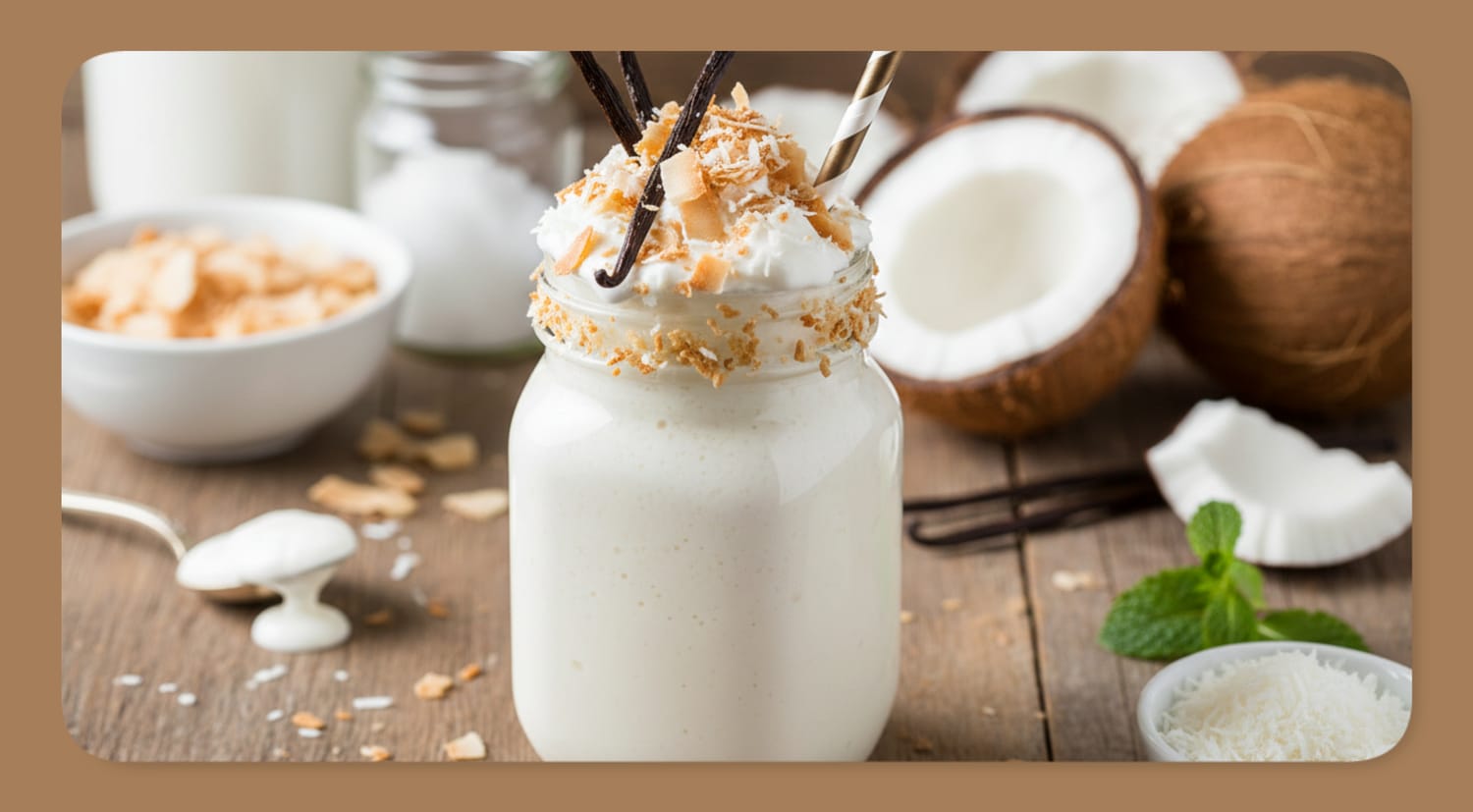
Silky Keto Coconut Cream Pie Smoothie
Thick, luscious coconut cream swirled with warm vanilla and the subtle sweetness of toasted coconut flakes creates a smoothie so decadently pie-like it feels almost impossible that it fits your macros. The first sip coats your tongue with rich, velvety coconut richness, followed by a clean vanilla sweetness and a gentle toasted-coconut warmth that fades slowly, leaving you with the unmistakable memory of a perfect slice of coconut cream pie from a Southern bakery. The texture is extraordinary: thick enough to eat with a spoon, smooth as silk, and cold enough to feel like a frozen dessert.
Most keto dessert smoothies approach coconut flavor by dumping in coconut-flavored protein powder or coconut extract and hoping for the best. The result usually tastes artificial, one-dimensional, and nothing like actual coconut cream pie. This recipe takes a completely different philosophy. It layers real coconut from multiple sources: coconut cream for thick richness, coconut oil for smooth mouthfeel and ketone-boosting MCTs, and toasted coconut flakes for that baked-pie topping flavor, building authentic coconut complexity from the ground up. Finding the right balance took considerable testing. Too much coconut cream made it cloyingly heavy. Too little and it tasted like vanilla milk with a hint of tropical. The coconut oil was the trickiest ingredient, adding incredible smoothness when emulsified properly but turning into waxy flecks when added incorrectly. The version here solves all of these problems, delivering genuine coconut cream pie flavor with a texture that feels indulgent and a macro profile that works beautifully on keto.
Whether you're a keto dieter who misses pie more than almost anything, a coconut lover who wants a smoothie that celebrates the ingredient in its full glory, someone looking for a satisfying high-fat snack that keeps you in ketosis, or simply craving something rich, cold, and absolutely delicious, this smoothie was designed to make you forget you're on a diet at all.
🌟 What Makes This Smoothie Special
🥧 Keto Coconut Cream Pie Smoothie Recipe
🥥 Base Ingredients
- 1/3 cup coconut cream (80ml), the thick, rich layer from the top of a chilled can of full-fat coconut milk; provides the luxurious, pie-filling-like body (see tip below for extraction)
- 1 tablespoon coconut oil, melted (15ml), adds smooth mouthfeel, boosts healthy MCT fats, and enhances the coconut flavor (must be added correctly to avoid waxy clumps; see blending instructions)
- 2 tablespoons unsweetened coconut flakes (10g), toasted, provides the baked-pie-crust topping flavor and subtle textural interest
- 1/2 cup unsweetened almond milk (120ml), thins the base to a drinkable or scoopable consistency without adding carbs
- 1 teaspoon pure vanilla extract, the essential bridge between "coconut smoothie" and "coconut cream pie," adding warmth and bakery-like sweetness
- 1 to 2 tablespoons granulated erythritol or monk fruit sweetener (adjust to taste), provides sweetness without blood sugar impact
- Pinch of sea salt, amplifies the coconut flavor and creates the slight savory-sweet balance found in real pie
- 1 cup ice cubes (about 8 to 10 cubes), creates the thick, frosty, frozen-dessert texture
⚡ Nutritional Boosters (Optional)
- 1 scoop vanilla or unflavored keto protein powder (adds 20g protein; choose one with no added sugars or maltodextrin)
- 1 tablespoon MCT oil powder (additional ketone-boosting fats in a format that blends more easily than liquid MCT)
- 1 tablespoon collagen peptides (supports skin, joints, and gut while adding protein with zero carbs)
- 1 tablespoon chia seeds (adds fiber and omega-3s with minimal net carb impact)
- 1/4 teaspoon coconut extract (only if you want even more intense coconut flavor; use sparingly)
✨ Topping Ideas (For a Smoothie Bowl Version)
- Toasted unsweetened coconut flakes (the essential finishing touch)
- A small dollop of whipped coconut cream
- Sugar-free white chocolate chips or shavings
- Chopped macadamia nuts
- Cacao nibs
- A light drizzle of melted coconut oil
- A pinch of flaky sea salt
- Unsweetened shredded coconut
- A single vanilla bean scraped and sprinkled
🔄 Blending Instructions and Technique
A. Preparation
Extracting coconut cream from a can. Place a full can of full-fat coconut milk in the refrigerator for at least 12 hours (overnight is ideal). The thick, solid cream rises to the top and separates from the thin, watery liquid below. Open the can without shaking it. Scoop the thick, white cream from the top, leaving the thin liquid behind. This thick cream is your coconut cream. One can typically yields 1/2 to 2/3 cup of cream, enough for 1 to 2 smoothies. Save the remaining coconut water in the can for cooking or other smoothies.
Toasting coconut flakes. Spread the unsweetened coconut flakes in a single layer on a dry skillet. Toast over medium-low heat for 2 to 3 minutes, stirring constantly. Coconut flakes burn incredibly fast, going from white to golden to black in under a minute if you stop watching. Remove from heat the moment they turn light golden with some white still visible. They'll continue darkening slightly from residual heat. The aroma should be warm, nutty, and fragrant, like the topping of a freshly baked pie. Let them cool completely before adding to the blender. Toast extra and store in an airtight container for up to 2 weeks.
Melting the coconut oil. If your coconut oil is solid (it solidifies below approximately 76°F/24°C), melt it gently. Microwave for 10 to 15 seconds or place the jar in a bowl of warm water for a few minutes. It should be liquid but not hot. Hot coconut oil added to a cold smoothie can create solid waxy flecks. Room temperature liquid is the goal.
Powdering the sweetener. If using granulated erythritol, pulse it alone in the blender for 10 seconds to create a finer powder before adding any other ingredients. This prevents any grainy texture in the finished smoothie. Alternatively, buy powdered (confectioners') erythritol, which dissolves instantly in cold liquids.
B. Blend Order and Layering
The order of operations is especially critical in this recipe because of the coconut oil. Follow this sequence precisely for the smoothest, most emulsified result:
- Pour the almond milk into the blender first. Liquid at the bottom creates the vortex and provides a medium for the coconut oil to emulsify into.
- Add the coconut cream, vanilla extract, sweetener, and sea salt. Blending these into the almond milk first creates a smooth, creamy, sweetened coconut base.
- Turn the blender on medium-high speed. While it's running, slowly drizzle the melted coconut oil through the lid opening in a thin, steady stream. This technique is borrowed from making salad dressing or mayonnaise. The motion of the blender emulsifies the oil into the liquid, creating a smooth, unified mixture rather than oil floating on top or solidifying into waxy chunks. This step takes about 10 seconds and makes all the difference.
- Stop the blender. Add the toasted coconut flakes. These don't need to fully dissolve. A few tiny pieces remaining add pleasant textural interest, similar to pie crust bits in the filling.
- Add the protein powder or collagen (if using).
- Add the ice cubes all at once on top.
- Blend on high speed for 30 to 45 seconds until smooth and thick.
C. Blending Technique
- Start on low speed for 5 seconds after adding the ice, then quickly increase to high speed and blend for 30 to 45 seconds until completely smooth and frosty.
- Watch for the color and consistency. The smoothie should be a pure, creamy white with a thick, milkshake-like body. If you see any yellowish oil streaks (coconut oil that didn't emulsify), blend for another 15 seconds on high.
- Listen for the motor. It shifts from crunchy and uneven (ice crushing) to smooth and steady. The coconut cream and oil create a naturally richer blend, so the motor may sound slightly different than a fruit-based smoothie, more like blending a thick batter.
- Stop and taste. This is the moment of truth. The flavor should present as rich, enveloping coconut cream first, followed by warm, sweet vanilla, and finished with a faint toasted-coconut warmth in the background. If the coconut flavor isn't strong enough, add another tablespoon of coconut cream and pulse. If you want more vanilla warmth, add another 1/4 teaspoon of vanilla extract. If the sweetness isn't right, add sweetener in small increments (1/2 teaspoon at a time) and pulse. If it tastes flat, the salt is probably missing or too light. A tiny additional pinch focuses all the flavors.
- Check the texture. It should be thick, rich, and velvety, like a melted coconut ice cream or custard. It should coat a spoon generously and hold for several seconds before sliding off slowly.
D. For a Smoothie Bowl Version
- Reduce the almond milk to 2 tablespoons (30ml), just enough to help the blades move.
- Increase the ice cubes to 12 to 15 for a very thick, frozen base.
- Add 1 tablespoon of chia seeds to the base for additional structure and body.
- Blend on low speed, using a tamper tool to push the ice toward the blades. This requires patience. Stop and scrape down sides frequently.
- Target a frozen-custard consistency. The mixture should not flow at all when you tilt the blender jar. It should look like thick, white frozen custard.
- Scoop into a chilled bowl. The pure white base is an elegant, minimalist canvas. Scatter toasted coconut flakes generously across the surface, place a few macadamia nut halves in a cluster, add a small dollop of whipped coconut cream in the center, and finish with a pinch of flaky sea salt. For an extra-special touch, drizzle a thin ribbon of melted sugar-free white chocolate across the surface. The all-white and golden presentation looks like an actual slice of coconut cream pie deconstructed in a bowl.
E. Finishing and Serving
Pour into a clear glass to display the pure, snowy white color. This smoothie has an elegant, clean simplicity that's striking in its own right.
For the full coconut cream pie presentation, sprinkle a generous pinch of toasted coconut flakes on the surface of the smoothie immediately after pouring. They'll float on the thick surface and add both visual warmth and textural crunch. A light dusting of cinnamon or a scraping of vanilla bean seeds across the top adds tiny, beautiful dark specks against the white that make it look absolutely bakery-worthy.
For an elevated serving, rim the glass with a thin layer of melted coconut oil, then press the rim into finely crushed toasted coconut flakes. It mimics the coconut pie crust in both flavor and appearance.
📐 Texture and Consistency Guide
For a Drinkable Smoothie
- Too Thin? Add more ice cubes (4 to 5 additional) or another tablespoon of coconut cream. Both solutions add body without increasing carbs significantly. A tablespoon of chia seeds also thickens effectively (let it sit for 3 minutes).
- Too Thick? Add almond milk 1 tablespoon at a time until it flows through a wide straw. Be conservative, as this smoothie's appeal is partly in its rich, thick body. Thinning it too much diminishes the pie-like indulgence.
For a Smoothie Bowl
- Perfect Bowl Consistency: Thick enough that a spoon stands upright in the center. Think frozen custard, not pudding.
- Secret: Maximum ice, minimum liquid, and the natural fat from coconut cream and oil create a remarkably stable, thick bowl base without needing frozen fruit.
- Test: Scoop a spoonful and turn it upside down. It should hold for 3 to 4 seconds before slowly dropping.
Ideal Consistency Indicators
🥤 Drinkable
Flows through a wide straw with rich, heavy resistance. Feels luxuriously creamy and coating on the tongue, like melted premium ice cream.
🥣 Bowl
Dense, scoopable, and stable. Holds toppings firmly. Has the appearance and texture of thick frozen custard or coconut ice cream.
🎨 Customization Matrix
| Category | Options |
|---|---|
| Liquid Base | Unsweetened almond milk (lightest, lowest carb, most neutral), macadamia nut milk (ultra-rich, very low carb, enhances the tropical richness), coconut milk from carton unsweetened (lighter coconut option), heavy cream mixed with water 50/50 (richest possible base, highest fat), cashew milk (neutral and smooth) |
| Fat Sources | Coconut cream + coconut oil (original, most authentic), coconut cream + MCT oil (more ketone-boosting, less coconut flavor from the oil), coconut cream + butter or ghee (adds a slightly nutty, browned butter quality), coconut cream only (simpler, still rich, lower total fat) |
| Sweetener Options | Erythritol granulated or powdered (no aftertaste, 0 glycemic impact), monk fruit sweetener (0 glycemic impact, very sweet so use less), allulose (closest to real sugar texture), liquid stevia drops (3 to 5 drops, convenient), Swerve confectioners (erythritol blend, dissolves smoothly) |
| Protein Boosters | Collagen peptides unflavored (zero carbs, dissolves invisibly), vanilla whey isolate GF (check label for carbs), coconut-flavored protein powder (enhances the coconut if you can find a good one), egg white protein (clean, neutral) |
| Pie Crust Element | Toasted coconut flakes (original), 1 crushed graham cracker (adds ~7g net carbs, not strict keto but adds authentic pie crust flavor), almond flour (1 tbsp, toasted, adds nutty crust quality with minimal carbs), crushed pecans (pie-crust-like richness, very low carb) |
| Flavor Twists | Chocolate Coconut Cream Pie: add 1 tbsp unsweetened cocoa powder. Toasted Coconut Almond: add 1 tbsp almond butter. Coconut Key Lime Pie: add 1 tbsp fresh lime juice and 1/2 tsp lime zest. Piña Colada Pie: add 2 tbsp frozen pineapple (increases carbs by ~2g). Coconut Macadamia: add 1 tbsp macadamia nut butter. Haupia (Hawaiian Coconut Pudding): increase coconut cream to 1/2 cup and add 1/4 tsp coconut extract. |
👨🍳 Chef's Tips for Success
Chill the coconut milk can overnight. No shortcuts. The thick coconut cream separates from the thin water only when the can is properly chilled. A warm or room temperature can will not separate, and you'll end up with thin, runny coconut milk instead of the thick, scoopable cream that makes this smoothie taste like pie. Put the can in the fridge the night before and don't shake it before opening.
Drizzle the coconut oil while the blender is running. This is the technique that prevents waxy coconut oil chunks in your smoothie. When liquid coconut oil meets very cold liquid, it can resolidify into unpleasant flecks. Drizzling it slowly into the blending vortex emulsifies it into the liquid, creating a smooth, unified mixture. Pour it in a thin, steady stream through the lid opening over about 10 seconds. If you dump it all in at once onto ice, you'll get waxy bits.
Toast the coconut flakes carefully and watch them constantly. Coconut flakes go from golden to burned in under 60 seconds. Stir them continuously, keep the heat at medium-low, and pull them off the heat when they're light golden with some white spots remaining. They'll continue browning slightly from residual heat. The toasted flavor is essential to the "pie" experience, providing the warm, baked quality that separates this from a plain coconut smoothie.
Use powdered sweetener for the smoothest texture. Granulated erythritol can leave a faintly grainy texture in cold smoothies because it doesn't dissolve as readily as sugar in cold liquids. Buy the powdered (confectioners') version, or pulse granulated erythritol in the blender for 10 seconds before adding other ingredients to break it down into a finer powder. This ensures a completely smooth, silky result.
The pinch of salt is what makes it taste like pie. Every good pie filling recipe includes salt. It amplifies the coconut sweetness, adds depth, and creates the slight savory-sweet interplay that distinguishes pie filling from plain sweetened coconut. Without salt, the flavors sit flat. With it, they become layered, interesting, and unmistakably dessert-like.
Vanilla extract quality matters here. Since the flavor profile is relatively simple (coconut and vanilla are the two main players), the quality of your vanilla extract is more noticeable than in complex recipes with many competing flavors. Use pure vanilla extract, never imitation. If you have access to vanilla bean paste, use 1/2 teaspoon for an even richer, more authentic pie-filling vanilla experience with the bonus of beautiful vanilla bean specks.
Save the thin coconut water from the bottom of the can. After scooping the thick cream from the top, the remaining thin coconut liquid is still useful. Use it in curries, soups, smoothies where you want lighter coconut flavor, or freeze it in ice cube trays for future cooking. Nothing needs to go to waste.
🌿 Nutritional Benefits
This smoothie proves that keto desserts can be both indulgent and functional:
- MCTs from Coconut Oil and Coconut Cream for rapid energy and ketone production. Medium-chain triglycerides are metabolized differently than other fats, converting quickly into ketones that fuel the brain and body. This makes the smoothie not just a dessert but an active supporter of the ketogenic metabolic state.
- Lauric Acid from Coconut for immune support. Coconut products are the richest dietary source of lauric acid, a fatty acid with documented antimicrobial and antiviral properties. The body converts lauric acid into monolaurin, a compound that supports immune defense.
- High Healthy Fat Content for sustained satiety and hormonal support. The 38g of fat per serving provides the kind of deep, lasting fullness that prevents snacking and cravings for hours. On a ketogenic diet, this level of fat in a single meal or snack is appropriate and desirable.
- Manganese from Coconut for bone health and metabolism. Coconut products contribute meaningful amounts of manganese, a trace mineral that supports bone formation, wound healing, and the metabolism of carbohydrates and fats.
- Iron from Coconut Cream for energy and oxygen transport. Coconut cream contains more iron per serving than many people realize, contributing to red blood cell production and overall energy levels.
- Electrolyte-Friendly Profile for keto-specific needs. The sea salt in this recipe contributes sodium, and the coconut products provide small amounts of potassium and magnesium. Maintaining electrolyte balance is especially important during ketosis, and food-based sources like these support it naturally.
📊 Macro Breakdown
Why This Matters: A traditional slice of coconut cream pie contains approximately 450 to 600 calories with 35 to 45g of sugar (from the sweetened coconut, pastry cream, whipped cream, and pie crust), 25 to 30g of refined carbs, and minimal nutritional value beyond calories. This smoothie delivers the same rich, coconut cream pie flavor with only 5g net carbs, 2g of sugar, and fats that actively support ketosis rather than spiking blood sugar. For anyone following a keto lifestyle, this is the kind of recipe that transforms the diet from something you endure into something you enjoy. You're not white-knuckling through coconut cream pie cravings. You're satisfying them completely, in a way that keeps your body in a fat-burning state.
🔧 Best Blender Types and Equipment
🏆 High-Speed Blenders (Ideal)
Vitamix, Blendtec, Ninja Professional. These produce the silkiest, most perfectly emulsified result, fully incorporating the coconut oil into the smoothie without any trace of waxy separation. They also crush ice into a completely smooth, frozen-custard-like texture.
Best for: Achieving the most professional, pie-like smoothness, making thick smoothie bowl versions, and fully emulsifying the coconut oil.
👍 Standard Blenders (Works Great)
Most kitchen blenders handle this recipe well with one adjustment: take extra care with the coconut oil drizzling step. Standard blenders create a slightly less powerful vortex, so drizzle the oil even more slowly and steadily. If you notice any oil separation after blending, blend for an additional 15 to 20 seconds on high.
Tip: Ensure the coconut oil is just barely melted (liquid but cool, not hot) for best emulsification in standard blenders.
⚡ Personal/Bullet Blenders (Convenient)
NutriBullet, Magic Bullet, and similar single-serve blenders work for this recipe with a slight modification.
Tip: These blenders don't have lid openings for drizzling oil during blending. Instead, blend the almond milk, coconut cream, vanilla, sweetener, and salt first for 10 seconds. Stop, add the melted coconut oil, then pulse rapidly 5 to 6 times. The quick pulses emulsify the oil effectively. Then add ice and coconut flakes and blend for 30 seconds.
🍹 No Blender? No Problem
Whisk the coconut cream, almond milk, melted coconut oil, vanilla, sweetener, and salt together vigorously in a bowl or jar until smooth and emulsified. Pour over a glass packed with crushed ice. Stir in the toasted coconut flakes. It becomes a coconut cream pie iced drink rather than a thick smoothie, but the flavor is identical.
An immersion blender works well in a tall, narrow container. Add the coconut oil slowly while blending; the same drizzling principle applies.
Other Helpful Tools
- Can opener (for the coconut milk can)
- Small skillet for toasting coconut flakes
- Wide reusable straw (this thick smoothie needs room to flow)
- Mason jars or clear glasses for serving
- Airtight container for storing extra toasted coconut flakes
📦 Storage, Prep, and Serving
Immediate Serving
- Best consumed within 10 to 15 minutes of blending when the texture is thick and frosty and the toasted coconut flakes on top still have their crunch.
- Serve in a clear glass to display the pure white color. The simplicity of the presentation is part of its elegance.
Short-Term Storage
- Refrigerator: Keeps up to 24 hours in a sealed mason jar or airtight container. The coconut cream and oil may solidify slightly when chilled, creating a thicker, more pudding-like texture. Let it sit at room temperature for 5 minutes, then stir vigorously or give it a quick 10-second re-blend.
- Note: Some people actually prefer the thicker, chilled, pudding-like consistency the next day. It eats like coconut cream pie filling straight from the fridge.
Make-Ahead Smoothie Prep
- Traditional smoothie packs don't work as well for this recipe since the key ingredients (coconut cream, coconut oil) are pantry or fridge staples rather than frozen items.
- Best approach: Keep 2 to 3 cans of full-fat coconut milk chilling in the fridge at all times so coconut cream is always ready. Store pre-toasted coconut flakes in an airtight container at room temperature for up to 2 weeks. With these two elements prepped, the smoothie takes under 3 minutes to assemble.
- Batch prep the coconut cream base: Blend a double or triple batch of the coconut cream, almond milk, coconut oil, vanilla, sweetener, and salt. Store in a sealed jar in the fridge for up to 3 days. When ready to serve, pour the base into the blender, add ice, and blend. This saves the most time and ensures perfect emulsification every time.
Freezing Finished Smoothies
- Pour into silicone molds or ice cube trays for keto coconut cream pie frozen bites. They taste like coconut ice cream and are an incredible standalone treat.
- Freeze for up to 1 month.
- To serve: Eat frozen as fat bombs, or blend frozen cubes with a splash of almond milk for an even thicker, more ice-cream-like smoothie.
💡 Meal Prep Benefits
- Canned coconut milk has a shelf life of 2 to 5 years. Stocking several cans means you always have the main ingredient available.
- Coconut oil is a shelf-stable pantry staple that lasts for months.
- This recipe requires no fresh produce, no freezing of fruits, and no peeling or chopping. The prep is genuinely minimal once you understand the technique.
🍽️ Serving Suggestions and Occasions
Best Times to Enjoy
- After-dinner keto dessert: This is the smoothie's highest and best use. Rich, satisfying, pie-flavored, and completely carb-friendly. It makes the end of a keto meal feel like a celebration.
- Afternoon high-fat snack: The 38g of fat provides deep, lasting satiety that eliminates snacking urges and carries you comfortably from lunch to dinner.
- Weekend keto brunch treat: Serve alongside eggs and bacon for a brunch that feels indulgent and special.
- Fat bomb alternative: Instead of making separate fat bombs, blend this smoothie or freeze it into cubes for a more enjoyable way to hit your fat macros.
- Date night dessert: Blend two servings, pour into stemless wine glasses, top with whipped coconut cream and toasted coconut, and serve as an elegant, romantic keto dessert course.
Perfect Pairings
- With: A handful of macadamia nuts, a few squares of dark chocolate (85%+ cacao), or a small plate of cheese for a complete, satisfying keto snack spread.
- As: A standalone dessert that needs nothing alongside it. The richness and fat content make it deeply satisfying on its own.
- For the smoothie bowl: Top with toasted coconut flakes, macadamia nut halves, a dollop of whipped coconut cream, cacao nibs, and a pinch of flaky sea salt for the most beautiful keto dessert bowl imaginable.
Make It a Complete Meal
- Add 1 to 2 scoops of collagen peptides or keto protein powder (brings protein to 24g).
- The existing fat content from coconut cream and oil already provides exceptional satiety.
- Add 1 tablespoon of chia seeds for fiber (brings total fiber to 4g).
- The resulting macro profile (high fat, moderate protein, very low carb) aligns perfectly with ketogenic meal structure.
💭 Final Thoughts
This keto coconut cream pie smoothie is the recipe that makes people say, "There's no way this is keto." But it is. Five grams of net carbs, thirty-eight grams of satisfying fat, and a flavor so authentically coconut cream pie that it borders on unfair. The triple-coconut layering (coconut cream for richness, coconut oil for smoothness, and toasted coconut flakes for that baked-pie warmth) creates a depth of flavor that single-ingredient approaches simply cannot achieve.
What makes this recipe truly special is its honesty. There are no weird substitutions pretending to be something they're not. There's no cauliflower secretly playing the role of pie filling. Every ingredient is exactly what it says it is: real coconut, real vanilla, real cream, blended together with care and technique into something that tastes like it came from a bakery display case. The coconut oil emulsification method, borrowed from professional cooking, is the kind of small technique that produces a dramatically better result. Once you've made it this way, you'll never go back to dumping oil into a blender and hoping for the best.
Serve it after dinner when you want to end a keto day on a high note. Blend it on a lazy Saturday afternoon when a pie craving hits. Freeze it into cubes for the most delicious fat bombs you've ever made. Try the chocolate coconut variation for a rich, tropical twist, the coconut key lime for a tangy summer version, or the haupia style for an even more intensely coconut experience. Whatever direction you go, this smoothie transforms the keto dessert experience from "acceptable substitute" into "I genuinely prefer this."
❓ Frequently Asked Questions
📖 Glossary of Key Terms
🥥 Share Your Success!
Have you tried this keto coconut cream pie smoothie yet? Did it deliver on the pie promise? I'd love to hear whether the triple-coconut layering created the depth of flavor you were hoping for, or if you found a variation that made it even more special.
Did you try the frozen fat bomb version? The coconut key lime twist? Has this become your go-to keto dessert? Drop a comment below and tell me everything. I genuinely want to hear how yours turned out!
Save this recipe to your Pinterest smoothie board so it's ready the next time a coconut cream pie craving hits! Follow my Pinterest for more keto-friendly smoothie recipes, low-carb dessert ideas, and satisfying high-fat treats that keep you in ketosis without sacrificing a drop of flavor. Tag me in your smoothie photos, especially those gorgeous all-white smoothie bowls with the toasted coconut and macadamia toppings. I love featuring your creations!
More Delicious Smoothies to Try
Affiliate Disclosure
This page may contain affiliate links. This means that if you click on one of these links and make a purchase, I may receive a small commission at no additional cost to you. This helps support the blog and allows me to continue creating free content. I only recommend products or services that I use personally and believe will add value to my readers. Your support is appreciated!
Created with ©simplyhealthynews