
🌴 Light Low-Calorie Papaya Lime Smoothie
Tropical Sunshine Under 120 Calories
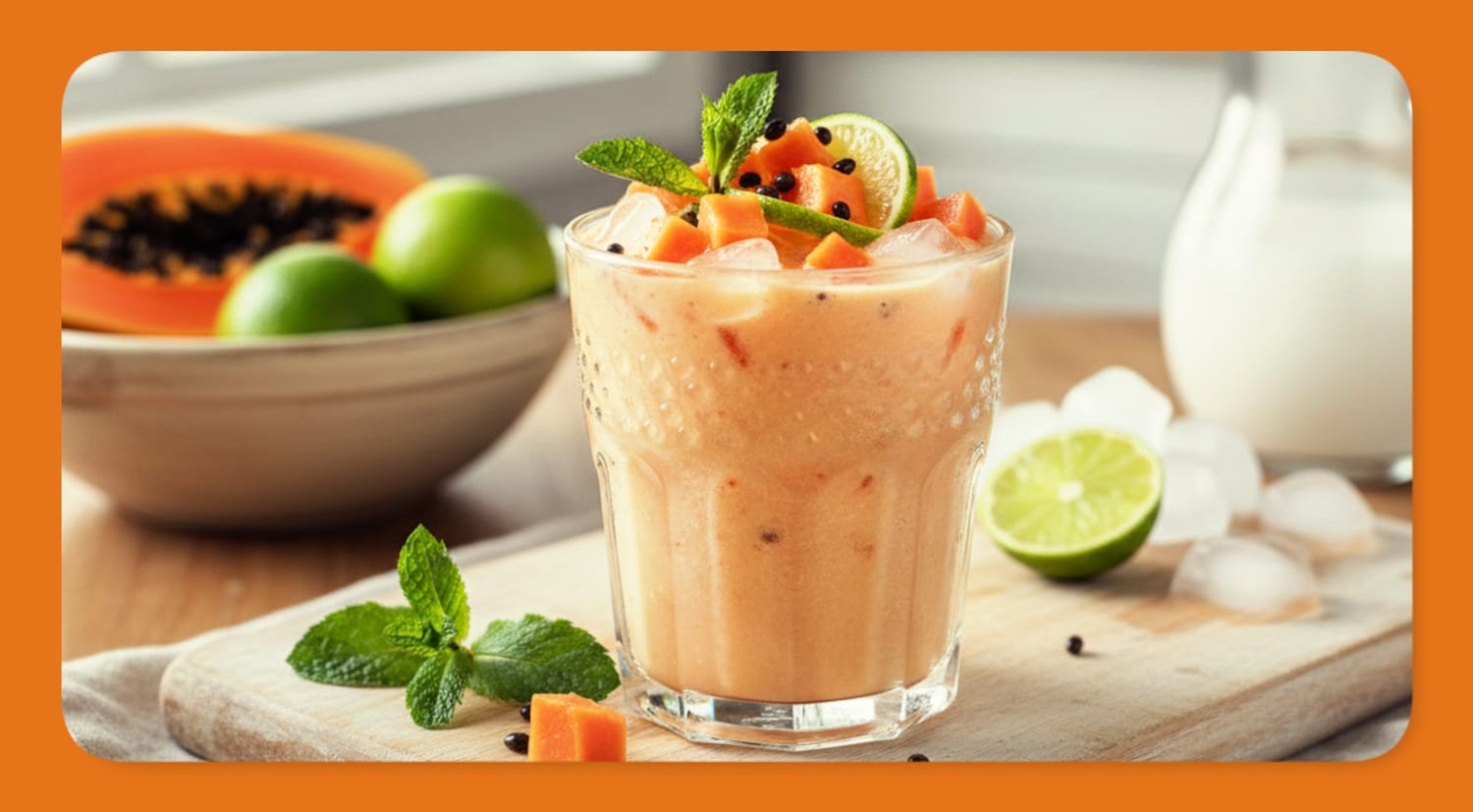
Bright, golden papaya blended with a squeeze of tart lime and poured over ice creates a smoothie so refreshingly tropical it tastes like standing on a warm beach with the ocean breeze on your skin. The first sip is pure sunshine: sweet and buttery papaya that melts into zesty lime citrus, finished with a clean, light coolness from coconut water that leaves you feeling hydrated and satisfied without a single ounce of heaviness. The color is stunning, a warm, glowing apricot-gold that practically radiates warmth in any glass you pour it into.
Finding a smoothie that genuinely supports weight-loss goals without tasting like a sad, watered-down compromise was the entire motivation for this recipe. So many "low-calorie" smoothies cheat their way to a low number by being mostly ice and water with a few sad pieces of fruit blended in. They taste thin, they're unsatisfying, and you're hungry again in twenty minutes. This recipe took a completely different approach. Papaya is one of the most naturally flavorful and lowest-calorie tropical fruits available, so you can use a generous amount without the calorie count climbing. Coconut water adds natural sweetness and electrolytes. Lime brightens everything into sharp focus. And a smart use of ice creates a thick, frosty body that feels far more substantial than the calorie count suggests. After testing different papaya-to-lime ratios, experimenting with liquid bases, and figuring out exactly how much ice to use for maximum thickness without diluting the flavor, this version landed on the sweet spot. It tastes generous, bright, and tropical. It just happens to clock in under 120 calories.
Whether you're working toward a weight-loss goal and need a snack that won't eat into your calorie budget, a tropical flavor lover looking for a light and refreshing option, someone searching for a naturally low-calorie smoothie that doesn't taste like it's missing something, or simply craving a beautiful, easy, warm-weather drink, this papaya lime smoothie delivers on every front.
🌟 What Makes This Smoothie Special
This is one of the lowest-calorie smoothies you can make that still tastes genuinely delicious and satisfying. No artificial sweeteners, no fillers, just whole fruit, coconut water, and lime.
Papaya's naturally buttery, mango-adjacent sweetness means you can use a full cup and a half of fruit while keeping the calorie count remarkably low. You're not rationing flavor to save calories here.
Fresh lime juice sharpens the papaya's sweetness, prevents the flavor from feeling one-dimensional, and adds a tangy brightness that makes every sip feel clean and invigorating.
Between papaya (roughly 88% water), coconut water, and ice, this smoothie contributes significantly to your daily fluid intake. It rehydrates while it refreshes.
The soft apricot-gold hue of blended papaya is one of the prettiest natural smoothie colors. It photographs beautifully in natural light and looks elegant in a clear glass.
📋 Low-Calorie Papaya Lime Smoothie Recipe
*With optional protein powder
🥝 Base Ingredients
- 1.5 cups ripe papaya, cubed and frozen (225g) — provides the star tropical flavor, natural sweetness, and thick frosty texture (see ripeness tips below)
- 1 cup coconut water (240ml) — light, naturally sweet, and rich in electrolytes, the ideal low-calorie hydrating base
- 1 tablespoon fresh lime juice (15ml) — approximately half a lime, delivers the bright citrus tang that elevates the papaya
- 1/2 teaspoon lime zest — from the same lime, grated before juicing, adds aromatic lime depth that juice alone can't provide
- 1 cup ice cubes (about 8 to 10 cubes) — creates the thick, frosty body that makes this smoothie feel substantial despite the low calorie count
- Tiny pinch of sea salt — optional but recommended, enhances the papaya's natural sweetness and makes the tropical flavor pop
✨ Nutritional Boosters (Optional)
- 1 scoop vanilla or unflavored plant-based protein powder — adds 20g protein, increases calories to roughly 230
- 1 tablespoon chia seeds — adds fiber and omega-3s, approximately 60 additional calories
- 1/2-inch piece fresh ginger, peeled and grated — adds a warming zing and digestive support with negligible calories
- 1/4 teaspoon ground turmeric — anti-inflammatory, pairs naturally with tropical flavors, adds gorgeous color depth
- Small handful of baby spinach — adds iron and vitamins with virtually zero additional calories
- 1 tablespoon hemp hearts — adds 5g protein and healthy fats, approximately 55 additional calories
🎨 Topping Ideas (For a Smoothie Bowl Version)
- Fresh papaya cubes
- A thin lime wheel or lime zest curls
- Unsweetened coconut flakes
- Passion fruit pulp (stunning visual and flavor contrast)
- Kiwi slices
- A few fresh raspberries (the pink-red against the gold is gorgeous)
- Pumpkin seeds (pepitas)
- Chia seeds
- Fresh mint leaves
- A drizzle of honey (adds approximately 20 calories per teaspoon)
🧑🍳 Blending Instructions and Technique
Choosing and preparing ripe papaya is the most important step. Papaya flavor varies dramatically with ripeness. An underripe papaya tastes flat, slightly bitter, and almost vegetal. A ripe papaya tastes buttery, sweet, and genuinely tropical.
How to choose a ripe papaya:
- The skin should be mostly yellow to yellow-orange with minimal green. Some green patches are fine, but an entirely green papaya is underripe.
- Press gently near the stem end. A ripe papaya gives slightly, similar to a ripe avocado.
- Smell the stem end. A ripe papaya has a faintly sweet, tropical fragrance. If it smells like nothing, it's not ready.
- If your papaya is still slightly firm, leave it on the counter at room temperature for 1 to 3 days until it softens and the skin turns predominantly yellow.
To freeze papaya for smoothies:
- Cut the papaya in half lengthwise and scoop out all the black seeds with a spoon.
- Peel the skin with a vegetable peeler or knife.
- Cut the flesh into roughly 1-inch cubes.
- Spread cubes in a single layer on a parchment-lined baking sheet.
- Freeze for at least 3 hours or overnight until solid.
- Transfer to a labeled freezer bag, squeeze out excess air, and store for up to 3 months.
💡 Pro Tip: Zest the lime before juicing it. Use a microplane to grate only the green outer layer, avoiding the white pith underneath, which tastes bitter.
This sequence produces the smoothest, most evenly flavored result:
- Pour the coconut water into the blender first. Liquid at the bottom allows the blades to spin freely and creates the vortex needed to pull frozen ingredients downward.
- Add the fresh lime juice, lime zest, and sea salt (if using). Blending the citrus into the liquid first ensures it distributes evenly throughout the smoothie rather than concentrating in random sips.
- Add any boosters (protein powder, spinach, ginger, turmeric) at this point so they blend into the liquid before the frozen ingredients create resistance.
- Drop in the frozen papaya cubes. They're denser than ice, so they need direct contact with the liquid and blades.
- Add the ice cubes on top. Ice goes last, sitting on top of the frozen fruit so gravity helps push everything toward the blades.
- Start on low speed for 10 to 15 seconds to break up the frozen papaya and begin pulling the ice cubes into the liquid.
- Increase to high speed and blend for 30 to 45 seconds until completely smooth.
- Watch for the color. The smoothie should become a beautiful, uniform warm gold, like liquid sunshine. If you see pale ice chunks or darker papaya streaks, blend for another 10 seconds.
- Listen for the motor transition. It shifts from a rough, crunchy sound (ice and frozen fruit breaking down) to a smooth, steady hum. The ice is the last thing to fully crush, so wait for that final smoothing-out of the sound.
- Stop and taste. The flavor should lead with sweet, buttery papaya, followed by a bright lime tang that cleans the palate and finishes with a light, clean, almost thirst-quenching quality. If the papaya tastes flat, your fruit may not have been ripe enough. Add an extra squeeze of lime (tartness can compensate for mild sweetness) or a tiny drizzle of honey (1 teaspoon adds only 20 calories). If the lime is too assertive, add a few more frozen papaya cubes.
- Check the texture. It should be thick and frosty, like a tropical slushie with more body. The generous amount of ice creates a satisfying thickness that makes the low calorie count feel irrelevant. It should flow through a straw but with enough body to feel substantial.
- Reduce the coconut water to 1/4 cup (60ml) for a much thicker consistency.
- Increase the frozen papaya to 2 cups (300g) for extra body and a more intense flavor.
- Keep the full cup of ice to maintain frostiness and structural thickness.
- Add 1/4 of a frozen banana (30g) for binding and scoopability. The small amount won't significantly increase calories (roughly 25 additional) but provides the structural body that papaya alone sometimes lacks for bowl consistency.
- Blend on low speed, using a tamper tool to push ingredients toward the blades. Papaya has high water content, so achieving bowl thickness requires patience and minimal liquid.
- Target a thick sorbet consistency. The mixture should resist flowing when you tilt the blender jar.
- Scoop into a chilled bowl. The warm gold color is a stunning canvas for colorful toppings. Try passion fruit pulp in the center (the dark seeds against the gold is striking), a line of fresh raspberries along one edge, coconut flakes scattered across the surface, and a lime wheel placed artfully on the rim.
Pour into a clear glass to display that gorgeous warm gold color. This smoothie catches light beautifully and practically glows in sunshine, making it one of the most naturally photogenic smoothies you can make.
For a simple finishing touch, place a thin lime wheel on the rim of the glass or float it on the surface. A tiny pinch of lime zest grated directly over the poured smoothie releases a burst of citrus aroma that makes the first sip feel special.
For serving at a gathering, pour into small glasses or cups and garnish each with a lime wedge. The golden color and tropical aroma make these look and feel far more special than their effortless preparation would suggest.
📐 Texture and Consistency Guide
For a Drinkable Smoothie
- Too Thin? Add more ice cubes (4 to 5 additional) or extra frozen papaya cubes. Both solutions add thickness without significantly increasing calories. A tablespoon of chia seeds also thickens nicely (let it sit for 3 minutes after stirring in).
- Too Thick? Add coconut water 1 tablespoon at a time until it reaches your preferred sipping consistency. Plain water works too and adds zero calories.
For a Smoothie Bowl
- Perfect Bowl Consistency: Thick enough that a spoon stands upright in the center. Think tropical sorbet, not pudding.
- Secret: More frozen papaya plus minimal liquid is the key formula. The small amount of frozen banana recommended for the bowl version provides crucial structural binding.
- Test: Drag a spoon through the surface. It should leave a visible trail that fills in slowly, not immediately.
Ideal Consistency Indicators
- Drinkable: Flows through a straw with a refreshing, slushie-like body. Feels cold, smooth, and hydrating.
- Bowl: Scoopable like sorbet. Holds toppings on the surface and maintains its shape.
🎛️ Customization Matrix
| Category | Options |
|---|---|
| Liquid Base | Coconut water (most hydrating, naturally sweet with electrolytes), plain water (zero calories, purest option for weight loss), green tea cooled (adds gentle caffeine and antioxidants with zero calories), watermelon juice fresh (adds sweetness and hydration, very low calorie), cucumber juice (ultra-refreshing, almost zero calories) |
| Tropical Fruit Variations | Papaya only (original, lowest calorie), papaya and mango (sweeter, richer, adds ~30 calories per 1/4 cup), papaya and pineapple (more tart, adds ~20 calories per 1/4 cup), papaya and passion fruit (complex, tangy, stunning seeds), papaya and guava (deeper tropical flavor) |
| Citrus Variations | Lime (original, brightest tang), lemon (slightly sweeter citrus, equally refreshing), orange (sweeter, adds more calories, shifts to a sunrise color), grapefruit (more bitter, very low calorie, beautiful pink tint) |
| Protein Boosters | Unflavored or vanilla plant-based protein powder, collagen peptides (dissolves invisibly), hemp hearts (3 tbsp = 10g protein), silken tofu (1/4 cup, blends smoothly, negligible flavor impact) |
| Low-Calorie Thickness Enhancers | Extra ice cubes (zero calories), frozen cauliflower rice (virtually zero flavor, adds creaminess, ~10 calories per 1/4 cup), frozen zucchini slices (tasteless, adds body), chia seeds (adds fiber and thickens as it sits) |
| Flavor Twists | Papaya Lime Ginger: add 1/2 tsp fresh grated ginger. Papaya Lime Mint: add 6 fresh mint leaves. Papaya Lime Chili: add a tiny pinch of cayenne pepper (boosts metabolism, adds a surprising kick). Papaya Lime Turmeric: add 1/4 tsp turmeric and a pinch of black pepper. Papaya Lime Coconut: add 1 tbsp coconut cream for a richer (but slightly higher calorie) version. |
👨🍳 Chef's Tips for Success
This cannot be overstated. An underripe papaya will produce a bland, slightly bitter smoothie that no amount of lime can rescue. A ripe papaya, with its buttery, almost custard-like sweetness, makes the smoothie taste indulgent despite having so few calories. Take the time to choose a good one. Yellow-orange skin, slight softness, sweet fragrance. If your grocery store only has green papayas, buy one 3 to 5 days before you plan to use it and let it ripen on the counter.
Ice adds coldness and volume, but frozen papaya cubes add flavor, thickness, and that creamy frosty quality that makes a low-calorie smoothie feel satisfying rather than watery. The combination of frozen fruit and ice together creates a much better texture than either one alone.
Just like in every citrus-forward recipe, bottled lime juice cannot match the bright, vibrant acidity of freshly squeezed. The tartness of fresh lime wakes up the papaya's sweetness and makes the whole smoothie taste intentional and layered rather than flat. One lime is all you need, and it takes 30 seconds to squeeze.
The zest provides the aromatic, fragrant lime oils that you smell before you even taste the smoothie. Juice gives tartness, but zest gives depth and complexity. It's a small addition that elevates the entire drinking experience.
This sounds unusual in a fruit smoothie, but a tiny pinch of salt amplifies the papaya's natural sweetness without adding any sugar or calories. It's the same principle that makes salted watermelon or salted mango taste sweeter and more flavorful than unsalted versions. Less than 1/8 teaspoon is all you need.
For weight-loss-friendly smoothies, ice is one of the most valuable tools available. A full cup of ice cubes adds substantial body and frostiness to this smoothie without a single calorie. It transforms what could be a thin, juice-like drink into something that feels thick, satisfying, and indulgent. Don't skimp on it.
If you want this smoothie to feel creamier and more substantial without adding significant calories, blend in 1/4 cup of frozen cauliflower rice. It has virtually no flavor, adds a smooth, creamy body, and contributes only about 10 calories. The papaya and lime completely mask any trace of the cauliflower.
🍎 Nutritional Benefits
This smoothie proves that low-calorie doesn't have to mean low-nutrition:
Key Health Benefits
- Digestive Enzymes from Papaya for improved digestion and nutrient absorption. Papaya contains papain, a natural enzyme that helps break down proteins and supports healthy digestion. This makes the smoothie particularly soothing if you experience bloating or digestive discomfort after meals.
- Vitamin C from Papaya and Lime for immune function, collagen production, and antioxidant protection. One serving of this smoothie provides over 100% of your daily vitamin C needs. Vitamin C also supports the body's fat-burning processes during exercise, making it especially relevant for weight-loss goals.
- Vitamin A and Beta-Carotene from Papaya for eye health, skin health, and immune function. The warm gold color of papaya comes from its rich beta-carotene content, which the body converts into vitamin A. This fat-soluble vitamin supports vision, skin cell renewal, and overall immune defense.
- Natural Electrolytes from Coconut Water for hydration and recovery. Coconut water provides potassium, magnesium, and sodium in naturally balanced proportions, supporting hydration without the added sugars found in commercial sports drinks.
- Folate from Papaya for cellular health and energy production. Papaya is a good natural source of folate (vitamin B9), which is essential for DNA synthesis, red blood cell formation, and converting food into energy.
- Anti-Inflammatory Properties from Papaya and Lime for overall wellness. Both papaya and lime contain compounds that research suggests may help reduce inflammation, supporting recovery from exercise and general well-being.
Macro Breakdown
*All naturally occurring from papaya and coconut water
Why This Matters: At just 115 calories per serving, this smoothie fits comfortably into virtually any calorie budget. Compare it to a store-bought tropical smoothie from a juice chain, which typically contains 300 to 500 calories with added sugars, fruit juice concentrate, and sherbet. This version delivers more vitamins, more digestive enzymes, and real hydration for a fraction of the calorie cost. For anyone tracking calories for weight loss, this smoothie is the kind of recipe that makes the process feel sustainable. You're not suffering through a bland "diet drink." You're enjoying a genuinely delicious tropical treat that happens to be remarkably light. That's the difference between a diet that feels punishing and an approach to eating that feels like real life.
🔧 Best Blender Types and Equipment
🏆 High-Speed Blenders (Ideal)
Vitamix, Blendtec, Ninja Professional. These crush ice and frozen papaya effortlessly, producing the smoothest, most uniform texture with a perfectly frosty consistency.
Best for: Achieving the slushie-smooth texture, fully crushing a full cup of ice, and incorporating add-ins like ginger root or frozen cauliflower rice.
✅ Standard Blenders (Works Great)
Most kitchen blenders handle this recipe well. Frozen papaya is softer than many frozen fruits, and the generous amount of coconut water provides enough liquid for standard blades to work efficiently.
Tip: If your blender struggles with a full cup of ice, reduce to 6 ice cubes and let the frozen papaya provide most of the thickness. Add the remaining ice cubes in a second blend after the initial base is smooth.
🚀 Personal/Bullet Blenders (Convenient)
NutriBullet, Magic Bullet, and similar single-serve blenders work nicely for this recipe.
Tip: Add the coconut water and lime juice first, then the frozen papaya, then ice on top. Blend in two 20-second pulses. Let the frozen papaya sit at room temperature for 3 minutes before blending if your motor seems strained.
🍴 No Blender? No Problem
Use thawed or fresh ripe papaya and mash it thoroughly with a fork. Stir in coconut water, lime juice, and lime zest. Pour over a glass packed with crushed ice. It becomes a papaya lime agua fresca rather than a smoothie, with a thinner, juice-like consistency. The flavor is still beautiful and refreshing.
An immersion blender works well in a tall container. Use partially thawed papaya for easiest processing.
🛠️ Other Helpful Tools
- Sharp knife and large spoon for seeding and cubing papaya
- Vegetable peeler for removing papaya skin
- Microplane for lime zest
- Citrus reamer or juicer for the lime
- Parchment-lined baking sheet for freezing papaya cubes flat
- Reusable straw (this lighter smoothie flows easily through a standard straw)
- Clear glass for showcasing the golden color
📦 Storage, Prep, and Serving
Best consumed within 10 to 15 minutes of blending when the texture is thick and frosty and the lime flavor is at its brightest.
Serve in a clear glass to display the gorgeous warm gold color. Natural light makes this smoothie glow.
Refrigerator: Keeps up to 24 hours in a sealed mason jar or airtight container. The ice melts over time, thinning the consistency, so add a few fresh ice cubes and stir before drinking.
Note: The papaya flavor holds up well in the fridge, though the lime brightness fades slightly. The color may pale a bit but remains a pretty golden tone. A quick stir or shake before drinking restores the texture.
- Place frozen papaya cubes into a labeled freezer bag. Add any dry boosters (protein powder, chia seeds, turmeric) if desired.
- Write on the bag: "Add: 1 cup coconut water, 1 tbsp lime juice, 1/2 tsp lime zest, pinch of salt, 1 cup ice."
- Freeze for up to 3 months.
- Morning or afternoon routine: Empty bag into blender, add the fresh ingredients and ice, blend for 30 to 45 seconds, done.
- Pour into popsicle molds for beautiful tropical popsicles. The warm gold color makes them look like frozen sunshine.
- Alternatively, freeze in ice cube trays and re-blend with a splash of coconut water for a quick frosty re-make.
- Frozen smoothie or pops keep for up to 1 month.
Meal Prep Benefits: One medium papaya, cubed and frozen, yields approximately 3 to 4 smoothie portions. Spend 10 minutes on prep and you have nearly a week of snacks ready. Coconut water is affordable, shelf-stable (until opened), and widely available. Buying multi-packs is one of the most cost-effective smoothie staples. A 115-calorie tropical snack ready in 2 minutes of blending means you'll never need to reach for a processed, calorie-heavy snack out of desperation.
🍽️ Serving Suggestions and Occasions
☀️ Best Times to Enjoy
- Afternoon snack: At 115 calories, this is one of the lightest, most refreshing between-meal options you can make. It satisfies without interfering with dinner appetite.
- Post-workout hydration: The natural electrolytes from coconut water and the high water content from papaya make this an excellent rehydrator after light to moderate exercise.
- Hot weather refresher: This smoothie was designed for warm days. The frosty texture, tropical flavor, and hydrating ingredients create the most cooling, thirst-quenching experience.
- Weight-loss-friendly dessert: When you want something sweet after dinner but don't want to spend 300+ calories on it, this smoothie satisfies the craving at a fraction of the cost.
- Brunch or party drink: Pour into small glasses, garnish with lime wheels, and serve as an elegant, alcohol-free tropical beverage. Guests always ask for the recipe.
🤝 Perfect Pairings
- With: A handful of raw almonds (adds protein and healthy fats for a more complete snack), a rice cake with avocado, a hard-boiled egg, or a small portion of cottage cheese.
- As: A standalone light snack or a refreshing complement to a heavier meal (balances rich foods beautifully).
- For the smoothie bowl: Top with fresh papaya cubes, passion fruit pulp, coconut flakes, and a lime wheel for a beautiful, light, tropical bowl.
🍱 Make It a Complete Meal
- Add a scoop of plant-based protein powder (brings protein to 22g and calories to approximately 230).
- Include 1 tablespoon of chia seeds for fiber and omega-3s.
- Add 1/4 of a frozen banana for extra creaminess and natural sweetness.
- Include 1 tablespoon of hemp hearts for healthy fats and additional protein.
- The boosted version becomes a balanced light meal at roughly 350 calories with protein, healthy fats, and fiber.
💭 Final Thoughts
This low-calorie papaya lime smoothie is the answer to a question that anyone watching their calorie intake has asked at some point: "Is there a snack that tastes genuinely great, feels satisfying, and won't set me back?" At under 120 calories, bursting with tropical flavor, and loaded with hydrating electrolytes and digestive-supporting enzymes, this smoothie is a resounding yes.
What makes this recipe special is its refusal to compromise. Low calorie does not have to mean low flavor, low satisfaction, or low enjoyment. Ripe papaya is one of nature's most flavorful fruits, and when it's frozen and blended with fresh lime and coconut water, it produces a smoothie that tastes rich, intentional, and indulgent. The generous use of ice creates a thick, frosty body that feels substantial in your hand and satisfying on your tongue. Nothing about this smoothie feels like a diet drink.
Use it as your go-to afternoon snack, your post-workout rehydrator, your hot-day cooler, or your guilt-free evening treat. Try the ginger twist for digestive support, the chili variation for a metabolism-boosting kick, or the mint version for an even more refreshing experience. And when papaya is at its peak ripeness, sitting golden and fragrant on your counter, you'll know exactly what to do with it. Cube, freeze, blend, and enjoy the lightest, brightest tropical smoothie in your rotation.
❓ Frequently Asked Questions
Ripe papaya has a soft, buttery sweetness that falls somewhere between mango, cantaloupe, and peach. It's less assertive than mango and more delicate than pineapple, with a slightly musky, tropical quality that's unique to papaya. Some people detect a faintly creamy, almost custard-like undertone. The flavor is mild enough that it pairs beautifully with bold citrus like lime without being overwhelmed. If you're new to papaya, this smoothie is one of the best introductions because the lime brightens and focuses the papaya's natural flavor.
Underripe papaya can have a slightly bitter, vegetal taste, and some people find the aroma of fresh-cut papaya unusual or off-putting at first. Choosing a fully ripe papaya (yellow-orange skin, sweet fragrance, slight softness) dramatically improves both the taste and smell. Freezing the papaya also mellows any unusual aroma. The lime juice in this recipe further neutralizes any bitterness and brings out the fruit's natural sweetness.
You can, and it will taste delicious, but it creates a different smoothie. Mango is sweeter, denser, and higher in calories than papaya (about 100 calories per cup vs. 55 for papaya). Using mango increases the calorie count to roughly 170 to 180 per serving. The flavor shifts from delicate and buttery to bold and sweet. If your goal is specifically low-calorie, papaya is the better choice. If calories are less of a concern, mango-lime is a wonderful variation.
The 20g of sugar in this smoothie comes entirely from whole papaya and coconut water, both natural sources accompanied by fiber, vitamins, and enzymes that slow sugar absorption. This is fundamentally different from 20g of added sugar in a candy bar or soda. Research consistently shows that whole-fruit sugar consumed with fiber and nutrients does not have the same metabolic impact as refined sugar. To reduce the sugar further, replace half the coconut water with plain water (saves about 3g sugar) and reduce the papaya slightly while adding more ice.
Several low-calorie strategies work beautifully: Add 1/4 cup frozen cauliflower rice (approximately 10 calories, adds creaminess and volume). Stir in 1 tablespoon of chia seeds after blending and let sit for 5 minutes (about 60 calories, adds significant fiber and thickness). Add a small handful of baby spinach (virtually zero additional calories, adds fiber and iron). Blend in 1/4 of a frozen banana (about 25 calories, adds creaminess and satiety). Each option increases the satisfying quality without significantly impacting the calorie count.
Canned papaya works in a pinch, but choose varieties packed in water or their own juice, never in heavy syrup. Drain and freeze the pieces before blending for the best texture. Be aware that canned papaya has a softer, less vibrant flavor than fresh, and the canning process reduces some of the vitamin C and enzyme content. Fresh papaya, frozen at home, always produces the best result.
Yes, scoop out all the black seeds before cubing and freezing the flesh. Papaya seeds are edible and actually have a peppery, mustard-like flavor that some people enjoy in salad dressings, but they taste bitter and sharp in a smoothie and will ruin the delicate tropical flavor. Make sure they're completely removed before freezing.
Unflavored or vanilla plant-based protein powder works best. Avoid strongly flavored protein powders (chocolate, peanut butter) that would overpower the delicate papaya. If your protein powder tends to taste chalky on its own, blend it into the coconut water and lime juice first for 10 seconds before adding the frozen papaya and ice. This pre-dissolving step produces a smoother, more seamless result.
📖 Glossary of Key Terms
- Base Liquid: The liquid foundation of a smoothie that determines final consistency and flavor. In this recipe, coconut water provides a light, naturally sweet, electrolyte-rich base that complements the tropical papaya without adding heaviness.
- Beta-Carotene: An orange-yellow pigment found in papaya, carrots, sweet potatoes, and other colorful produce. The body converts beta-carotene into vitamin A, which supports vision, skin health, and immune function. Responsible for papaya's warm golden color.
- Coconut Water: The clear liquid found naturally inside young coconuts. Low in calories (roughly 45 per cup), naturally sweet, and rich in electrolytes, particularly potassium. An ideal hydrating base for low-calorie smoothies. Not the same as coconut milk, which is thicker and higher in fat and calories.
- Frozen Cauliflower Rice: Cauliflower that has been processed into small, rice-sized pieces and frozen. Virtually flavorless when blended into smoothies, adding creaminess, volume, and fiber with very few additional calories. A popular low-calorie thickness hack.
- Lime Zest: The finely grated outer layer of lime peel, containing concentrated aromatic oils that provide intense lime flavor and fragrance. Adds complexity that lime juice alone cannot deliver. Always zest before cutting the fruit.
- Microplane: A fine, sharp grater ideal for zesting citrus, grating ginger, and creating delicate garnishes. Produces very fine shavings that blend seamlessly into smoothies.
- Oxidation: A chemical reaction caused by exposure to air that can dull the vibrant color of blended smoothies and alter flavor slightly over time. Lime juice acts as a natural antioxidant that slows this process.
- Papain: A natural digestive enzyme found abundantly in papaya. Helps break down proteins and supports healthy digestion, nutrient absorption, and reduced bloating. Most concentrated in ripe papaya flesh and even more so in the fruit's skin and seeds.
- Papaya: A tropical fruit with soft, buttery, golden-orange flesh and a mild, sweet flavor. High in vitamin C, vitamin A, folate, and the digestive enzyme papain. Approximately 88% water by weight, making it one of the most hydrating and lowest-calorie tropical fruits.
- Smoothie Bowl: A thick smoothie served in a bowl and eaten with a spoon, topped with fresh fruit, seeds, coconut, and other toppings for added texture, nutrition, and visual appeal.
- Smoothie Pack: A pre-portioned freezer bag containing frozen smoothie ingredients (minus liquids, citrus, and ice) designed for fast, grab-and-go preparation.
🌟 Share Your Success!
Have you blended up this papaya lime smoothie yet? Was the tropical flavor as bright and refreshing as you hoped? I'd love to hear whether you went with the classic version or tried one of the flavor twists, like the ginger variation for a warming kick or the chili version for a metabolism boost.
Did you discover a topping combination you love for the bowl version? Are you surprised by how satisfying a smoothie under 120 calories can be? Drop a comment below and tell me how yours turned out!
Save this recipe to your Pinterest smoothie board so it's ready whenever you need a light, tropical, guilt-free snack! Follow my Pinterest for more low-calorie smoothie recipes, weight-loss-friendly snack ideas, and tropical-inspired treats that support your goals without sacrificing flavor. Tag me in your smoothie photos. That warm golden color always makes a gorgeous shot, and I love featuring your creations!
More Delicious Smoothies to Try
Affiliate Disclosure
This page may contain affiliate links. This means that if you click on one of these links and make a purchase, I may receive a small commission at no additional cost to you. This helps support the blog and allows me to continue creating free content. I only recommend products or services that I use personally and believe will add value to my readers. Your support is appreciated!
Created with ©simplyhealthynews