
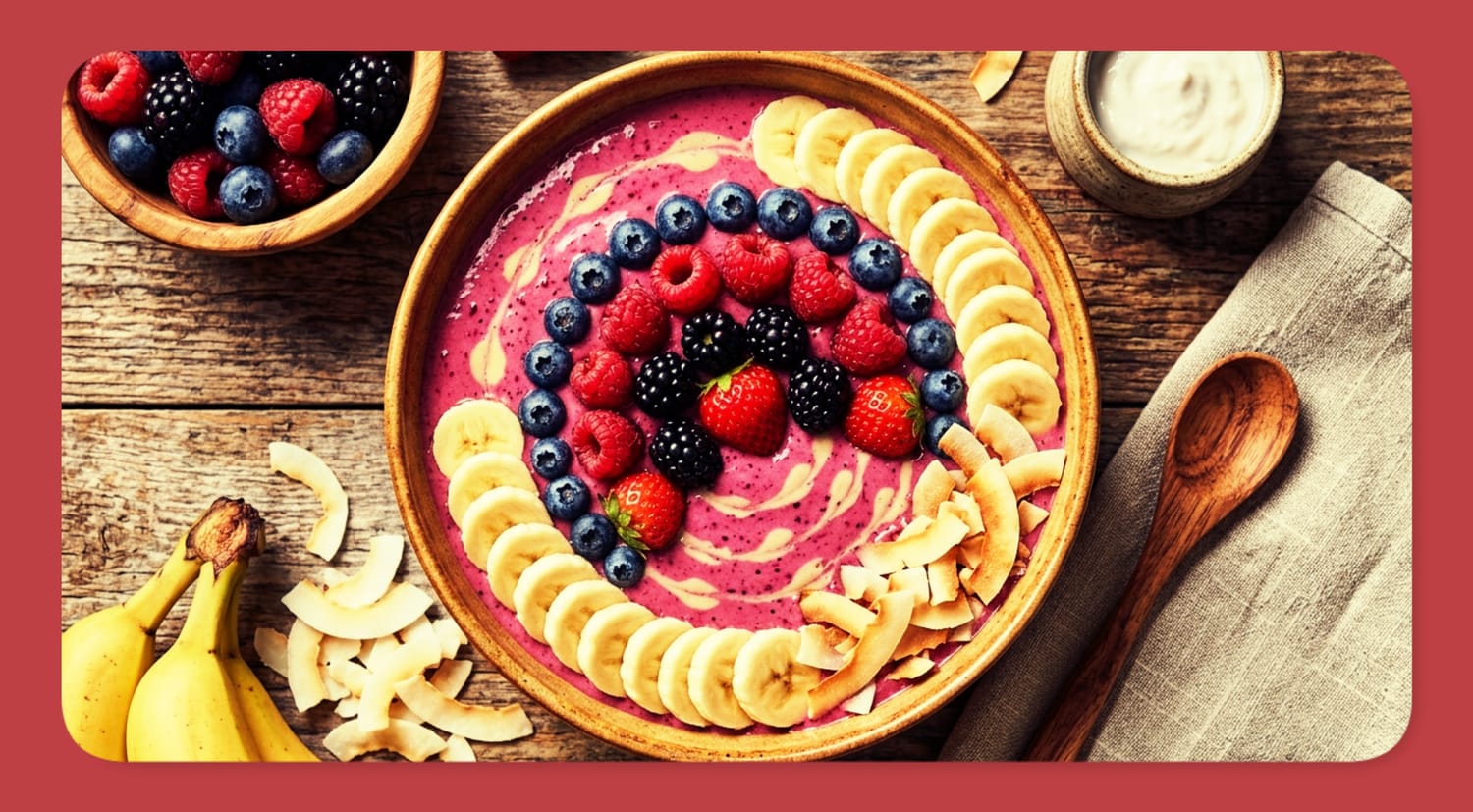
Gorgeous Dairy-Free Coconut Berry Smoothie Bowl: Tropical Pink Perfection
A vibrant pink smoothie bowl loaded with mixed berries, creamy coconut, and tropical flavor is the kind of breakfast that makes you excited to wake up in the morning. This Dairy-Free Coconut Berry Smoothie Bowl combines the natural sweetness of ripe berries and banana with the rich, velvety texture of coconut cream for a bowl that looks stunning and tastes even better. No dairy needed. No compromises made.
If you've ever scrolled through Pinterest and wondered how people create those beautiful, Instagram-worthy smoothie bowls at home, this recipe is your answer. The secret is simpler than you think. It comes down to the right ingredients, the right ratios, and a few easy techniques that turn ordinary fruit into an extraordinary breakfast experience. Every spoonful delivers a burst of berry sweetness balanced by cool, creamy coconut richness.
What Makes This Dairy-Free Coconut Berry Smoothie Bowl Special
Most smoothie bowl recipes rely on yogurt or milk for their creamy base. This one takes a completely different approach by using full-fat coconut cream as the star ingredient. Coconut cream creates an incredibly thick, luscious texture that rivals any dairy-based bowl without triggering sensitivities or compromising vegan dietary choices.
What truly sets this bowl apart is the layered tropical experience. The coconut cream base, the toasted coconut flake topping, and the banana all work together to transport your taste buds somewhere warm and sunny. It's like a vacation in a bowl, and it happens to be packed with antioxidants, healthy fats, and natural energy to fuel your entire morning.
Ingredients and Their Roles
Every ingredient in this smoothie bowl has been chosen for a specific purpose. Together, they create the perfect balance of flavor, texture, nutrition, and visual appeal.
🥣 Base Ingredients
🍓 Topping Ingredients
Step-by-Step Blending Instructions
Smoothie bowls require a different blending technique than regular smoothies. The goal is thick, frozen, and scoopable. Follow these steps carefully for perfect results every time.
Texture and Consistency Guide
The texture of a smoothie bowl is everything. Too thin and it becomes a regular smoothie. Too thick and it's impossible to eat. Here's how to troubleshoot and achieve the perfect consistency.
You added too much liquid or your fruit wasn't frozen enough. Fix this by adding a few more frozen banana slices or frozen berries and blending briefly. For future bowls, make sure all fruit is completely solid before blending, and resist the urge to add liquid.
Let the mixture sit in the blender for one to two minutes to soften very slightly at the edges, then try again. Add coconut milk one teaspoon at a time. Consider slicing frozen fruit into smaller pieces before adding to the blender.
Your blender may not be powerful enough to handle the frozen ingredients smoothly. Try letting the fruit sit at room temperature for three to five minutes before blending to take the extreme chill off. Alternatively, use smaller fruit pieces or partially thaw berries in the microwave for 10 to 15 seconds.
Add a few extra strawberries or raspberries. These berries have the strongest pigments and will intensify the pink color. Blueberries can sometimes create a more purple tone, so reduce them slightly if you want a truer pink.
Customization Matrix
This base recipe is a canvas for creativity. Adapt it to your nutritional needs, flavor preferences, and whatever ingredients you have available.
Extra Protein Power
Add one scoop of vanilla plant-based protein powder or two tablespoons of almond butter to the blender with the base ingredients. Either option adds 10 to 20 grams of protein, transforming this from a lighter breakfast into a substantial, muscle-supporting meal. Choose a protein powder that blends smoothly to avoid grittiness.
Green Boost (Hidden Veggies)
Add one small handful of fresh spinach to the blender. The berry color will overpower the green, so the bowl stays pink while you sneak in extra vitamins and minerals. Spinach has a mild flavor that disappears completely behind the berries and coconut.
Tropical Intensifier
Replace half of the mixed berries with 1/2 cup frozen mango chunks and add one tablespoon of passion fruit pulp as a topping. This shifts the flavor profile toward a more tropical direction while creating a beautiful orange-pink gradient in the bowl.
Chocolate Berry Version
Add one tablespoon of raw cacao powder to the blender for a chocolate-berry fusion. The cacao deepens the color to a rich, dark pink-purple and adds antioxidants along with a subtle chocolatey bitterness that balances the fruit sweetness.
Nut-Free School-Safe Option
Keep the coconut base as is (coconut is classified as a fruit, not a tree nut, by the FDA, though check with your specific allergy guidelines). Replace hemp hearts with sunflower seeds and skip any nut butters. Top with pumpkin seeds for crunch instead.
Lower Sugar Option
Replace the banana with 1/4 cup frozen cauliflower rice and 1/4 of a small avocado. This creates the same creamy thickness without the natural sugars from banana. The cauliflower is completely undetectable in terms of flavor, and the avocado adds healthy fats and a silky texture.
Nutritional Benefits Breakdown
This smoothie bowl is far more than a pretty breakfast. Every component delivers meaningful nutrition to support your health and energy throughout the day.
🫐 Antioxidant Powerhouse
Mixed berries are among the most antioxidant-rich foods available. Blueberries contain anthocyanins that support brain health and cognitive function. Strawberries are loaded with vitamin C for immune support and skin health. Raspberries provide ellagic acid, which has been studied for its anti-inflammatory properties. Together, they create a potent antioxidant blend that helps protect your cells from oxidative stress.
🥥 Healthy Fats from Coconut
Coconut cream is rich in medium-chain triglycerides (MCTs), a type of fat that your body absorbs and converts to energy more quickly than long-chain fatty acids. MCTs can support mental clarity, sustained energy, and even healthy metabolism. The healthy fats in coconut also help your body absorb fat-soluble vitamins from the berries and other toppings.
🍌 Natural Energy Without the Crash
The banana provides natural sugars paired with potassium and vitamin B6, creating a steady energy release rather than the spike-and-crash cycle of processed breakfast foods. Potassium also supports healthy muscle function and hydration balance, making this an excellent choice before a morning workout.
🌾 Fiber for Digestive Health
Between the berries, banana, chia seeds, and coconut, this bowl delivers a significant amount of dietary fiber that supports healthy digestion and keeps you feeling satisfied until lunch. Chia seeds are particularly impressive, offering approximately 5 grams of fiber per tablespoon.
🐟 Omega-3 Fatty Acids
Chia seeds and hemp hearts provide plant-based omega-3 fatty acids (ALA), which support heart health, reduce inflammation, and promote healthy skin. For those following a dairy-free or vegan diet, these plant-based omega-3 sources are especially important.
📊 Approximate Nutrition Per Serving (base plus standard toppings)
Note: Exact values vary based on specific brands, fruit sizes, and optional add-ins. Calculate with your preferred tracking app for precision.
Equipment Recommendations
Having the right tools makes smoothie bowl preparation faster and produces significantly better results.
Blender Options
A high-powered blender (Vitamix, Blendtec, or similar) is the gold standard for smoothie bowls. These blenders have the motor strength to pulverize frozen fruit with minimal liquid, creating the thick, creamy consistency that defines a great bowl. Most come with tamper tools specifically designed for thick blends.
A Ninja blender with stacked blade design handles frozen ingredients well and is more affordable than premium brands. The multiple blade levels help process thick mixtures more efficiently than single-blade blenders.
A standard blender can work, but requires more patience. You'll need to stop and scrape the sides more frequently, let fruit soften slightly before blending, and may need to add a bit more liquid. The result will still taste great, even if the texture isn't quite as thick.
Bullet-style single-serve blenders generally struggle with the thick, frozen consistency required for smoothie bowls. They work well for drinkable smoothies but lack the power and capacity for bowl preparation.
Helpful Extras
- Blender tamper tool is essential if your blender includes one. It pushes ingredients toward the blades without needing to stop and open the lid repeatedly.
- Long-handled spatula for scraping every bit of the thick base out of the blender jar. A flexible silicone spatula works best.
- Chilled ceramic or coconut shell bowl keeps the smoothie base cold longer. Place your serving bowl in the freezer for 10 minutes before use for the best results.
- Microplane grater for adding fresh coconut shavings or citrus zest as a finishing touch.
- Small dry skillet for toasting coconut flakes quickly and evenly.
Storage and Meal Prep Tips
🧊 Freezer Smoothie Packs
The most effective way to make smoothie bowls a quick weekday breakfast is preparing freezer packs in advance. Measure out 1 cup mixed berries and 1 sliced banana into individual freezer bags or reusable silicone bags. Squeeze out the air, seal, label with the date, and freeze flat for easy stacking. In the morning, dump a pack into the blender, add coconut cream, and blend. Prep takes under 10 minutes for a full week of packs (5 to 7 bags).
🗂️ Topping Station
Prepare a topping container at the beginning of each week. Fill a divided container or small mason jars with pre-measured portions of coconut flakes, chia seeds, hemp hearts, and any other toppings you enjoy. Store in the pantry (for dry toppings) or refrigerator (for fresh fruit toppings). Having everything ready and portioned eliminates morning decision fatigue.
🥥 Coconut Cream Prep
If buying canned coconut milk instead of coconut cream, chill two to three cans in the refrigerator at all times so you always have thick, solid cream ready to scoop. Once opened, transfer unused coconut cream to a glass jar and refrigerate. It stays fresh for up to five days. You can also freeze scoops of coconut cream in an ice cube tray for grab-and-go convenience.
🍳 Toast Coconut Flakes in Batches
Toast a full cup of coconut flakes at once in a dry skillet over medium-low heat, stirring constantly for three to four minutes until golden and fragrant. Store cooled toasted flakes in an airtight jar at room temperature for up to two weeks. Having them pre-toasted saves time and ensures you always have a crunchy, flavorful topping ready.
❓ Can I Store a Blended Smoothie Bowl?
Smoothie bowls are best consumed immediately after blending. The frozen, thick texture begins to melt within minutes, and the vibrant pink color can darken over time due to oxidation. If you absolutely must prepare one in advance, pour the blended base into a freezer-safe container and freeze it. When ready to eat, let it thaw at room temperature for 10 to 15 minutes and stir vigorously. The texture won't be quite as smooth as freshly blended, but it's a workable solution for extremely busy mornings.
Serving Suggestions and Presentation
This smoothie bowl is naturally photogenic, but a few simple presentation techniques can elevate it from beautiful to absolutely stunning.
Building a Pinterest-Worthy Bowl
Topping Combination Ideas
Toasted coconut flakes, fresh mango cubes, sliced banana, chia seeds, drizzle of honey (or agave for vegan)
Fresh strawberry slices, whole blueberries, raspberry halves, freeze-dried strawberry pieces, hemp hearts
Dairy-free granola clusters, sliced almonds, coconut flakes, fresh berries, drizzle of almond butter
Diced pineapple, kiwi slices, passion fruit seeds, toasted coconut, macadamia nuts
Three perfect strawberry slices, a pinch of coconut flakes, three mint leaves. Sometimes less is more.
Bowl Choices for Presentation
Create the most on-brand tropical aesthetic and photograph beautifully with natural, warm tones.
Make the pink color pop dramatically and create a clean, modern look.
Add warmth and an earthy, organic feel that complements the natural ingredients.
Showcase the vibrant color from every angle, including the sides, especially appealing for video content.
Frequently Asked Questions
Light coconut milk is much thinner and will result in a runny, drinkable smoothie rather than a thick bowl. If it's all you have, freeze the coconut milk into ice cubes first and use those frozen cubes as part of the base. This adds thickness while keeping the coconut flavor. For best results, always use full-fat coconut cream.
Several strategies help. Chill your bowl in the freezer for 10 minutes before adding the base. Make sure all fruit is completely frozen solid, not just cold. Minimize blending time so you don't generate excess heat from the motor. Prepare your toppings before blending so you can assemble immediately. Finally, eat in a cool environment rather than outside in warm weather.
No, and this distinction is important. Coconut cream is the thick, fatty layer from full-fat coconut milk. It's unsweetened and perfect for smoothie bowls. Cream of coconut (like Coco Lopez) is a heavily sweetened product used in cocktails like piña coladas. Using cream of coconut in this recipe would make the bowl excessively sweet and add significant processed sugar. Always check the label.
Fresh berries alone won't create the thick, frozen texture required for a smoothie bowl. If fresh berries are all you have, freeze them on a baking sheet for at least two hours before using. Alternatively, use fresh berries but increase the frozen banana to compensate for the lack of frozen fruit volume.
The base recipe is already nut-free since coconut is classified as a fruit. For toppings, use sunflower seeds, pumpkin seeds, or sunflower seed butter instead of any nut-based options. Always verify your specific school's allergy policy regarding coconut.
Blueberries are the likely culprit. Their deep blue pigment can overpower the pink from strawberries and raspberries. To achieve a true pink color, increase the ratio of strawberries and raspberries while reducing or eliminating blueberries from the blend. You can always add whole blueberries as a topping instead.
Yes. Add two tablespoons of rolled oats to the blender with the base ingredients. They blend in completely and add fiber, complex carbohydrates, and a more substantial feel without changing the flavor. This is an excellent modification for highly active individuals who need more sustained energy from breakfast.
This recipe is a wonderful option for toddlers and young children. The natural sweetness from fruit means no added sugar is needed. The smooth, soft texture is easy for little ones to eat. Adjust portion sizes (half a bowl is usually plenty for small children) and be mindful of topping sizes to prevent choking hazards. Cut berries into small pieces and skip whole nuts or large seeds for very young children.
Glossary of Key Terms
🌟 Share Your Success!
Made this Dairy-Free Coconut Berry Smoothie Bowl? I want to see your beautiful creation! Snap a photo of your finished bowl and pin it to your breakfast inspiration board on Pinterest. Don't forget to tag your post so other smoothie bowl lovers can discover this recipe and start their mornings with something truly special.
Did you try a unique topping combination or flavor twist that worked amazingly well? Leave a comment below and share your experience. Your creative ideas help inspire this entire community of smoothie bowl enthusiasts, and your tips might become someone else's new favorite breakfast hack.
Here's to colorful, nourishing, dairy-free mornings that taste as good as they look!
🥥🍓🫐More Delicious Smoothies to Try
Affiliate Disclosure
This page may contain affiliate links. This means that if you click on one of these links and make a purchase, I may receive a small commission at no additional cost to you. This helps support the blog and allows me to continue creating free content. I only recommend products or services that I use personally and believe will add value to my readers. Your support is appreciated!
Created with ©simplyhealthynews