
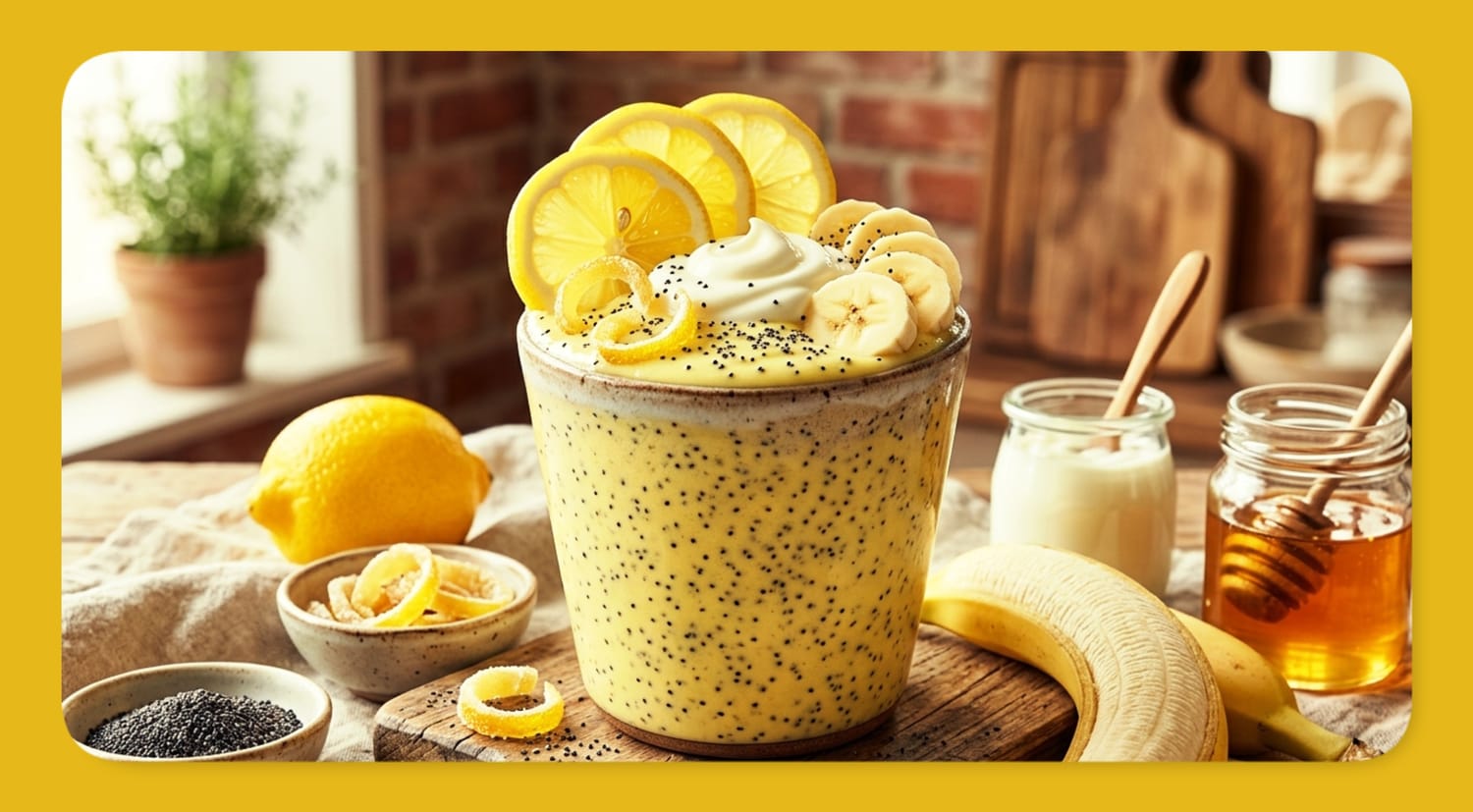
Delightful Gluten-Free Lemon Poppy Seed Smoothie: Your Favorite Bakery Classic in a Glass
Fresh lemon, crunchy poppy seeds, creamy Greek yogurt, and a touch of honey come together in under five minutes for a breakfast that tastes like sunshine in a glass.
Close your eyes and think about the best lemon poppy seed muffin you've ever had. That tender, slightly sweet crumb. The bright burst of lemon that hits your tongue first. Those tiny poppy seeds adding the most satisfying little crunch. The way the whole thing somehow tastes like a warm spring morning no matter what time of year you eat it.
Now imagine being told you can never have one again.
For anyone living with celiac disease, gluten sensitivity, or simply choosing to avoid gluten, that's a real loss. Lemon poppy seed muffins are one of those universally beloved bakery treats that most gluten-free versions just can't quite replicate. The texture is off, the flavor falls flat, or they crumble into a disappointing pile of dry, dense sadness on your plate.
This smoothie takes a completely different approach to the problem.
Instead of trying to recreate the muffin itself, this recipe captures the essence of what makes lemon poppy seed baked goods so irresistible and delivers it in a creamy, sippable, naturally gluten-free format. Fresh lemon juice and zest provide that unmistakable brightness. Real poppy seeds add their signature crunch and subtle nutty flavor. Creamy Greek yogurt creates a rich, velvety base. Banana adds natural sweetness and body. And a drizzle of honey ties the whole thing together into something that genuinely tastes like your favorite bakery treat in liquid form.
No gluten-free flour blends. No complicated baking techniques. No crossing your fingers and hoping it turns out okay. Just five simple ingredients, a blender, and about three minutes between you and the most delicious gluten-free breakfast or snack you've had in a long time.
What Makes This Lemon Poppy Seed Smoothie So Special
Bakery-inspired smoothies can easily go wrong. They either taste nothing like the baked good they're trying to emulate, or they load up on sugar and artificial flavors to force the resemblance. This recipe avoids both pitfalls, and here's why it works so well.
- Real lemon does the heavy lifting. This smoothie uses both fresh lemon juice and lemon zest, which is the key to achieving authentic lemon poppy seed muffin flavor. The juice provides that bright, tangy acidity, while the zest contributes the aromatic, floral lemon oils that are actually responsible for most of what we think of as "lemon flavor." Using both creates a layered, complex lemon taste that bottled lemon juice simply cannot match.
- Poppy seeds add more than you'd expect. Beyond the visual appeal and signature crunch, poppy seeds contribute a subtle earthy, nutty flavor that's essential to the overall lemon poppy seed experience. Without them, you'd have a lemon smoothie. With them, you have something that unmistakably recalls that beloved bakery classic. They also add a small but meaningful nutritional contribution, including minerals like calcium, iron, and manganese.
- Greek yogurt creates bakery-worthy richness. The thick, creamy texture of Greek yogurt is what transforms this from a thin, juice-like drink into something that feels indulgent and substantial. It mimics the dense, tender quality of a good muffin crumb while adding a significant protein boost that keeps you feeling satisfied for hours.
- It's naturally gluten-free without compromise. Every ingredient in this smoothie is inherently gluten-free. There's no need for specialty flour blends, xanthan gum, or any of the workarounds that gluten-free baking requires. You're not substituting around gluten. You're simply working with ingredients that never contained it in the first place.
- The flavor balance is spot-on. Getting the sweet-to-tart ratio right is crucial for anything lemon poppy seed flavored. Too sweet and it tastes like candy. Too tart and it's mouth-puckering. This recipe uses banana and honey together to create just the right amount of sweetness to complement the lemon's brightness without overwhelming it. The result tastes balanced, polished, and genuinely reminiscent of a beautifully made muffin.
Five simple ingredients, a blender, and about three minutes between you and the most delicious gluten-free breakfast you've had in a long time.
The Ingredients You'll Need
Every ingredient here plays a specific and important role. Here's your complete list with details on what each one brings to your glass.
Fresh Lemon — 1 whole (juice and zest)
Fresh lemon is the heart of this smoothie, and using a whole lemon, both its juice and its zest, is what creates that authentic bakery-style lemon flavor. The juice of one medium lemon provides roughly 2 to 3 tablespoons of bright, tangy liquid that gives the smoothie its signature citrus punch. Lemon juice is also an excellent source of vitamin C, providing about 30% of your daily needs from just one lemon.
The zest is equally important, though it's often overlooked. Lemon zest contains concentrated essential oils that carry the aromatic, floral side of lemon flavor. These oils are what make lemon baked goods smell so incredible, and they do the same thing for this smoothie. Just one teaspoon of zest adds an enormous amount of fragrant lemon flavor without any additional tartness.
Poppy Seeds — 1 tablespoon
Poppy seeds are small but mighty in this recipe. They're the ingredient that transforms a lemon smoothie into a lemon poppy seed smoothie, and their contribution goes beyond just visual appeal. Each tiny blue-black seed adds a subtle crunch that creates textural interest throughout the smoothie. Unlike other mix-ins that dissolve or break down during blending, poppy seeds maintain their shape and texture, giving you those little pops of crunch in every sip that are so characteristic of lemon poppy seed baked goods.
Nutritionally, poppy seeds are surprisingly impressive for their size. They're a good source of calcium, providing about 4% of your daily needs per tablespoon. They also contain manganese, copper, iron, zinc, and dietary fiber. These minerals support bone health, energy production, and immune function.
Ripe Banana — 1 medium (frozen)
Frozen banana is the secret to this smoothie's thick, creamy, milkshake-like texture. It serves as a natural thickener and sweetener that makes the smoothie feel indulgent without adding refined sugar or heavy cream. A ripe banana brings enough natural sweetness to soften the lemon's tartness while keeping the overall flavor balanced. It also blends into an incredibly smooth, creamy consistency that mimics the tender, cakey quality of a good muffin.
Bananas are nutritional multitaskers, providing potassium for heart and muscle health, vitamin B6 for brain function and energy metabolism, and prebiotic fiber that feeds the beneficial bacteria in your gut.
Greek Yogurt — 1/2 cup (plain)
Greek yogurt is the ingredient that gives this smoothie its luxuriously rich, creamy body. It adds a thick, velvety quality that regular yogurt simply can't match. Plain Greek yogurt is ideal because it provides richness without competing with the lemon flavor. The slight tanginess of plain Greek yogurt actually complements the lemon beautifully, creating a flavor combination similar to lemon cheesecake or lemon curd.
A half cup of plain Greek yogurt contains roughly 10 to 12 grams of protein, depending on the brand. Greek yogurt also provides calcium, probiotics for gut health, and B vitamins.
Raw Honey — 1 tablespoon
Honey is the sweetener that brings the entire flavor profile into focus. It adds a gentle, floral sweetness that complements the lemon and enhances the overall bakery-inspired taste. Raw honey is recommended because it retains the natural enzymes, antioxidants, and beneficial compounds that are often destroyed during commercial processing and heating.
One tablespoon of honey adds approximately 64 calories and 17 grams of sugar to the smoothie. Combined with the natural sweetness of the banana, it creates the perfect level of dessert-like flavor without pushing the smoothie into overly sweet territory.
Simple Step-by-Step Instructions
-
Zest and Juice Your Lemon
Start by zesting your lemon using a microplane or fine grater. You'll need about 1 teaspoon of zest. Then cut the lemon in half and squeeze out the juice, straining out any seeds. One medium lemon should yield 2 to 3 tablespoons of juice. Set both the zest and juice aside.
-
Add Liquid and Yogurt to Your Blender
Spoon 1/2 cup of plain Greek yogurt into your blender, then add the lemon juice. The yogurt goes in first to give the blender blades something to grip, and the liquid lemon juice helps everything start moving smoothly.
-
Add Banana and Honey
Drop in the frozen banana chunks and drizzle the tablespoon of honey on top.
-
Blend Until Smooth
Blend on high for 30 to 45 seconds until the mixture is completely smooth, thick, and creamy. The smoothie should be a beautiful pale yellow color with a consistency similar to a thick milkshake. If your blender struggles with the frozen banana, pause, scrape down the sides with a spatula, and blend again.
-
Add Lemon Zest and Poppy Seeds
Add the teaspoon of lemon zest and the tablespoon of poppy seeds to the blender. Pulse just 3 to 4 times, or stir them in by hand with a spoon. You want these ingredients distributed throughout the smoothie but not fully broken down. The zest should remain in small, visible flecks, and the poppy seeds should stay whole to maintain their signature crunch.
-
Pour and Admire
Pour into your favorite glass. The smoothie should be thick, creamy, and speckled with tiny poppy seeds throughout. It should look exactly like you'd hope a lemon poppy seed smoothie would look. Take a moment to appreciate how beautiful it is before you take that first sip.
Helpful Tips for the Best Results
- Always use fresh lemon, never bottled juice. This is the single most important tip for this entire recipe. Bottled lemon juice has a flat, one-dimensional flavor compared to fresh. Fresh lemon juice is bright and lively, and when combined with fresh zest, it creates a lemon flavor that's miles ahead of anything from a bottle.
- Room temperature lemon yields more juice. If your lemon has been in the refrigerator, roll it firmly on the counter with the palm of your hand for 15 to 20 seconds before cutting it. This breaks down the internal membranes and releases significantly more juice. A room temperature lemon that's been rolled can yield up to twice as much juice as a cold one straight from the fridge.
- Don't blend the poppy seeds on high. Poppy seeds should stay whole so you get those little crunchy pops throughout the smoothie. Blending them on high will crush them and release their oils, turning them into a gritty paste instead of a pleasant crunch. Either fold them in by hand or pulse very briefly.
- Make sure your yogurt is gluten-free certified if needed. While plain Greek yogurt is inherently gluten-free, cross-contamination during manufacturing is a real concern for people with celiac disease. Brands like Fage, Chobani, and Stonyfield are generally considered safe, but always read labels carefully and look for official gluten-free certification if you're highly sensitive.
- Use very ripe bananas for the best sweetness. The riper your banana, the sweeter your smoothie will be, and the less honey you'll need. Bananas with heavy brown spotting on the skin are ideal. If your banana isn't very ripe, you might want to add a touch more honey to compensate.
- Chill your glass in the freezer for 5 minutes before pouring. This keeps the smoothie cold and thick for longer, especially if you like to sip slowly. A frosted glass also makes the whole experience feel a little more special, like you're treating yourself to something from a fancy cafe.
Easy Ingredient Swaps and Substitutions
This recipe is wonderfully adaptable. Here are some tested swaps that maintain the lemon poppy seed spirit while accommodating different needs and preferences.
🥛 Dairy-Free Yogurt Swap
Coconut yogurt is the best dairy-free substitute because its richness and slight sweetness complement the lemon flavor beautifully. Cashew yogurt is another excellent option with a very neutral flavor that won't compete with the lemon. Almond yogurt works but tends to be thinner, so add a few extra frozen banana chunks for thickness. Soy yogurt provides the most comparable protein content.
🍌 Banana-Free Option
Substitute 1/2 cup of frozen cauliflower florets for thickness (truly, you won't taste them), plus an additional teaspoon of honey for sweetness. Frozen mango is another option, though it will add a tropical note to the flavor. Frozen zucchini works similarly to cauliflower as a neutral thickener.
🍯 Honey Alternatives
Maple syrup works beautifully and adds a warm sweetness that pairs surprisingly well with lemon. Agave nectar is more neutral. Date syrup adds deep, caramel-like sweetness. For a sugar-free option, a few drops of liquid stevia or monk fruit sweetener can work, though the flavor will be slightly different from honey's floral warmth.
🍋 Lemon Variations
Meyer lemons create a sweeter, more floral version of this smoothie that's absolutely lovely. You can also try a combination of lemon and lime for a more complex citrus flavor. For a completely different citrus direction, orange zest and juice create a delicious "orange poppy seed" variation that tastes like a different but equally wonderful bakery muffin.
⚫ Seed Alternatives
If you can't find poppy seeds or prefer to avoid them, hemp hearts provide a similar visual effect and a slightly nuttier flavor. White chia seeds add tiny specks and a nutritional boost, though they lack the distinctive crunch. Toasted sesame seeds are a more unconventional swap that creates an interesting, slightly savory twist.
💪 Boost the Bakery Factor
For an even more muffin-like experience, add 2 tablespoons of rolled oats (certified gluten-free) during the main blending step. You can also add 1 tablespoon of almond flour for richness, or a tablespoon of melted coconut oil for that buttery muffin-top quality. Vanilla protein powder blends seamlessly and turns this into a great post-workout option.
Nutritional Benefits at a Glance
This smoothie isn't just a clever way to enjoy bakery flavors without gluten. It's a genuinely nourishing choice that supports your body in multiple ways.
High-Quality Protein
Thanks to the Greek yogurt, this smoothie provides roughly 10 to 12 grams of protein per serving. Protein supports muscle maintenance, keeps you feeling full and satisfied between meals, and helps stabilize blood sugar levels to prevent energy crashes.
Abundant Vitamin C
The fresh lemon provides a meaningful dose of vitamin C, a powerful antioxidant that supports immune function, skin health, and iron absorption. Vitamin C also plays a role in the production of collagen, important for healthy joints and skin elasticity.
Gut-Friendly Probiotics
The live active cultures in Greek yogurt provide beneficial bacteria that support a healthy gut microbiome. A balanced gut microbiome is increasingly linked to improved digestion, nutrient absorption, better mood, and immune function.
Bone-Supporting Minerals
Both poppy seeds and Greek yogurt contribute calcium, essential for strong bones and teeth. Poppy seeds also provide manganese and copper, which play supporting roles in bone health and connective tissue formation.
Potassium for Heart Health
The banana in this smoothie is an excellent source of potassium, a mineral that helps regulate blood pressure, supports proper heart rhythm, and aids in muscle contraction and nerve signaling. Most people don't get enough potassium in their daily diets.
Sustained Natural Energy
The combination of complex carbohydrates from the banana, protein from the Greek yogurt, and natural sugars from the honey provides energy that releases gradually throughout the morning, unlike a sugary pastry that spikes and then crashes your blood sugar.
🌾 Living Gluten-Free Without Giving Up Flavor
One of the most challenging parts of living gluten-free, whether by medical necessity or personal choice, is the sense of missing out. Birthday cakes, fresh bread, your favorite bakery muffin. These aren't just foods. They're experiences and memories tied to flavor.
This smoothie exists because no one should have to feel like going gluten-free means giving up the flavors they love.
The lemon poppy seed muffin is one of those classic bakery items that people miss the most when they eliminate gluten. Gluten-free versions exist, of course, but they often require specialty ingredients, careful measuring, and a fair amount of hope. Sometimes they're wonderful. Sometimes they're not worth the effort.
This smoothie sidesteps all of that entirely. There's no baking involved, no specialty flours to source, no risk of a dense, gummy, or crumbly result. You get the exact flavors you're craving in a format that's naturally, effortlessly gluten-free. And honestly, on a busy weekday morning, a smoothie that takes three minutes is a lot more practical than a batch of muffins that takes an hour.
That said, if you have celiac disease or a serious gluten sensitivity, it's always important to verify that every individual ingredient you use is certified gluten-free or produced in a gluten-free facility. Cross-contamination can occur during manufacturing, even with naturally gluten-free foods like oats, yogurt, or spices. Reading labels carefully and choosing certified products when available gives you the best protection.
Storage and Make-Ahead Tips
⚡ Best Enjoyed Fresh
Like most smoothies, this one is at its absolute best right after blending. The texture is thick and creamy, the lemon flavor is at peak brightness, and the poppy seeds have their maximum crunch. If possible, blend and enjoy immediately.
🧊 Refrigerator Storage
If you need to make it ahead, store it in a sealed mason jar or airtight container in the refrigerator for up to 24 hours. The smoothie will thicken as it sits. Give it a good shake before drinking and add a splash of water or milk to thin it back to your preferred consistency.
🍋 Lemon Prep Ahead of Time
If your morning routine is tight, zest and juice your lemons the night before. Store the zest in a small airtight container and the juice in a separate small container in the refrigerator. This saves you the most time-consuming step and makes morning blending even faster.
🛍 Freezer Smoothie Packs
Prepare freezer-ready smoothie packs by placing 1 frozen banana (in chunks), 1 tablespoon of poppy seeds, and 1 teaspoon of lemon zest into individual freezer bags. In the morning, dump a pack into your blender, add the yogurt, fresh lemon juice, and honey. Freshly blended smoothie in under 2 minutes.
❄️ Batch-Freeze Lemon Zest
If you find yourself with extra lemons, zest them all at once and freeze the zest in a small container or ice cube tray. Lemon zest freezes beautifully and retains its flavor for up to 3 months. Having pre-made zest on hand makes this smoothie much quicker to prepare.
⚠️ Why Freezing Isn't Ideal Here
Unlike creamier smoothies with banana or avocado, this citrus-based smoothie doesn't freeze and thaw particularly well. The texture can become watery and the lemon flavor tends to become more bitter after freezing. Use the freezer pack method above instead for the best results.
Frequently Asked Questions
It genuinely captures the flavor essence of a lemon poppy seed muffin. The combination of fresh lemon juice, lemon zest, poppy seeds, and honey creates a flavor profile that's remarkably similar to the beloved baked good. The texture is obviously different since you're drinking it rather than eating it, but the taste will absolutely remind you of your favorite bakery muffin. Several people who've tried this recipe have said they actually prefer it to most gluten-free lemon poppy seed muffins they've had.
All the ingredients in this recipe are naturally gluten-free. However, people with celiac disease should take extra precautions against cross-contamination. Choose Greek yogurt, honey, and poppy seeds that are certified gluten-free or produced in dedicated gluten-free facilities. If you're adding optional ingredients like oats, make sure they're specifically labeled as certified gluten-free, since conventional oats are frequently cross-contaminated with wheat during growing and processing.
You can, but the smoothie will be thinner and less protein-rich. Regular yogurt contains more liquid (whey) and less protein per serving than Greek yogurt. If you use regular yogurt, consider adding a few extra frozen banana chunks to compensate for the thinner consistency, or reduce the amount slightly to keep the smoothie from becoming too runny.
Poppy seeds are generally considered safe in the small culinary quantities used in cooking and baking. The amount in this recipe (1 tablespoon divided among servings) is a standard food quantity. However, if you have concerns, consult your pediatrician. You can also simply omit the poppy seeds and still have a delicious lemon smoothie.
They can, especially if the smoothie sits for a while. Poppy seeds are denser than the surrounding liquid, so some settling is natural. If you're sipping slowly, give your glass a quick stir periodically. If you're using a straw, this is less of an issue because you'll naturally pick up seeds from different levels as you drink.
Absolutely. This recipe doubles perfectly for two servings. Just make sure your blender is large enough to handle the increased volume. If you're making it for two people, blend the doubled recipe together and divide between two glasses. Both servings will taste exactly the same.
Lemon tartness can vary significantly from fruit to fruit. If your smoothie turns out more tart than you'd like, add a bit more honey (start with an additional teaspoon) or add a few extra chunks of banana. Both will increase the sweetness and mellow the tartness. You can also use a Meyer lemon next time, which is naturally sweeter and less acidic.
If the smoothie is sweeter than you prefer, reduce the honey to 1 teaspoon or omit it entirely next time. You can also add a tiny splash of additional lemon juice to brighten and sharpen the flavor. Some people prefer this smoothie with no added sweetener at all, relying entirely on the banana for natural sweetness.
It makes a beautiful smoothie bowl. Reduce the lemon juice slightly to keep the consistency extra thick, and skip blending in the poppy seeds entirely. Instead, pour the thick lemon smoothie into a bowl and sprinkle the poppy seeds on top along with other toppings like sliced banana, a drizzle of honey, granola (certified gluten-free), or fresh berries.
Why You'll Love This Lemon Poppy Seed Smoothie
Some smoothie recipes are nice to have. This one fills a gap that genuinely needed filling.
If you're living gluten-free, you know the frustration of watching other people casually enjoy bakery favorites that are off-limits for you. You know the disappointment of buying a gluten-free muffin that costs twice as much and tastes half as good. You know the mental energy of constantly reading labels, asking questions at restaurants, and managing a dietary restriction that the rest of the world doesn't always understand.
This smoothie won't solve all of those challenges. But it will give you back one specific joy: the bright, sweet, poppy seed-speckled flavor of a perfect lemon muffin, ready in minutes, made from simple ingredients you can trust, and absolutely delicious without any compromise.
It's also just a really, really good smoothie, even if you have zero dietary restrictions. The lemon is bright and sunny. The poppy seeds add fun texture. The yogurt makes it creamy and satisfying. And the whole thing comes together so quickly and easily that it can become a regular part of your weekly routine without any extra effort.
This is the smoothie that proves gluten-free eating isn't about limitation. It's about creativity, quality ingredients, and the realization that some things actually taste better when you approach them from a fresh angle.
- ✓ Ready in under 5 minutes
- ✓ Genuinely tastes like the real thing
- ✓ No specialty ingredients needed
- ✓ Naturally gluten-free from the start
- ✓ High protein keeps you satisfied
- ✓ Easy meal prep friendly
Share Your Lemon Poppy Seed Smoothie Creation 📌
I would love to hear about your experience with this recipe. When you blend up this Gluten-Free Lemon Poppy Seed Smoothie, snap a photo and share it on Pinterest so other lemon lovers and gluten-free foodies can discover it too.
Save this recipe to your favorite Pinterest boards for quick access whenever the craving strikes. It's a perfect fit for your "Gluten-Free Recipes," "Healthy Breakfast Ideas," "Lemon Recipes," or "Quick Smoothies" boards.
Tell me how you made it your own. Did you try it with Meyer lemons? Add a scoop of protein powder for post-workout fuel? Turn it into a gorgeous smoothie bowl with all the toppings? Make it with coconut yogurt for a dairy-free version? I love hearing about your unique variations and discovering new twists.
If this smoothie brought a little bakery happiness back into your gluten-free life, share it with someone else who could use that same joy. Whether it's a friend recently diagnosed with celiac disease, a fellow lemon enthusiast, or anyone who simply loves a good smoothie, great recipes are always better shared.
Now go grab a lemon, fire up your blender, and treat yourself to something truly bright and beautiful.
You've earned it. 🍋
More Delicious Smoothies to Try
Affiliate Disclosure
This page may contain affiliate links. This means that if you click on one of these links and make a purchase, I may receive a small commission at no additional cost to you. This helps support the blog and allows me to continue creating free content. I only recommend products or services that I use personally and believe will add value to my readers. Your support is appreciated!
Created with ©simplyhealthynews