
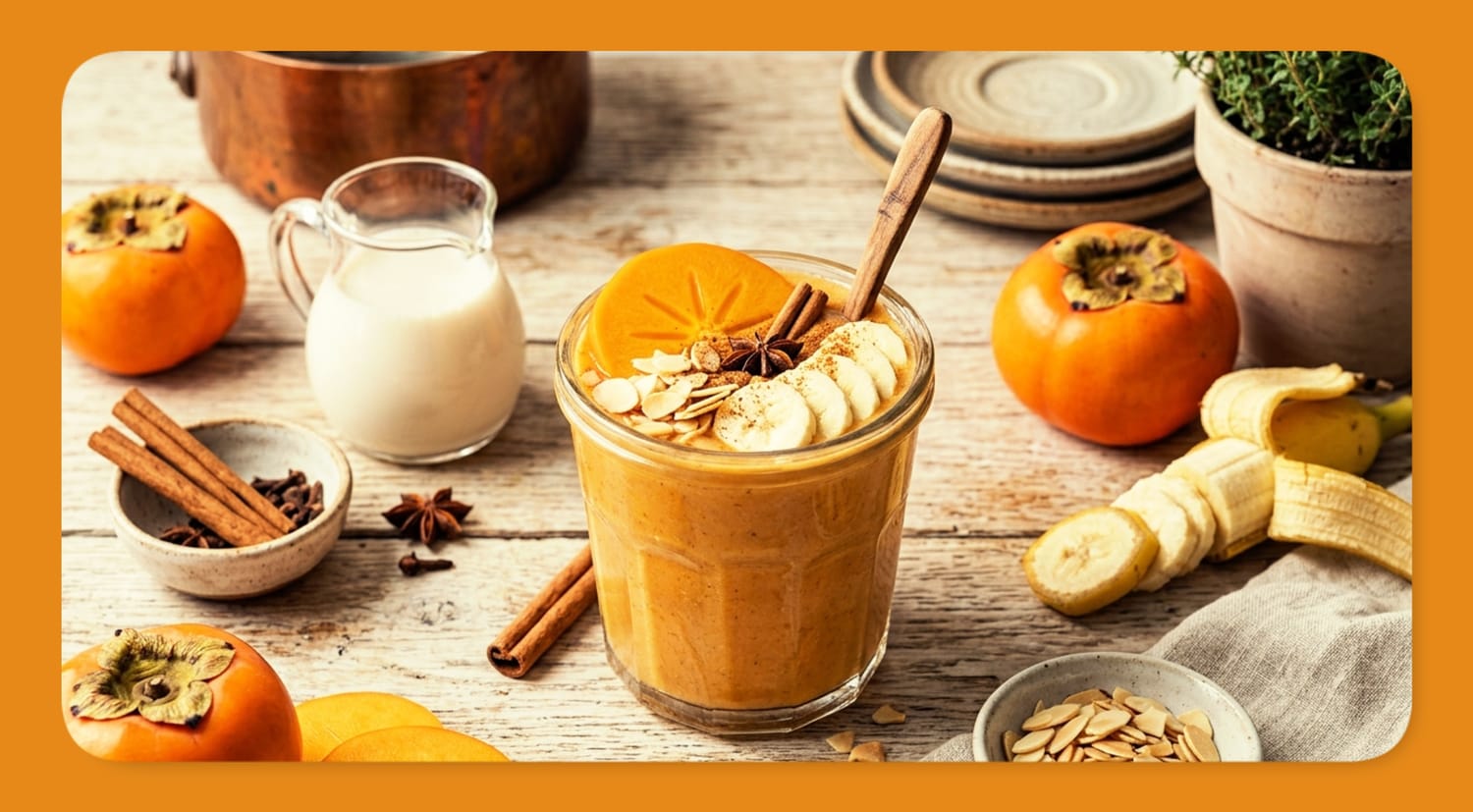
Enchanting Vegan Persimmon Smoothie: Exotic Flavor You Need to Try
Honey-sweet, golden, and utterly irresistible, this autumn smoothie is pure seasonal magic
If you've never tried a persimmon before, this smoothie is the perfect introduction. If you're already a fan, this recipe will quickly become your new favorite way to enjoy them. The flavor is unlike anything you've experienced in a smoothie. It's not quite mango, not quite apricot, not quite honey, but somehow reminiscent of all three with its own unique, exotic character. One sip and you'll wonder why persimmon smoothies aren't on every fall menu everywhere.
What Makes This Vegan Persimmon Smoothie Special
Most fall smoothie recipes lean on the same familiar flavors: pumpkin, apple, sweet potato. Those are wonderful, but they barely scratch the surface of what autumn produce has to offer. This smoothie breaks the mold by showcasing persimmon, a fruit that delivers extraordinary flavor and nutrition but rarely gets its moment in the spotlight.
What makes persimmon particularly magical in a smoothie is its natural texture. A fully ripe Hachiya persimmon has a pudding-like, almost custard consistency that blends into an incredibly creamy, velvety smoothie without any dairy, yogurt, or thickening agents. Combined with frozen banana for body and natural sweetness, a touch of warm cinnamon for that cozy fall feeling, and almond milk for a smooth, dairy-free pour, the result is a smoothie that tastes rich and indulgent while being completely plant-based.
This is also a smoothie that stands out visually. The deep golden-orange color of blended persimmon is absolutely stunning. It practically glows in the glass, making it naturally eye-catching for food photography, social sharing, and Pinterest boards dedicated to fall recipes and seasonal eating.
Ingredients and Their Roles
Every ingredient in this smoothie has a specific purpose, contributing to the flavor, texture, nutrition, or visual beauty of the finished drink.
🍊 Base Ingredients
🌿 Flavor and Spice Ingredients
✨ Optional Add-ins
Step-by-Step Blending Instructions
Preparing a persimmon smoothie requires a little extra attention to fruit preparation, but the blending process itself is simple and quick.
Texture and Consistency Guide
Persimmon has a unique texture that behaves differently in the blender than most other fruits. Here's how to handle any consistency challenges.
This usually happens when the persimmon is extremely ripe and watery, or when too much almond milk was added. Fix it by adding a few more frozen banana slices and blending briefly. One tablespoon of almond butter also thickens the smoothie while adding richness. For future blends, start with slightly less almond milk (1/2 cup) and add more only if needed.
Add almond milk one tablespoon at a time and blend briefly between additions until you reach your preferred consistency. Persimmon, especially the Hachiya variety, can create a very thick, pudding-like consistency that may need a little extra liquid to become sippable.
Some persimmons, particularly underripe ones, can have fibrous strands that don't fully blend. If you notice any stringiness, blend on high for an additional 20 to 30 seconds. If the problem persists, strain the smoothie through a fine mesh strainer, pressing with a spoon to extract all the liquid. To avoid this issue, always use fully ripe persimmons.
Fuyu persimmons can sometimes produce a slightly grainy texture because their flesh is firmer and drier than Hachiya persimmons. Adding an extra splash of almond milk and blending longer usually resolves this. If you're using Fuyu persimmons regularly, consider freezing the peeled, chopped pieces before blending. Freezing breaks down the cell structure and produces a smoother result.
This is a clear sign that your persimmon wasn't ripe enough. Unripe persimmons, especially Hachiya varieties, contain high levels of tannins that cause an intensely astringent, chalky sensation in the mouth. Unfortunately, this can't be fixed once blended. The solution is always in the preparation: make sure Hachiya persimmons are completely soft and squishy before using. See the FAQ section for ripening tips.
Customization Matrix
This base recipe welcomes adaptation. Use these variations to explore new flavors, accommodate different dietary needs, or work with whatever you have available.
Warm Spice Chai Version
Add 1/4 teaspoon ground cardamom, 1/8 teaspoon ground cloves, and an extra 1/4 teaspoon ground ginger to the blend. These chai-inspired spices complement persimmon's natural warmth beautifully and create a more complex, aromatic smoothie that tastes like a spiced fall latte.
Tropical Persimmon Twist
Replace the almond milk with coconut milk and add 1/4 cup frozen mango chunks alongside the persimmon. This variation leans into the tropical side of persimmon's flavor profile, creating a smoothie that bridges autumn and summer. Top with toasted coconut flakes for extra tropical flair.
Creamy Oat Version
Replace the almond milk with oat milk for an even creamier, slightly sweeter base. Oat milk's natural richness and subtle sweetness amplify the persimmon's honey-like flavor and create a more substantial, latte-like smoothie. This swap is also ideal for anyone with nut allergies.
Protein-Packed Version
Add one scoop of vanilla plant-based protein powder and one tablespoon of almond butter for a filling, protein-rich smoothie that works as a post-workout snack or a more substantial breakfast. The vanilla protein enhances the persimmon's sweetness, and the almond butter adds healthy fats for sustained energy.
Green Boost (Hidden Vegetables)
Add one small handful of fresh spinach to the blender. The persimmon's deep orange color easily masks the green, keeping the smoothie looking golden and appetizing while sneaking in extra iron, folate, and vitamins. This is a great trick for anyone who wants more vegetables without tasting them.
Persimmon Pie Version
Add one tablespoon of rolled oats, a pinch of ground allspice, and one tablespoon of pecans to the blend. This creates a smoothie that tastes remarkably like persimmon pudding or pie. The oats add body and fiber, while the pecans bring a rich, buttery nuttiness that makes the smoothie feel like a dessert.
Nut-Free Version
Replace the almond milk with oat milk or coconut milk and skip any nut butter add-ins. Use sunflower seed butter if you want the added creaminess and protein that a nut butter would provide. This makes the smoothie safe for nut-free households and school environments.
🍊 Nutritional Benefits Breakdown
This smoothie delivers impressive nutrition from a fruit that most people have never considered adding to their blender.
Persimmons are loaded with vitamin A (in the form of beta-carotene), providing over 50% of your daily recommended intake in a single fruit. Vitamin A is essential for eye health, immune function, and maintaining healthy skin. The rich orange color of persimmon is a visual indicator of its high beta-carotene content, which acts as a powerful antioxidant in the body, protecting cells from damage caused by free radicals.
One persimmon delivers a significant dose of vitamin C, supporting immune defense during the fall and winter months when colds and flu are most prevalent. Vitamin C also plays a critical role in collagen production, which supports skin elasticity, joint health, and wound healing. Pairing persimmon with banana in this smoothie creates a vitamin C and potassium combination that supports both immune and cardiovascular health simultaneously.
Persimmons are an excellent source of dietary fiber, providing approximately 6 grams per fruit. Combined with the fiber from banana and optional flaxseed, this smoothie delivers a meaningful portion of your daily fiber needs. Adequate fiber intake supports healthy digestion, promotes regular bowel movements, and helps maintain stable blood sugar levels by slowing the absorption of natural sugars.
Persimmons are a notable source of manganese, a trace mineral that supports bone formation, blood clotting, and metabolism of carbohydrates, amino acids, and cholesterol. Most people don't think about manganese when considering nutrition, but it plays a crucial role in overall metabolic function and antioxidant defense.
Cinnamon contains cinnamaldehyde, the compound responsible for its distinctive flavor and aroma. Research suggests that cinnamaldehyde has anti-inflammatory and antimicrobial properties. Regular consumption of cinnamon has been associated with improved insulin sensitivity, reduced fasting blood sugar levels, and decreased markers of inflammation, making it a functional spice that goes far beyond flavor.
This smoothie derives all of its energy from whole, unprocessed plant foods. The natural sugars in persimmon and banana are paired with fiber, which ensures a gradual, sustained energy release rather than the spike-and-crash cycle associated with refined sugar. This makes it an ideal mid-morning or mid-afternoon snack for maintaining focus and energy levels.
Note: Exact values vary based on persimmon size, banana size, and optional add-ins. Calculate with your preferred tracking app for precision.
Equipment Recommendations
The right tools make working with persimmons easy and ensure a perfectly smooth, beautiful smoothie every time.
Blender Options
A high-speed blender (Vitamix, Blendtec, or similar) processes persimmon flesh, frozen banana, and spices into a perfectly silky-smooth consistency in under 60 seconds. High-speed blenders are particularly valuable here because they can break down any fibrous strands in the persimmon that lower-powered machines might leave behind.
A Ninja or KitchenAid blender handles this recipe well since the ingredients are relatively soft (especially when using ripe Hachiya persimmon). The frozen banana is the firmest ingredient, and most mid-range blenders handle frozen banana without difficulty.
A standard blender works fine for this recipe with a small adjustment. Blend the persimmon flesh and almond milk together first until completely smooth, then add the frozen banana and spices and blend again. This two-stage approach prevents the persimmon from remaining chunky.
A bullet-style blender (NutriBullet or similar) is a great choice for this recipe since the total volume is relatively small and the ingredients are soft. It produces quick, single-serving results with minimal cleanup.
Helpful Extras
- Small sharp knife for cutting the persimmon and removing the calyx (leaf top). A paring knife works perfectly.
- Spoon for scooping out the soft flesh of a ripe Hachiya persimmon. The flesh is so soft that it practically falls out of the skin.
- Vegetable peeler for peeling Fuyu persimmons, which have firmer skin that doesn't separate as easily.
- Fine mesh strainer for straining the smoothie if any fibrous bits remain after blending. Place over a bowl or glass, pour the smoothie through, and press with the back of a spoon.
- Cinnamon stick for a beautiful, aromatic garnish that doubles as a stirrer.
Storage and Meal Prep Tips
Ripening Persimmons at Home
The biggest challenge with persimmon smoothies isn't the blending, it's getting the fruit perfectly ripe. Here's how to manage the ripening process so you always have smoothie-ready persimmons available.
Place firm persimmons on the counter at room temperature. Hachiya persimmons may take one to three weeks to fully ripen. They're ready when the skin is translucent and the fruit feels extremely soft, almost liquid inside. Fuyu persimmons ripen faster and can be used when slightly soft but still somewhat firm.
Place persimmons in a brown paper bag with a ripe banana or apple. These fruits release ethylene gas, which accelerates ripening. Check daily. This method can reduce ripening time to three to seven days for Hachiya persimmons.
For Hachiya persimmons, place the whole, unripe fruit in the freezer overnight. Thaw completely the next day. The freeze-thaw cycle breaks down the tannins and cell structure, effectively "ripening" the fruit and eliminating astringency. The texture becomes very soft and scoopable, perfect for smoothies. This trick is a game-changer if you can't wait for natural ripening.
When you find yourself with multiple ripe persimmons at once (which tends to happen since they often ripen all at the same time), scoop out the flesh, remove any seeds, and freeze the pulp in 1/2-cup portions using ice cube trays, silicone molds, or small freezer bags. Frozen persimmon pulp keeps for up to six months and can be dropped directly into the blender from the freezer. This allows you to enjoy persimmon smoothies well beyond the short autumn season.
Prepare freezer smoothie packs by combining frozen persimmon pulp, sliced frozen banana, and pre-measured cinnamon in individual freezer bags. Label with the date and contents. When ready to blend, dump the pack into the blender, add almond milk and vanilla, and blend. This reduces morning prep time to under two minutes.
This smoothie is best consumed immediately after blending. The vibrant golden-orange color can darken slightly due to oxidation if left sitting for too long. If you need to save it, pour into an airtight jar, squeeze a few drops of lemon juice on the surface (this slows oxidation without noticeably affecting flavor), and refrigerate for up to 8 hours. Shake or stir vigorously before drinking.
Buy persimmons when they first appear in stores during late September through December (peak season varies by region). Purchase them at varying stages of ripeness so they don't all become ready at once. Store unripe persimmons at room temperature and move them to the refrigerator once ripe if you're not ready to use them immediately. Ripe persimmons keep in the refrigerator for two to three days.
Serving Suggestions and Presentation
The naturally stunning color of this smoothie makes presentation effortless, but a few finishing touches elevate it from beautiful to breathtaking.
Garnish Ideas
Glassware Choices
Showcases the rich golden-orange color and lets the smoothie's beauty speak for itself. The best choice for photography and Pinterest content.
Gives the smoothie a cozy, hygge-inspired aesthetic that feels perfectly autumnal. Pair with a cinnamon stick and a folded linen napkin for a lifestyle-oriented photo.
Creates a casual, rustic fall presentation. Tie a small piece of twine or raffia around the top for a charming, farmhouse-style touch.
Works beautifully for on-the-go sipping and creates an appealing, portable presentation for picnics and outdoor fall activities.
Seasonal Pairing Ideas
- Alongside pumpkin muffins or banana bread for a complete fall breakfast spread.
- With a small bowl of spiced granola for added crunch and texture contrast.
- Paired with warm apple cider for a cozy autumn afternoon snack.
- After a fall hike or walk as a refreshing, naturally sweet reward.
- As part of a fall brunch table alongside other seasonal drinks like chai lattes and spiced hot chocolate.
Prepare a persimmon smoothie tasting station at your next autumn gathering. Blend a batch of the base recipe and pour small servings into tasting glasses. Set out small bowls of different spice additions (extra cinnamon, ginger, cardamom, nutmeg) and let guests customize their own spice levels. This is an interactive, conversation-starting activity that introduces people to a fruit many have never tried.
Frequently Asked Questions
These are the two most common varieties. Hachiya persimmons are acorn-shaped and must be eaten when extremely soft and ripe. When unripe, they are intensely astringent and inedible due to high tannin content. When fully ripe, the flesh is jelly-like and incredibly sweet. Fuyu persimmons are squat and tomato-shaped. They can be eaten while still firm, similar to an apple, and have a milder, less complex sweetness. For smoothies, Hachiya persimmons produce a creamier, richer result, but Fuyu persimmons work well too, especially when frozen first.
Your persimmon was not ripe enough. Unripe Hachiya persimmons contain high levels of soluble tannins that cause an intense, mouth-puckering astringency. This is a natural defense mechanism of the fruit. The solution is simple: wait until the Hachiya persimmon is extremely soft, almost mushy, with translucent skin. At this stage, the tannins have converted and the fruit becomes sweet, smooth, and delicious. The freezer trick described in the Storage section can also eliminate astringency quickly.
Persimmons are available at most major grocery stores, Asian markets, and farmers markets from approximately October through January, depending on your region. Asian markets often have the best selection and pricing. Look in the produce section near other seasonal fruits like pomegranates and cranberries. Online specialty fruit retailers also ship fresh persimmons during peak season.
Dried persimmons (hoshigaki) are a traditional Japanese delicacy, but they're not ideal for smoothies. They're very chewy and dense, and even a high-speed blender may struggle to fully incorporate them into a smooth consistency. If dried persimmons are all you have, soak them in warm almond milk for 30 minutes to soften before blending. The flavor will be more concentrated and caramel-like, which can be pleasant but is quite different from a fresh persimmon smoothie.
Absolutely. This smoothie is made entirely from whole, natural ingredients and contains no common allergens (in its base form without almond butter). The natural sweetness from persimmon and banana means no added sugar is needed. Adjust the cinnamon and ginger levels downward for younger children who may be sensitive to strong spices. It's an excellent way to introduce kids to a new, exotic fruit in a familiar, appealing format.
Yes, if you freeze persimmon pulp during peak season. Stock up on ripe persimmons in the fall, scoop out the flesh, and freeze in individual portions. You can enjoy persimmon smoothies all year long using your frozen supply. The flavor and texture of thawed persimmon pulp are nearly identical to fresh, especially when blended with other frozen ingredients.
Spinach works best because its mild flavor and light green color are easily overpowered by the deep orange of the persimmon. A small handful blends in without significantly changing the taste or color. Avoid kale or other strongly flavored, deeply colored greens, which may create an unappetizing brownish tone when mixed with orange.
While no fruit perfectly replicates persimmon's unique flavor, a combination of ripe mango and a small ripe apricot comes closest. Add a tiny drizzle of honey and an extra pinch of cinnamon to mimic the warm, caramel sweetness. The smoothie will taste different, but it will still be delicious and maintain a similar color and consistency.
The sugar in this smoothie comes entirely from whole fruit (persimmon and banana). Unlike added sugars found in processed foods and drinks, the natural sugars in whole fruit are accompanied by fiber, vitamins, minerals, and water, which slow their absorption and prevent blood sugar spikes. The approximately 36 to 42 grams of sugar per serving is comparable to eating a banana and a persimmon as a snack, which most nutrition guidelines consider perfectly healthy for most people.
Glossary of Key Terms
An acorn-shaped persimmon variety that must be fully ripe (extremely soft) before eating. Known for its intensely sweet, honey-like flavor and pudding-smooth texture when ripe. Astringent and inedible when unripe.
A squat, tomato-shaped persimmon variety that can be eaten while still firm. It has a milder, crisp sweetness similar to a pear and is non-astringent, meaning it can be enjoyed at various stages of ripeness without the mouth-puckering effect.
Naturally occurring plant compounds found in persimmons, tea, wine, and other foods. In unripe persimmons, soluble tannins bind to proteins in saliva, creating an intense astringent, dry, puckering sensation. As persimmons ripen, soluble tannins become insoluble, eliminating the astringency.
A red-orange pigment found in persimmons, carrots, sweet potatoes, and other deeply colored fruits and vegetables. The body converts beta-carotene into vitamin A, which is essential for vision, immune function, and skin health. It also functions as an antioxidant.
A natural plant hormone released by certain fruits (like bananas and apples) that triggers and accelerates the ripening process in nearby produce. Placing an unripe persimmon near ethylene-producing fruit speeds up its ripening.
The green, leafy cap at the top of a persimmon. It is removed before eating or blending and is not edible.
A dry, puckering sensation in the mouth caused by tannins binding to salivary proteins. In the context of persimmons, astringency indicates the fruit is not yet ripe enough to eat. It is not harmful but is extremely unpleasant.
A chemical reaction that occurs when cut or blended fruit is exposed to air. In persimmon smoothies, oxidation can cause the vibrant orange color to darken over time. Consuming the smoothie promptly or adding a small amount of citrus juice helps slow this process.
Share Your Success
Made this Vegan Persimmon Smoothie? I want to hear about your experience! Take a photo of your gorgeous, golden-orange creation and pin it to your fall recipes or seasonal smoothie board on Pinterest. Tag your post so other exotic fruit enthusiasts and autumn lovers can discover this recipe and fall in love with persimmons too.
Tried one of the customization variations? Discovered a new spice combination that works perfectly? Found a creative way to use up a batch of ripe persimmons? Leave a comment below and share your story. Your experience, tips, and creativity help inspire this entire community and might just convince someone to pick up a persimmon for the very first time.
Here's to discovering new flavors, embracing seasonal eating, and blending something truly extraordinary this fall! 🍂✨
More Delicious Smoothies to Try
Affiliate Disclosure
This page may contain affiliate links. This means that if you click on one of these links and make a purchase, I may receive a small commission at no additional cost to you. This helps support the blog and allows me to continue creating free content. I only recommend products or services that I use personally and believe will add value to my readers. Your support is appreciated!
Created with ©simplyhealthynews