
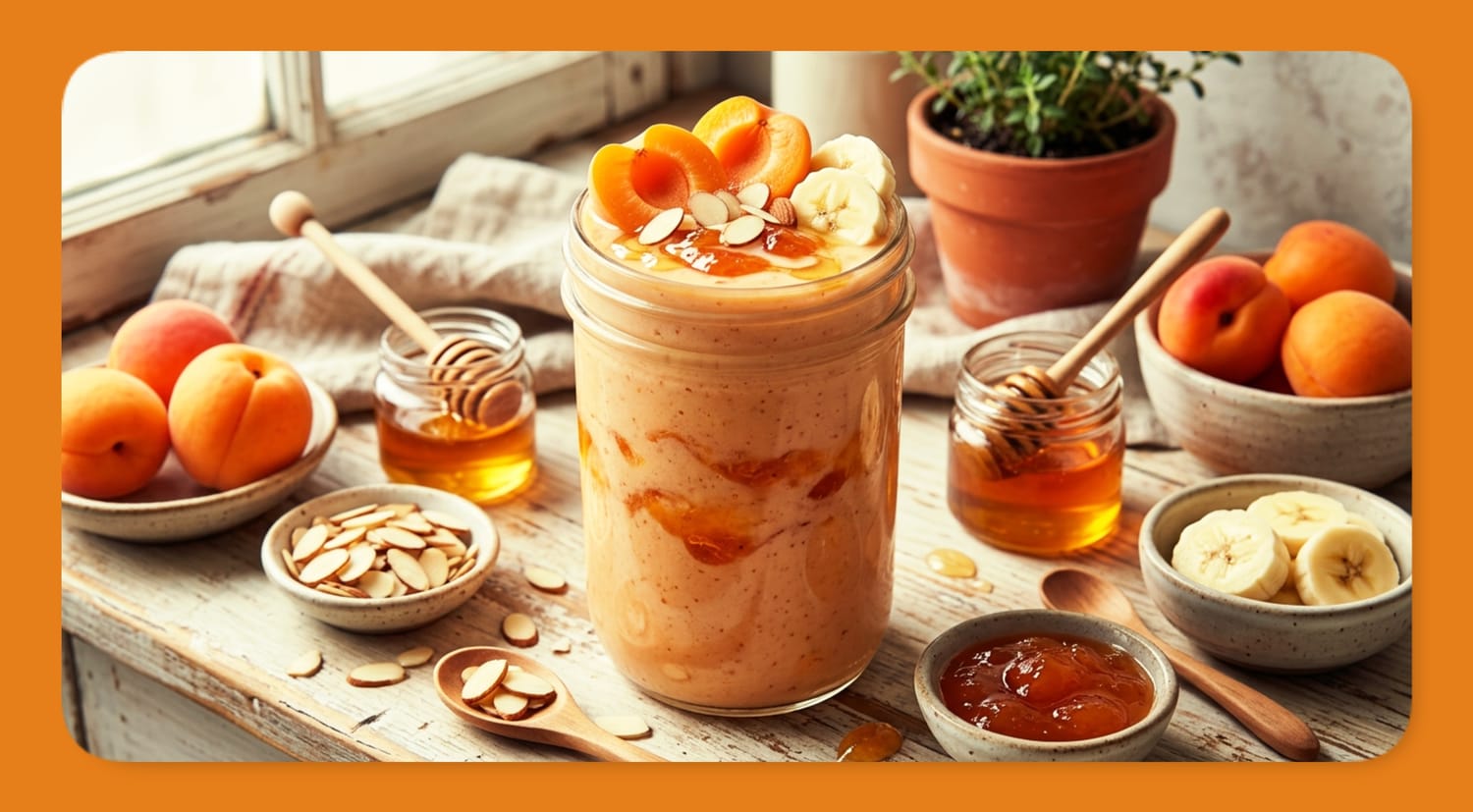
Sunny Dairy-Free Apricot Smoothie: Summery Stone Fruit Perfection
There's a brief window each summer when apricots appear at farmers markets and grocery stores, their golden-orange skin blushing with hints of rose. These delicate stone fruits capture the essence of summer in every bite: sweet, slightly tangy, and impossibly fragrant. This Dairy-Free Apricot Smoothie transforms that fleeting seasonal treasure into a creamy, refreshing drink that tastes like sunshine in a glass. No dairy needed. Just pure, golden fruit blended to perfection.
Apricots deserve more attention in the smoothie world. While berries and tropical fruits dominate most recipes, apricots bring something different: a sophisticated sweetness with subtle floral notes that make this smoothie feel special. Combined with frozen banana for creaminess, smooth almond milk, and a drizzle of golden honey, every sip delivers that perfect balance of sweet and bright that makes stone fruit so beloved. Whether you're sipping poolside, packing for a picnic, or simply craving something that tastes like summer, this smoothie delivers.
What Makes This Dairy-Free Apricot Smoothie Special
Most smoothie recipes rely on yogurt or milk for their creamy texture. This recipe proves you don't need dairy to create something luscious and satisfying. The combination of frozen banana and almond milk produces a silky-smooth body that rivals any dairy-based smoothie while keeping the recipe accessible to those with lactose intolerance, dairy allergies, or plant-based dietary preferences.
Fresh apricots are the undeniable star here. Unlike canned or preserved apricots, fresh ones bring a brightness and complexity that simply can't be replicated. Their flavor is more nuanced than peaches, less assertive than plums, with a subtle almond-like undertone that comes from compounds related to their pit. When blended, ripe apricots create a smooth, velvety texture that integrates beautifully with the banana base.
What sets this smoothie apart is its seasonal intentionality. This isn't a year-round recipe made with frozen fruit from a bag. It's a celebration of a specific moment in the calendar when fresh apricots are at their peak. Making this smoothie becomes a ritual of summer, a way of savoring the season's gifts before they disappear for another year.
The honey isn't just a sweetener here. It's a flavor enhancer that deepens the apricot's natural sweetness while adding its own floral complexity. The result is a smoothie that tastes crafted and intentional, not just thrown together.
Ingredients and Their Roles
Every ingredient in this smoothie serves a deliberate purpose, contributing to flavor, texture, or nutritional value.
Base Ingredients
- 3 medium ripe fresh apricots (approximately 1 cup chopped) form the heart and soul of this smoothie. Apricots deliver a unique flavor profile that's sweet with gentle tartness and subtle floral notes. Their soft, juicy flesh blends into a smooth consistency that creates the distinctive character of this drink. Nutritionally, apricots are excellent sources of vitamin A, vitamin C, and potassium, with significant fiber content despite their small size. Choose apricots that yield slightly to gentle pressure and have a fragrant aroma at the stem end. Avoid rock-hard apricots, which will taste sour and won't blend as smoothly.
- 1 medium frozen banana (sliced before freezing) provides the creamy, thick texture that makes this smoothie satisfying rather than thin and juice-like. Banana is the dairy replacement that creates body and substance while contributing natural sweetness that complements the apricots beautifully. Freezing the banana is essential. A fresh banana produces a lukewarm, thin smoothie rather than the cold, frosty result you want. Choose a ripe banana with brown spots for maximum sweetness and the smoothest blending.
- 1 cup unsweetened almond milk serves as the liquid base that brings all ingredients together while maintaining the dairy-free character. Almond milk has a mild, slightly nutty flavor that supports without overpowering the delicate apricot notes. Its clean taste allows the stone fruit to remain the undisputed star. Unsweetened is important because the fruit and honey provide more than enough natural sweetness.
Flavor Ingredients
- 1 tablespoon raw honey (or to taste) enhances and deepens the apricot's natural sweetness while adding its own subtle floral complexity. Honey and stone fruits are a classic pairing, and here the combination creates something greater than the sum of its parts. Raw honey also brings trace enzymes and antioxidants that processed sweeteners lack. Adjust the amount based on the natural sweetness of your apricots. Perfectly ripe, peak-season apricots may need less. For a strictly vegan version, substitute maple syrup or agave nectar.
- 1/2 teaspoon pure vanilla extract rounds out the flavor profile with warm, aromatic notes that tie the apricot and honey together. Vanilla enhances the perceived sweetness without adding sugar and creates a more sophisticated, dessert-like character. High-quality pure vanilla extract makes a noticeable difference.
- 1/4 teaspoon almond extract (optional but recommended) amplifies the subtle almond notes naturally present in apricots. This connection isn't coincidental: apricots belong to the same family as almonds, and their pits contain similar flavor compounds. A small amount of almond extract bridges these natural flavors, creating a more layered and interesting taste experience. Use sparingly, as almond extract is potent.
Optional Add-ins
- 1/2 cup ice cubes can be added for an extra-cold, thicker consistency, especially if your apricots are fresh rather than frozen.
- 1 tablespoon chia seeds add omega-3 fatty acids, fiber, and subtle texture without affecting the apricot flavor.
- 1/4 teaspoon ground ginger adds a warm, slightly spicy note that complements stone fruits beautifully. Ginger also supports digestion.
- 1 tablespoon almond butter increases protein and healthy fat content while enhancing the almond notes throughout the smoothie.
- Pinch of cardamom adds an exotic, aromatic dimension that pairs surprisingly well with apricots. This spice is commonly used with stone fruits in Middle Eastern cuisines.
- 1/4 cup plain dairy-free yogurt (coconut or almond-based) adds tanginess and extra creaminess while increasing protein content.
Step-by-Step Blending Instructions
Follow these steps for the smoothest, most vibrant apricot smoothie possible.
- Prepare the apricots. Wash the apricots and slice in half along the natural seam. Remove the pits by twisting the halves apart and popping out the stone. Cut the halves into rough quarters. There's no need to peel apricots for smoothies; the skin is thin and blends completely, contributing color and nutrition.
- Pour the almond milk into the blender first. Starting with liquid at the bottom allows the blades to spin freely and creates a vortex that pulls other ingredients downward during blending.
- Add the prepared apricot pieces. Drop them directly into the almond milk. Placing the soft fruit in contact with the liquid helps it break down quickly and completely.
- Add the honey, vanilla extract, and almond extract if using. Dropping these into the liquid ensures they distribute evenly throughout the blend rather than sticking to the blender walls.
- Add the frozen banana slices. Layer these on top of the apricots. Having the densest frozen ingredient on top means gravity helps push it toward the blades as the softer ingredients below begin to blend.
- Add ice cubes if using. Place these on the very top to help push everything downward.
- Blend on low speed for 10 to 15 seconds. This initial pulse begins breaking down the frozen banana and incorporating the apricots with the liquid.
- Increase to high speed and blend for 30 to 45 seconds. Continue blending until the mixture is completely smooth, uniform in color, and free of any visible fruit chunks. The smoothie should be a beautiful golden-orange color.
- Stop and check the consistency. The smoothie should be thick enough to feel substantial but thin enough to sip through a straw. If too thick, add one tablespoon of almond milk at a time. If too thin, add a few more frozen banana slices or ice cubes.
- Taste and adjust. Check the sweetness and flavor balance. Add more honey if the apricots are particularly tart, or an extra drop of almond extract for more nutty depth. Blend for another 10 seconds to incorporate any additions.
- Pour immediately and garnish. Transfer to your serving glass right away while the color is most vibrant and the temperature is perfectly cold. Add your chosen garnishes and serve.
Texture and Consistency Guide
Achieving the perfect smoothie texture ensures the best drinking experience.
Too thin or watery? Add a few more frozen banana slices or a handful of ice cubes and blend briefly. You can also add one tablespoon of almond butter for more body and richness. For future smoothies, start with slightly less almond milk and add more only if needed.
Too thick to drink through a straw? Add almond milk one tablespoon at a time, blending briefly between additions, until you reach your preferred consistency. The frozen banana creates substantial thickness that may need adjustment based on the size of your banana.
Not sweet enough? Add more honey one teaspoon at a time, tasting between additions. The sweetness of apricots varies significantly based on ripeness and variety. Perfectly ripe apricots at peak season often need minimal added sweetener, while early or late-season fruit may require more.
Too sweet? Add a small squeeze of fresh lemon juice (about one teaspoon) to brighten and balance the sweetness. The acidity cuts through excessive sweetness and makes the apricot flavor more pronounced.
Grainy or stringy texture? Fresh apricots occasionally have fibrous areas, especially near the skin. Blend on high for an additional 20 to 30 seconds. If graininess persists, strain through a fine mesh strainer before serving.
Color not vibrant enough? The golden-orange color comes primarily from the apricots. Using very ripe, deeply colored apricots produces the most beautiful result. Adding a small amount of fresh or frozen mango can intensify the orange color without significantly changing the flavor.
The ideal consistency should be smooth, creamy, and easy to sip through a straw while feeling substantial and satisfying. The texture should coat your tongue pleasantly, similar to a melted creamsicle or liquid sorbet.
Customization Matrix
This base recipe welcomes adaptation. Use these variations to explore new flavors or accommodate different dietary needs.
🍑 Peach-Apricot Fusion
Replace half of the apricots with one medium fresh peach. This creates a more complex stone fruit flavor that highlights the best qualities of both fruits. The peach adds a deeper sweetness while the apricots contribute brightness and complexity.
🥭 Tropical Stone Fruit Version
Add 1/4 cup frozen mango chunks to the blend. Mango intensifies the golden color and adds tropical sweetness that pairs beautifully with apricot's floral notes. Top with toasted coconut flakes for extra tropical flair.
🥛 Creamy Oat Version
Replace the almond milk with oat milk for an even creamier, slightly sweeter base. Oat milk's natural richness enhances the smoothie's body and creates a more substantial drink that works well as a breakfast replacement.
💪 Protein-Boosted Version
Add one scoop of vanilla plant-based protein powder and one tablespoon of almond butter. This transforms the smoothie into a filling meal replacement with 20 to 25 grams of protein. The vanilla protein enhances the overall sweetness while the almond butter adds richness and healthy fats.
🥬 Green Apricot Version
Add one small handful of fresh spinach to the blender. The apricot's golden color easily masks the green, keeping the smoothie looking sunny and appealing while sneaking in extra iron, folate, and vitamins. This is an excellent trick for adding vegetables without tasting them.
✨ Spiced Apricot Version
Add 1/4 teaspoon ground cardamom and 1/8 teaspoon ground cinnamon. These warming spices create a Middle Eastern-inspired flavor profile that's especially appealing as a transitional recipe between summer and fall. The spices highlight the apricot's natural complexity.
🥥 Coconut Apricot Version
Replace the almond milk with full-fat coconut milk and add 1/4 teaspoon coconut extract. This creates a richer, more tropical-leaning smoothie with creamy body. Top with toasted coconut flakes and a drizzle of honey.
🫐 Extra-Tart Version
Add 1/4 cup fresh or frozen raspberries to the blend. The raspberries contribute tartness that balances the apricot's sweetness and adds a beautiful pink-orange color variation. This version is especially refreshing on very hot days.
👶 Kid-Friendly Version
Use the base recipe as written (children typically love the naturally sweet, fruity flavor). Serve in a fun glass with a colorful straw. Consider freezing the smoothie in popsicle molds for a healthy frozen treat that celebrates summer produce.
Nutritional Benefits Breakdown
This smoothie delivers meaningful nutrition while tasting like a summery treat.
🍑 Apricots: Vitamin A Superstars
Fresh apricots are exceptionally rich in beta-carotene, the precursor to vitamin A that gives them their golden-orange color. Just three medium apricots provide approximately 50% of your daily vitamin A needs. Vitamin A is essential for eye health, immune function, and skin integrity. The beta-carotene in apricots also functions as a powerful antioxidant, protecting cells from oxidative damage.
❤️ Potassium for Heart and Muscle Health
Both apricots and bananas contribute significant potassium to this smoothie. Potassium is an essential mineral that supports healthy blood pressure, proper muscle contractions, and nerve signaling. Many people don't consume enough potassium, making this smoothie a delicious way to increase intake. One serving provides approximately 15 to 20% of your daily potassium needs.
🌾 Fiber for Digestive Health
This smoothie delivers approximately 5 to 7 grams of dietary fiber per serving from the apricots, banana, and any optional chia seeds. Fiber supports healthy digestion, feeds beneficial gut bacteria, and helps maintain stable blood sugar levels by slowing the absorption of natural fruit sugars.
🛡️ Vitamin C for Immune Support
Apricots contribute a meaningful dose of vitamin C, providing approximately 15% of your daily needs per serving. Vitamin C supports immune function, collagen production for skin health, and enhances the absorption of iron from plant foods. Combined with the vitamin C from any optional additions, this smoothie supports overall immune resilience.
🌟 Natural Antioxidants
The combination of apricots, honey, and banana provides a variety of antioxidant compounds including beta-carotene, flavonoids, and phenolic acids. These compounds help protect cells from oxidative stress, which is associated with aging and chronic disease development. The natural antioxidants work synergistically, providing benefits that isolated supplements can't replicate.
🦴 Dairy-Free Calcium (from Almond Milk)
Most commercial almond milks are fortified with calcium, providing approximately 30 to 45% of your daily needs per cup. This makes the smoothie a good calcium source for those avoiding dairy. Check your specific almond milk brand for exact fortification levels.
Calories: 240 to 280 • Fat: 3g to 5g • Protein: 3g to 5g (higher with protein powder) • Carbohydrates: 52g to 58g • Fiber: 5g to 7g • Sugar: 38g to 44g (naturally occurring from whole fruit and honey) • Vitamin A: 45 to 55% of daily recommended intake • Potassium: 550mg to 650mg
Note: Exact values vary based on fruit sizes, ripeness, and optional add-ins. Calculate with your preferred tracking app for precision.
Equipment Recommendations
The right equipment ensures this smoothie comes out perfectly smooth every time.
Blender Options
Best choice: A high-powered blender (Vitamix, Blendtec, or similar) processes fresh apricots, including their thin skin, into a perfectly silky consistency. High-speed blenders create the smoothest result with no trace of fruit fibers or skin.
Great mid-range option: A Ninja or KitchenAid blender handles this recipe well since apricots are naturally soft and easy to blend. The key is using ripe fruit and blending long enough to achieve complete smoothness.
Budget-friendly option: A standard countertop blender works fine for this recipe because the ingredients are relatively soft. Blend in stages if needed: start with almond milk and apricots until smooth, then add banana and blend again.
Single-serve option: A bullet-style blender (NutriBullet or similar) is convenient for single servings of this smoothie. The soft apricot flesh processes easily in smaller blenders. Load ingredients with liquid first and frozen items last.
Helpful Extras
- Sharp paring knife for halving apricots and removing pits cleanly.
- Citrus juicer for extracting fresh lemon juice if adjusting sweetness balance.
- Fine mesh strainer for achieving an ultra-silky texture if your blender leaves any fruit fibers.
- Clear glass for serving, which showcases the beautiful golden-orange color.
- Reusable straw for sipping. Clear or light-colored straws complement the sunny aesthetic.
- Ice cube trays for freezing almond milk cubes, which add chill without diluting the smoothie.
Apricot Selection Tips
- Look for color: Choose apricots with deep golden-orange skin, possibly with rosy blush areas. Avoid pale, greenish fruit.
- Check firmness: Ripe apricots should yield slightly to gentle pressure, similar to a ripe peach. They shouldn't be rock-hard or mushy.
- Smell the stem end: Ripe apricots have a sweet, fragrant aroma. No scent usually means underripe fruit.
- Avoid blemishes: Small imperfections are fine, but avoid fruit with soft spots, bruising, or wrinkled skin.
- Buy in season: Fresh apricots are typically available from late May through August in most regions. Peak season varies by location.
Storage and Meal Prep Tips
Ripening Apricots at Home
Apricots are often sold underripe to survive shipping. Ripen them at home by placing them in a single layer at room temperature away from direct sunlight. They typically ripen within two to four days. To speed ripening, place apricots in a paper bag with a banana or apple, which releases ethylene gas that accelerates the process. Check daily. Once ripe, use immediately or refrigerate for one to two days.
Freezing Fresh Apricots
Capture peak-season apricots for year-round smoothies by freezing them. Wash, halve, and pit the apricots, then arrange in a single layer on a parchment-lined baking sheet. Freeze until solid (approximately two hours), then transfer to freezer bags. Frozen apricots keep for up to six months. Use directly from the freezer without thawing. Note that you may need slightly less frozen banana when using frozen apricots, as both contribute chill.
Dried Apricot Alternative
During off-season months when fresh apricots are unavailable, unsulfured dried apricots can be used as a substitute. Soak 1/4 cup dried apricots in the almond milk for 30 minutes to two hours before blending. The flavor will be more concentrated and less bright than fresh, but the smoothie remains delicious. Reduce or omit the honey, as dried apricots are sweeter.
Smoothie Prep Packs
Create grab-and-go smoothie packs by portioning prepared apricot pieces (fresh or frozen), frozen banana slices, and pre-measured honey into individual freezer bags or containers. Label with the date. When ready to blend, dump the pack into the blender and add almond milk and extracts. This reduces morning prep to under two minutes.
Fresh Smoothie Storage
This smoothie is best consumed immediately after blending for optimal color, texture, and nutrition. The vibrant golden-orange color can dull slightly over time due to oxidation. If you must store it, pour into an airtight jar, add a thin layer of lemon juice on top (to slow oxidation), seal tightly, and refrigerate for up to 12 hours. Shake vigorously before drinking.
Apricot Season Planning
Fresh apricot season is brief, typically spanning late May through August with peak availability in June and July. Plan ahead by:
- Visiting farmers markets during peak season for the best selection
- Buying in larger quantities when quality is highest
- Freezing extras for off-season enjoyment
- Noting which apricot varieties you prefer for future seasons
Serving Suggestions and Presentation
The naturally beautiful color of this smoothie makes presentation almost effortless.
Garnish Ideas
- Fresh apricot slice placed on the rim or floating on top immediately communicates the star ingredient and adds visual appeal.
- Light drizzle of honey across the surface creates a glossy, golden finish that photographs beautifully.
- Sliced almonds scattered on top echo the almond milk and optional almond extract while adding elegant crunch.
- Fresh mint sprig provides green contrast against the golden smoothie and adds a refreshing aroma.
- Thin lemon wheel placed on the rim adds a pop of yellow that complements the apricot color.
- Bee pollen granules scattered on top add golden specks and superfood appeal.
- A few whole raspberries create color contrast if serving the extra-tart variation.
- Dusting of cinnamon adds visual warmth if serving the spiced variation.
Glassware Choices
Clear glass tumbler is the ideal choice for showcasing the smoothie's gorgeous golden-orange color. Transparency allows the sunny hue to take center stage.
Mason jar creates a casual, summer picnic aesthetic that feels fresh and approachable. Perfect for outdoor sipping.
Stemless wine glass adds elegance for brunches or special occasions when you want the smoothie to feel more sophisticated.
Copper mug creates an unexpected, eye-catching presentation with beautiful color contrast between the copper and the orange smoothie.
Seasonal Serving Ideas
Picnic perfect: Pour into a portable mason jar with a sealed lid and pack in a cooler. Shake before drinking if separation occurs.
Poolside refreshment: Serve in a plastic tumbler with a wide straw for safe, relaxing outdoor sipping.
Brunch centerpiece: Present in elegant glassware alongside fresh apricots, honey dipper, and sliced almonds for an impressive spread.
Summer party batch: Double or triple the recipe and serve from a pitcher, allowing guests to pour their own servings.
Pairing Suggestions
- Alongside a croissant or muffin for a complete continental breakfast
- With a small handful of raw almonds for added protein and staying power
- After morning exercise as a refreshing, natural energy replenisher
- As an afternoon pick-me-up during the hottest summer days
- Paired with a light salad for a refreshing summer lunch
Frequently Asked Questions
Can I use canned apricots instead of fresh?
Canned apricots can work in a pinch but will produce different results. Choose apricots canned in water or natural juice (not heavy syrup) to control sugar content. Drain the apricots before using. The flavor will be softer and less bright than fresh, and the texture may be slightly different. Reduce or eliminate the honey since canned apricots are often sweeter. Fresh or frozen apricots are strongly preferred.
Why do apricots have such a short season?
Apricots are highly perishable and don't ship well over long distances or long periods. Unlike apples or oranges, which can be stored for months, apricots begin deteriorating within days of harvest. This means they're only available when grown relatively close to your location. Their brief appearance makes them feel precious and worth celebrating.
Can I use dried apricots?
Yes, but the smoothie will taste different. Soak 1/4 cup unsulfured dried apricots in the almond milk for 30 minutes to two hours before blending. The flavor will be more concentrated, sweeter, and less bright than fresh. Reduce the honey and consider adding a small squeeze of lemon juice to balance the sweetness. Choose unsulfured dried apricots to avoid sulfur dioxide preservatives.
Is this smoothie nut-free?
As written, no. The recipe includes almond milk and optional almond extract. For a nut-free version, substitute oat milk, coconut milk, or soy milk for the almond milk and omit the almond extract. The smoothie will still be delicious with a slightly different flavor profile.
How can I make this smoothie more filling?
Add protein and healthy fats to increase satiety. Include one scoop of plant-based protein powder, one tablespoon of almond butter (or sunflower seed butter for nut-free), and one tablespoon of chia seeds. These additions increase protein and fat content, making the smoothie more substantial and keeping you full longer.
Can I make this vegan?
The base recipe uses honey, which some vegans avoid. Substitute maple syrup, agave nectar, or date syrup in equal amounts to keep the smoothie plant-based. All other ingredients are already vegan.
My apricots are tart. How do I fix this?
Tart apricots typically aren't fully ripe. If you've already cut them, add extra honey (up to one additional tablespoon) to balance the tartness. A small amount of vanilla extract also helps round out sharp flavors. For future smoothies, allow apricots to ripen fully at room temperature before using.
Can children drink this smoothie?
Absolutely. This smoothie is made from whole, natural ingredients that are appropriate for children over one year of age. (Honey should not be given to infants under 12 months.) The naturally sweet, fruity flavor typically appeals to children. Adjust sweetness if desired and serve in smaller portions appropriate for their age.
How do I know if an apricot is ripe enough?
A ripe apricot will yield slightly to gentle pressure (similar to a ripe peach), have a sweet, fragrant aroma at the stem end, display deep golden-orange color with possible rosy blush, and feel heavy for its size (indicating juiciness). Avoid apricots that are rock-hard, pale, or have no aroma, as these are underripe and will taste sour.
Glossary of Key Terms
Share Your Success
Made this Dairy-Free Apricot Smoothie? I'd love to see your sunny creation! Snap a photo of your golden smoothie with its beautiful garnishes and pin it to your summer recipes or dairy-free smoothie board on Pinterest. Tag your post so other stone fruit lovers and dairy-free enthusiasts can discover this recipe and celebrate apricot season too.
Did you find perfectly ripe apricots at your local farmers market? Try one of the customization variations? Have tips for selecting the best apricots? Leave a comment below and share your experience. Your insights, photos, and enthusiasm help inspire this community and remind us all to savor the fleeting gifts of each season.
Here's to golden summers, ripe fruit, and smoothies that taste like sunshine! ☀️🍑
More Delicious Smoothies to Try
Affiliate Disclosure
This page may contain affiliate links. This means that if you click on one of these links and make a purchase, I may receive a small commission at no additional cost to you. This helps support the blog and allows me to continue creating free content. I only recommend products or services that I use personally and believe will add value to my readers. Your support is appreciated!
Created with ©simplyhealthynews