
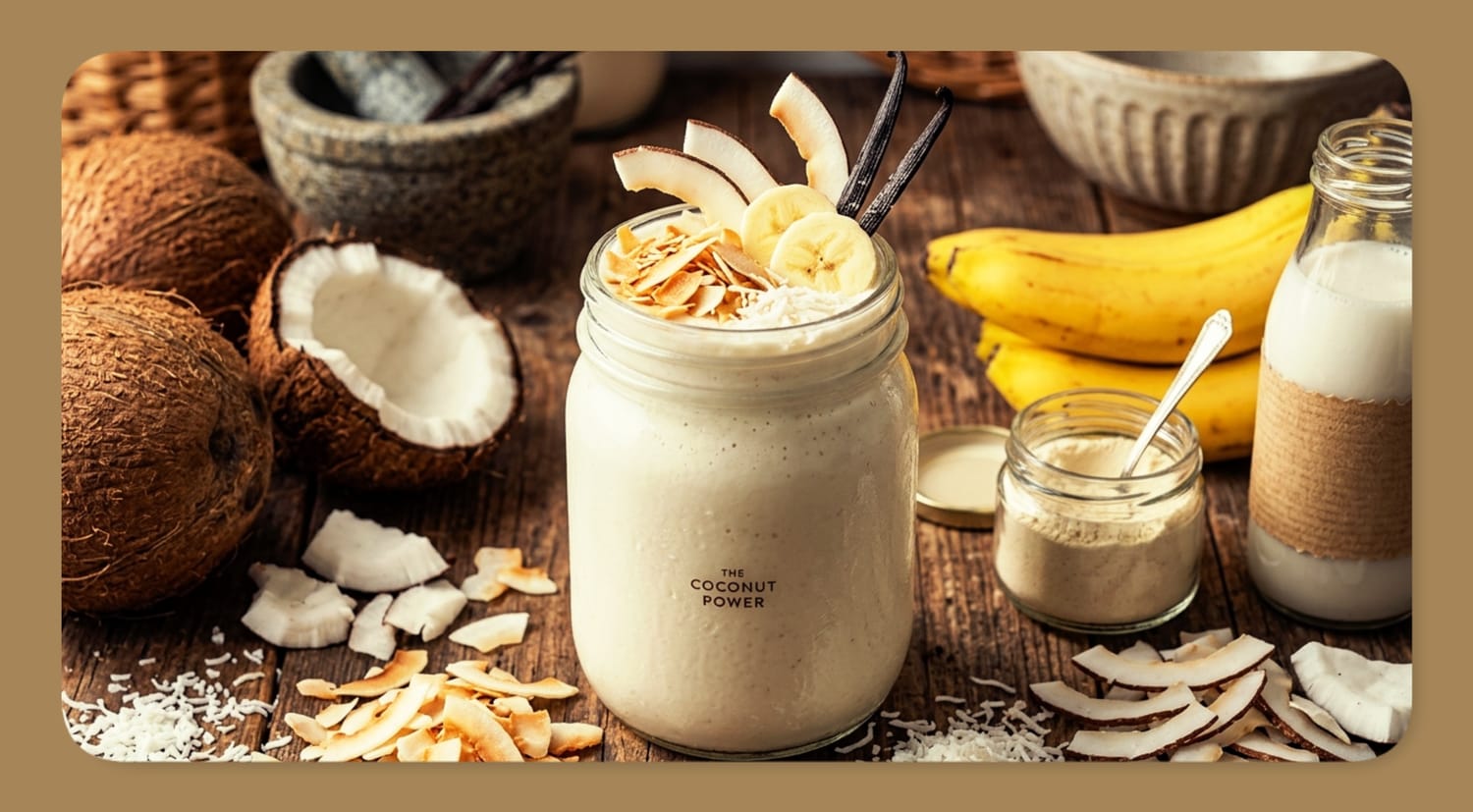
Delicious Protein-Packed Toasted Coconut Smoothie
Tropical Protein Bliss
Close your eyes and imagine the warm, nutty aroma of freshly toasted coconut. Now imagine that flavor transformed into a creamy, protein-rich smoothie that tastes like a tropical vacation but fuels your body like a serious fitness drink. This Protein-Packed Toasted Coconut Smoothie delivers exactly that experience. Rich vanilla protein blends seamlessly with golden toasted coconut flakes, creamy banana, and luscious coconut milk to create a smoothie that's as satisfying to drink as it is effective at supporting your fitness goals.
This isn't a smoothie that tastes like you're choking down a protein shake. It's a smoothie you actually crave. The toasted coconut brings a depth of flavor that regular coconut can't match, creating warm, caramelized notes that transform a simple protein shake into something special. Whether you're refueling after a tough workout, replacing a rushed lunch, or satisfying an afternoon craving for something tropical and sweet, this smoothie does the job deliciously.
What Makes This Protein-Packed Toasted Coconut Smoothie Special
Most protein smoothies fall into one of two categories: they either taste great but lack nutritional substance, or they deliver serious protein but taste like chalky punishment. This recipe breaks that pattern by building the entire flavor profile around one star ingredient: toasted coconut.
Toasting coconut transforms it completely. Raw coconut flakes are mild, slightly sweet, and pleasant. Toasted coconut flakes are deeply aromatic, nutty, and complex with subtle caramelized notes that make everything they touch taste more interesting. When blended into a smoothie with vanilla protein powder, the two flavors merge into something that tastes remarkably like a coconut cream pie milkshake.
The frozen banana provides natural sweetness and that thick, frosty texture that makes this smoothie feel indulgent rather than medicinal. Full-fat coconut milk reinforces the coconut theme while adding healthy fats that enhance satiety and support hormone production. Together, these ingredients create a smoothie that delivers over 30 grams of protein while tasting like something you'd order at a tropical smoothie bar.
What truly sets this smoothie apart is its versatility. It works as a post-workout recovery drink, a meal replacement, a filling afternoon snack, or even a healthier dessert option. The protein supports muscle recovery and growth while the balanced macros keep your energy stable for hours.
Ingredients and Their Roles
Every ingredient in this smoothie serves a deliberate purpose, contributing to flavor, texture, nutrition, or the overall drinking experience.
Base Ingredients
Provides the thick, creamy foundation that gives this smoothie its milkshake-like body. Banana is the natural sweetener here, eliminating the need for added sugars while creating a smooth, consistent texture that protein powder alone can't achieve. Freezing the banana before blending is essential. A fresh banana produces a thin, room-temperature drink rather than a thick, frosty smoothie. Choose a ripe banana with brown spots for maximum sweetness and the smoothest blending results. One medium banana contributes approximately 14 grams of natural sugar along with potassium, vitamin B6, and fiber.
Serves as the liquid base that brings all ingredients together while reinforcing the coconut theme throughout. Full-fat coconut milk from a can is thicker and richer, while coconut milk from a carton is lighter and more pourable. Either works, depending on your calorie and thickness preferences. Coconut milk provides medium-chain triglycerides (MCTs), a type of healthy fat that's quickly converted to energy and supports satiety. It also creates a creamy mouthfeel that makes the protein powder blend more smoothly.
The signature ingredient that elevates this smoothie from ordinary to extraordinary. Toasting transforms coconut flakes from mild and subtle to deeply aromatic, nutty, and complex. The toasting process caramelizes the natural sugars in the coconut, creating warm, golden notes that pair beautifully with vanilla. These flakes blend into the smoothie while retaining just enough texture to create tiny bursts of coconut in each sip. Use unsweetened coconut flakes to control the sugar content.
Protein and Flavor Ingredients
Delivers the protein punch that makes this smoothie a legitimate fitness drink. Vanilla flavor is ideal here because it complements the natural sweetness of coconut without competing for attention. A quality protein powder contributes 20 to 30 grams of protein per scoop, depending on the brand, supporting muscle recovery, growth, and satiety. Choose a protein powder you enjoy on its own, as its flavor will be prominent in the finished smoothie.
Adds an extra layer of coconut richness and healthy fats that makes the smoothie taste more like a dessert than a fitness drink. Coconut butter is made from pureed whole coconut meat, including both the oil and the fiber. It has a thick, creamy consistency when warm and creates a luscious mouthfeel when blended. If you don't have coconut butter, coconut oil can substitute, though the texture will be slightly different.
Intensifies and rounds out the vanilla notes from the protein powder, creating a more cohesive, sophisticated flavor profile. Vanilla also enhances the perceived sweetness of the smoothie without adding any sugar.
Amplifies the coconut flavor for those who want a more intense tropical experience. A little goes a long way with coconut extract, so start with a small amount and adjust to taste.
Optional Add-ins
Can be added for an extra-thick, frostier consistency. The frozen banana already provides significant chill, but ice makes the smoothie even colder and thicker if desired.
Add omega-3 fatty acids, fiber, and subtle texture without affecting the flavor. They also help thicken the smoothie slightly and increase satiety.
Provides additional medium-chain triglycerides for those seeking extra energy support, particularly if following a keto or low-carb approach. MCT oil is flavorless and blends seamlessly.
Can be added if you prefer a sweeter smoothie. The banana and vanilla typically provide enough sweetness for most palates, so taste before adding any sweetener.
Enhances all the flavors by making the sweetness pop and the coconut taste more pronounced. Don't skip this small addition, as it makes a noticeable difference.
Step-by-Step Blending Instructions
Follow these steps in order for the smoothest, creamiest, most evenly blended result.
Toast the coconut flakes (if not pre-toasted). This step can be done in advance or right before blending. Spread three tablespoons of unsweetened coconut flakes in a single layer in a dry skillet over medium-low heat. Stir constantly for two to three minutes, watching carefully as coconut burns quickly. The flakes should turn light golden brown and become very fragrant. Remove immediately from the heat and transfer to a plate to cool completely. If using pre-toasted coconut flakes from a bag, skip this step.
Pour the coconut milk into the blender first. Starting with liquid at the bottom allows the blades to spin freely and creates a vortex that pulls other ingredients downward during blending.
Add the vanilla protein powder. Dropping the protein powder into the liquid ensures it dissolves and distributes evenly rather than clumping against the sides of the blender. Sifting the protein powder through a fine mesh strainer before adding can help prevent any lumps.
Add the toasted coconut flakes. Pour them directly into the liquid and protein mixture. Placing them early in the process gives them more time to break down during blending.
Add the coconut butter if using. If your coconut butter is solid, soften it slightly in the microwave for 10 to 15 seconds before adding. This helps it incorporate more smoothly.
Add the vanilla extract, optional coconut extract, and pinch of sea salt. These small additions make a significant flavor difference, so don't skip them.
Add the frozen banana slices. Layer these on top of everything else. Having the dense, frozen ingredient on top means gravity helps push it toward the blades as the ingredients below begin to liquefy.
Add ice cubes if using. Place these on the very top to help push everything downward.
Blend on low speed for 10 to 15 seconds. This initial pulse begins incorporating ingredients without overwhelming the motor or creating air pockets.
Increase to high speed and blend for 45 to 60 seconds. Continue blending until the mixture is completely smooth, uniform in color, and free of any visible chunks. The toasted coconut should be fully incorporated with only tiny flecks remaining for texture.
Taste and adjust. Check the sweetness, coconut intensity, and consistency. Add honey if more sweetness is desired, an extra pinch of toasted coconut for more coconut flavor, or a splash of additional coconut milk if too thick. Blend for another 10 seconds to incorporate any additions.
Pour into a glass and garnish. Transfer immediately to your serving glass and top with any desired garnishes. Serve with a wide straw and enjoy while cold.
Texture and Consistency Guide
Getting the texture right transforms this from an ordinary protein shake into a special treat.
Too thin or watery?
Add a few more frozen banana slices or a handful of ice cubes and blend briefly. You can also add an extra tablespoon of coconut butter for additional thickness and richness. Next time, use less coconut milk or choose full-fat canned coconut milk instead of carton coconut milk for a thicker base.
Too thick to drink through a straw?
Add coconut milk one tablespoon at a time, blending briefly between additions, until you reach your preferred consistency. The combination of frozen banana, coconut butter, and protein powder can create a very thick result that may need adjustment.
Gritty or chalky texture?
This is almost always caused by the protein powder. Some brands, particularly plant-based options, don't dissolve well in cold liquids. Try blending the protein powder with the coconut milk alone for 15 seconds before adding other ingredients. Switching to a higher-quality whey protein isolate typically eliminates this issue.
Protein powder clumping?
Sift the protein powder through a fine mesh strainer before adding to the blender. This breaks up any lumps and ensures smoother blending. You can also shake the protein powder container well before scooping.
Coconut flakes not breaking down?
Your blender may need more time or more liquid to properly process the flakes. Blend on high for an additional 30 seconds. If you prefer a completely smooth texture without any coconut pieces, blend the toasted coconut with the liquid and protein powder first for 30 seconds before adding the banana.
Not sweet enough?
Add raw honey or maple syrup one teaspoon at a time, tasting between additions. A riper banana (with more brown spots) will also increase natural sweetness. A pinch more sea salt can enhance perceived sweetness without adding actual sugar.
The ideal consistency should be thick enough to feel substantial and satisfying but thin enough to sip through a wide straw without straining. It should coat the inside of the glass and feel rich and creamy on your tongue.
Customization Matrix
This base recipe is a flexible starting point. Adapt it to match your flavor preferences, dietary needs, or nutritional goals.
🍫 Chocolate Coconut Version
Replace the vanilla protein powder with chocolate protein powder and add one tablespoon of unsweetened cocoa powder. This creates a chocolate-coconut combination reminiscent of a certain famous candy bar. Top with a few dark chocolate chips and extra toasted coconut for the complete experience.
🍍 Pina Colada Version
Add 1/2 cup frozen pineapple chunks to the blend. The pineapple brings bright tropical acidity that pairs beautifully with the coconut. For an extra-authentic pina colada flavor, add 1/4 teaspoon rum extract (which contains no alcohol). Top with a pineapple wedge and toasted coconut.
☕ Coffee Coconut Version
Add 1/2 cup cold brew coffee or one shot of cooled espresso to the blend. Reduce the coconut milk to 1/2 cup to compensate for the additional liquid. The coffee adds a caffeinated kick and creates a mocha-coconut flavor that's perfect for morning smoothies or pre-workout fuel.
🥑 Keto-Friendly Version
Replace the banana with 1/4 cup frozen cauliflower rice (undetectable in flavor) and 1/4 of a small avocado for creaminess. Use full-fat canned coconut milk and add one tablespoon of MCT oil. Sweeten with liquid stevia or monk fruit drops instead of honey. This drops the carbohydrate content significantly while maintaining the creamy, coconut-forward flavor.
💪 Extra-High Protein Version
Add a second half-scoop of protein powder and two tablespoons of Greek yogurt (if dairy is acceptable in your diet). This pushes the protein content above 40 grams, making it a serious post-workout recovery drink or complete meal replacement. The Greek yogurt also adds tanginess that balances the sweetness.
🥬 Tropical Green Version
Add one small handful of fresh spinach to the blender. The banana and coconut easily mask the spinach flavor, and the light green color is often undetectable against the creamy base. This adds iron, folate, and other nutrients without changing the taste.
⚠️ Nut-Free and Allergen-Friendly
The base recipe is already nut-free when made with coconut products only (coconut is classified as a fruit, not a tree nut, though check with specific allergy guidance). For complete allergen safety, use a rice-based or pea-based protein powder and confirm all ingredients are processed in allergen-free facilities.
🌱 Fiber and Gut Health Version
Add one tablespoon of chia seeds and one tablespoon of ground flaxseed to the blend. These additions contribute omega-3 fatty acids, substantial fiber, and prebiotic benefits that support digestive health. The smoothie will thicken slightly as the chia seeds absorb liquid, so drink promptly or add a splash more coconut milk.
Nutritional Benefits Breakdown
This smoothie delivers serious nutrition that supports fitness goals while tasting like a tropical treat.
With over 30 grams of protein per serving (depending on your specific protein powder), this smoothie is a powerhouse for muscle recovery and growth. Protein is essential for repairing muscle tissue damaged during exercise, maintaining lean body mass during weight loss, and keeping you feeling full and satisfied between meals. Consuming protein within 30 to 60 minutes after a workout maximizes the muscle protein synthesis response, making this smoothie an ideal post-exercise choice.
Coconut milk and coconut butter are rich in medium-chain triglycerides (MCTs), a unique type of fat that's metabolized differently than other fats. MCTs are absorbed quickly, transported directly to the liver, and converted to energy almost immediately. This makes them an excellent fuel source for both physical activity and mental focus. MCTs have also been associated with improved satiety and may support healthy metabolism.
The banana provides approximately 420mg of potassium along with magnesium and other minerals that function as electrolytes. After exercise, electrolyte replenishment is essential for proper muscle function, hydration, and preventing cramps. The natural sugars in banana also help restore muscle glycogen that's depleted during workouts.
Toasted coconut flakes contribute more than delicious flavor. They provide dietary fiber that supports digestive health and helps you feel full. They also contain manganese, a trace mineral that supports bone health, metabolism, and antioxidant function. The toasting process doesn't significantly change the nutritional profile but dramatically enhances the flavor, making healthy eating more enjoyable.
The macronutrient balance of this smoothie, with protein, healthy fats, and natural carbohydrates working together, provides steady, sustained energy rather than the spike-and-crash cycle associated with high-sugar drinks. The fats slow the absorption of carbohydrates, preventing rapid blood sugar elevation, while the protein keeps you satisfied for hours.
When using a quality whey protein isolate or a well-formulated plant-based protein blend, this smoothie delivers all nine essential amino acids your body can't produce on its own. These amino acids are the building blocks for muscle tissue, enzymes, hormones, and immune function.
Approximate Nutrition Per Serving (base recipe)
Note: Exact values vary depending on your specific protein powder, type of coconut milk, and optional add-ins. Calculate with your preferred tracking app for precision.
Equipment Recommendations
The right equipment ensures this smoothie comes out perfectly smooth and delicious every time.
Blender Options
Best choice: A high-speed blender (Vitamix, Blendtec, or similar) crushes frozen banana, pulverizes toasted coconut, and dissolves protein powder into a perfectly smooth consistency. These blenders eliminate any grittiness from protein powder and break down the coconut flakes until they're barely perceptible while still contributing flavor and tiny bursts of texture.
Great mid-range option: A Ninja blender or KitchenAid blender handles this recipe well. The key is blending long enough to fully incorporate the coconut flakes and protein powder. Budget an extra 15 to 20 seconds of blending time compared to a high-speed blender.
Budget-friendly option: A standard countertop blender works with some adjustments. Let the frozen banana sit at room temperature for three to five minutes to soften slightly. Blend the liquid, protein powder, and coconut flakes first until smooth, then add the banana. Expect to blend longer for the smoothest results.
Single-serve option: A bullet-style blender (NutriBullet 900W or higher) is convenient for individual portions. Load ingredients in the order specified, with liquid first and frozen items last. Blend in 30-second pulses, shaking between pulses if ingredients get stuck.
Helpful Extras
- Small dry skillet for toasting coconut flakes perfectly. Cast iron or stainless steel work best for even heat distribution.
- Wooden spoon or heat-safe spatula for stirring coconut flakes constantly during toasting. Continuous movement prevents burning.
- Fine mesh strainer for sifting protein powder before adding to the blender, eliminating any clumps.
- Tall, clear glass for serving, which showcases the creamy, golden color and any toasted coconut garnish floating on top.
- Wide reusable straw is essential for a smoothie this thick. Standard straws often collapse or make sipping difficult.
- Long-handled spoon for enjoying any thick portion at the bottom of the glass.
Coconut Toasting Tips
Toasting coconut is simple but requires attention:
Use a dry skillet (no oil needed).
Keep heat at medium-low. High heat causes burning before the center of the flakes is properly toasted.
Stir constantly with a wooden spoon or spatula.
Watch for color change from white to light golden brown (approximately two to three minutes).
Remove immediately from the pan when done. Residual heat continues toasting the coconut even off the burner.
Spread on a plate to cool. Coconut left in the hot pan will continue cooking and may burn.
Storage and Meal Prep Tips
🥥 Batch-Toasting Coconut
Toast coconut flakes in larger batches to save daily time and ensure you always have pre-toasted coconut ready for smoothies. Toast one cup of coconut flakes at a time in a dry skillet, stirring constantly for three to four minutes until golden and fragrant. Cool completely before transferring to an airtight jar or container. Store at room temperature for up to two weeks or in the refrigerator for up to one month. Having pre-toasted coconut ready eliminates the most time-consuming step in this recipe.
❄️ Freezer Smoothie Packs
Prepare grab-and-go smoothie packs by portioning one sliced frozen banana, three tablespoons toasted coconut flakes, and one scoop protein powder into individual freezer bags or reusable silicone bags. Label with the recipe name and date. When ready to blend, dump the pack into the blender, add coconut milk, vanilla extract, and salt, and blend. This reduces morning prep time to under two minutes and ensures consistent results every time.
📦 Protein Powder Portioning
Pre-measure individual scoops of protein powder into small snack bags or reusable containers. Store these alongside your freezer smoothie packs for a completely grab-and-go system. This eliminates the mess and hassle of scooping protein powder when you're in a hurry.
🧊 Coconut Milk Freezing
If you use canned coconut milk and don't go through it quickly, freeze the leftover milk in ice cube trays. Once solid, transfer the cubes to a freezer bag. Each cube is approximately two tablespoons. Add coconut milk cubes directly to the blender for an extra-cold, extra-thick smoothie. Frozen coconut milk keeps for up to three months.
🕐 Fresh Smoothie Storage
This smoothie is best consumed immediately after blending for optimal texture and taste. If you must prepare it ahead, pour into an airtight jar and refrigerate for up to 12 hours. The smoothie will separate and thicken as it sits. Give it a vigorous shake or quick re-blend before drinking. The flavor remains excellent, though the texture won't be quite as fresh and frothy.
📋 Bulk Prep for Multiple Days
For serious meal preppers, consider making a large batch of the dry ingredients (toasted coconut and protein powder combined) and storing in individual containers. Add pre-portioned frozen banana slices to freezer bags. Each morning, dump the dry mix and frozen banana into the blender, add fresh coconut milk, and blend. This assembly-line approach makes healthy, high-protein breakfasts or post-workout drinks almost effortless.
Serving Suggestions and Presentation
This smoothie looks as good as it tastes, especially with thoughtful presentation.
Garnish Ideas
- Extra toasted coconut flakes sprinkled on top create a beautiful, textured finish and reinforce the star ingredient visually.
- A few raw coconut flakes mixed with toasted flakes provide color contrast (white against golden brown).
- Light drizzle of coconut butter melted to a pourable consistency creates elegant, creamy swirls on the surface.
- Banana slices floated on top communicate the other key ingredient and add visual interest.
- A pinch of cinnamon dusted over the surface adds warmth and creates an appetizing, speckled appearance.
- Cacao nibs scattered on top add crunch and a chocolate note that pairs beautifully with coconut.
- A whole vanilla bean laid across the top creates a sophisticated, cafe-style presentation.
Glassware Choices
🥛 Tall, Clear Glass
Showcases the creamy, golden color and any coconut garnish floating on the surface. This is the best choice for photography and social sharing.
🫙 Mason Jar
Creates a casual, grab-and-go aesthetic that feels health-forward and approachable. Perfect for taking to the gym or office.
🥥 Coconut Shell Cup
For a thicker, sippable version, this reinforces the tropical theme and creates a fun, vacation-inspired presentation.
🧊 Insulated Tumbler
With lid and straw, keeps the smoothie cold longer, which matters for post-workout drinks consumed over time.
Timing Suggestions
Pairing Ideas
- After a strength training session for optimal muscle recovery
- Alongside a simple salad for a complete, balanced meal
- With a small handful of additional nuts for extra protein and crunch
- Before a busy afternoon when you need sustained focus and energy
- As a healthier dessert alternative when craving something sweet after dinner
Frequently Asked Questions
Yes, but you'll miss the signature flavor that makes this smoothie special. Raw coconut is mild and pleasant, while toasted coconut has deep, nutty, caramelized notes that transform the entire drinking experience. If time is limited, look for pre-toasted coconut flakes at natural food stores or online. They provide the same flavor without the extra step.
Whey protein isolate with vanilla flavor produces the smoothest texture and most neutral, pleasant taste. Whey concentrate is a budget-friendly alternative that works well but may be slightly thicker. For dairy-free options, pea protein or rice protein blends formulated for smooth blending work nicely, though some plant-based options can be grittier. Always choose a protein powder you enjoy on its own, as its qualities will be noticeable in the finished smoothie.
Coconut does contain saturated fat, but it's primarily in the form of medium-chain triglycerides (MCTs), which are metabolized differently than other saturated fats. Research suggests MCTs may support healthy metabolism and don't have the same cardiovascular implications as long-chain saturated fats found in animal products. For most healthy individuals, the coconut in this smoothie is not a concern and may actually provide benefits. If you have specific cardiovascular conditions, consult your healthcare provider.
You can prepare it up to 12 hours ahead, but freshly blended is always best. If prepping overnight, pour into an airtight jar, press plastic wrap directly onto the surface (to minimize air contact), seal, and refrigerate. The smoothie will separate and thicken. Shake vigorously or re-blend briefly before drinking. The flavor remains good, but the fresh, frothy texture will be diminished.
Replace the banana with 1/4 cup frozen cauliflower rice and 2 tablespoons of avocado. This provides creaminess and thickness without the carbohydrates. Use full-fat canned coconut milk and consider adding MCT oil for additional fat. Sweeten with stevia or monk fruit if needed. These modifications can reduce net carbs to under 10 grams per serving.
Yes, though the smoothie becomes more of a coconut banana shake than a protein drink. To maintain some protein, add 1/4 cup Greek yogurt (if dairy is acceptable), two tablespoons of hemp hearts, or two tablespoons of almond butter. The flavor will shift slightly, but the coconut and banana will still dominate.
Absolutely. Children generally love the sweet, creamy, coconut flavor. Consider using half a scoop of protein powder for smaller portions and growing bodies. Skip any coffee-based variations and choose kid-friendly toppings. This smoothie is an excellent way to ensure children get quality protein, especially for picky eaters who resist other protein sources.
Yes, though the smoothie will be thinner and less creamy. Light coconut milk has significantly less fat, which affects both texture and satiety. If using light coconut milk, consider adding one tablespoon of coconut butter or coconut oil to restore some richness. You may also need less additional liquid overall.
Several strategies help. Sift the protein powder through a fine mesh strainer before adding to the blender. Blend the protein powder with the liquid first for 15 seconds before adding frozen ingredients. Choose a high-quality protein powder known for smooth mixing. Shake your protein powder container before scooping to break up any settling. Using room-temperature coconut milk (rather than refrigerated) also helps protein powder dissolve more easily.
Glossary of Key Terms
A complete protein derived from milk during cheese production. It contains all essential amino acids and is quickly absorbed, making it popular for post-workout nutrition. Available in concentrate (more affordable, slightly higher in fat and carbs) and isolate (more processed, higher protein percentage, lower fat and carbs) forms.
Protein powder derived from non-animal sources such as peas, rice, hemp, or soy. Many brands blend multiple plant proteins to create a complete amino acid profile comparable to whey.
A type of fat found abundantly in coconut oil and coconut products. MCTs are absorbed and metabolized quickly, providing rapid energy without requiring extensive digestion. They are transported directly to the liver and converted to ketones, which can fuel both body and brain.
A spread made from pureed whole coconut meat, including both the oil and the fiber. It has a thick, creamy consistency and is more substantial than coconut oil. Also called coconut manna by some brands.
Canned coconut milk is extracted from coconut flesh and water, resulting in a thick, rich liquid high in fat. Carton coconut milk is thinned with water, often contains added ingredients, and is designed as a beverage or milk substitute. Canned is preferred for rich, creamy smoothies.
The process by which the body repairs and builds muscle tissue. Consuming protein after exercise stimulates this process, which is why post-workout nutrition is emphasized for fitness goals.
The three categories of nutrients required in large amounts: protein, carbohydrates, and fat. Tracking macros involves monitoring the balance of these three nutrients to support specific health or fitness goals.
Minerals that carry electrical charges in the body, including potassium, sodium, magnesium, and calcium. They regulate fluid balance, muscle contractions, and nerve signaling, and are depleted through sweat during exercise.
Share Your Success
Made this Protein-Packed Toasted Coconut Smoothie? I'd love to see your creation! Snap a photo of your golden, coconut-topped smoothie and pin it to your fitness smoothie or high-protein recipe board on Pinterest. Tag your post so other coconut lovers and fitness enthusiasts can discover this recipe and fuel their own workouts with something genuinely delicious.
Tried one of the customization options? Discovered a flavor combination that worked surprisingly well? Found the perfect protein powder brand for this recipe? Leave a comment below and share your experience. Your tips, modifications, and photos help build a community of people who believe that healthy eating and incredible flavor absolutely belong together.
Here's to smoothies that taste like vacation but work like fuel. Train hard, recover smart, and enjoy every sip!
🥥💪More Delicious Smoothies to Try
Affiliate Disclosure
This page may contain affiliate links. This means that if you click on one of these links and make a purchase, I may receive a small commission at no additional cost to you. This helps support the blog and allows me to continue creating free content. I only recommend products or services that I use personally and believe will add value to my readers. Your support is appreciated!
Created with ©simplyhealthynews