
Stunning Vegan Pomegranate Berry Smoothie: Antioxidant Explosion in Every Sip
A vibrant, nutrient-packed superfood smoothie bursting with flavor and color
There's something almost magical about pomegranates. Those jewel-like ruby seeds hidden inside a tough exterior hold some of the most potent antioxidants found in nature. When you combine them with a medley of frozen berries, creamy banana, and smooth almond milk, you create something extraordinary. This Vegan Pomegranate Berry Smoothie isn't just beautiful to look at. It's a serious nutritional powerhouse designed to flood your body with immune-supporting compounds while tasting like a fruity, refreshing treat.
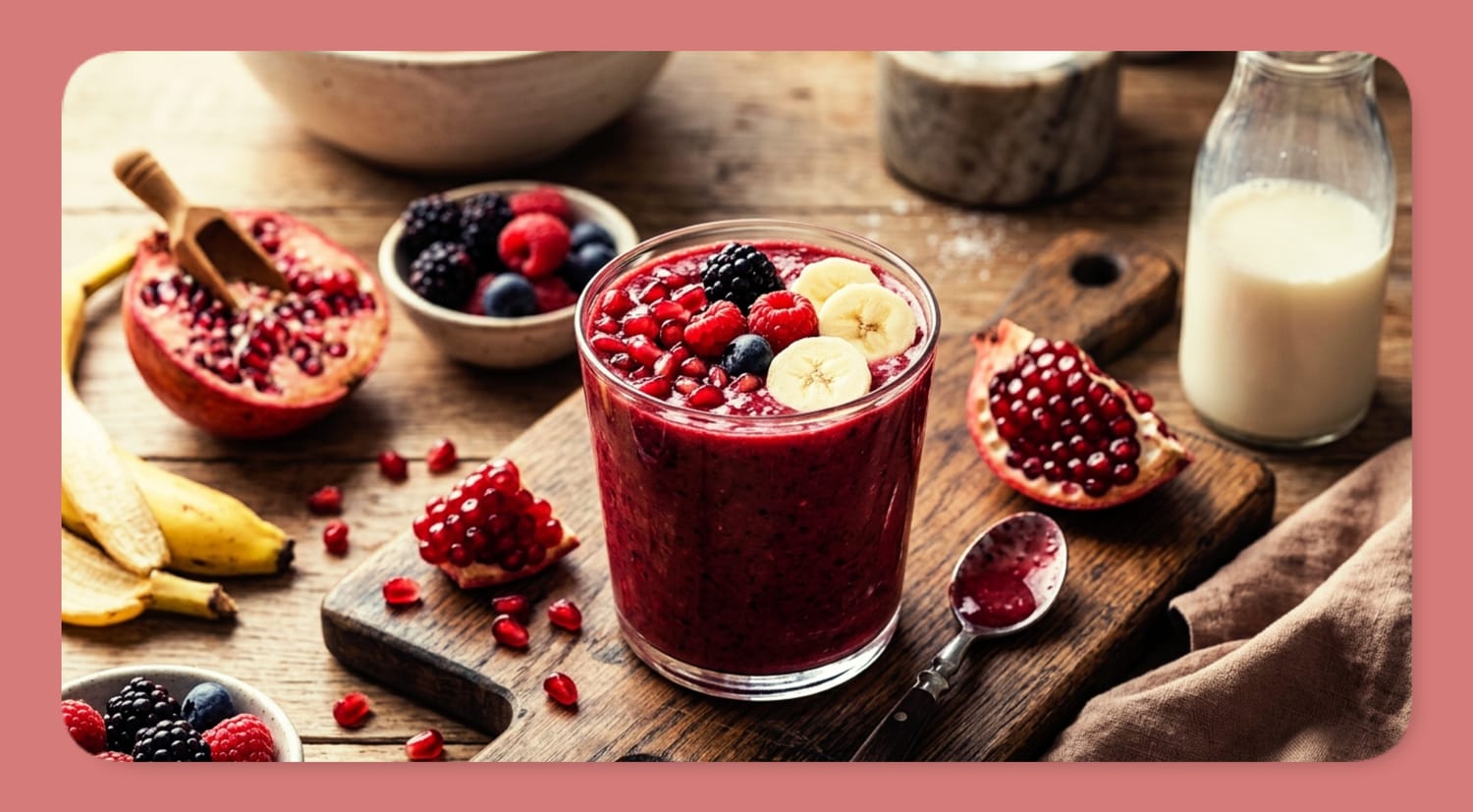
The deep burgundy-purple color of this smoothie practically glows in the glass, hinting at the concentrated plant compounds within. Every sip delivers the sweet-tart complexity of pomegranate layered with familiar berry sweetness and a creamy, satisfying body. Whether you're looking to boost your immunity, increase your antioxidant intake, or simply enjoy a delicious plant-based snack, this smoothie delivers on every front without a single animal-derived ingredient.
🌟 What Makes This Vegan Pomegranate Berry Smoothie Special
Most berry smoothies blend strawberries, blueberries, or raspberries with yogurt and call it a day. This recipe elevates the entire experience by introducing pomegranate as a co-star ingredient, bringing unique nutritional benefits and a sophisticated flavor that sets this smoothie apart from anything you've tried before.
Pomegranate contains punicalagins and punicic acid, antioxidant compounds so powerful they've been the subject of extensive research for their potential health benefits. These compounds are found almost exclusively in pomegranates, making this fruit irreplaceable for anyone focused on maximizing their antioxidant intake. When combined with the anthocyanins from blueberries, ellagic acid from raspberries, and vitamin C from strawberries, you create what can only be described as an antioxidant explosion.
The frozen banana serves as the creamy, naturally sweet base that makes this smoothie taste indulgent rather than medicinal. Almond milk provides a clean, dairy-free liquid that lets the berry and pomegranate flavors shine without adding any competing tastes. Together, these ingredients create a smoothie that looks like a work of art, tastes like a treat, and functions like a superfood supplement in liquid form.
🥣 Ingredients and Their Roles
Every ingredient in this smoothie serves a deliberate purpose, contributing to flavor, texture, nutrition, or visual appeal.
🫐 Base Ingredients
1/2 cup pomegranate arils (seeds) are the signature ingredient that transforms this from an ordinary berry smoothie into something exceptional. Pomegranate arils deliver a unique sweet-tart flavor with subtle floral notes that complement other berries beautifully. Their deep ruby color intensifies the visual impact of the finished smoothie. Nutritionally, pomegranate seeds are loaded with punicalagins, one of the most potent antioxidant compounds known, along with vitamin C, vitamin K, folate, and potassium. Fresh pomegranate arils are preferred when in season, but packaged fresh arils from the produce section work perfectly and save considerable prep time.
1 cup frozen mixed berries (strawberries, blueberries, raspberries) form the fruity foundation of this smoothie. Using a combination of berries creates a more complex, layered flavor than any single berry could achieve. Each berry brings its own antioxidant profile: blueberries deliver anthocyanins for brain health, raspberries provide ellagic acid for cellular protection, and strawberries contribute vitamin C for immune support. Frozen berries are essential here because they create thickness and chill without requiring additional ice that would dilute the flavor.
1 medium frozen banana (sliced before freezing) provides the creamy texture that makes this smoothie feel satisfying rather than thin and juice-like. Banana acts as a natural sweetener, eliminating the need for added sugars while binding all the ingredients into a smooth, cohesive blend. Freezing the banana before use is crucial for achieving the proper thick, frosty consistency. Choose a ripe banana with brown spots for maximum sweetness and the smoothest blending results.
1 cup unsweetened almond milk serves as the liquid base that brings everything together in the blender. Almond milk has a mild, slightly nutty flavor that supports without overpowering the berry and pomegranate notes. Its clean taste allows the fruit flavors to remain the stars of the show. Unsweetened is important because the fruit provides more than enough natural sweetness on its own.
✨ Flavor and Nutrition Boosters
2 tablespoons pure pomegranate juice (optional but recommended) intensifies the pomegranate flavor and adds extra antioxidants without significantly increasing sweetness. Look for 100% pomegranate juice with no added sugars or other juice blends. This concentrated addition makes the pomegranate presence more pronounced and deepens the smoothie's beautiful color.
1 teaspoon fresh lemon juice brightens all the flavors and adds a subtle citrus note that makes the berry sweetness pop. Lemon juice also provides additional vitamin C and helps prevent the smoothie from oxidizing and turning brown if not consumed immediately.
1/2 teaspoon vanilla extract rounds out the flavor profile with warm, subtle sweetness that ties all the fruit notes together. Vanilla enhances the perceived sweetness without adding any sugar and creates a more sophisticated, dessert-like taste.
🌿 Optional Superfood Add-ins
1 tablespoon acai powder amplifies the antioxidant content and adds another layer of berry flavor with subtle chocolate undertones. Acai is rich in anthocyanins and supports the immunity-boosting goals of this smoothie.
1 tablespoon chia seeds add omega-3 fatty acids, fiber, and a subtle textural element. They also help thicken the smoothie slightly and increase satiety.
1 teaspoon raw honey or maple syrup can be added if you prefer a sweeter smoothie. The fruit typically provides enough natural sweetness for most palates, so taste before adding any sweetener. Use maple syrup to keep the smoothie strictly vegan.
1/4 teaspoon ground ginger adds a warming, slightly spicy note that pairs beautifully with berries and supports digestive health. Ginger also has its own immune-supporting properties that complement the antioxidant theme.
1 tablespoon almond butter increases protein and healthy fat content, making the smoothie more filling and satisfying as a meal replacement or substantial snack.
📋 Step-by-Step Blending Instructions
Follow these steps for the smoothest, most vibrant, and perfectly blended result.
Pour the almond milk into the blender first. Starting with liquid at the bottom allows the blades to spin freely and creates a vortex that pulls frozen ingredients downward during blending.
Add the pomegranate arils. Drop them directly into the almond milk. Placing the pomegranate seeds early in the process gives them maximum exposure to the blades and ensures they break down completely, releasing all their juice and color.
Add the pomegranate juice and lemon juice if using. These liquid additions help create the proper consistency for blending.
Add the vanilla extract. Dropping it into the liquid ensures even distribution throughout the blend.
Add the frozen mixed berries. Pour them on top of the liquid layer. The berries should still be fully frozen for the thickest, coldest result.
Add the frozen banana slices. Layer these on top of the berries. Having the densest frozen ingredient on top means gravity helps push it toward the blades as the ingredients below begin to liquefy.
Add any optional superfood powders. If using acai powder, chia seeds, or ground ginger, add them now so they incorporate evenly.
Blend on low speed for 10 to 15 seconds. This initial pulse begins breaking down the frozen fruit and distributing the pomegranate seeds throughout the mixture.
Increase to high speed and blend for 45 to 60 seconds. Continue blending until the mixture is completely smooth, uniform in color, and free of any visible chunks. The pomegranate seeds contain small edible fibers that should be fully pulverized. The color should be a deep, vibrant burgundy-purple.
Stop and check the consistency. If the smoothie is too thick to move in the blender, add one tablespoon of almond milk at a time until the blades can turn freely. If too thin, add a few more frozen berries or banana slices.
Taste and adjust. Check the sweetness and balance. Add honey or maple syrup if more sweetness is desired, or an extra squeeze of lemon for more brightness. Blend for another 10 seconds to incorporate any additions.
Pour immediately and garnish. Transfer to your serving glass right away while the color is most vibrant and the temperature is perfectly cold. Add your chosen garnishes and serve.
🎯 Texture and Consistency Guide
Achieving the perfect smoothie texture transforms the drinking experience from ordinary to exceptional.
Add a few more frozen berries or frozen banana slices and blend briefly. You can also add one tablespoon of chia seeds, let the smoothie sit for two minutes to allow the chia to absorb liquid, then blend again. For future smoothies, start with slightly less almond milk and add more only if needed.
Add almond milk one tablespoon at a time, blending briefly between additions, until you reach your preferred consistency. The combination of frozen banana and frozen berries creates a thick base that may need adjustment depending on your specific fruit sizes and ripeness.
Pomegranate seeds contain small edible fibers that most blenders can pulverize, but some may remain noticeable. If the texture bothers you, strain the smoothie through a fine mesh strainer before serving, pressing with the back of a spoon to extract all the liquid. This extra step creates an ultra-smooth result. Alternatively, blend for an additional 30 seconds on the highest setting.
Add maple syrup or honey one teaspoon at a time, tasting between additions. A riper banana with more brown spots will also increase natural sweetness. Sometimes a pinch of sea salt enhances perceived sweetness without adding actual sugar.
Add an extra tablespoon of pomegranate juice or a few more raspberries, which have strong pigments that intensify the color. Blueberries in excess can push the color toward purple-blue rather than ruby-red, so adjust your berry ratio if you prefer a redder hue.
The ideal consistency should be thick enough to feel substantial and satisfying but thin enough to sip through a standard straw without straining. It should coat the inside of the glass and feel smooth and refreshing on your tongue.
🎨 Customization Matrix
This base recipe is a flexible starting point. Adapt it to match your flavor preferences, nutritional goals, or whatever ingredients you have available.
🌴 Tropical Pomegranate Version
Add 1/4 cup frozen mango chunks to the blend and replace half the almond milk with coconut milk. This shifts the flavor profile toward a tropical-berry fusion while maintaining the pomegranate antioxidant benefits. Top with toasted coconut flakes for visual contrast.
🥬 Green Antioxidant Boost
Add one large handful of fresh spinach or one tablespoon of spirulina powder to the blend. The deep berry colors can mask light greens, though spirulina may shift the color toward a darker purple. This version adds iron, chlorophyll, and additional plant compounds that complement the antioxidant theme.
💪 High-Protein Version
Add one scoop of vanilla plant-based protein powder and one tablespoon of almond butter. This transforms the smoothie from a snack into a filling meal replacement with 20 to 25 grams of protein. The vanilla protein enhances the berry sweetness, while the almond butter adds richness and healthy fats.
🛡️ Immunity Intensive Version
Add 1/4 teaspoon ground turmeric, 1/4 teaspoon ground ginger, and a pinch of black pepper (which enhances turmeric absorption). These warming spices have their own immune-supporting properties that stack with the antioxidant benefits of the berries and pomegranate. The flavor becomes more complex with subtle spicy undertones.
🍫 Chocolate Berry Version
Add one tablespoon of raw cacao powder for a chocolate-berry combination that tastes decadent while adding even more antioxidants. Cacao is one of the highest antioxidant foods available, making this version a true superfood powerhouse. Top with cacao nibs for crunch.
🍃 Lower Sugar Version
Replace the banana with 1/4 cup frozen cauliflower rice and 1/4 of a small avocado. This maintains the creamy texture while reducing the natural sugar content significantly. Add 5 to 10 drops of liquid stevia if additional sweetness is needed. This version works well for those monitoring blood sugar or following a lower-carb approach.
👶 Kid-Friendly Version
Use the base recipe as written (kids generally love the naturally sweet, berry flavor) but serve in a fun glass with a colorful straw. Let children add their own toppings, like fresh berries or a sprinkle of granola. Call it a "superhero smoothie" or "magic potion" to increase excitement about drinking it.
🥣 Extra-Thick Bowl Version
Reduce the almond milk to 1/2 cup and add 1/4 cup more frozen berries. Blend until thick and scoopable, then transfer to a bowl. Top with fresh pomegranate arils, granola, sliced banana, and a drizzle of almond butter for a complete smoothie bowl breakfast.
🔬 Nutritional Benefits Breakdown
This smoothie delivers exceptional nutritional value with a specific focus on antioxidants and immune support.
🍎 Pomegranate: The Antioxidant King
Pomegranate contains punicalagins, a type of antioxidant found almost exclusively in this fruit. Punicalagins have been shown in research to have three times the antioxidant activity of red wine or green tea. Pomegranate also contains punicic acid, a unique fatty acid with potent biological effects. Regular pomegranate consumption has been associated with reduced inflammation, improved heart health markers, and enhanced memory function. The ruby-red color indicates the concentration of these beneficial compounds.
🫐 Anthocyanins from Berries
The mixed berries in this smoothie deliver a diversity of anthocyanins, the plant pigments responsible for blue, purple, and red colors. Research suggests anthocyanins support brain health, protect against oxidative stress, and may reduce the risk of certain chronic diseases. Blueberries are particularly noted for their cognitive benefits, while raspberries and strawberries contribute their own unique antioxidant profiles. Eating a variety of berries ensures you receive the full spectrum of these protective compounds.
🍊 Vitamin C for Immune Function
Between the pomegranate, strawberries, and lemon juice, this smoothie delivers a substantial dose of vitamin C. One serving provides approximately 50 to 70% of your daily recommended intake. Vitamin C is essential for immune function, supporting the production and activity of white blood cells that fight infection. It also enhances the absorption of iron from plant foods and supports collagen production for skin health.
🌾 Fiber for Digestive Health
Pomegranate arils, berries, and banana all contribute dietary fiber that supports healthy digestion and feeds beneficial gut bacteria. Fiber also slows the absorption of natural fruit sugars, preventing blood sugar spikes and providing more sustained energy. One serving of this smoothie provides approximately 6 to 8 grams of fiber, a significant portion of the daily recommended intake.
⚡ Potassium and Electrolyte Balance
Bananas and pomegranate are both excellent sources of potassium, a mineral essential for proper muscle function, nerve signaling, and fluid balance. Many people don't get enough potassium in their diets, making this smoothie a valuable addition. Adequate potassium intake is associated with healthy blood pressure and reduced risk of stroke.
🌱 Plant-Based, Whole Food Nutrition
Every ingredient in this smoothie comes from whole, unprocessed plant foods. There's no dairy, no artificial sweeteners, no protein isolates, and no synthetic vitamins. The nutrition comes directly from nature, packaged with the fiber, water, and complementary compounds that help your body absorb and utilize these nutrients most effectively.
📊 Approximate Nutrition Per Serving (base recipe):
Note: Exact values vary based on specific fruit sizes, brands, and optional add-ins. Calculate with your preferred tracking app for precision.
🔧 Equipment Recommendations
The right equipment ensures this smoothie comes out perfectly smooth with maximum color and nutrition extraction.
🥤 Blender Options
Best choice: A high-powered blender (Vitamix, Blendtec, or similar) is ideal for this recipe because it completely pulverizes the pomegranate seed fibers, extracting every bit of juice and nutrition. High-speed blenders also create the smoothest, most vibrant result with no graininess from the berry seeds.
Great mid-range option: A Ninja blender or KitchenAid blender handles this recipe well. Blend for an additional 15 to 20 seconds compared to a high-powered blender to ensure the pomegranate seeds are fully broken down.
Budget-friendly option: A standard countertop blender works with some adjustments. Let frozen fruit sit at room temperature for three to five minutes before blending. Blend the pomegranate seeds and almond milk first until completely smooth, then add remaining ingredients. Expect to blend longer and potentially strain for the smoothest result.
Single-serve option: A bullet-style blender (NutriBullet 900W or higher) is convenient for individual servings. Load ingredients with liquid first and frozen items last. Blend in 30-second pulses. The pomegranate seeds may not break down as completely as in a full-size blender, so straining may be necessary if texture is a concern.
🛠️ Helpful Extras
- Fine mesh strainer for straining if you prefer a completely smooth, seed-free texture. Place over a bowl or pitcher, pour the smoothie through, and press with the back of a spoon.
- Sharp knife and cutting board for halving pomegranates and extracting arils if using whole fruit.
- Large bowl of water is helpful when extracting pomegranate arils. Submerging the pomegranate half while removing seeds keeps the juice from splattering and allows the arils to sink while the white pith floats.
- Clear glass for serving, which showcases the beautiful deep burgundy-purple color.
- Reusable straw for sipping. Clear or light-colored straws show off the smoothie color as you drink.
🍎 Pomegranate Prep Tips
Extracting pomegranate arils can be messy, but these techniques help:
- Score the pomegranate around its equator, cutting just through the skin without piercing the seeds.
- Pull apart into halves gently.
- Hold each half over a large bowl with the cut side facing your palm.
- Tap firmly on the back with a wooden spoon. The arils will fall through your fingers into the bowl.
- Pick out any white pith pieces that fell in.
- Alternatively, submerge pomegranate halves in a bowl of water and gently separate the arils underwater. Arils sink, pith floats, and there's no splatter.
To save time, purchase pre-packaged fresh pomegranate arils from the produce section. They're typically available year-round and eliminate all the prep work.
📦 Storage and Meal Prep Tips
Pomegranate Aril Storage
Fresh pomegranate arils can be stored in an airtight container in the refrigerator for up to five days. For longer storage, freeze arils in a single layer on a parchment-lined baking sheet until solid, then transfer to a freezer bag. Frozen pomegranate arils keep for up to six months and can be added directly to the blender without thawing.
Freezer Smoothie Packs
Prepare grab-and-go smoothie packs by portioning 1/2 cup pomegranate arils, 1 cup frozen mixed berries, and 1 sliced frozen banana into individual freezer bags or reusable silicone bags. Squeeze out excess air, seal, label with the date, and freeze flat for easy stacking. In the morning, dump a pack into the blender, add almond milk and liquid additions, and blend. Prep time: approximately 15 minutes for a full week of packs (five to seven bags).
Pre-Measuring Liquid Additions
If you use pomegranate juice, lemon juice, and vanilla extract regularly in this recipe, consider pre-measuring and combining them in a small jar. Shake before adding to the blender. This small step saves time and ensures consistent flavor.
Bulk Pomegranate Prep
When pomegranates are in season (typically September through January), buy several and extract all the arils at once. Store in the refrigerator for immediate use or freeze in smoothie-sized portions. This seasonal batch prep lets you enjoy pomegranate smoothies year-round without paying premium prices for out-of-season fruit.
Fresh Smoothie Storage
This smoothie is best consumed immediately after blending for optimal color, texture, and nutrition. The vibrant burgundy-purple color can darken due to oxidation within 30 to 60 minutes. If you must store it, pour into an airtight jar, add a thin layer of lemon juice on top (to slow oxidation), seal tightly, and refrigerate for up to 12 hours. Shake vigorously before drinking.
Extending Pomegranate Season
Since fresh pomegranates are seasonal, stock up when they're available and freeze the arils. You can also keep 100% pomegranate juice in the pantry and increase the amount slightly when fresh arils aren't available. While juice doesn't provide the same fiber as whole arils, it delivers the signature flavor and antioxidant benefits.
🍽️ Serving Suggestions and Presentation
The naturally stunning color of this smoothie makes presentation almost effortless, but thoughtful touches elevate it to Pinterest-worthy status.
✨ Garnish Ideas
🔴 Fresh pomegranate arils scattered on top are the obvious and beautiful choice. Their jewel-like appearance against the deep purple smoothie creates immediate visual impact.
🍓 A few whole fresh berries (raspberries, blueberries, or a strawberry half) add color variation and communicate the key ingredients.
🍋 Thin lemon wheel or twist placed on the rim adds a pop of yellow that contrasts beautifully with the purple.
🌿 Fresh mint sprig provides green contrast and a refreshing aroma that enhances the drinking experience.
⚪ Chia seeds sprinkled on top create a subtle spotted texture and boost nutrition visibility.
🟡 Bee pollen granules (if not strictly vegan) add golden specks and additional superfood appeal.
🍫 Cacao nibs scattered across the surface add crunch and sophisticated chocolate notes.
🥥 Swirl of coconut cream drizzled on top creates an elegant marbled effect.
🥂 Glassware Choices
Clear glass tumbler is the ideal choice for showcasing the smoothie's gorgeous deep color. Transparency lets the vibrant burgundy-purple hue take center stage.
Stemless wine glass creates an elegant presentation for special occasions, brunches, or when you want the smoothie to feel more sophisticated.
Mason jar with a handle creates a casual, approachable aesthetic that feels health-forward and Instagram-ready.
Tall, narrow glass elongates the visual and shows off the color beautifully, especially when garnished with a colorful straw.
📸 Color Photography Tips
This smoothie photographs exceptionally well due to its rich, saturated color. For best results:
- Use natural light near a window for true color representation.
- White or light-colored backgrounds make the purple color pop dramatically.
- Add contrasting garnishes (red pomegranate arils, green mint) for visual interest.
- Shoot from above to capture beautiful topping arrangements.
- Include fresh pomegranate halves or scattered arils beside the glass to communicate ingredients.
🍴 Pairing Suggestions
- Alongside avocado toast for a complete, balanced vegan breakfast.
- With a small handful of raw almonds or walnuts for added protein and staying power.
- After a yoga or meditation session as a mindful, nourishing reward.
- As an afternoon immunity boost during cold and flu season.
- Paired with a light salad for a refreshing, plant-powered lunch.
- Before or after a wellness treatment (massage, facial) to continue the self-care theme.
❓ Frequently Asked Questions
Can I use pomegranate juice instead of fresh pomegranate arils?
Yes, though the nutritional profile will be slightly different. Fresh arils provide fiber that juice lacks, but 100% pomegranate juice still delivers the signature flavor and powerful antioxidants. Use 1/3 cup pomegranate juice in place of the arils and reduce the almond milk to 2/3 cup to maintain proper consistency. The color and taste will remain excellent.
Are pomegranate seeds safe to eat?
Absolutely. The entire pomegranate aril, including the small white seed inside, is edible. The seed provides fiber, while the juicy red coating delivers most of the flavor and antioxidants. High-powered blenders pulverize the seeds completely. If you prefer, you can strain the smoothie to remove any remaining seed particles.
What's the best time of year to buy pomegranates?
Pomegranate season runs from September through January in the Northern Hemisphere, with peak availability in October through November. During this time, pomegranates are most abundant, affordable, and flavorful. Outside of this season, look for pre-packaged fresh arils (available year-round in many stores) or frozen arils. Pomegranate juice is available year-round.
Can I make this smoothie nut-free?
Yes. Replace the almond milk with oat milk, coconut milk, or soy milk. All of these alternatives work well with the berry and pomegranate flavors. Oat milk adds slight natural sweetness, coconut milk adds tropical richness, and soy milk provides extra protein. The smoothie remains fully vegan with any of these substitutions.
How can I make this smoothie more filling?
Add protein and healthy fats to increase satiety. Include one scoop of plant-based protein powder, one tablespoon of almond butter, and one tablespoon of chia seeds. These additions increase protein to 20+ grams and add healthy fats that slow digestion and keep you satisfied longer. The smoothie becomes substantial enough to replace a meal.
Will this smoothie help with immunity?
While no single food can "boost" immunity, this smoothie delivers nutrients that support healthy immune function. The vitamin C from berries and pomegranate supports white blood cell production and activity. The antioxidants help reduce oxidative stress that can compromise immune function. The fiber supports gut health, where much of the immune system resides. Combined with an overall healthy lifestyle, this smoothie contributes meaningfully to immune support.
Can I add greens without changing the color too much?
Spinach in small amounts (one small handful) typically doesn't dramatically change the color because the deep berry pigments overpower the green. Avoid kale or other strongly pigmented greens, which may create a brownish or muddy appearance. For maximum green nutrition without color change, add spirulina sparingly, as it can shift the color toward a darker purple but won't turn it green.
Is this smoothie suitable for children?
Yes. Children generally enjoy the sweet, fruity flavor, and this smoothie provides excellent nutrition for growing bodies. Serve smaller portions appropriate for their age and appetite. Skip any supplements or strong spices (like turmeric or ginger) that might be too intense for young palates. Let kids participate in adding their own garnishes to increase engagement.
Why is my smoothie turning brown?
Oxidation occurs when the blended fruit is exposed to air, causing the vibrant color to darken over time. This is a visual issue, not a safety concern. To minimize browning, consume the smoothie immediately after blending. Adding lemon juice helps slow oxidation due to its vitamin C content. If storing, press plastic wrap directly onto the surface to minimize air contact.
📖 Glossary of Key Terms
Punicalagins: Powerful antioxidant compounds found almost exclusively in pomegranates. They are responsible for more than half of the antioxidant activity of pomegranate juice and have been studied for potential anti-inflammatory, heart-protective, and memory-enhancing effects.
Anthocyanins: Water-soluble pigments found in blue, purple, and red fruits and vegetables. They belong to the flavonoid family of antioxidants and have been associated with reduced inflammation, improved brain function, and cardiovascular benefits.
Ellagic Acid: A naturally occurring polyphenol found in raspberries, strawberries, and pomegranates. Research suggests it may have anti-inflammatory and anti-cancer properties, though more studies are needed.
Antioxidants: Compounds that help protect cells from damage caused by free radicals, unstable molecules produced during normal metabolism and in response to environmental stressors. Antioxidant-rich diets are associated with reduced risk of chronic diseases.
Oxidative Stress: An imbalance between free radicals and antioxidants in the body, which can lead to cell damage. Consuming antioxidant-rich foods like those in this smoothie helps counteract oxidative stress.
Pomegranate Arils: The edible seeds of the pomegranate, consisting of a juicy red outer layer surrounding a small white seed. Both parts are safe and nutritious to consume.
Vegan: A dietary and lifestyle approach that excludes all animal products, including meat, dairy, eggs, and honey. This smoothie is fully vegan-compliant using maple syrup (if sweetener is needed) instead of honey.
Superfoods: A marketing term for foods considered especially nutritious or beneficial to health. While not a scientific classification, foods commonly called superfoods (like pomegranate, berries, and acai) tend to be exceptionally rich in vitamins, minerals, and antioxidants.
💜 Share Your Success
Made this Vegan Pomegranate Berry Smoothie? I'd love to see your beautiful creation! Snap a photo of your jewel-toned smoothie with its gorgeous garnishes and pin it to your vegan recipes or superfood smoothie board on Pinterest. Tag your post so other antioxidant enthusiasts and plant-based eaters can discover this recipe and enjoy their own immunity-supporting, delicious sipping.
Tried one of the customization options? Found a favorite garnish combination? Have tips for easily extracting pomegranate arils? Leave a comment below and share your experience. Your insights, photos, and creativity help inspire this entire community and show others that vegan eating can be vibrant, delicious, and incredibly nourishing.
Here's to drinking your antioxidants in the most delicious way possible!
🍓💜More Delicious Smoothies to Try
Affiliate Disclosure
This page may contain affiliate links. This means that if you click on one of these links and make a purchase, I may receive a small commission at no additional cost to you. This helps support the blog and allows me to continue creating free content. I only recommend products or services that I use personally and believe will add value to my readers. Your support is appreciated!
Created with ©simplyhealthynews